Request Demo
Last update 08 May 2025
MSD Ltd.
Subsidiary Company|United Kingdom
Subsidiary Company|United Kingdom
Last update 08 May 2025
Overview
Related
Target |
Mechanism |
Active Org. |
Originator Org. |
Active Indication |
Inactive Indication |
Drug Highest Phase |
First Approval Ctry. / Loc. |
First Approval Date |

Target |
Mechanism |
Active Org. |
Originator Org. |
Active Indication |
Inactive Indication |
Drug Highest Phase |
First Approval Ctry. / Loc. |
First Approval Date |
100 Clinical Results associated with MSD Ltd.
Login to view more data
Login to view more data
01 May 2025Journal of Hepatology
Utility of AI digital pathology as an aid for pathologists scoring fibrosis in MASH
Article
Author: Ong, Charlene Zhi Lin ; Ho, Gideon ; Kleiner, David E ; Sanyal, Arun J ; Chin, Chih-Liang ; Saigal, Ashmita ; Hendra, Christopher ; Chng, Elaine ; Kendall, Timothy J ; Raji, Annaswamy ; Forest, Thomas ; Lek, Serene ; Abdurrachim, Desiree ; Talukdar, Saswata ; Soon, Gwyneth ; Zhou, Yongqi ; Wong, Chun Kit ; Krishnan, Radha ; Ali, Asad Abu Bakar ; Wee, Aileen ; Engel, Samuel S ; Tai, Dean ; Idowu, Michael O ; Baumgartner, Richard
01 Apr 2025Diagnostic Microbiology and Infectious Disease
A real-world investigation into prescribing patterns and effectiveness of ceftolozane/tazobactam among critically ill patients from SPECTRA
Article
Author: Thalhalmmer, Florian ; Obi, Engels N ; Viale, Pierluigi ; Kaul, Sundeep ; Watanabe, Alexandre H ; Yücel, Emre ; Allen, Mike ; Wirbel, Stephanie ; Kluge, Stefan ; Soriano, Alex ; Akrich, Brune ; Paterson, David L
01 Mar 2025Journal of Global Antimicrobial Resistance
Unveiling results and insights from multinational, multicenter Study of Prescribing patterns and Effectiveness of Ceftolozane/Tazobactam Real-world Analysis (SPECTRA)
Article
Author: Watanabe, Alexandre H ; Kaul, Sundeep ; Viale, Pierluigi ; Wirbel, Stephanie ; Allen, Mike ; Thalhammer, Florian ; Soriano, Alex ; Kluge, Stefan ; Akrich, Brune ; Paterson, David L ; Yücel, Emre ; Obi, Engels N
100 Deals associated with MSD Ltd.
Login to view more data
100 Translational Medicine associated with MSD Ltd.
Login to view more data
Corporation Tree
Boost your research with our corporation tree data.
login
or

Pipeline
Pipeline Snapshot as of 26 Aug 2026
The statistics for drugs in the Pipeline is the current organization and its subsidiaries are counted as organizations,Early Phase 1 is incorporated into Phase 1, Phase 1/2 is incorporated into phase 2, and phase 2/3 is incorporated into phase 3
Other
2
Login to view more data
Current Projects
Login to view more data
Deal
Boost your decision using our deal data.
login
or

Translational Medicine
Boost your research with our translational medicine data.
login
or

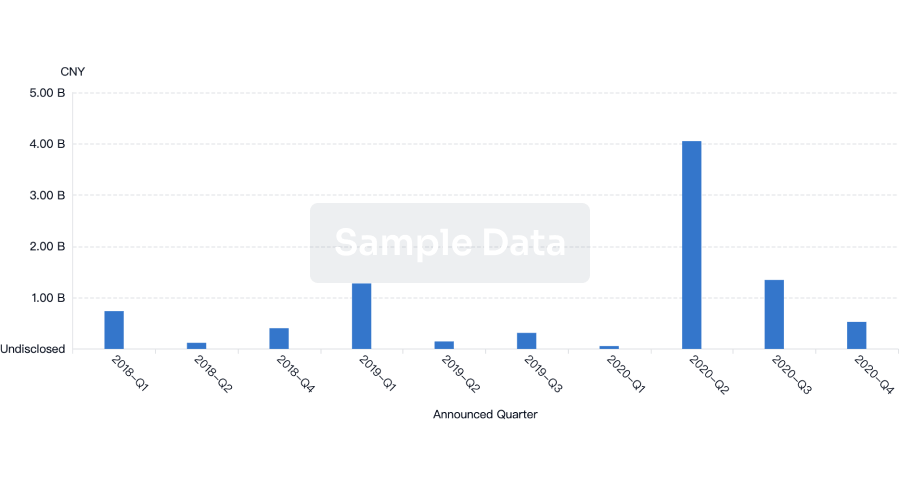
Profit
Explore the financial positions of over 360K organizations with Synapse.
login
or

Grant & Funding(NIH)
Access more than 2 million grant and funding information to elevate your research journey.
login
or

Investment
Gain insights on the latest company investments from start-ups to established corporations.
login
or

Financing
Unearth financing trends to validate and advance investment opportunities.
login
or
Hiro LS Researcher
The AI Search Engine Built to Accelerate Biopharma Decisions
Search across billion-scale life sciences data to uncover signals, validate evidence, and act with confidence.
Ask any biopharma research question→
Get started for free today!
Accelerate Strategic R&D decision making with Synapse, Patsnap’s AI-powered Connected Innovation Intelligence Platform Built for Life Sciences Professionals.
Discover Synapse Data Servers
Synapse data is now integrated into the PatSnap LS Model Context Protocol (MCP) service. Customize your LLM agent now using our MCP server!
Bio
Bio Sequences Search & Analysis
Sign up for free
Chemical
Chemical Structures Search & Analysis
Sign up for free