Request Demo
Last update 09 Dec 2025

Maharashtra Institute of Technology
Last update 09 Dec 2025
Overview
Tags
Neoplasms
Respiratory Diseases
Small molecule drug
Disease domain score
A glimpse into the focused therapeutic areas

Technology Platform
Most used technologies in drug development
Targets
Most frequently developed targets
Related
Target |
Mechanism |
Active Org. |
Originator Org. |
Active Indication |
Inactive Indication |
Drug Highest Phase |
First Approval Ctry. / Loc. |
First Approval Date |
Target |
Mechanism |
Active Org. |
Originator Org. |
Active Indication |
Inactive Indication |
Drug Highest Phase |
First Approval Ctry. / Loc. |
First Approval Date |
Target |
Mechanism |
Active Org. |
Originator Org. |
Active Indication |
Inactive Indication |
Drug Highest Phase |
First Approval Ctry. / Loc. |
First Approval Date |
100 Clinical Results associated with Maharashtra Institute of Technology
Login to view more data
Login to view more data
01 Dec 2025MethodsX
Design of an integrated model using deep reinforcement learning and Variational Autoencoders for enhanced quantum security
Review
Author: Shingne, Harshala ; Chikmurge, Diptee ; Parkhi, Priya ; Agrawal, Poorva
The need for secure communication systems has driven extensive research into quantum-based security mechanisms, particularly Quantum Key Distribution (QKD). However, traditional QKD systems, within dynamic environments incorporating network fluctuation and attacks, have been relatively limited because static protocols cannot support high key generation rates and security. This work addresses these challenges by proposing the integration of AI and machine learning optimization techniques into quantum communication protocols to enhance both security and efficiency. We here propose three advanced models: first, Deep Reinforcement Learning is applied to adaptively optimize QKD protocols by dynamically adjusting the key generation parameters with respect to environmental conditions. In the state-of-the-art method, the DRL-based approach enlarges the secure key generation rate by 15-20 % and suppresses QBER 30-40 % under noisy conditions. A VAE is used for the detection of anomalies in quantum networks that effectively detects eavesdropping. By incorporating quantum-specific feature extraction and latent variable disentanglement, the VAE model detects attack detection accuracy of 85-90 % with a reduction of 25 % in false positives. Finally, it considers the optimization of cryptographic protocols in a distributed quantum network using Multi-Agent Deep Q-Networks. This multi-agent system strengthens both the security and computational efficiency by reducing attack vulnerabilities by 15-18 % and lowering the computational complexity by 20-25 %. In all, the integration of AI with machine learning methods brings far better enhancements in the field of quantum communication system security and efficiency, addressing critical limitations of conventional QKD systems and pointing to the way to more resilient adaptive quantum security solutions.
01 Jul 2025INTERNATIONAL JOURNAL OF HYDROGEN ENERGY
Investigation of performance, combustion and exhaust emission characteristics of a CI engine using waste cooking biodiesel-hydrogen strategies: A trade-off analysis
Author: Bhowmik, Subrata ; Kakde, Malhari Madhav ; Panua, Rajsekhar ; Shirfule, Bhushan Shivaji ; Satav, Sanket Sunil ; Mane Deshmukh, Om Vitthal
This exptl. study elucidates the effects of hydrogen (H2) supplementation on the performance, combustion, and emission parameters of a waste cooking biodiesel (WCB)-fuelled compression ignition (CI) engine under variable fuel injection timings (FITs).Initially, a comprehensive trade-off study of methanol-to-oil ratios, reaction time and catalyst shares was performed to identify the optimal biodiesel production strategy, achieving a maximum yield of 97.60 %.The produced WCB was subsequently utilized in a water-cooled, single-cylinder CI engine operating at 8°-16° bTDC FITs.WCB100 exhibited suboptimal performance due to its high viscosity and d., resulting in delayed combustion and increased emissions.However, the integration of five H2 injection strategies significantly enhanced combustion behavior and reduced emissions, achieving reduction of up to 54.75 % in BSHC, 44.77 % in BSCO, and 43.62 % in BSPM.The findings highlight WCBH5 with a FIT of 12° bTDC as the optimal configuration for sustainable CI engine performance and remarkably reduced emissions.
16 Jun 2025Energy Sources Part A-Recovery Utilization and Environmental Effects
Prediction of ethanol-gasoline blend fuelled spark ignition engine performance using dimensional analysis
Author: Hatte, Prafulla ; Bhalerao, Yogesh
Ethanol is blended with pure gasoline for use as a fuel in a gasoline engine.It is required to conduct phys. tests on engines to observe the engine performance for these fuel blends.However, math. equations provide a quick, effective, and accurate alternate for phys. tests.It may not be possible to develop the math. relations for the specific operating conditions of engine and fuel.It is possible to use dimensional anal. approach to develop math. model.Dimensional anal. approach is used in this research work for deriving the math. correlations of Indicated Mean Effective Pressure, Brake Power, Indicated Power, and Brake Specific Fuel Consumption as engine performance parameters.Their relations are established with engine speed, load on engine, calorific value of fuel fractions, and clearance volume of engine as independent parameters.Buckingham π theorem is used for formulating the relations having proportionality sign showing the possible relations of each dependent parameter with all four independent parameters.Regression anal. is used for eliminating proportionality signs from the equations developed.Math. relations developed by the dimensional anal. are accurate.Root Mean Square errors have noted a min. of 4.19 for Brake Specific Fuel Consumption and a maximum 8.56 for Brake Power.The average percentage errors are less than 1%.
100 Deals associated with Maharashtra Institute of Technology
Login to view more data
100 Translational Medicine associated with Maharashtra Institute of Technology
Login to view more data
Corporation Tree
Boost your research with our corporation tree data.
login
or

Pipeline
Pipeline Snapshot as of 12 Mar 2026
The statistics for drugs in the Pipeline is the current organization and its subsidiaries are counted as organizations,Early Phase 1 is incorporated into Phase 1, Phase 1/2 is incorporated into phase 2, and phase 2/3 is incorporated into phase 3
Preclinical
3
Login to view more data
Current Projects
Login to view more data
Deal
Boost your decision using our deal data.
login
or

Translational Medicine
Boost your research with our translational medicine data.
login
or

Profit
Explore the financial positions of over 360K organizations with Synapse.
login
or

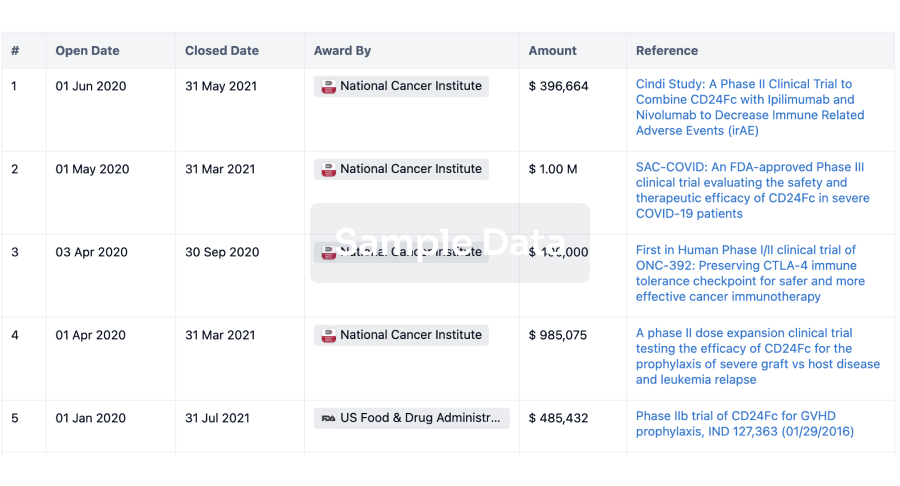
Grant & Funding(NIH)
Access more than 2 million grant and funding information to elevate your research journey.
login
or
Investment
Gain insights on the latest company investments from start-ups to established corporations.
login
or

Financing
Unearth financing trends to validate and advance investment opportunities.
login
or

AI Agents Built for Biopharma Breakthroughs
Accelerate discovery. Empower decisions. Transform outcomes.
Get started for free today!
Accelerate Strategic R&D decision making with Synapse, PatSnap’s AI-powered Connected Innovation Intelligence Platform Built for Life Sciences Professionals.
Start your data trial now!
Synapse data is also accessible to external entities via APIs or data packages. Empower better decisions with the latest in pharmaceutical intelligence.
Bio
Bio Sequences Search & Analysis
Sign up for free
Chemical
Chemical Structures Search & Analysis
Sign up for free