Request Demo
What are κ opioid receptor modulators and how do they work?
21 June 2024
The discovery of opioid receptors in the brain has transformed our understanding of pain management and neurobiology. While the µ (mu) opioid receptor has garnered much of the spotlight due to its role in pain relief and addiction, the κ (kappa) opioid receptor (KOR) represents a fascinating and promising area of research. κ opioid receptor modulators, which either activate or inhibit these receptors, may hold the key to new treatments for a variety of conditions. This blog post delves into the basics of κ opioid receptor modulators, their mechanisms of action, and their potential therapeutic applications.
κ opioid receptor modulators exert their effects by interacting with the κ opioid receptors, which are part of the opioid receptor family that also includes the µ and δ (delta) receptors. These receptors are G-protein-coupled receptors (GPCRs) located throughout the central and peripheral nervous systems. When a κ opioid receptor modulator binds to a KOR, it initiates a cascade of intracellular events. Depending on whether the modulator is an agonist or antagonist, the outcome of this binding can vary significantly.
Agonists are compounds that bind to the KOR and activate it, mimicking the effects of the natural ligand dynorphin. This activation leads to a series of cellular responses, such as the inhibition of adenylate cyclase, which subsequently reduces the production of cyclic AMP (cAMP). This reduction in cAMP levels can lead to changes in neurotransmitter release and alterations in neuronal excitability. On the other hand, antagonists bind to the KOR but do not activate it. Instead, they block the receptor and prevent agonists from exerting their effects.
Partial agonists, which partially activate the KOR, offer a more nuanced mechanism, potentially balancing efficacy and side effects. Additionally, there are also biased agonists, which preferentially activate specific signaling pathways downstream of the KOR. This selective signaling can result in therapeutic benefits with potentially fewer side effects, making biased agonists a particularly exciting area of research.
One of the most well-known effects of κ opioid receptor activation is its role in modulating pain. KOR agonists produce analgesia, particularly in conditions involving visceral and neuropathic pain, which are typically challenging to treat with conventional analgesics. Unlike µ opioid receptor agonists, KOR agonists have a lower risk of inducing tolerance, dependence, and respiratory depression. However, their use has been limited by side effects such as dysphoria and hallucinations, making the search for more selective and side-effect-free modulators an ongoing pursuit.
Beyond pain management, κ opioid receptor modulators have shown promise in treating mood disorders. Dysregulation of the KOR system has been implicated in conditions such as depression and anxiety. KOR antagonists, in particular, have demonstrated antidepressant and anxiolytic effects in preclinical studies and early-phase clinical trials. By blocking the KOR, these antagonists may alleviate the stress-induced dysphoria and anhedonia that characterize many mood disorders.
Substance use disorders represent another area where κ opioid receptor modulators have potential therapeutic value. KOR activation is thought to counteract the rewarding effects of drugs like cocaine and alcohol, suggesting that KOR agonists could be used to reduce cravings and relapse. Conversely, KOR antagonists may help mitigate withdrawal symptoms and stress-related relapse in individuals recovering from addiction. The dual potential of KOR modulators in addiction treatment highlights their versatility and underscores the need for further research.
Moreover, emerging evidence suggests that KOR modulators could play a role in neuroprotection and neuroinflammation. KOR activation has been shown to have anti-inflammatory effects in the central nervous system, which could be beneficial in conditions such as multiple sclerosis and neurodegenerative diseases. Additionally, KOR modulators may influence processes like neurogenesis and synaptic plasticity, offering potential therapeutic avenues for cognitive disorders and brain injuries.
In conclusion, κ opioid receptor modulators represent a promising frontier in medical research, with potential applications ranging from pain management and mood disorders to addiction treatment and neuroprotection. While challenges remain, particularly in minimizing side effects, ongoing research continues to unlock the therapeutic potential of these fascinating compounds. As our understanding of κ opioid receptors deepens, so too does the promise of developing safer and more effective treatments for a wide array of conditions.
κ opioid receptor modulators exert their effects by interacting with the κ opioid receptors, which are part of the opioid receptor family that also includes the µ and δ (delta) receptors. These receptors are G-protein-coupled receptors (GPCRs) located throughout the central and peripheral nervous systems. When a κ opioid receptor modulator binds to a KOR, it initiates a cascade of intracellular events. Depending on whether the modulator is an agonist or antagonist, the outcome of this binding can vary significantly.
Agonists are compounds that bind to the KOR and activate it, mimicking the effects of the natural ligand dynorphin. This activation leads to a series of cellular responses, such as the inhibition of adenylate cyclase, which subsequently reduces the production of cyclic AMP (cAMP). This reduction in cAMP levels can lead to changes in neurotransmitter release and alterations in neuronal excitability. On the other hand, antagonists bind to the KOR but do not activate it. Instead, they block the receptor and prevent agonists from exerting their effects.
Partial agonists, which partially activate the KOR, offer a more nuanced mechanism, potentially balancing efficacy and side effects. Additionally, there are also biased agonists, which preferentially activate specific signaling pathways downstream of the KOR. This selective signaling can result in therapeutic benefits with potentially fewer side effects, making biased agonists a particularly exciting area of research.
One of the most well-known effects of κ opioid receptor activation is its role in modulating pain. KOR agonists produce analgesia, particularly in conditions involving visceral and neuropathic pain, which are typically challenging to treat with conventional analgesics. Unlike µ opioid receptor agonists, KOR agonists have a lower risk of inducing tolerance, dependence, and respiratory depression. However, their use has been limited by side effects such as dysphoria and hallucinations, making the search for more selective and side-effect-free modulators an ongoing pursuit.
Beyond pain management, κ opioid receptor modulators have shown promise in treating mood disorders. Dysregulation of the KOR system has been implicated in conditions such as depression and anxiety. KOR antagonists, in particular, have demonstrated antidepressant and anxiolytic effects in preclinical studies and early-phase clinical trials. By blocking the KOR, these antagonists may alleviate the stress-induced dysphoria and anhedonia that characterize many mood disorders.
Substance use disorders represent another area where κ opioid receptor modulators have potential therapeutic value. KOR activation is thought to counteract the rewarding effects of drugs like cocaine and alcohol, suggesting that KOR agonists could be used to reduce cravings and relapse. Conversely, KOR antagonists may help mitigate withdrawal symptoms and stress-related relapse in individuals recovering from addiction. The dual potential of KOR modulators in addiction treatment highlights their versatility and underscores the need for further research.
Moreover, emerging evidence suggests that KOR modulators could play a role in neuroprotection and neuroinflammation. KOR activation has been shown to have anti-inflammatory effects in the central nervous system, which could be beneficial in conditions such as multiple sclerosis and neurodegenerative diseases. Additionally, KOR modulators may influence processes like neurogenesis and synaptic plasticity, offering potential therapeutic avenues for cognitive disorders and brain injuries.
In conclusion, κ opioid receptor modulators represent a promising frontier in medical research, with potential applications ranging from pain management and mood disorders to addiction treatment and neuroprotection. While challenges remain, particularly in minimizing side effects, ongoing research continues to unlock the therapeutic potential of these fascinating compounds. As our understanding of κ opioid receptors deepens, so too does the promise of developing safer and more effective treatments for a wide array of conditions.
How to obtain the latest development progress of all targets?
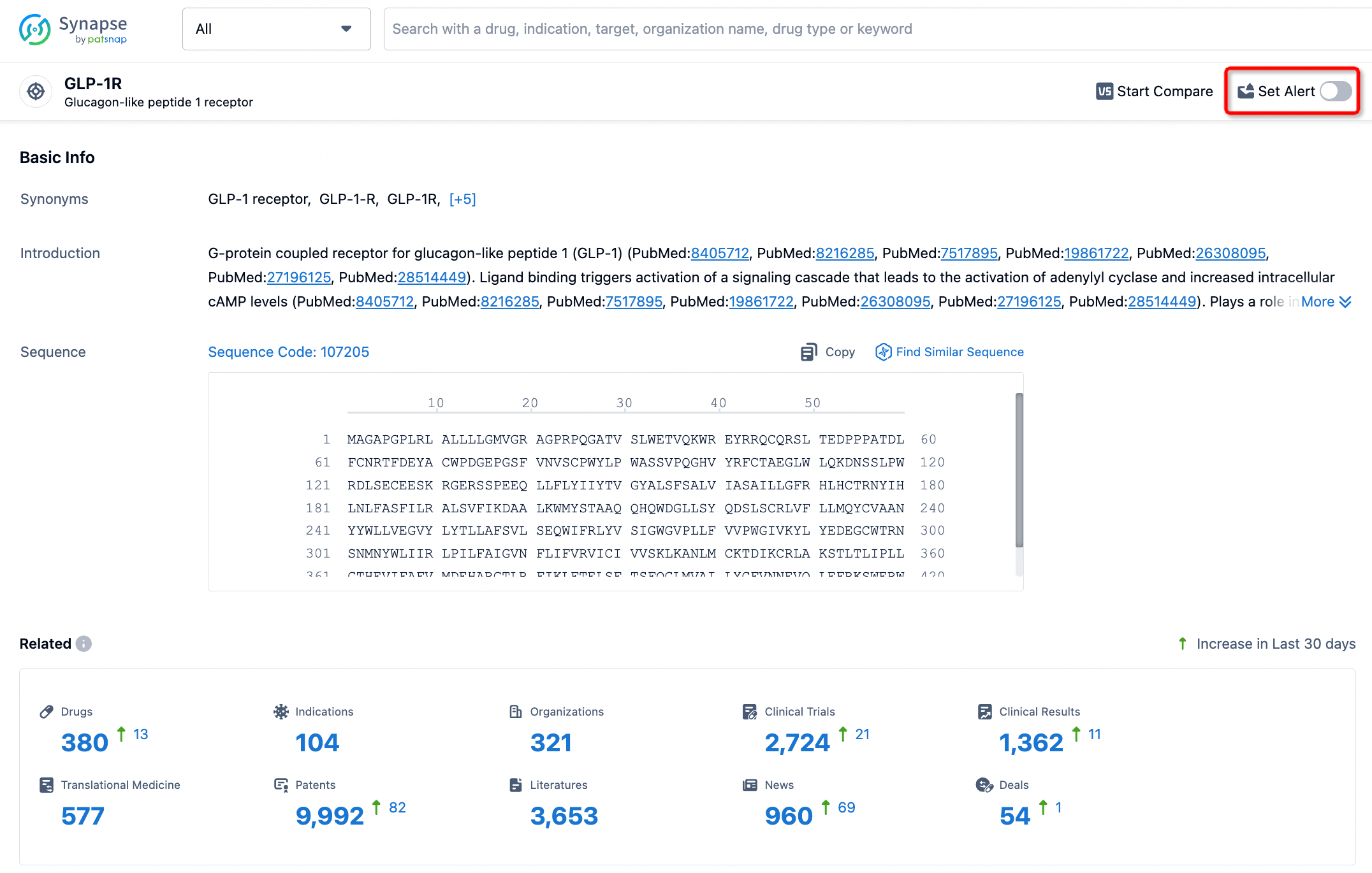
In the Synapse database, you can stay updated on the latest research and development advances of all targets. This service is accessible anytime and anywhere, with updates available daily or weekly. Use the "Set Alert" function to stay informed. Click on the image below to embark on a brand new journey of drug discovery!

Hiro LS Researcher
The AI Search Engine Built to Accelerate Biopharma Decisions
Search across billion-scale life sciences data to uncover signals, validate evidence, and act with confidence.
Ask any biopharma research question→
Get started for free today!
Accelerate Strategic R&D decision making with Synapse, Patsnap’s AI-powered Connected Innovation Intelligence Platform Built for Life Sciences Professionals.
Discover Synapse Data Servers
Synapse data is now integrated into the PatSnap LS Model Context Protocol (MCP) service. Customize your LLM agent now using our MCP server!