Request Demo
What are CYP17A1 inhibitors and how do they work?
21 June 2024
CYP17A1 inhibitors are a class of drugs that have gained significant attention in the medical field, particularly in the treatment of certain types of cancer. These inhibitors target the enzyme cytochrome P450 17A1 (CYP17A1), which plays a crucial role in steroidogenesis, the process by which the body produces steroid hormones. By inhibiting this enzyme, CYP17A1 inhibitors can effectively reduce the production of androgens and other steroids, which are often implicated in the progression of certain cancers, most notably prostate cancer.
To understand how CYP17A1 inhibitors work, it's essential to delve into the role of the CYP17A1 enzyme itself. CYP17A1, also known as 17α-hydroxylase/17,20-lyase, is a key enzyme involved in the production of androgens and glucocorticoids. It catalyzes two critical reactions in the steroidogenesis pathway: the 17α-hydroxylation of pregnenolone and progesterone, and the 17,20-lyase reaction that converts these intermediates into dehydroepiandrosterone (DHEA) and androstenedione, respectively. These products are precursors to testosterone and other androgens, which can fuel the growth of androgen-dependent cancers.
CYP17A1 inhibitors work by blocking the activity of this enzyme, thereby reducing the levels of androgens in the body. This is particularly beneficial in treating prostate cancer, a disease that often relies on androgens to grow and spread. By lowering androgen levels, CYP17A1 inhibitors can slow down or even halt the progression of the cancer. One of the most well-known CYP17A1 inhibitors is abiraterone acetate, which has been approved for the treatment of metastatic castration-resistant prostate cancer. Abiraterone acetate is often used in conjunction with prednisone, a corticosteroid, to help manage the side effects associated with androgen deprivation therapy.
The primary use of CYP17A1 inhibitors is in the treatment of prostate cancer. Prostate cancer is one of the most common cancers among men and is often driven by androgens. In the early stages of the disease, prostate cancer can typically be managed with therapies that reduce androgen levels, such as androgen deprivation therapy (ADT). However, many patients eventually develop resistance to ADT and progress to a more advanced stage known as castration-resistant prostate cancer (CRPC). At this point, additional treatment options are needed, and this is where CYP17A1 inhibitors come into play.
CYP17A1 inhibitors like abiraterone acetate have shown significant efficacy in treating CRPC. Clinical trials have demonstrated that these inhibitors can extend overall survival and delay the progression of the disease. They are usually prescribed in combination with other medications, such as prednisone, to enhance their effectiveness and mitigate potential side effects. The success of CYP17A1 inhibitors in treating prostate cancer has sparked interest in exploring their use for other types of cancers that may also be driven by steroid hormones.
While the primary focus of CYP17A1 inhibitors has been on prostate cancer, there is ongoing research into their potential applications in other hormone-dependent cancers. For instance, some studies are investigating the use of these inhibitors in the treatment of breast cancer, ovarian cancer, and adrenal gland tumors. These cancers also involve complex hormonal pathways, and CYP17A1 inhibitors could potentially play a role in their management. However, more research is needed to fully understand the efficacy and safety of these inhibitors in treating other types of cancer.
In conclusion, CYP17A1 inhibitors represent a promising class of drugs in the fight against hormone-dependent cancers. By targeting the CYP17A1 enzyme, these inhibitors can effectively reduce androgen levels and slow the progression of diseases like prostate cancer. With ongoing research and clinical trials, the potential applications of CYP17A1 inhibitors may expand, offering hope for improved treatments for various types of cancer.
To understand how CYP17A1 inhibitors work, it's essential to delve into the role of the CYP17A1 enzyme itself. CYP17A1, also known as 17α-hydroxylase/17,20-lyase, is a key enzyme involved in the production of androgens and glucocorticoids. It catalyzes two critical reactions in the steroidogenesis pathway: the 17α-hydroxylation of pregnenolone and progesterone, and the 17,20-lyase reaction that converts these intermediates into dehydroepiandrosterone (DHEA) and androstenedione, respectively. These products are precursors to testosterone and other androgens, which can fuel the growth of androgen-dependent cancers.
CYP17A1 inhibitors work by blocking the activity of this enzyme, thereby reducing the levels of androgens in the body. This is particularly beneficial in treating prostate cancer, a disease that often relies on androgens to grow and spread. By lowering androgen levels, CYP17A1 inhibitors can slow down or even halt the progression of the cancer. One of the most well-known CYP17A1 inhibitors is abiraterone acetate, which has been approved for the treatment of metastatic castration-resistant prostate cancer. Abiraterone acetate is often used in conjunction with prednisone, a corticosteroid, to help manage the side effects associated with androgen deprivation therapy.
The primary use of CYP17A1 inhibitors is in the treatment of prostate cancer. Prostate cancer is one of the most common cancers among men and is often driven by androgens. In the early stages of the disease, prostate cancer can typically be managed with therapies that reduce androgen levels, such as androgen deprivation therapy (ADT). However, many patients eventually develop resistance to ADT and progress to a more advanced stage known as castration-resistant prostate cancer (CRPC). At this point, additional treatment options are needed, and this is where CYP17A1 inhibitors come into play.
CYP17A1 inhibitors like abiraterone acetate have shown significant efficacy in treating CRPC. Clinical trials have demonstrated that these inhibitors can extend overall survival and delay the progression of the disease. They are usually prescribed in combination with other medications, such as prednisone, to enhance their effectiveness and mitigate potential side effects. The success of CYP17A1 inhibitors in treating prostate cancer has sparked interest in exploring their use for other types of cancers that may also be driven by steroid hormones.
While the primary focus of CYP17A1 inhibitors has been on prostate cancer, there is ongoing research into their potential applications in other hormone-dependent cancers. For instance, some studies are investigating the use of these inhibitors in the treatment of breast cancer, ovarian cancer, and adrenal gland tumors. These cancers also involve complex hormonal pathways, and CYP17A1 inhibitors could potentially play a role in their management. However, more research is needed to fully understand the efficacy and safety of these inhibitors in treating other types of cancer.
In conclusion, CYP17A1 inhibitors represent a promising class of drugs in the fight against hormone-dependent cancers. By targeting the CYP17A1 enzyme, these inhibitors can effectively reduce androgen levels and slow the progression of diseases like prostate cancer. With ongoing research and clinical trials, the potential applications of CYP17A1 inhibitors may expand, offering hope for improved treatments for various types of cancer.
How to obtain the latest development progress of all targets?
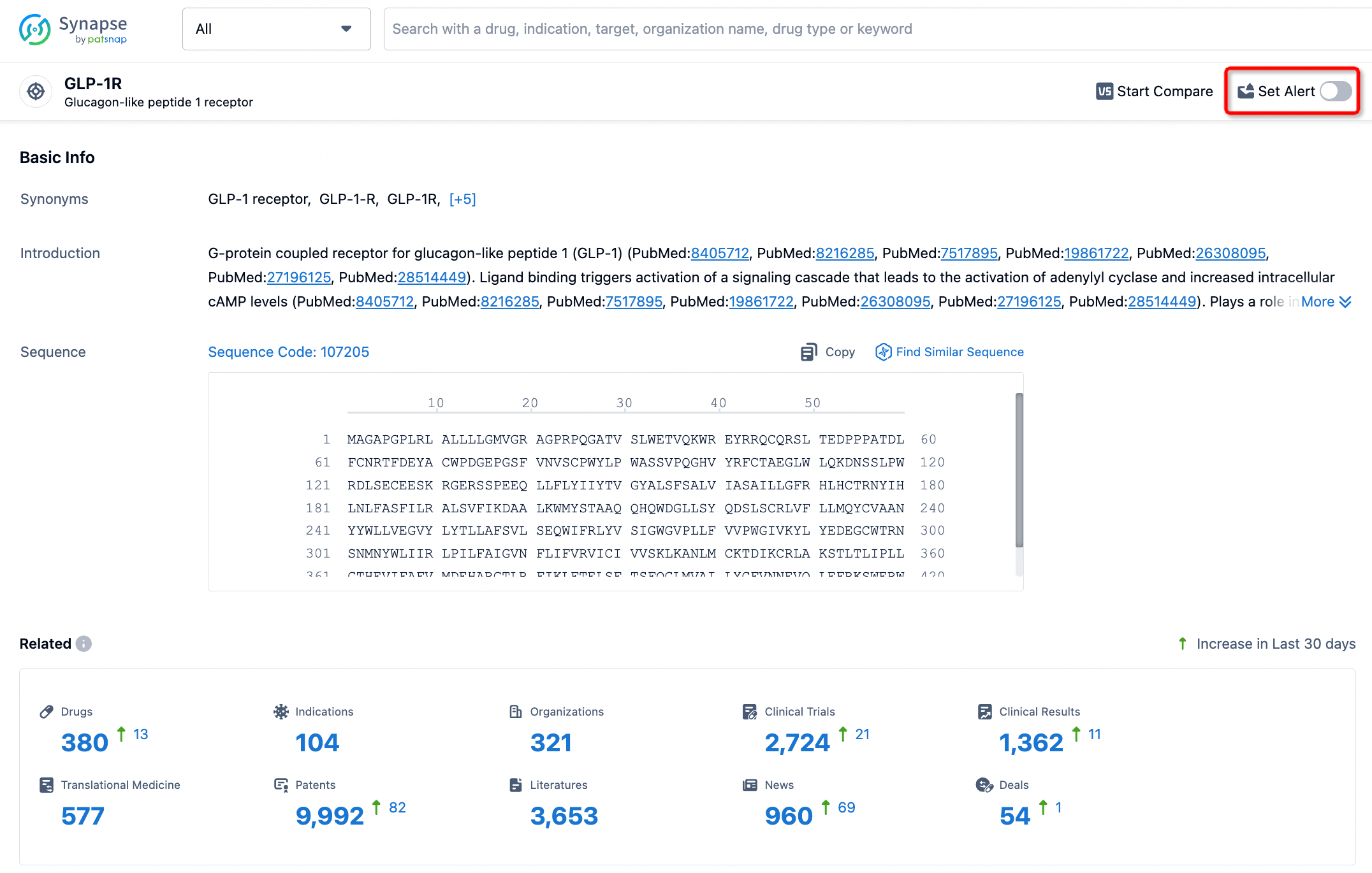
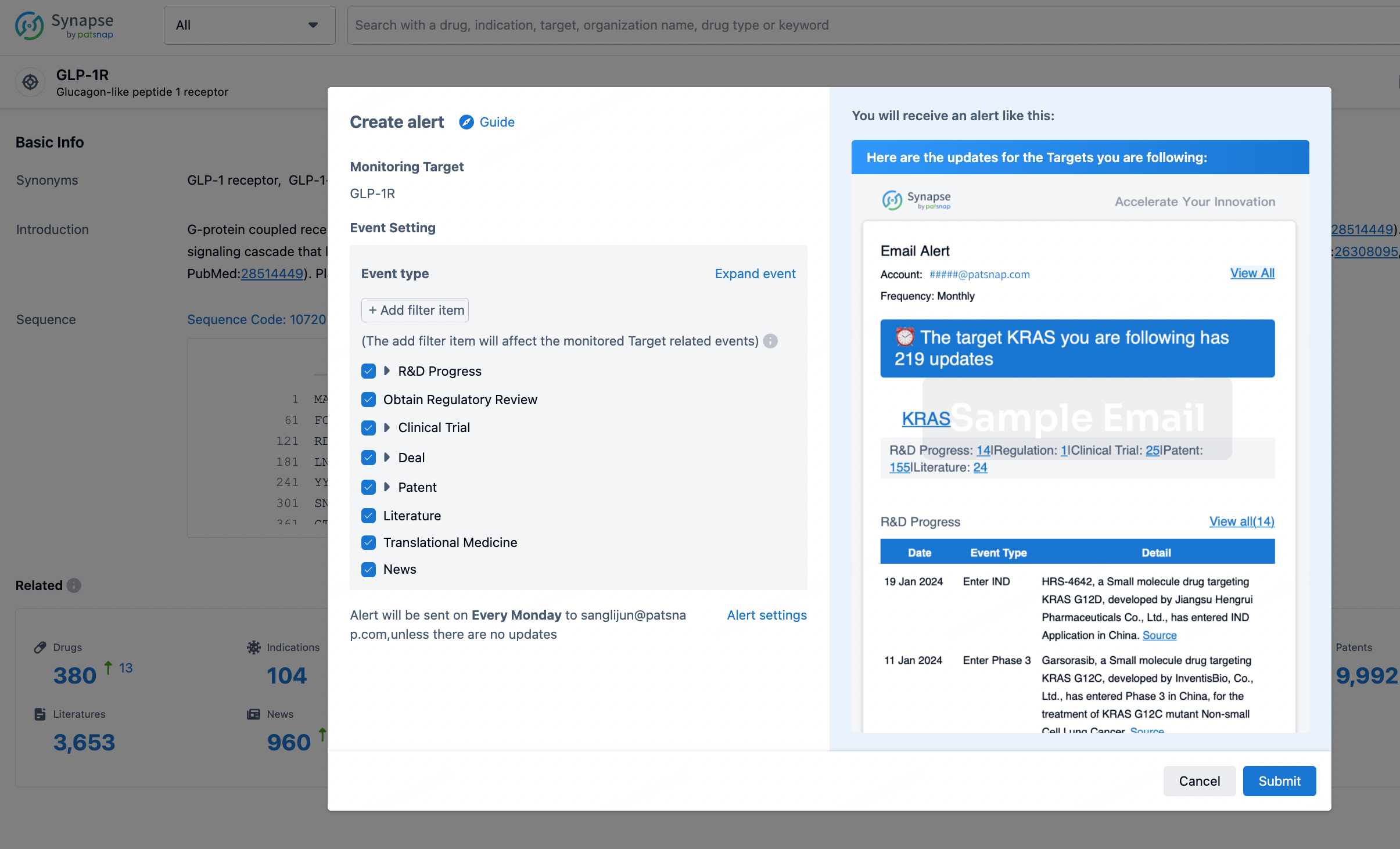
In the Synapse database, you can stay updated on the latest research and development advances of all targets. This service is accessible anytime and anywhere, with updates available daily or weekly. Use the "Set Alert" function to stay informed. Click on the image below to embark on a brand new journey of drug discovery!
AI Agents Built for Biopharma Breakthroughs
Accelerate discovery. Empower decisions. Transform outcomes.
Get started for free today!
Accelerate Strategic R&D decision making with Synapse, PatSnap’s AI-powered Connected Innovation Intelligence Platform Built for Life Sciences Professionals.
Start your data trial now!
Synapse data is also accessible to external entities via APIs or data packages. Empower better decisions with the latest in pharmaceutical intelligence.