Request Demo
What are PDGFRβ inhibitors and how do they work?
21 June 2024
Platelet-derived growth factor receptor beta (PDGFRβ) inhibitors represent an exciting frontier in targeted therapies for various diseases, particularly cancers and fibrotic disorders. These inhibitors target the PDGFRβ, a cell surface tyrosine kinase receptor that plays a crucial role in cell proliferation, migration, and survival. In this blog post, we will delve into the intricacies of PDGFRβ inhibitors, how they function, and their current and potential applications in the medical field.
PDGFRβ is part of the larger family of receptor tyrosine kinases (RTKs), which are essential for many cellular processes. When PDGF binds to PDGFRβ, it triggers receptor dimerization and autophosphorylation, activating downstream signaling pathways like PI3K/AKT, Ras/MAPK, and PLCγ. These pathways collectively promote cell growth, survival, and motility. In normal physiology, PDGFRβ is vital for wound healing and development. However, its overactivation can lead to pathological conditions, including cancers and fibrotic diseases.
PDGFRβ inhibitors are designed to block the receptor's kinase activity, thereby interrupting the signaling cascade that leads to abnormal cell proliferation and migration. These inhibitors can be classified into different categories based on their mode of action. Some inhibitors, such as imatinib, bind to the ATP-binding site of the kinase domain, preventing ATP from accessing the site and thus stopping the phosphorylation process. Others, like sorafenib, may inhibit multiple kinases, providing a broader spectrum of action. By inhibiting PDGFRβ signaling, these drugs effectively hinder the pathological processes driven by excessive PDGFRβ activity.
PDGFRβ inhibitors are predominantly used in oncology, where they target tumors characterized by aberrant PDGFRβ signaling. Cancers such as gastrointestinal stromal tumors (GISTs), certain types of leukemia, and dermatofibrosarcoma protuberans (DFSP) have shown responsiveness to these inhibitors. For instance, imatinib was one of the first PDGFRβ inhibitors to gain FDA approval for GISTs and DFSP, showcasing significant efficacy in reducing tumor size and improving patient survival rates.
Beyond oncology, PDGFRβ inhibitors are also being explored for their potential in treating fibrotic diseases. Fibrosis, characterized by excessive connective tissue formation, can affect various organs, including the lungs, liver, and kidneys. By targeting PDGFRβ, these inhibitors can reduce the proliferation and activation of fibroblasts, the primary cells responsible for producing extracellular matrix components in fibrotic tissue. Early-stage research and clinical trials have shown promise in conditions like idiopathic pulmonary fibrosis (IPF) and systemic sclerosis.
The utility of PDGFRβ inhibitors extends to other areas as well. In ophthalmology, they are being investigated for their potential to treat conditions such as proliferative vitreoretinopathy and diabetic retinopathy, where pathological angiogenesis and fibrosis play significant roles. Additionally, there is interest in their application for cardiovascular diseases, particularly in preventing restenosis after angioplasty procedures.
While the therapeutic potential of PDGFRβ inhibitors is vast, challenges remain. One of the primary concerns is the development of resistance, which can occur through various mechanisms, such as secondary mutations in the PDGFRβ gene or activation of alternative signaling pathways. Moreover, the broad-spectrum activity of some PDGFRβ inhibitors can lead to off-target effects and adverse events, necessitating careful management and monitoring of patients.
In conclusion, PDGFRβ inhibitors are a powerful class of drugs with significant potential across multiple medical domains. Their ability to specifically target and modulate aberrant PDGFRβ signaling makes them invaluable in the treatment of certain cancers and fibrotic diseases. As research continues to advance, it is likely that new PDGFRβ inhibitors will be developed, offering improved efficacy and safety profiles. The future of PDGFRβ inhibitors is promising, holding the potential to bring transformative changes to how we approach and treat various complex diseases.
PDGFRβ is part of the larger family of receptor tyrosine kinases (RTKs), which are essential for many cellular processes. When PDGF binds to PDGFRβ, it triggers receptor dimerization and autophosphorylation, activating downstream signaling pathways like PI3K/AKT, Ras/MAPK, and PLCγ. These pathways collectively promote cell growth, survival, and motility. In normal physiology, PDGFRβ is vital for wound healing and development. However, its overactivation can lead to pathological conditions, including cancers and fibrotic diseases.
PDGFRβ inhibitors are designed to block the receptor's kinase activity, thereby interrupting the signaling cascade that leads to abnormal cell proliferation and migration. These inhibitors can be classified into different categories based on their mode of action. Some inhibitors, such as imatinib, bind to the ATP-binding site of the kinase domain, preventing ATP from accessing the site and thus stopping the phosphorylation process. Others, like sorafenib, may inhibit multiple kinases, providing a broader spectrum of action. By inhibiting PDGFRβ signaling, these drugs effectively hinder the pathological processes driven by excessive PDGFRβ activity.
PDGFRβ inhibitors are predominantly used in oncology, where they target tumors characterized by aberrant PDGFRβ signaling. Cancers such as gastrointestinal stromal tumors (GISTs), certain types of leukemia, and dermatofibrosarcoma protuberans (DFSP) have shown responsiveness to these inhibitors. For instance, imatinib was one of the first PDGFRβ inhibitors to gain FDA approval for GISTs and DFSP, showcasing significant efficacy in reducing tumor size and improving patient survival rates.
Beyond oncology, PDGFRβ inhibitors are also being explored for their potential in treating fibrotic diseases. Fibrosis, characterized by excessive connective tissue formation, can affect various organs, including the lungs, liver, and kidneys. By targeting PDGFRβ, these inhibitors can reduce the proliferation and activation of fibroblasts, the primary cells responsible for producing extracellular matrix components in fibrotic tissue. Early-stage research and clinical trials have shown promise in conditions like idiopathic pulmonary fibrosis (IPF) and systemic sclerosis.
The utility of PDGFRβ inhibitors extends to other areas as well. In ophthalmology, they are being investigated for their potential to treat conditions such as proliferative vitreoretinopathy and diabetic retinopathy, where pathological angiogenesis and fibrosis play significant roles. Additionally, there is interest in their application for cardiovascular diseases, particularly in preventing restenosis after angioplasty procedures.
While the therapeutic potential of PDGFRβ inhibitors is vast, challenges remain. One of the primary concerns is the development of resistance, which can occur through various mechanisms, such as secondary mutations in the PDGFRβ gene or activation of alternative signaling pathways. Moreover, the broad-spectrum activity of some PDGFRβ inhibitors can lead to off-target effects and adverse events, necessitating careful management and monitoring of patients.
In conclusion, PDGFRβ inhibitors are a powerful class of drugs with significant potential across multiple medical domains. Their ability to specifically target and modulate aberrant PDGFRβ signaling makes them invaluable in the treatment of certain cancers and fibrotic diseases. As research continues to advance, it is likely that new PDGFRβ inhibitors will be developed, offering improved efficacy and safety profiles. The future of PDGFRβ inhibitors is promising, holding the potential to bring transformative changes to how we approach and treat various complex diseases.
How to obtain the latest development progress of all targets?
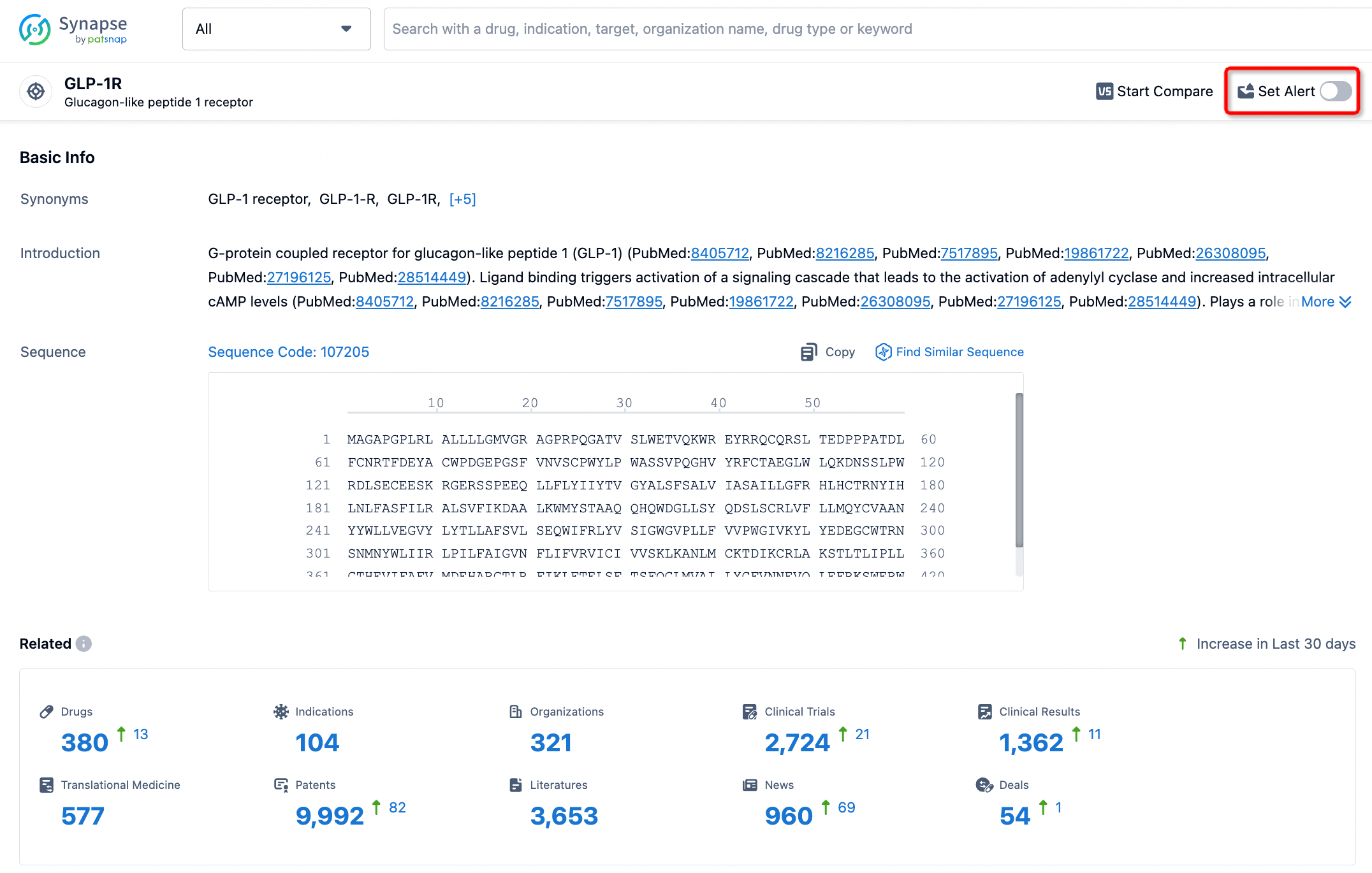
In the Synapse database, you can stay updated on the latest research and development advances of all targets. This service is accessible anytime and anywhere, with updates available daily or weekly. Use the "Set Alert" function to stay informed. Click on the image below to embark on a brand new journey of drug discovery!

AI Agents Built for Biopharma Breakthroughs
Accelerate discovery. Empower decisions. Transform outcomes.
Get started for free today!
Accelerate Strategic R&D decision making with Synapse, PatSnap’s AI-powered Connected Innovation Intelligence Platform Built for Life Sciences Professionals.
Start your data trial now!
Synapse data is also accessible to external entities via APIs or data packages. Empower better decisions with the latest in pharmaceutical intelligence.