Request Demo
What are PPARα agonists and how do they work?
21 June 2024
Peroxisome proliferator-activated receptor alpha (PPARα) agonists have garnered significant attention in the medical and scientific communities due to their potential therapeutic benefits. These compounds target the PPARα receptor, a key regulator of lipid metabolism, inflammation, and overall energy homeostasis. Understanding how PPARα agonists work and their applications can provide deeper insights into their role in managing various health conditions.
PPARα agonists function by activating the PPARα receptor, which is predominantly expressed in tissues with high fatty acid oxidation rates, such as the liver, heart, kidney, and muscle. This receptor belongs to the nuclear receptor superfamily, which regulates gene expression when bound by its ligand. When PPARα agonists bind to the receptor, they modulate the transcription of genes involved in fatty acid oxidation, lipid metabolism, and inflammatory responses.
Mechanistically, upon binding to a PPARα agonist, the receptor undergoes a conformational change, allowing it to form heterodimers with the retinoid X receptor (RXR). This complex then binds to specific DNA sequences called peroxisome proliferator response elements (PPREs) in the promoter regions of target genes. The binding initiates the transcription of genes that enhance fatty acid uptake, beta-oxidation, and lipoprotein assembly and transport. This process reduces triglyceride levels and improves the body's lipid profile, thus promoting better metabolic health.
PPARα agonists also play a significant role in controlling inflammatory processes. By inhibiting the expression of pro-inflammatory genes, these agonists can help reduce inflammation, which is beneficial in the context of chronic inflammatory diseases and metabolic disorders. Additionally, PPARα activation influences glucose metabolism, contributing to improved insulin sensitivity and glycemic control.
The therapeutic applications of PPARα agonists are diverse and primarily focus on metabolic disorders. One of the most well-established uses of PPARα agonists is in the treatment of dyslipidemia, a condition characterized by abnormal levels of lipids in the blood. Drugs like fibrates (e.g., fenofibrate, gemfibrozil) are PPARα agonists commonly prescribed to lower elevated triglycerides and increase high-density lipoprotein (HDL) cholesterol levels. By improving lipid profiles, these drugs help reduce the risk of cardiovascular diseases, such as atherosclerosis and coronary artery disease.
PPARα agonists are also investigated for their potential benefits in nonalcoholic fatty liver disease (NAFLD) and its more severe form, nonalcoholic steatohepatitis (NASH). These conditions are characterized by excessive fat accumulation in the liver, which can lead to inflammation, fibrosis, and ultimately liver cirrhosis. By enhancing fatty acid oxidation and reducing lipid accumulation in the liver, PPARα agonists can help mitigate the progression of NAFLD and NASH.
Moreover, PPARα agonists have shown promise in managing metabolic syndrome, a cluster of conditions that increase the risk of heart disease, stroke, and diabetes. These conditions include elevated blood pressure, high blood sugar, excess body fat around the waist, and abnormal cholesterol levels. By addressing dyslipidemia and improving insulin sensitivity, PPARα agonists can play a crucial role in comprehensive metabolic syndrome management.
In addition to their metabolic benefits, PPARα agonists are being explored for their potential anti-inflammatory and neuroprotective effects. Research suggests that PPARα activation may help mitigate inflammatory responses in chronic diseases, such as rheumatoid arthritis and inflammatory bowel disease. Furthermore, emerging evidence indicates that PPARα agonists could offer neuroprotection in neurodegenerative diseases like Alzheimer's, though more research is needed to fully understand these effects.
In conclusion, PPARα agonists represent a promising class of compounds with multifaceted therapeutic potential. By targeting the PPARα receptor, these agonists effectively modulate lipid metabolism, inflammation, and glucose homeostasis. Their established use in managing dyslipidemia and emerging applications in liver diseases, metabolic syndrome, and inflammatory conditions underscore their significance in contemporary medicine. As research continues to unravel their full potential, PPARα agonists may become pivotal in addressing a broad spectrum of health challenges.
PPARα agonists function by activating the PPARα receptor, which is predominantly expressed in tissues with high fatty acid oxidation rates, such as the liver, heart, kidney, and muscle. This receptor belongs to the nuclear receptor superfamily, which regulates gene expression when bound by its ligand. When PPARα agonists bind to the receptor, they modulate the transcription of genes involved in fatty acid oxidation, lipid metabolism, and inflammatory responses.
Mechanistically, upon binding to a PPARα agonist, the receptor undergoes a conformational change, allowing it to form heterodimers with the retinoid X receptor (RXR). This complex then binds to specific DNA sequences called peroxisome proliferator response elements (PPREs) in the promoter regions of target genes. The binding initiates the transcription of genes that enhance fatty acid uptake, beta-oxidation, and lipoprotein assembly and transport. This process reduces triglyceride levels and improves the body's lipid profile, thus promoting better metabolic health.
PPARα agonists also play a significant role in controlling inflammatory processes. By inhibiting the expression of pro-inflammatory genes, these agonists can help reduce inflammation, which is beneficial in the context of chronic inflammatory diseases and metabolic disorders. Additionally, PPARα activation influences glucose metabolism, contributing to improved insulin sensitivity and glycemic control.
The therapeutic applications of PPARα agonists are diverse and primarily focus on metabolic disorders. One of the most well-established uses of PPARα agonists is in the treatment of dyslipidemia, a condition characterized by abnormal levels of lipids in the blood. Drugs like fibrates (e.g., fenofibrate, gemfibrozil) are PPARα agonists commonly prescribed to lower elevated triglycerides and increase high-density lipoprotein (HDL) cholesterol levels. By improving lipid profiles, these drugs help reduce the risk of cardiovascular diseases, such as atherosclerosis and coronary artery disease.
PPARα agonists are also investigated for their potential benefits in nonalcoholic fatty liver disease (NAFLD) and its more severe form, nonalcoholic steatohepatitis (NASH). These conditions are characterized by excessive fat accumulation in the liver, which can lead to inflammation, fibrosis, and ultimately liver cirrhosis. By enhancing fatty acid oxidation and reducing lipid accumulation in the liver, PPARα agonists can help mitigate the progression of NAFLD and NASH.
Moreover, PPARα agonists have shown promise in managing metabolic syndrome, a cluster of conditions that increase the risk of heart disease, stroke, and diabetes. These conditions include elevated blood pressure, high blood sugar, excess body fat around the waist, and abnormal cholesterol levels. By addressing dyslipidemia and improving insulin sensitivity, PPARα agonists can play a crucial role in comprehensive metabolic syndrome management.
In addition to their metabolic benefits, PPARα agonists are being explored for their potential anti-inflammatory and neuroprotective effects. Research suggests that PPARα activation may help mitigate inflammatory responses in chronic diseases, such as rheumatoid arthritis and inflammatory bowel disease. Furthermore, emerging evidence indicates that PPARα agonists could offer neuroprotection in neurodegenerative diseases like Alzheimer's, though more research is needed to fully understand these effects.
In conclusion, PPARα agonists represent a promising class of compounds with multifaceted therapeutic potential. By targeting the PPARα receptor, these agonists effectively modulate lipid metabolism, inflammation, and glucose homeostasis. Their established use in managing dyslipidemia and emerging applications in liver diseases, metabolic syndrome, and inflammatory conditions underscore their significance in contemporary medicine. As research continues to unravel their full potential, PPARα agonists may become pivotal in addressing a broad spectrum of health challenges.
How to obtain the latest development progress of all targets?
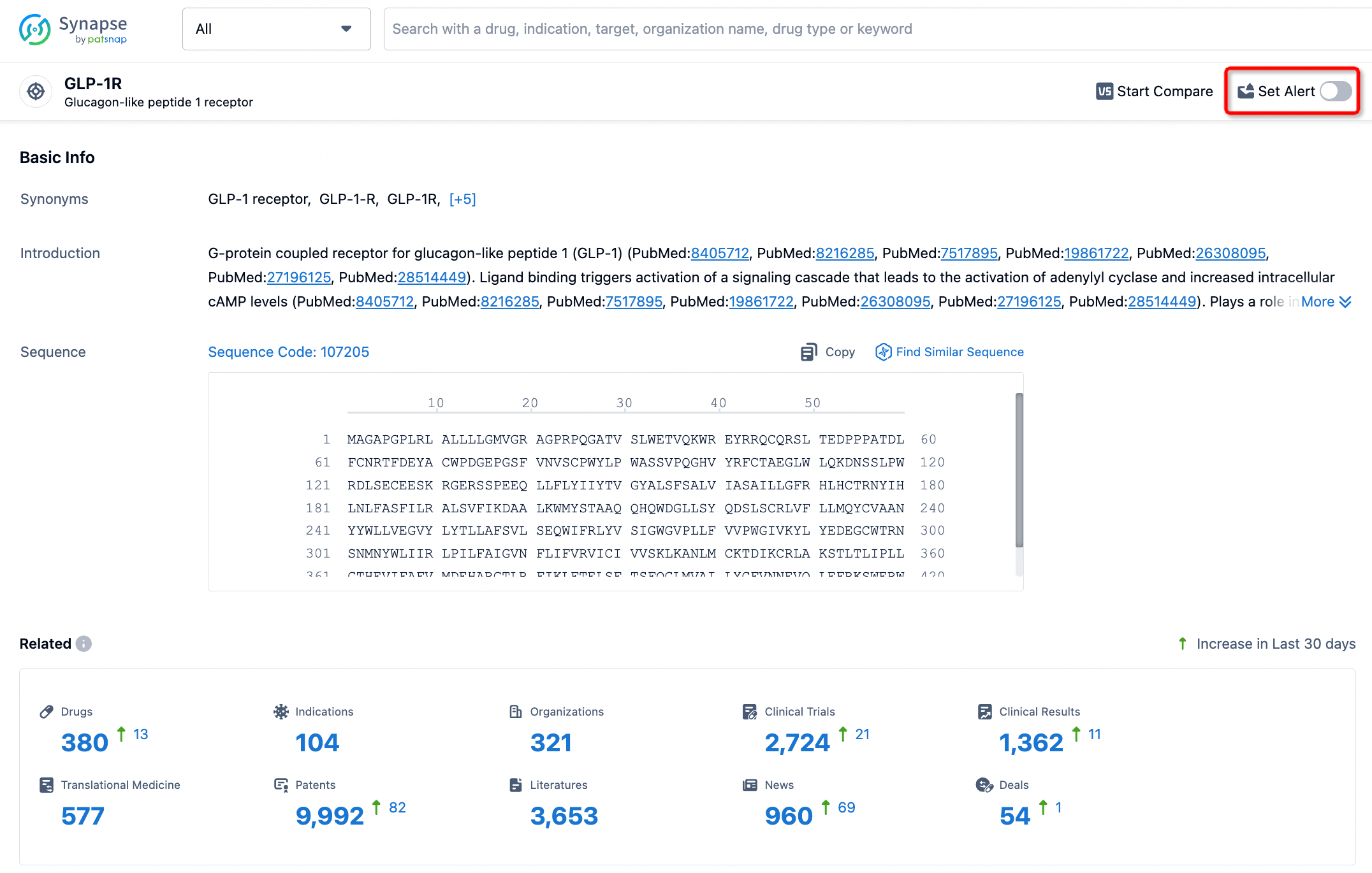
In the Synapse database, you can stay updated on the latest research and development advances of all targets. This service is accessible anytime and anywhere, with updates available daily or weekly. Use the "Set Alert" function to stay informed. Click on the image below to embark on a brand new journey of drug discovery!


Hiro LS Researcher
The AI Search Engine Built to Accelerate Biopharma Decisions
Search across billion-scale life sciences data to uncover signals, validate evidence, and act with confidence.
Ask any biopharma research question→
Get started for free today!
Accelerate Strategic R&D decision making with Synapse, Patsnap’s AI-powered Connected Innovation Intelligence Platform Built for Life Sciences Professionals.
Discover Synapse Data Servers
Synapse data is now integrated into the PatSnap LS Model Context Protocol (MCP) service. Customize your LLM agent now using our MCP server!