Request Demo
What are the side effects of Dacarbazine?
12 July 2024
Dacarbazine, a chemotherapy medication used primarily to treat various types of cancer such as malignant melanoma and Hodgkin's lymphoma, is a potent drug that can help slow or stop the growth of cancer cells. However, like many potent treatments, dacarbazine is associated with a range of side effects that patients and healthcare providers should be aware of. This blog will delve into the possible side effects of dacarbazine, providing a comprehensive overview to help individuals understand what to expect during treatment.
One of the most common side effects of dacarbazine is nausea and vomiting. These symptoms can often be severe and may occur within 1-3 hours after administration of the drug. To manage these symptoms, doctors often prescribe antiemetic medications, which can help reduce the intensity and frequency of nausea and vomiting. Patients are also advised to eat small, frequent meals and avoid foods that can exacerbate these symptoms.
Fatigue is another frequent side effect experienced by patients undergoing treatment with dacarbazine. The medication can cause an overall decrease in energy levels, leaving patients feeling unusually tired and weak. It's important for patients to listen to their bodies and get plenty of rest. Sometimes, light exercise may help combat fatigue, but this should always be discussed with a healthcare provider.
Hair loss (alopecia) can also occur with dacarbazine treatment. While this side effect can be emotionally challenging, it is usually temporary, and hair often begins to regrow once treatment is completed. Patients experiencing hair loss might find it helpful to use gentle hair care products and consider wearing wigs, hats, or scarves to cope with this change.
Another significant side effect is myelosuppression, which is the decreased ability of the bone marrow to produce blood cells. This can lead to anemia (low red blood cells), increased risk of infection (low white blood cells), and bleeding or bruising (low platelets). Regular blood tests are essential to monitor blood cell levels, and healthcare providers may recommend treatments such as growth factors, blood transfusions, or medications to stimulate blood cell production.
Dacarbazine can also irritate the gastrointestinal tract, leading to symptoms like diarrhea or constipation. Patients should stay well-hydrated and consult their healthcare providers for appropriate dietary adjustments or medications to manage these symptoms.
Injection site reactions are another potential side effect. Patients may experience pain, redness, or swelling at the site where dacarbazine is administered. Using a warm compress and taking over-the-counter pain relievers as recommended by a healthcare provider can help alleviate these reactions.
Liver toxicity is a more severe but less common side effect of dacarbazine. Signs of liver problems include jaundice (yellowing of the skin and eyes), dark urine, severe nausea, and abdominal pain. Regular liver function tests are performed to monitor the liver’s health during treatment. If any signs of liver toxicity are detected, treatment may need to be adjusted or discontinued.
Patients may also experience flu-like symptoms such as fever, chills, muscle aches, and fatigue. These symptoms are usually temporary and can be managed with rest, fluids, and medications like acetaminophen.
Lastly, there is a risk of secondary cancers, though this is rare. Long-term use of dacarbazine can potentially increase the risk of developing other types of cancer later in life. This underscores the importance of regular follow-ups and monitoring even after the initial treatment is complete.
In conclusion, while dacarbazine is an effective chemotherapy drug that can help treat certain cancers, it comes with a range of potential side effects, from common issues like nausea, fatigue, and hair loss to more serious concerns like myelosuppression and liver toxicity. It's crucial for patients to maintain open communication with their healthcare providers, adhere to recommended monitoring, and report any new or worsening symptoms immediately. Managing side effects effectively can help improve the overall treatment experience and quality of life for patients undergoing therapy with dacarbazine.
One of the most common side effects of dacarbazine is nausea and vomiting. These symptoms can often be severe and may occur within 1-3 hours after administration of the drug. To manage these symptoms, doctors often prescribe antiemetic medications, which can help reduce the intensity and frequency of nausea and vomiting. Patients are also advised to eat small, frequent meals and avoid foods that can exacerbate these symptoms.
Fatigue is another frequent side effect experienced by patients undergoing treatment with dacarbazine. The medication can cause an overall decrease in energy levels, leaving patients feeling unusually tired and weak. It's important for patients to listen to their bodies and get plenty of rest. Sometimes, light exercise may help combat fatigue, but this should always be discussed with a healthcare provider.
Hair loss (alopecia) can also occur with dacarbazine treatment. While this side effect can be emotionally challenging, it is usually temporary, and hair often begins to regrow once treatment is completed. Patients experiencing hair loss might find it helpful to use gentle hair care products and consider wearing wigs, hats, or scarves to cope with this change.
Another significant side effect is myelosuppression, which is the decreased ability of the bone marrow to produce blood cells. This can lead to anemia (low red blood cells), increased risk of infection (low white blood cells), and bleeding or bruising (low platelets). Regular blood tests are essential to monitor blood cell levels, and healthcare providers may recommend treatments such as growth factors, blood transfusions, or medications to stimulate blood cell production.
Dacarbazine can also irritate the gastrointestinal tract, leading to symptoms like diarrhea or constipation. Patients should stay well-hydrated and consult their healthcare providers for appropriate dietary adjustments or medications to manage these symptoms.
Injection site reactions are another potential side effect. Patients may experience pain, redness, or swelling at the site where dacarbazine is administered. Using a warm compress and taking over-the-counter pain relievers as recommended by a healthcare provider can help alleviate these reactions.
Liver toxicity is a more severe but less common side effect of dacarbazine. Signs of liver problems include jaundice (yellowing of the skin and eyes), dark urine, severe nausea, and abdominal pain. Regular liver function tests are performed to monitor the liver’s health during treatment. If any signs of liver toxicity are detected, treatment may need to be adjusted or discontinued.
Patients may also experience flu-like symptoms such as fever, chills, muscle aches, and fatigue. These symptoms are usually temporary and can be managed with rest, fluids, and medications like acetaminophen.
Lastly, there is a risk of secondary cancers, though this is rare. Long-term use of dacarbazine can potentially increase the risk of developing other types of cancer later in life. This underscores the importance of regular follow-ups and monitoring even after the initial treatment is complete.
In conclusion, while dacarbazine is an effective chemotherapy drug that can help treat certain cancers, it comes with a range of potential side effects, from common issues like nausea, fatigue, and hair loss to more serious concerns like myelosuppression and liver toxicity. It's crucial for patients to maintain open communication with their healthcare providers, adhere to recommended monitoring, and report any new or worsening symptoms immediately. Managing side effects effectively can help improve the overall treatment experience and quality of life for patients undergoing therapy with dacarbazine.
How to obtain the latest development progress of all drugs?
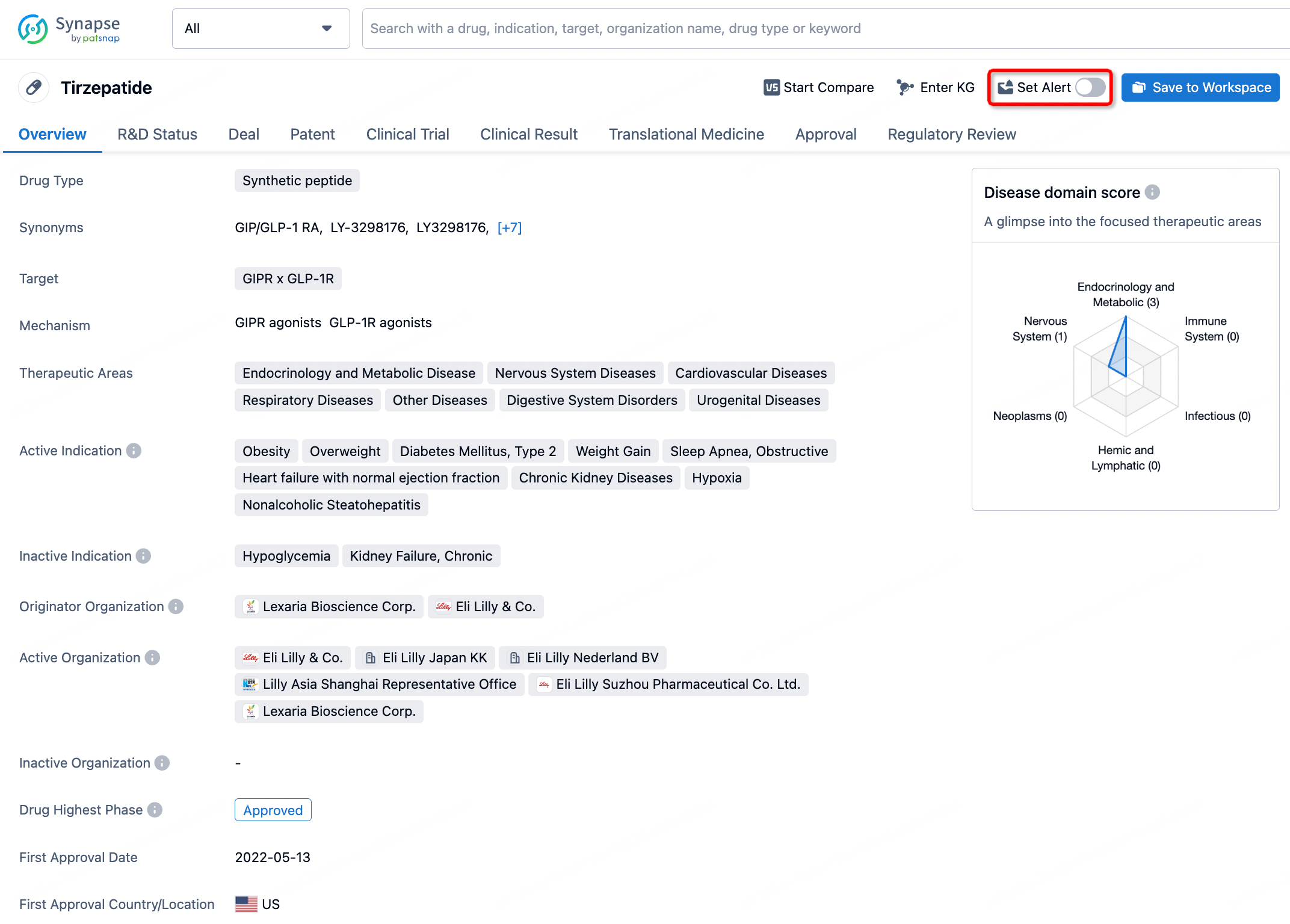
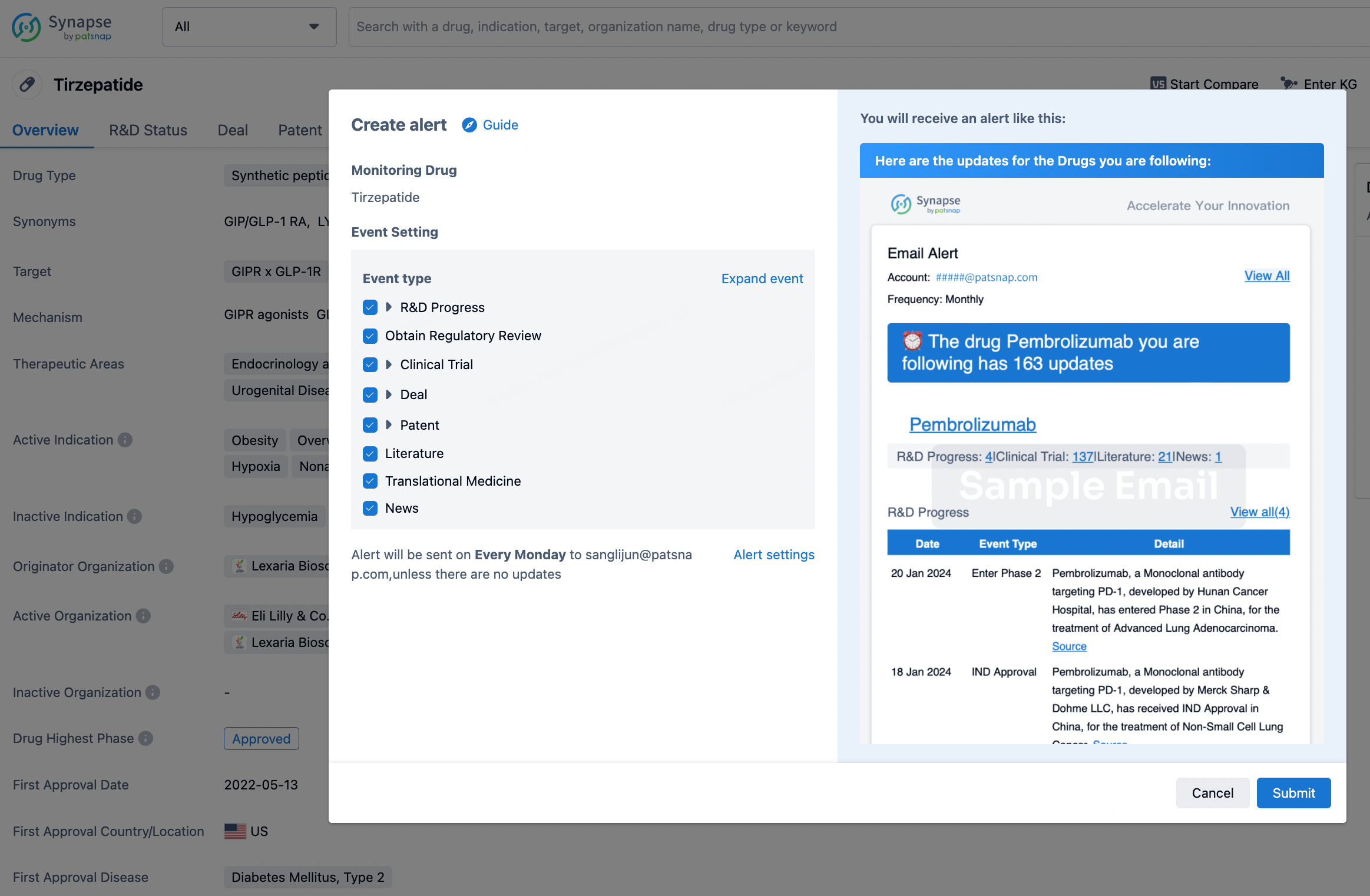
In the Synapse database, you can stay updated on the latest research and development advances of all drugs. This service is accessible anytime and anywhere, with updates available daily or weekly. Use the "Set Alert" function to stay informed. Click on the image below to embark on a brand new journey of drug discovery!

AI Agents Built for Biopharma Breakthroughs
Accelerate discovery. Empower decisions. Transform outcomes.
Get started for free today!
Accelerate Strategic R&D decision making with Synapse, PatSnap’s AI-powered Connected Innovation Intelligence Platform Built for Life Sciences Professionals.
Start your data trial now!
Synapse data is also accessible to external entities via APIs or data packages. Empower better decisions with the latest in pharmaceutical intelligence.