Request Demo
What are Triglyceride modulators and how do they work?
21 June 2024
Triglycerides are a type of fat found in your blood, and while they are essential for health, elevated levels can increase the risk of heart disease and other health issues. Triglyceride modulators are a class of medications and lifestyle interventions designed to manage these levels. In this blog post, we will delve into the science behind triglyceride modulators, explore how they work, and discuss their various applications.
Triglycerides play a crucial role in the body's metabolism by providing a source of energy. However, when triglyceride levels become too high, they can contribute to the buildup of plaque in artery walls, leading to atherosclerosis and increasing the risk of cardiovascular diseases. Elevated triglyceride levels are often linked with conditions such as obesity, diabetes, and metabolic syndrome. Triglyceride modulators aim to bring these levels back to a healthier range, thereby reducing associated health risks.
Triglyceride modulators work through various mechanisms to lower triglyceride levels in the blood. Some of the most common types include fibrates, omega-3 fatty acids, and niacin. Fibrates, such as fenofibrate and gemfibrozil, function by activating peroxisome proliferator-activated receptors (PPARs). These receptors play a pivotal role in lipid metabolism by increasing the activity of lipoprotein lipase, an enzyme that breaks down triglycerides in the blood. This leads to a reduction in triglyceride levels and an increase in high-density lipoprotein (HDL) cholesterol, often referred to as "good" cholesterol.
Omega-3 fatty acids, found in fish oil supplements, are another effective triglyceride modulator. They work by reducing the liver's production of triglycerides and increasing the rate at which these fats are broken down. Studies have shown that omega-3 fatty acids can reduce triglyceride levels by 20-50%, making them a valuable tool in managing lipid levels. However, it's important to note that high doses of omega-3 fatty acids are often required to achieve significant reductions, and these should be taken under medical supervision.
Niacin, also known as vitamin B3, is another compound used to modulate triglyceride levels. It works by inhibiting the liver's production of very-low-density lipoprotein (VLDL), which subsequently reduces the production of LDL cholesterol and triglycerides. Niacin can be particularly effective but is often associated with side effects such as flushing and gastrointestinal discomfort, which can limit its use.
Triglyceride modulators are primarily used to manage hypertriglyceridemia, a condition characterized by elevated levels of triglycerides in the blood. This condition is often seen in individuals with diabetes, obesity, and metabolic syndrome. By lowering triglyceride levels, these modulators can help reduce the risk of cardiovascular events such as heart attacks and strokes.
In addition to their use in managing hypertriglyceridemia, triglyceride modulators are also employed in the broader context of cardiovascular disease prevention. High triglyceride levels are often accompanied by low levels of HDL cholesterol and high levels of LDL cholesterol, both of which are risk factors for heart disease. By addressing triglyceride levels, these modulators contribute to an overall improvement in lipid profiles, thereby enhancing cardiovascular health.
Triglyceride modulators are also used in the management of pancreatitis, a condition characterized by inflammation of the pancreas. Elevated triglyceride levels can cause the pancreas to become inflamed, leading to severe pain and other complications. By lowering triglyceride levels, these modulators can help prevent the onset of pancreatitis and reduce the severity of symptoms in those who already have the condition.
In conclusion, triglyceride modulators play a vital role in the management of lipid levels and the prevention of associated health issues. Through various mechanisms, these agents help lower triglyceride levels, thereby reducing the risk of cardiovascular diseases and other complications. Whether used in the context of hypertriglyceridemia, cardiovascular disease prevention, or pancreatitis management, triglyceride modulators offer significant benefits in promoting overall health and well-being.
Triglycerides play a crucial role in the body's metabolism by providing a source of energy. However, when triglyceride levels become too high, they can contribute to the buildup of plaque in artery walls, leading to atherosclerosis and increasing the risk of cardiovascular diseases. Elevated triglyceride levels are often linked with conditions such as obesity, diabetes, and metabolic syndrome. Triglyceride modulators aim to bring these levels back to a healthier range, thereby reducing associated health risks.
Triglyceride modulators work through various mechanisms to lower triglyceride levels in the blood. Some of the most common types include fibrates, omega-3 fatty acids, and niacin. Fibrates, such as fenofibrate and gemfibrozil, function by activating peroxisome proliferator-activated receptors (PPARs). These receptors play a pivotal role in lipid metabolism by increasing the activity of lipoprotein lipase, an enzyme that breaks down triglycerides in the blood. This leads to a reduction in triglyceride levels and an increase in high-density lipoprotein (HDL) cholesterol, often referred to as "good" cholesterol.
Omega-3 fatty acids, found in fish oil supplements, are another effective triglyceride modulator. They work by reducing the liver's production of triglycerides and increasing the rate at which these fats are broken down. Studies have shown that omega-3 fatty acids can reduce triglyceride levels by 20-50%, making them a valuable tool in managing lipid levels. However, it's important to note that high doses of omega-3 fatty acids are often required to achieve significant reductions, and these should be taken under medical supervision.
Niacin, also known as vitamin B3, is another compound used to modulate triglyceride levels. It works by inhibiting the liver's production of very-low-density lipoprotein (VLDL), which subsequently reduces the production of LDL cholesterol and triglycerides. Niacin can be particularly effective but is often associated with side effects such as flushing and gastrointestinal discomfort, which can limit its use.
Triglyceride modulators are primarily used to manage hypertriglyceridemia, a condition characterized by elevated levels of triglycerides in the blood. This condition is often seen in individuals with diabetes, obesity, and metabolic syndrome. By lowering triglyceride levels, these modulators can help reduce the risk of cardiovascular events such as heart attacks and strokes.
In addition to their use in managing hypertriglyceridemia, triglyceride modulators are also employed in the broader context of cardiovascular disease prevention. High triglyceride levels are often accompanied by low levels of HDL cholesterol and high levels of LDL cholesterol, both of which are risk factors for heart disease. By addressing triglyceride levels, these modulators contribute to an overall improvement in lipid profiles, thereby enhancing cardiovascular health.
Triglyceride modulators are also used in the management of pancreatitis, a condition characterized by inflammation of the pancreas. Elevated triglyceride levels can cause the pancreas to become inflamed, leading to severe pain and other complications. By lowering triglyceride levels, these modulators can help prevent the onset of pancreatitis and reduce the severity of symptoms in those who already have the condition.
In conclusion, triglyceride modulators play a vital role in the management of lipid levels and the prevention of associated health issues. Through various mechanisms, these agents help lower triglyceride levels, thereby reducing the risk of cardiovascular diseases and other complications. Whether used in the context of hypertriglyceridemia, cardiovascular disease prevention, or pancreatitis management, triglyceride modulators offer significant benefits in promoting overall health and well-being.
How to obtain the latest development progress of all targets?
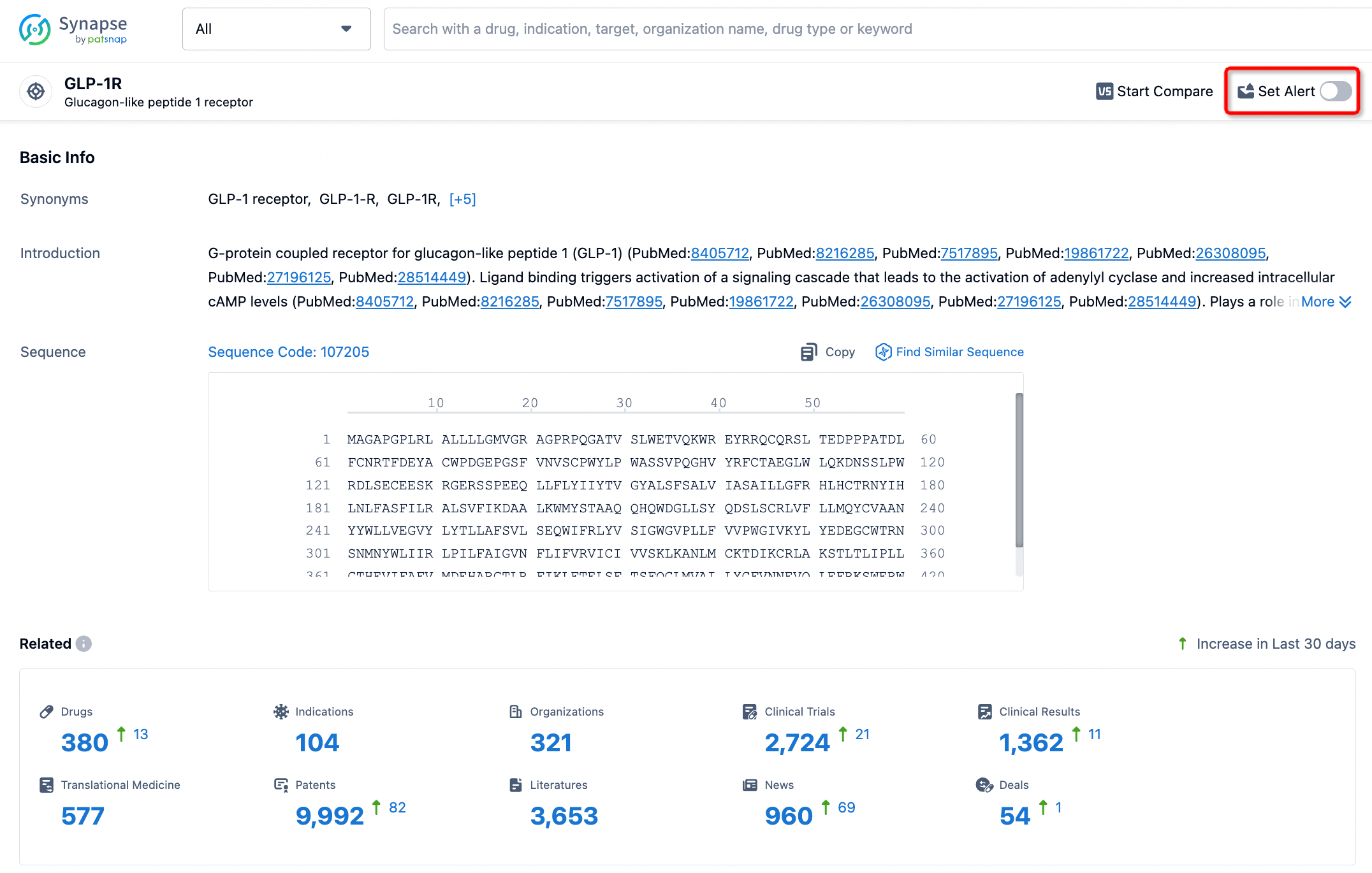
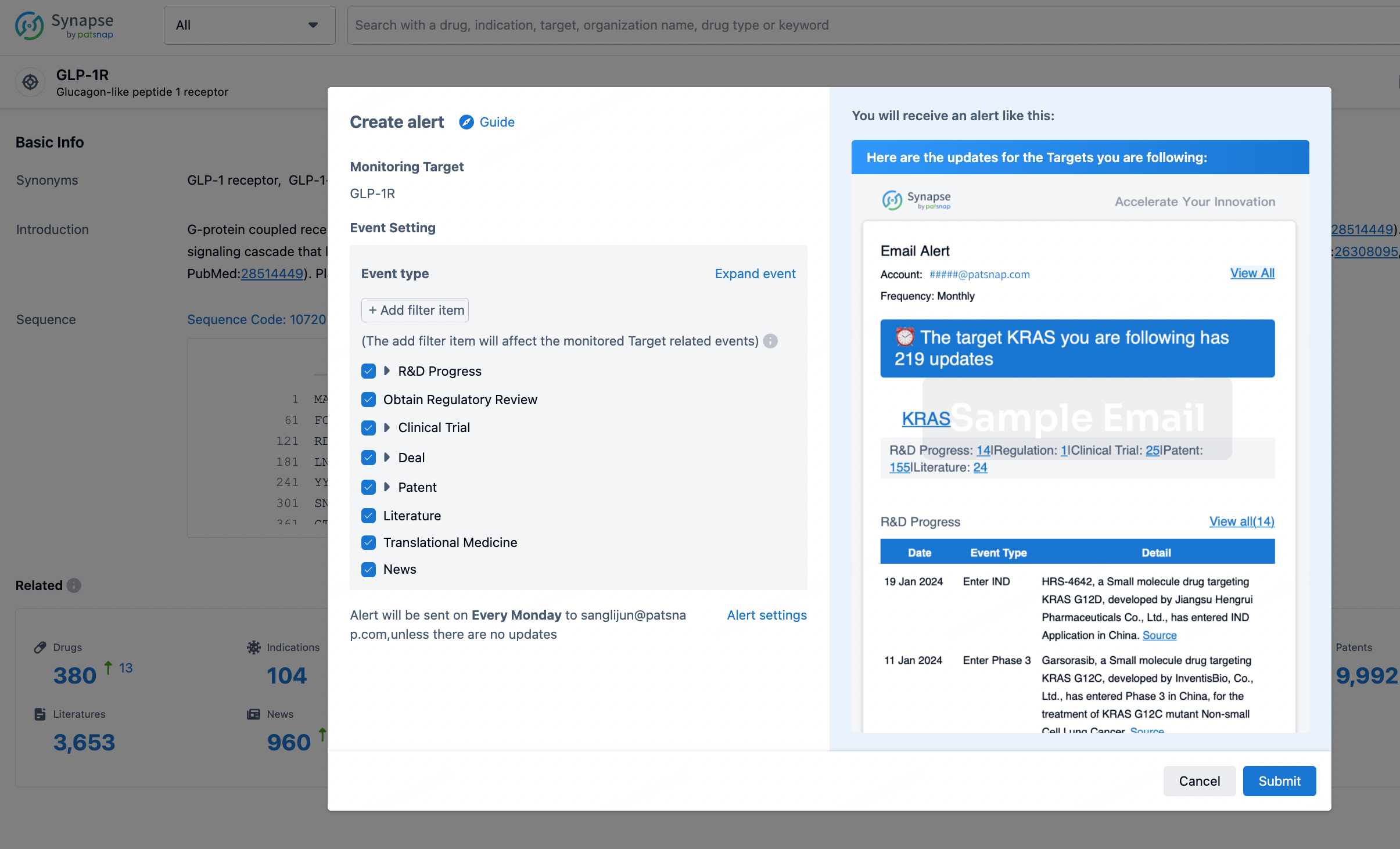
In the Synapse database, you can stay updated on the latest research and development advances of all targets. This service is accessible anytime and anywhere, with updates available daily or weekly. Use the "Set Alert" function to stay informed. Click on the image below to embark on a brand new journey of drug discovery!
AI Agents Built for Biopharma Breakthroughs
Accelerate discovery. Empower decisions. Transform outcomes.
Get started for free today!
Accelerate Strategic R&D decision making with Synapse, PatSnap’s AI-powered Connected Innovation Intelligence Platform Built for Life Sciences Professionals.
Start your data trial now!
Synapse data is also accessible to external entities via APIs or data packages. Empower better decisions with the latest in pharmaceutical intelligence.