Request Demo
What is Binifibrate used for?
15 June 2024
Binifibrate: A Comprehensive Overview
In the field of lipid-modifying agents, Binifibrate stands out as a notable name, showing promise for its potential benefits in managing dyslipidemia—a condition characterized by abnormal amounts of lipids in the blood. Binifibrate is marketed under various trade names and has been the subject of extensive research by pharmaceutical companies and academic institutions. As a fibrate drug, it primarily targets peroxisome proliferator-activated receptors (PPARs), which play a crucial role in lipid metabolism. The drug aims to reduce levels of triglycerides and low-density lipoprotein (LDL) cholesterol while boosting high-density lipoprotein (HDL) cholesterol.
Binifibrate is closely monitored under clinical research, and several studies have established its efficacy in managing lipid profiles in patients with hyperlipidemia. While it's not as widely known or prescribed as other lipid-lowering agents like statins, Binifibrate offers a unique mechanism of action that makes it a valuable option for certain patient populations.
Binifibrate Mechanism of Action
The primary mechanism of action of Binifibrate revolves around its interaction with PPARs, specifically PPAR-alpha. These nuclear receptors regulate the expression of genes involved in lipid metabolism. By activating PPAR-alpha, Binifibrate enhances the oxidation of fatty acids in the liver and skeletal muscle, leading to a reduction in triglyceride levels. Additionally, the drug inhibits the synthesis and secretion of very-low-density lipoprotein (VLDL) particles, which are precursors to LDL cholesterol.
Binifibrate also plays a role in increasing HDL cholesterol. It does this by upregulating the production of apolipoprotein A-I and A-II, the major protein components of HDL particles. The overall effect is a more favorable lipid profile, which can help reduce the risk of cardiovascular diseases.
Moreover, Binifibrate has anti-inflammatory and anti-thrombotic properties. These additional benefits stem from its ability to modulate the expression of various cytokines and adhesion molecules, which are involved in inflammation and blood clot formation.
How to Use Binifibrate
Binifibrate is typically administered orally, available in tablet form. The dosage and frequency depend on the specific needs of the patient, but it is commonly taken once daily. The drug is rapidly absorbed from the gastrointestinal tract, and peak plasma concentrations are usually reached within 1 to 2 hours after administration.
For optimal efficacy, Binifibrate should be taken with meals, as food can enhance its bioavailability. Patients are advised to follow their healthcare provider's instructions meticulously and to adhere to a consistent dosing schedule.
The onset of action for Binifibrate can vary among individuals, but significant changes in lipid levels are often observed within a few weeks of initiating therapy. However, for full therapeutic effects, it may take several months of continuous use.
It's essential for patients to undergo regular monitoring of lipid levels and liver function tests while on Binifibrate therapy. This helps ensure that the drug is working effectively and allows for timely adjustments in dosage if necessary.
What are Binifibrate Side Effects?
Like all medications, Binifibrate has its share of potential side effects. Most individuals tolerate the drug well, but some may experience adverse reactions. Common side effects include gastrointestinal disturbances such as nausea, vomiting, abdominal pain, and diarrhea. These symptoms are generally mild and tend to resolve on their own with continued use.
More severe side effects, though less common, can occur and warrant immediate medical attention. These include muscle pain or weakness, which could signal myopathy or rhabdomyolysis—a condition involving the breakdown of muscle tissue. Liver dysfunction is another serious side effect, indicated by symptoms such as jaundice (yellowing of the skin or eyes), dark urine, and persistent nausea or fatigue.
Binifibrate is contraindicated in certain populations. Patients with severe liver or kidney impairment should avoid the drug, as their bodies may not be able to metabolize or excrete it effectively. It's also contraindicated in individuals with a history of gallbladder disease or those who are allergic to fibrates.
Pregnant and breastfeeding women should use Binifibrate only if absolutely necessary and under strict medical supervision, as there is limited data on its safety in these populations.
What Other Drugs Will Affect Binifibrate?
The efficacy and safety of Binifibrate can be influenced by interactions with other medications. For instance, concurrent use of statins and Binifibrate increases the risk of myopathy and rhabdomyolysis. If combination therapy is deemed necessary, healthcare providers will closely monitor the patient for any signs of muscle-related side effects.
Anticoagulants, such as warfarin, are another class of drugs that can interact with Binifibrate. Fibrates can potentiate the effects of anticoagulants, increasing the risk of bleeding. Patients on such therapy should have their blood clotting parameters regularly monitored, and dose adjustments may be required.
Certain immunosuppressant drugs like cyclosporine can also interact with Binifibrate, potentially leading to increased nephrotoxicity. It is crucial for healthcare providers to weigh the benefits and risks before co-prescribing these medications.
Lastly, bile acid sequestrants, used for lowering cholesterol, can reduce the absorption of Binifibrate if taken concurrently. To mitigate this, patients should take Binifibrate at least 1 hour before or 4 to 6 hours after taking a bile acid sequestrant.
In conclusion, Binifibrate is a potent lipid-modifying agent with a unique mechanism of action that offers substantial benefits for managing dyslipidemia. While generally well-tolerated, it requires careful monitoring for potential side effects and drug interactions. As research continues, Binifibrate's role in lipid management may expand, offering new hope for patients struggling with abnormal lipid levels.
In the field of lipid-modifying agents, Binifibrate stands out as a notable name, showing promise for its potential benefits in managing dyslipidemia—a condition characterized by abnormal amounts of lipids in the blood. Binifibrate is marketed under various trade names and has been the subject of extensive research by pharmaceutical companies and academic institutions. As a fibrate drug, it primarily targets peroxisome proliferator-activated receptors (PPARs), which play a crucial role in lipid metabolism. The drug aims to reduce levels of triglycerides and low-density lipoprotein (LDL) cholesterol while boosting high-density lipoprotein (HDL) cholesterol.
Binifibrate is closely monitored under clinical research, and several studies have established its efficacy in managing lipid profiles in patients with hyperlipidemia. While it's not as widely known or prescribed as other lipid-lowering agents like statins, Binifibrate offers a unique mechanism of action that makes it a valuable option for certain patient populations.
Binifibrate Mechanism of Action
The primary mechanism of action of Binifibrate revolves around its interaction with PPARs, specifically PPAR-alpha. These nuclear receptors regulate the expression of genes involved in lipid metabolism. By activating PPAR-alpha, Binifibrate enhances the oxidation of fatty acids in the liver and skeletal muscle, leading to a reduction in triglyceride levels. Additionally, the drug inhibits the synthesis and secretion of very-low-density lipoprotein (VLDL) particles, which are precursors to LDL cholesterol.
Binifibrate also plays a role in increasing HDL cholesterol. It does this by upregulating the production of apolipoprotein A-I and A-II, the major protein components of HDL particles. The overall effect is a more favorable lipid profile, which can help reduce the risk of cardiovascular diseases.
Moreover, Binifibrate has anti-inflammatory and anti-thrombotic properties. These additional benefits stem from its ability to modulate the expression of various cytokines and adhesion molecules, which are involved in inflammation and blood clot formation.
How to Use Binifibrate
Binifibrate is typically administered orally, available in tablet form. The dosage and frequency depend on the specific needs of the patient, but it is commonly taken once daily. The drug is rapidly absorbed from the gastrointestinal tract, and peak plasma concentrations are usually reached within 1 to 2 hours after administration.
For optimal efficacy, Binifibrate should be taken with meals, as food can enhance its bioavailability. Patients are advised to follow their healthcare provider's instructions meticulously and to adhere to a consistent dosing schedule.
The onset of action for Binifibrate can vary among individuals, but significant changes in lipid levels are often observed within a few weeks of initiating therapy. However, for full therapeutic effects, it may take several months of continuous use.
It's essential for patients to undergo regular monitoring of lipid levels and liver function tests while on Binifibrate therapy. This helps ensure that the drug is working effectively and allows for timely adjustments in dosage if necessary.
What are Binifibrate Side Effects?
Like all medications, Binifibrate has its share of potential side effects. Most individuals tolerate the drug well, but some may experience adverse reactions. Common side effects include gastrointestinal disturbances such as nausea, vomiting, abdominal pain, and diarrhea. These symptoms are generally mild and tend to resolve on their own with continued use.
More severe side effects, though less common, can occur and warrant immediate medical attention. These include muscle pain or weakness, which could signal myopathy or rhabdomyolysis—a condition involving the breakdown of muscle tissue. Liver dysfunction is another serious side effect, indicated by symptoms such as jaundice (yellowing of the skin or eyes), dark urine, and persistent nausea or fatigue.
Binifibrate is contraindicated in certain populations. Patients with severe liver or kidney impairment should avoid the drug, as their bodies may not be able to metabolize or excrete it effectively. It's also contraindicated in individuals with a history of gallbladder disease or those who are allergic to fibrates.
Pregnant and breastfeeding women should use Binifibrate only if absolutely necessary and under strict medical supervision, as there is limited data on its safety in these populations.
What Other Drugs Will Affect Binifibrate?
The efficacy and safety of Binifibrate can be influenced by interactions with other medications. For instance, concurrent use of statins and Binifibrate increases the risk of myopathy and rhabdomyolysis. If combination therapy is deemed necessary, healthcare providers will closely monitor the patient for any signs of muscle-related side effects.
Anticoagulants, such as warfarin, are another class of drugs that can interact with Binifibrate. Fibrates can potentiate the effects of anticoagulants, increasing the risk of bleeding. Patients on such therapy should have their blood clotting parameters regularly monitored, and dose adjustments may be required.
Certain immunosuppressant drugs like cyclosporine can also interact with Binifibrate, potentially leading to increased nephrotoxicity. It is crucial for healthcare providers to weigh the benefits and risks before co-prescribing these medications.
Lastly, bile acid sequestrants, used for lowering cholesterol, can reduce the absorption of Binifibrate if taken concurrently. To mitigate this, patients should take Binifibrate at least 1 hour before or 4 to 6 hours after taking a bile acid sequestrant.
In conclusion, Binifibrate is a potent lipid-modifying agent with a unique mechanism of action that offers substantial benefits for managing dyslipidemia. While generally well-tolerated, it requires careful monitoring for potential side effects and drug interactions. As research continues, Binifibrate's role in lipid management may expand, offering new hope for patients struggling with abnormal lipid levels.
How to obtain the latest development progress of all drugs?
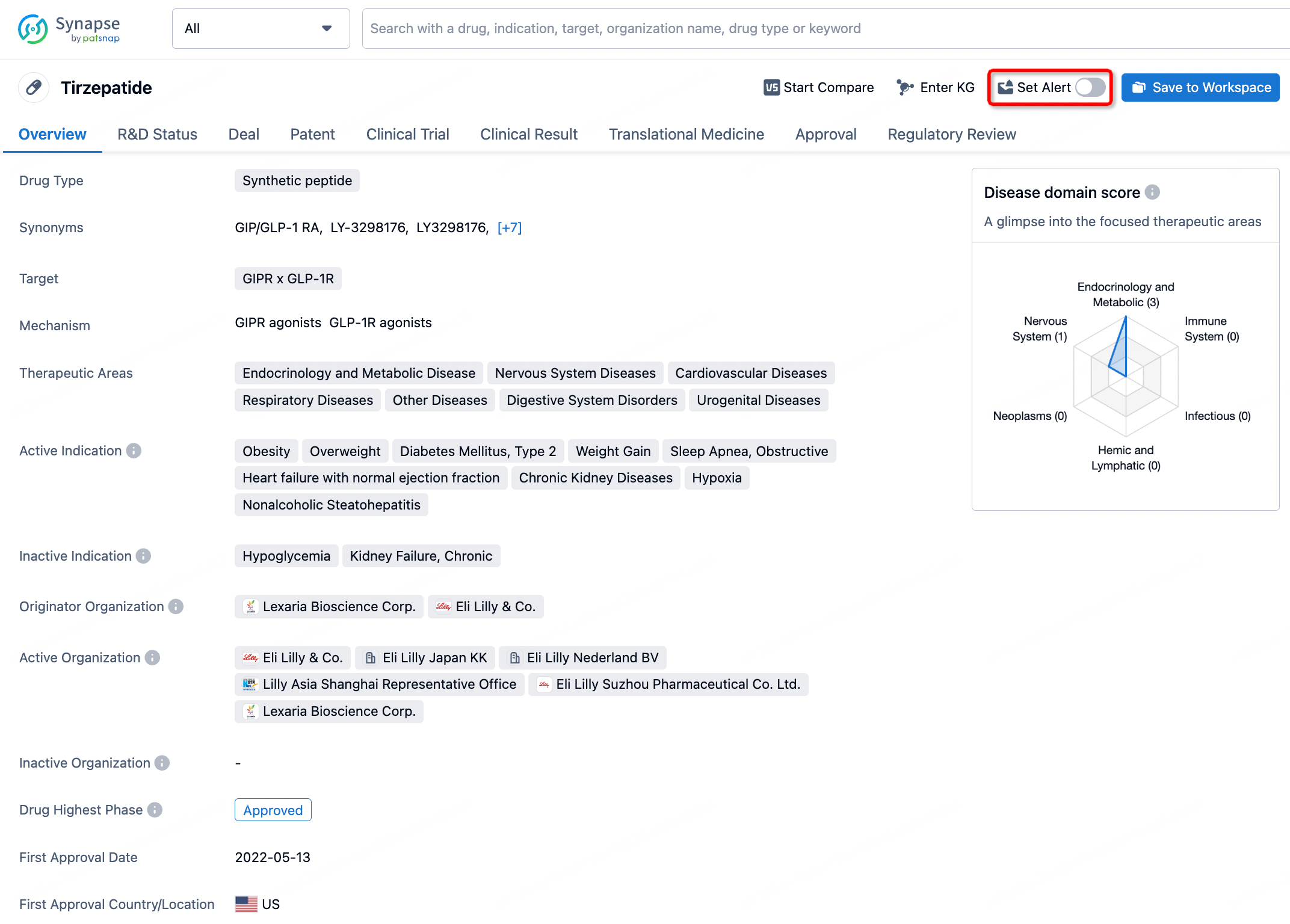
In the Synapse database, you can stay updated on the latest research and development advances of all drugs. This service is accessible anytime and anywhere, with updates available daily or weekly. Use the "Set Alert" function to stay informed. Click on the image below to embark on a brand new journey of drug discovery!

Hiro LS Researcher
The AI Search Engine Built to Accelerate Biopharma Decisions
Search across billion-scale life sciences data to uncover signals, validate evidence, and act with confidence.
Ask any biopharma research question→
Get started for free today!
Accelerate Strategic R&D decision making with Synapse, Patsnap’s AI-powered Connected Innovation Intelligence Platform Built for Life Sciences Professionals.
Discover Synapse Data Servers
Synapse data is now integrated into the PatSnap LS Model Context Protocol (MCP) service. Customize your LLM agent now using our MCP server!