Request Demo
What is Daratumumab used for?
14 June 2024
Daratumumab, marketed under trade names such as Darzalex and Darzalex Faspro, is a monoclonal antibody specifically designed to target CD38, a protein commonly found on the surface of multiple myeloma cells. Developed by Janssen Biotech in conjunction with Genmab, Daratumumab has ushered in a new era in the treatment of multiple myeloma—a type of cancer that affects plasma cells in the bone marrow. Initially approved by the FDA in 2015 as a monotherapy for patients who have received at least three prior lines of therapy, Daratumumab has since expanded its indications to include use in combination with other therapies. Clinical trials continue to explore its efficacy and safety in various combinations and stages of treatment, highlighting its transformative role in oncology.
Daratumumab operates through a multifaceted mechanism of action that exploits the overexpression of CD38 on multiple myeloma cells. CD38 is an enzyme involved in cellular adhesion, signal transduction, and calcium signaling, but its elevated levels on myeloma cells make it an excellent target for therapeutic intervention. Upon binding to CD38, Daratumumab induces cell death through several pathways. One primary mechanism is antibody-dependent cell-mediated cytotoxicity (ADCC), where immune cells such as natural killer cells recognize and destroy the tagged cancer cell. Another pathway involves complement-dependent cytotoxicity (CDC), where the complement system—a series of proteins in the blood—activates to kill the cancer cell. Additionally, Daratumumab can induce apoptosis directly, promoting programmed cell death in cancerous cells. This multifaceted approach enhances the drug's efficacy and helps to overcome resistance mechanisms that the tumor may employ.
Daratumumab is available in two primary forms: intravenous (IV) infusion and subcutaneous injection. The intravenous form, marketed as Darzalex, is typically administered in a clinical setting due to the time-intensive nature of infusion, which can take several hours. The subcutaneous form, Darzalex Faspro, offers a quicker administration time and is less invasive, making it more convenient for patients. The onset of action can vary; however, patients often start to notice symptom improvement within the first few weeks of therapy. The treatment schedule generally involves weekly administration for the initial cycles, followed by bi-weekly and eventually monthly maintenance dosing. The precise regimen may vary based on whether Daratumumab is used as a monotherapy or in combination with other drugs, as well as the specific treatment protocol prescribed by the healthcare provider.
Despite its efficacy, Daratumumab is not without side effects. Patients commonly experience infusion-related reactions, especially during the first administration. These reactions can include symptoms such as fever, chills, nausea, and shortness of breath. To mitigate these effects, premedications including corticosteroids, antihistamines, and antipyretics are often administered. Fatigue, anemia, and thrombocytopenia are other potential side effects, reflecting the drug's impact on bone marrow function. More severe but less common side effects can include severe allergic reactions, respiratory issues, and cardiac complications. Due to the risk of these adverse effects, Daratumumab is contraindicated in patients with severe hypersensitivity to the drug or any of its excipients. Monitoring and managing these side effects require close collaboration between the patient and their healthcare provider.
The potential interactions between Daratumumab and other drugs are an important consideration in treatment planning. Immunomodulatory drugs like lenalidomide and pomalidomide, as well as proteasome inhibitors like bortezomib, are often used in combination with Daratumumab to enhance therapeutic efficacy. However, caution is warranted when combining Daratumumab with these agents, as the risk of adverse effects may increase. For example, combining Daratumumab with chemotherapy can exacerbate bone marrow suppression, leading to increased rates of anemia, neutropenia, and thrombocytopenia. Furthermore, patients should avoid live vaccines during treatment, as Daratumumab can weaken the immune system, making them more susceptible to infections. The healthcare provider must review all medications the patient is taking, including over-the-counter drugs and supplements, to anticipate and manage any potential interactions.
In summary, Daratumumab has emerged as a cornerstone in the treatment of multiple myeloma, offering hope to patients with this challenging condition. Its unique mechanism of action, involving the targeting of CD38, has proven effective in killing myeloma cells through multiple pathways. While the drug is generally well-tolerated, it is not without side effects and potential drug interactions, necessitating careful monitoring and management. Ongoing research continues to explore its full potential, including its use in earlier stages of the disease and in combination with other therapies. As our understanding of multiple myeloma evolves, Daratumumab remains a pivotal player in improving patient outcomes.
Daratumumab operates through a multifaceted mechanism of action that exploits the overexpression of CD38 on multiple myeloma cells. CD38 is an enzyme involved in cellular adhesion, signal transduction, and calcium signaling, but its elevated levels on myeloma cells make it an excellent target for therapeutic intervention. Upon binding to CD38, Daratumumab induces cell death through several pathways. One primary mechanism is antibody-dependent cell-mediated cytotoxicity (ADCC), where immune cells such as natural killer cells recognize and destroy the tagged cancer cell. Another pathway involves complement-dependent cytotoxicity (CDC), where the complement system—a series of proteins in the blood—activates to kill the cancer cell. Additionally, Daratumumab can induce apoptosis directly, promoting programmed cell death in cancerous cells. This multifaceted approach enhances the drug's efficacy and helps to overcome resistance mechanisms that the tumor may employ.
Daratumumab is available in two primary forms: intravenous (IV) infusion and subcutaneous injection. The intravenous form, marketed as Darzalex, is typically administered in a clinical setting due to the time-intensive nature of infusion, which can take several hours. The subcutaneous form, Darzalex Faspro, offers a quicker administration time and is less invasive, making it more convenient for patients. The onset of action can vary; however, patients often start to notice symptom improvement within the first few weeks of therapy. The treatment schedule generally involves weekly administration for the initial cycles, followed by bi-weekly and eventually monthly maintenance dosing. The precise regimen may vary based on whether Daratumumab is used as a monotherapy or in combination with other drugs, as well as the specific treatment protocol prescribed by the healthcare provider.
Despite its efficacy, Daratumumab is not without side effects. Patients commonly experience infusion-related reactions, especially during the first administration. These reactions can include symptoms such as fever, chills, nausea, and shortness of breath. To mitigate these effects, premedications including corticosteroids, antihistamines, and antipyretics are often administered. Fatigue, anemia, and thrombocytopenia are other potential side effects, reflecting the drug's impact on bone marrow function. More severe but less common side effects can include severe allergic reactions, respiratory issues, and cardiac complications. Due to the risk of these adverse effects, Daratumumab is contraindicated in patients with severe hypersensitivity to the drug or any of its excipients. Monitoring and managing these side effects require close collaboration between the patient and their healthcare provider.
The potential interactions between Daratumumab and other drugs are an important consideration in treatment planning. Immunomodulatory drugs like lenalidomide and pomalidomide, as well as proteasome inhibitors like bortezomib, are often used in combination with Daratumumab to enhance therapeutic efficacy. However, caution is warranted when combining Daratumumab with these agents, as the risk of adverse effects may increase. For example, combining Daratumumab with chemotherapy can exacerbate bone marrow suppression, leading to increased rates of anemia, neutropenia, and thrombocytopenia. Furthermore, patients should avoid live vaccines during treatment, as Daratumumab can weaken the immune system, making them more susceptible to infections. The healthcare provider must review all medications the patient is taking, including over-the-counter drugs and supplements, to anticipate and manage any potential interactions.
In summary, Daratumumab has emerged as a cornerstone in the treatment of multiple myeloma, offering hope to patients with this challenging condition. Its unique mechanism of action, involving the targeting of CD38, has proven effective in killing myeloma cells through multiple pathways. While the drug is generally well-tolerated, it is not without side effects and potential drug interactions, necessitating careful monitoring and management. Ongoing research continues to explore its full potential, including its use in earlier stages of the disease and in combination with other therapies. As our understanding of multiple myeloma evolves, Daratumumab remains a pivotal player in improving patient outcomes.
How to obtain the latest development progress of all drugs?
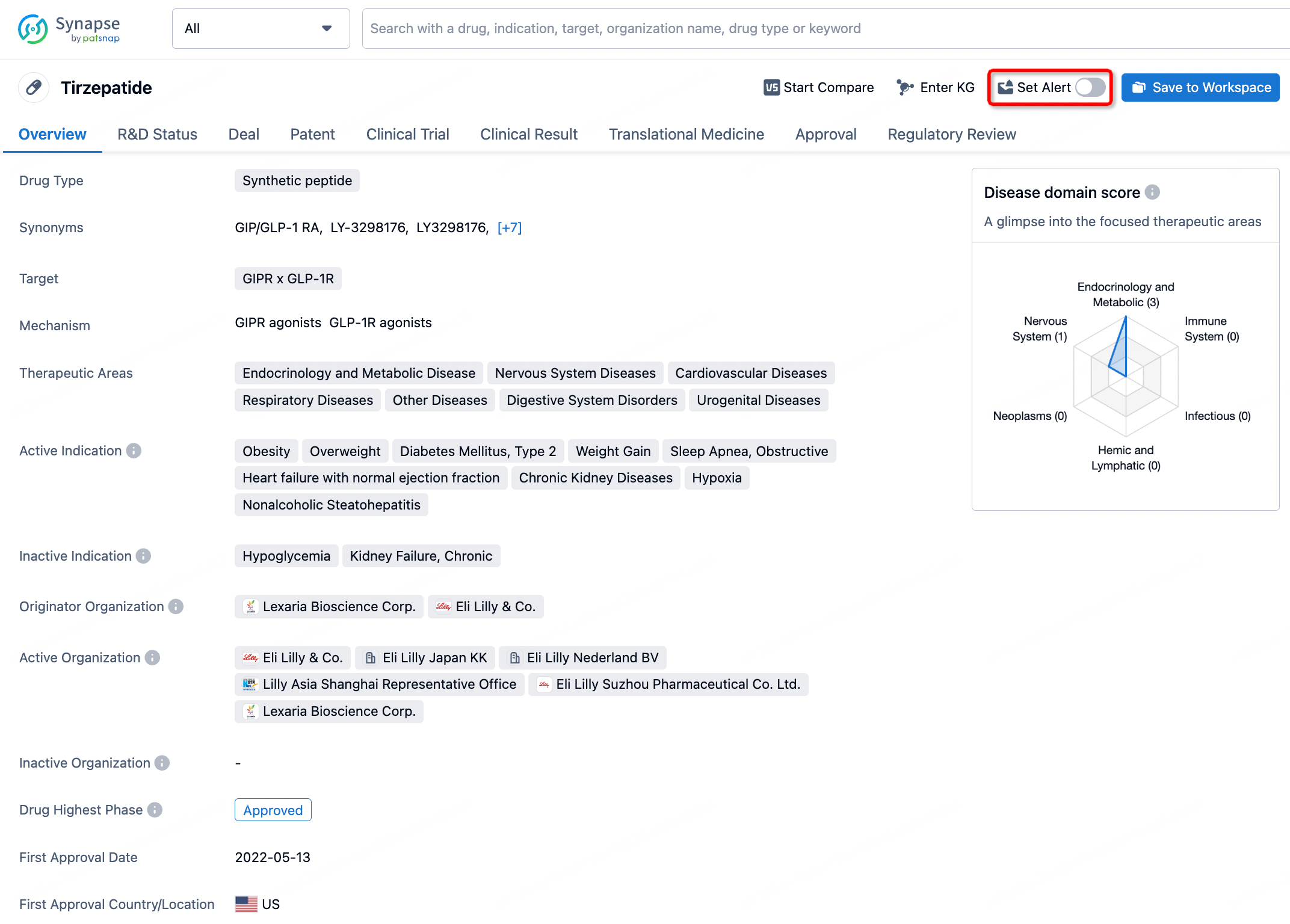
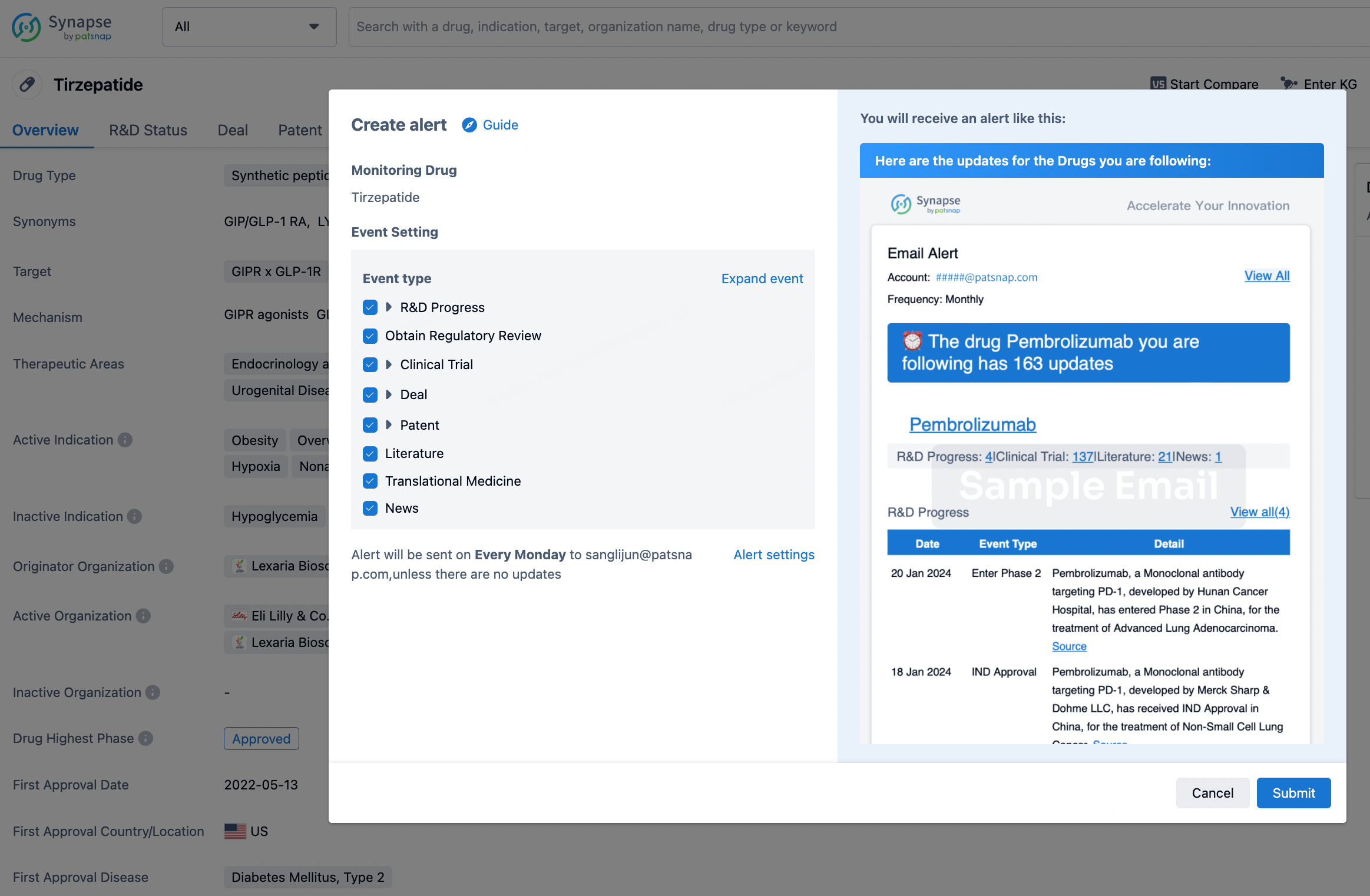
In the Synapse database, you can stay updated on the latest research and development advances of all drugs. This service is accessible anytime and anywhere, with updates available daily or weekly. Use the "Set Alert" function to stay informed. Click on the image below to embark on a brand new journey of drug discovery!

Hiro LS Researcher
The AI Search Engine Built to Accelerate Biopharma Decisions
Search across billion-scale life sciences data to uncover signals, validate evidence, and act with confidence.
Ask any biopharma research question→
Get started for free today!
Accelerate Strategic R&D decision making with Synapse, Patsnap’s AI-powered Connected Innovation Intelligence Platform Built for Life Sciences Professionals.
Discover Synapse Data Servers
Synapse data is now integrated into the PatSnap LS Model Context Protocol (MCP) service. Customize your LLM agent now using our MCP server!