Request Demo
What is JNJ-64400141 used for?
28 June 2024
In recent years, the pharmaceutical landscape has witnessed remarkable advancements in the development of novel therapeutics aimed at addressing some of the most challenging and debilitating diseases. One such promising candidate is JNJ-64400141, a drug that has captured the attention of researchers and clinicians alike for its potential to offer new treatment options. This blog post delves into the specifics of JNJ-64400141, including its mechanisms of action, indications, and the current state of research.
JNJ-64400141 is a cutting-edge investigational drug developed by Janssen Research & Development, a pharmaceutical company known for its pioneering work in the field of immunology, oncology, and infectious diseases. As part of the larger Johnson & Johnson family, Janssen has a robust pipeline of innovative therapies aimed at revolutionizing patient care. JNJ-64400141 is classified as a biologic, specifically a monoclonal antibody, designed to target and modulate specific pathways implicated in autoimmune disorders and inflammatory conditions.
The primary target of JNJ-64400141 is the cytokine interleukin-23 (IL-23), a critical player in the immune response. IL-23 is known to be involved in the pathogenesis of several chronic inflammatory diseases, including psoriasis, Crohn's disease, and ulcerative colitis. By specifically targeting the p19 subunit of IL-23, JNJ-64400141 aims to inhibit its activity, thereby reducing inflammation and ameliorating the symptoms associated with these conditions.
The mechanism of action of JNJ-64400141 revolves around its ability to selectively bind to the p19 subunit of IL-23. IL-23 is a heterodimeric cytokine composed of a p19 and a p40 subunit. The p19 subunit is unique to IL-23, distinguishing it from other cytokines such as IL-12, which shares the p40 subunit but has distinct roles in immune regulation. By binding to the p19 subunit, JNJ-64400141 effectively neutralizes IL-23's biological activity. This selective inhibition is critical because it allows for the targeted suppression of pathological inflammation without broadly compromising the immune system's ability to combat infections.
Upon binding to IL-23, JNJ-64400141 prevents the cytokine from interacting with its receptor on the surface of T cells and other immune cells. This blockade curtails the downstream signaling pathways that lead to the production of pro-inflammatory cytokines and the proliferation of Th17 cells, a subset of T cells implicated in autoimmunity. The overall result is a dampened inflammatory response, which can translate into clinical improvements for patients suffering from autoimmune and inflammatory conditions.
JNJ-64400141 is being investigated primarily for its potential to treat moderate to severe plaque psoriasis, a chronic skin condition characterized by red, scaly patches that can cause significant discomfort and distress. Psoriasis is driven by an overactive immune response, with IL-23 playing a pivotal role in sustaining the inflammatory cascade that leads to the formation of psoriatic lesions. By targeting IL-23, JNJ-64400141 offers a novel approach to mitigating the underlying immune dysfunction in psoriasis.
In addition to psoriasis, JNJ-64400141 is being explored for its efficacy in treating other IL-23-mediated disorders such as Crohn's disease and ulcerative colitis. Both conditions are forms of inflammatory bowel disease (IBD), where chronic inflammation of the gastrointestinal tract leads to a range of debilitating symptoms. Early clinical trials have shown promising results, highlighting the potential of JNJ-64400141 to offer relief to patients who may not respond adequately to existing treatments.
Currently, JNJ-64400141 is in the late stages of clinical development. Phase III clinical trials are underway to further evaluate its safety, efficacy, and long-term outcomes in patients with moderate to severe plaque psoriasis. Preliminary data from these studies have been encouraging, with many participants experiencing significant improvements in their symptoms and quality of life.
In conclusion, JNJ-64400141 represents a beacon of hope for individuals grappling with chronic inflammatory diseases. Its targeted mechanism of action, focusing on the inhibition of IL-23, sets it apart from other therapies and underscores its potential to offer meaningful clinical benefits. As research progresses, there is optimism that JNJ-64400141 will soon become a valuable addition to the therapeutic arsenal, providing new avenues for effective disease management and improved patient outcomes.
JNJ-64400141 is a cutting-edge investigational drug developed by Janssen Research & Development, a pharmaceutical company known for its pioneering work in the field of immunology, oncology, and infectious diseases. As part of the larger Johnson & Johnson family, Janssen has a robust pipeline of innovative therapies aimed at revolutionizing patient care. JNJ-64400141 is classified as a biologic, specifically a monoclonal antibody, designed to target and modulate specific pathways implicated in autoimmune disorders and inflammatory conditions.
The primary target of JNJ-64400141 is the cytokine interleukin-23 (IL-23), a critical player in the immune response. IL-23 is known to be involved in the pathogenesis of several chronic inflammatory diseases, including psoriasis, Crohn's disease, and ulcerative colitis. By specifically targeting the p19 subunit of IL-23, JNJ-64400141 aims to inhibit its activity, thereby reducing inflammation and ameliorating the symptoms associated with these conditions.
The mechanism of action of JNJ-64400141 revolves around its ability to selectively bind to the p19 subunit of IL-23. IL-23 is a heterodimeric cytokine composed of a p19 and a p40 subunit. The p19 subunit is unique to IL-23, distinguishing it from other cytokines such as IL-12, which shares the p40 subunit but has distinct roles in immune regulation. By binding to the p19 subunit, JNJ-64400141 effectively neutralizes IL-23's biological activity. This selective inhibition is critical because it allows for the targeted suppression of pathological inflammation without broadly compromising the immune system's ability to combat infections.
Upon binding to IL-23, JNJ-64400141 prevents the cytokine from interacting with its receptor on the surface of T cells and other immune cells. This blockade curtails the downstream signaling pathways that lead to the production of pro-inflammatory cytokines and the proliferation of Th17 cells, a subset of T cells implicated in autoimmunity. The overall result is a dampened inflammatory response, which can translate into clinical improvements for patients suffering from autoimmune and inflammatory conditions.
JNJ-64400141 is being investigated primarily for its potential to treat moderate to severe plaque psoriasis, a chronic skin condition characterized by red, scaly patches that can cause significant discomfort and distress. Psoriasis is driven by an overactive immune response, with IL-23 playing a pivotal role in sustaining the inflammatory cascade that leads to the formation of psoriatic lesions. By targeting IL-23, JNJ-64400141 offers a novel approach to mitigating the underlying immune dysfunction in psoriasis.
In addition to psoriasis, JNJ-64400141 is being explored for its efficacy in treating other IL-23-mediated disorders such as Crohn's disease and ulcerative colitis. Both conditions are forms of inflammatory bowel disease (IBD), where chronic inflammation of the gastrointestinal tract leads to a range of debilitating symptoms. Early clinical trials have shown promising results, highlighting the potential of JNJ-64400141 to offer relief to patients who may not respond adequately to existing treatments.
Currently, JNJ-64400141 is in the late stages of clinical development. Phase III clinical trials are underway to further evaluate its safety, efficacy, and long-term outcomes in patients with moderate to severe plaque psoriasis. Preliminary data from these studies have been encouraging, with many participants experiencing significant improvements in their symptoms and quality of life.
In conclusion, JNJ-64400141 represents a beacon of hope for individuals grappling with chronic inflammatory diseases. Its targeted mechanism of action, focusing on the inhibition of IL-23, sets it apart from other therapies and underscores its potential to offer meaningful clinical benefits. As research progresses, there is optimism that JNJ-64400141 will soon become a valuable addition to the therapeutic arsenal, providing new avenues for effective disease management and improved patient outcomes.
How to obtain the latest development progress of all drugs?
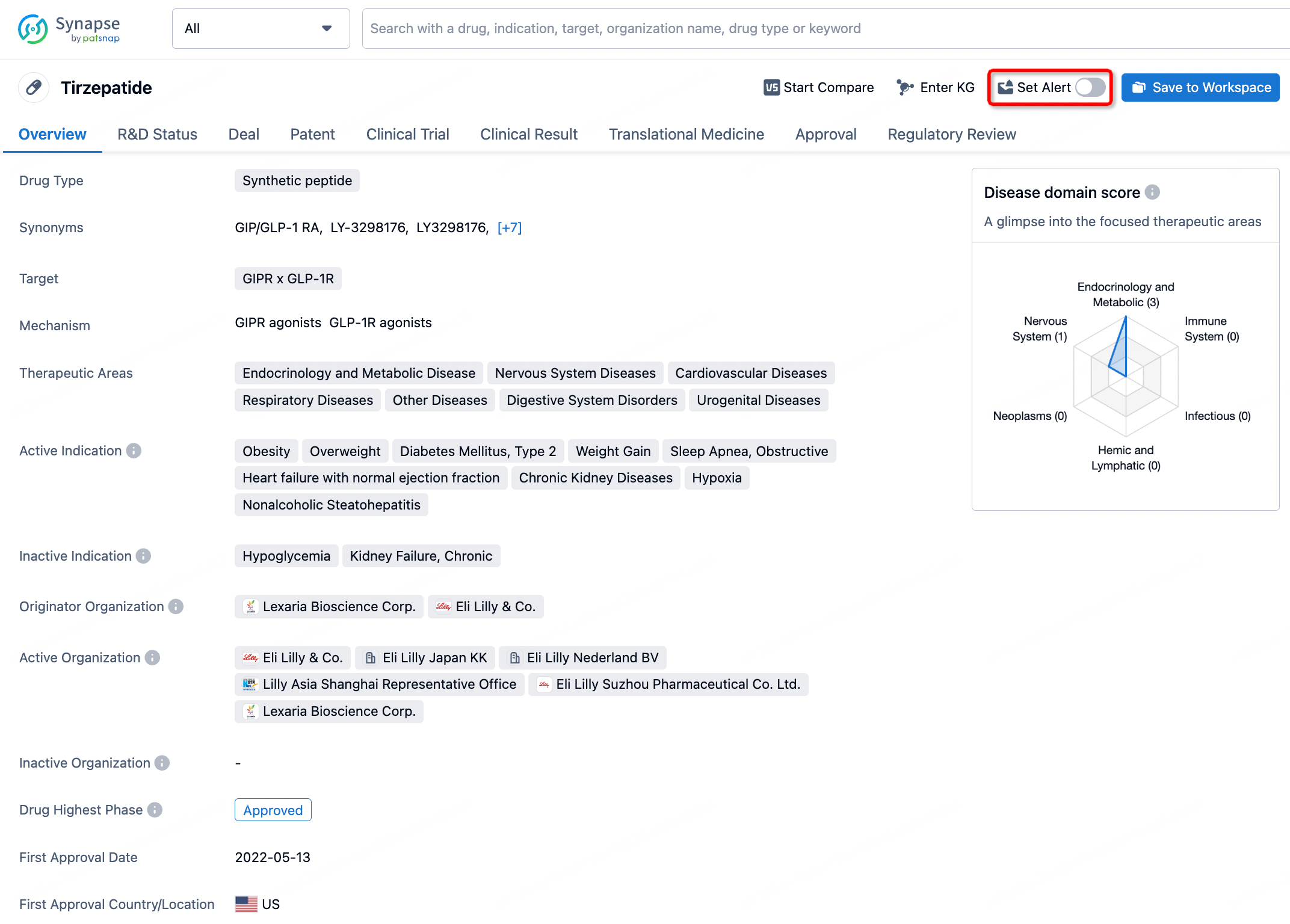
In the Synapse database, you can stay updated on the latest research and development advances of all drugs. This service is accessible anytime and anywhere, with updates available daily or weekly. Use the "Set Alert" function to stay informed. Click on the image below to embark on a brand new journey of drug discovery!


AI Agents Built for Biopharma Breakthroughs
Accelerate discovery. Empower decisions. Transform outcomes.
Get started for free today!
Accelerate Strategic R&D decision making with Synapse, PatSnap’s AI-powered Connected Innovation Intelligence Platform Built for Life Sciences Professionals.
Start your data trial now!
Synapse data is also accessible to external entities via APIs or data packages. Empower better decisions with the latest in pharmaceutical intelligence.