Request Demo
What is Siponimod Fumaric Acid used for?
14 June 2024
Siponimod Fumaric Acid is a groundbreaking medication that has garnered significant attention in the medical community, particularly in the treatment of multiple sclerosis (MS). Marketed under the trade name Mayzent, siponimod fumaric acid was developed by Novartis, a leading global healthcare company. The drug is primarily indicated for the treatment of relapsing forms of multiple sclerosis (RMS), including clinically isolated syndrome, relapsing-remitting disease, and active secondary progressive disease in adults. Siponimod is classified as a sphingosine-1-phosphate (S1P) receptor modulator, a type of drug that targets specific receptors on the surface of certain cells, affecting their movement and function.
Research into siponimod fumaric acid has shown promising results. The drug was approved by the U.S. Food and Drug Administration (FDA) in March 2019, following extensive clinical trials that demonstrated its efficacy and safety. These studies revealed that siponimod fumaric acid not only reduces the frequency of MS relapses but also slows the progression of physical disability associated with the disease. Understanding how siponimod fumaric acid works, how it is administered, and its potential side effects is crucial for healthcare providers and patients alike.
Siponimod fumaric acid works by selectively binding to specific S1P receptors, namely S1P1 and S1P5, on the surface of certain cells in the immune system. The S1P1 receptor is primarily found on lymphocytes, a type of white blood cell involved in the immune response. By binding to these receptors, siponimod modulates the movement of lymphocytes, preventing them from exiting lymph nodes and entering the central nervous system (CNS). This reduction in lymphocyte migration reduces the inflammatory response that can damage nerve cells in the CNS, which is a hallmark of multiple sclerosis.
In addition to its effects on the immune system, siponimod fumaric acid has been shown to have neuroprotective properties. The S1P5 receptor, found in the CNS, plays a role in the survival and function of oligodendrocytes, the cells responsible for producing myelin, the protective sheath around nerve fibers. By binding to these receptors, siponimod may help preserve myelin integrity and promote the repair of damaged nerve fibers, contributing to its overall therapeutic effect in MS.
Siponimod fumaric acid is administered orally in the form of tablets. The recommended starting dose is a titration schedule that gradually increases over six days to minimize the risk of adverse effects, particularly heart-related issues. On the first day, a patient takes 0.25 mg, followed by 0.5 mg on the second day, 0.75 mg on the third day, 1.25 mg on the fourth day, and finally 2 mg starting from the sixth day, which becomes the maintenance dose. It's crucial to follow this titration schedule carefully and not to skip doses, as missing doses during the titration phase may require restarting the entire schedule.
The onset of action for siponimod fumaric acid can vary from patient to patient. Some individuals may experience a reduction in MS relapse rate and progression of disability within a few months of starting treatment, while others may take longer to notice significant benefits. Regular monitoring by a healthcare provider is essential to assess the drug's effectiveness and make any necessary adjustments to the treatment plan.
As with any medication, siponimod fumaric acid can cause side effects, some of which are more common than others. The most frequently reported side effects include headaches, high blood pressure, and liver function abnormalities. Other potential adverse effects include infections, as siponimod can lower the number of lymphocytes in the bloodstream, making patients more susceptible to infections. Macular edema, a condition characterized by swelling in the retina, has also been reported, particularly in patients with a history of uveitis or diabetes.
Before starting siponimod fumaric acid, patients should undergo a thorough screening process, including tests for liver function, complete blood count, and an ophthalmologic examination to check for macular edema. It's also essential to assess cardiac function, as siponimod can cause a transient decrease in heart rate and may increase the risk of other heart-related issues, particularly in patients with a history of cardiovascular conditions.
There are several contraindications for using siponimod fumaric acid. Patients with a known hypersensitivity to siponimod or any of its components should not use the drug. Additionally, individuals with severe liver impairment, certain cardiac conditions (such as recent myocardial infarction, unstable angina, or severe untreated sleep apnea), or those who are pregnant or planning to become pregnant should avoid siponimod. Women of childbearing potential should use effective contraception during treatment and for at least ten days after discontinuation.
Various drugs can interact with siponimod fumaric acid, potentially altering its effectiveness or increasing the risk of adverse effects. For example, concurrent use of antiarrhythmic medications, beta-blockers, or calcium channel blockers can exacerbate the heart rate-lowering effects of siponimod. Immunosuppressive or immune-modulating therapies, such as corticosteroids or other disease-modifying treatments for MS, may increase the risk of infections when used in combination with siponimod.
Furthermore, drugs that affect liver enzymes, particularly cytochrome P450 2C9 (CYP2C9) and cytochrome P450 3A4 (CYP3A4), can influence the metabolism of siponimod. For instance, strong CYP2C9 inhibitors like fluconazole or moderate CYP3A4 inhibitors like erythromycin can increase siponimod levels in the blood, potentially leading to enhanced drug effects and side effects. Conversely, strong CYP3A4 inducers like rifampin can decrease siponimod levels, reducing its efficacy. Therefore, it's crucial for patients to inform their healthcare providers about all medications, supplements, and herbal products they are taking to avoid harmful interactions.
Siponimod fumaric acid represents a significant advancement in the treatment of relapsing forms of multiple sclerosis, offering hope to many patients struggling with this debilitating disease. Its unique mechanism of action, combined with careful administration and monitoring, can lead to improved outcomes and a better quality of life for those affected by MS. As with any medication, understanding the potential side effects, contraindications, and drug interactions is essential for maximizing the benefits and minimizing the risks associated with siponimod fumaric acid.
Research into siponimod fumaric acid has shown promising results. The drug was approved by the U.S. Food and Drug Administration (FDA) in March 2019, following extensive clinical trials that demonstrated its efficacy and safety. These studies revealed that siponimod fumaric acid not only reduces the frequency of MS relapses but also slows the progression of physical disability associated with the disease. Understanding how siponimod fumaric acid works, how it is administered, and its potential side effects is crucial for healthcare providers and patients alike.
Siponimod fumaric acid works by selectively binding to specific S1P receptors, namely S1P1 and S1P5, on the surface of certain cells in the immune system. The S1P1 receptor is primarily found on lymphocytes, a type of white blood cell involved in the immune response. By binding to these receptors, siponimod modulates the movement of lymphocytes, preventing them from exiting lymph nodes and entering the central nervous system (CNS). This reduction in lymphocyte migration reduces the inflammatory response that can damage nerve cells in the CNS, which is a hallmark of multiple sclerosis.
In addition to its effects on the immune system, siponimod fumaric acid has been shown to have neuroprotective properties. The S1P5 receptor, found in the CNS, plays a role in the survival and function of oligodendrocytes, the cells responsible for producing myelin, the protective sheath around nerve fibers. By binding to these receptors, siponimod may help preserve myelin integrity and promote the repair of damaged nerve fibers, contributing to its overall therapeutic effect in MS.
Siponimod fumaric acid is administered orally in the form of tablets. The recommended starting dose is a titration schedule that gradually increases over six days to minimize the risk of adverse effects, particularly heart-related issues. On the first day, a patient takes 0.25 mg, followed by 0.5 mg on the second day, 0.75 mg on the third day, 1.25 mg on the fourth day, and finally 2 mg starting from the sixth day, which becomes the maintenance dose. It's crucial to follow this titration schedule carefully and not to skip doses, as missing doses during the titration phase may require restarting the entire schedule.
The onset of action for siponimod fumaric acid can vary from patient to patient. Some individuals may experience a reduction in MS relapse rate and progression of disability within a few months of starting treatment, while others may take longer to notice significant benefits. Regular monitoring by a healthcare provider is essential to assess the drug's effectiveness and make any necessary adjustments to the treatment plan.
As with any medication, siponimod fumaric acid can cause side effects, some of which are more common than others. The most frequently reported side effects include headaches, high blood pressure, and liver function abnormalities. Other potential adverse effects include infections, as siponimod can lower the number of lymphocytes in the bloodstream, making patients more susceptible to infections. Macular edema, a condition characterized by swelling in the retina, has also been reported, particularly in patients with a history of uveitis or diabetes.
Before starting siponimod fumaric acid, patients should undergo a thorough screening process, including tests for liver function, complete blood count, and an ophthalmologic examination to check for macular edema. It's also essential to assess cardiac function, as siponimod can cause a transient decrease in heart rate and may increase the risk of other heart-related issues, particularly in patients with a history of cardiovascular conditions.
There are several contraindications for using siponimod fumaric acid. Patients with a known hypersensitivity to siponimod or any of its components should not use the drug. Additionally, individuals with severe liver impairment, certain cardiac conditions (such as recent myocardial infarction, unstable angina, or severe untreated sleep apnea), or those who are pregnant or planning to become pregnant should avoid siponimod. Women of childbearing potential should use effective contraception during treatment and for at least ten days after discontinuation.
Various drugs can interact with siponimod fumaric acid, potentially altering its effectiveness or increasing the risk of adverse effects. For example, concurrent use of antiarrhythmic medications, beta-blockers, or calcium channel blockers can exacerbate the heart rate-lowering effects of siponimod. Immunosuppressive or immune-modulating therapies, such as corticosteroids or other disease-modifying treatments for MS, may increase the risk of infections when used in combination with siponimod.
Furthermore, drugs that affect liver enzymes, particularly cytochrome P450 2C9 (CYP2C9) and cytochrome P450 3A4 (CYP3A4), can influence the metabolism of siponimod. For instance, strong CYP2C9 inhibitors like fluconazole or moderate CYP3A4 inhibitors like erythromycin can increase siponimod levels in the blood, potentially leading to enhanced drug effects and side effects. Conversely, strong CYP3A4 inducers like rifampin can decrease siponimod levels, reducing its efficacy. Therefore, it's crucial for patients to inform their healthcare providers about all medications, supplements, and herbal products they are taking to avoid harmful interactions.
Siponimod fumaric acid represents a significant advancement in the treatment of relapsing forms of multiple sclerosis, offering hope to many patients struggling with this debilitating disease. Its unique mechanism of action, combined with careful administration and monitoring, can lead to improved outcomes and a better quality of life for those affected by MS. As with any medication, understanding the potential side effects, contraindications, and drug interactions is essential for maximizing the benefits and minimizing the risks associated with siponimod fumaric acid.
How to obtain the latest development progress of all drugs?
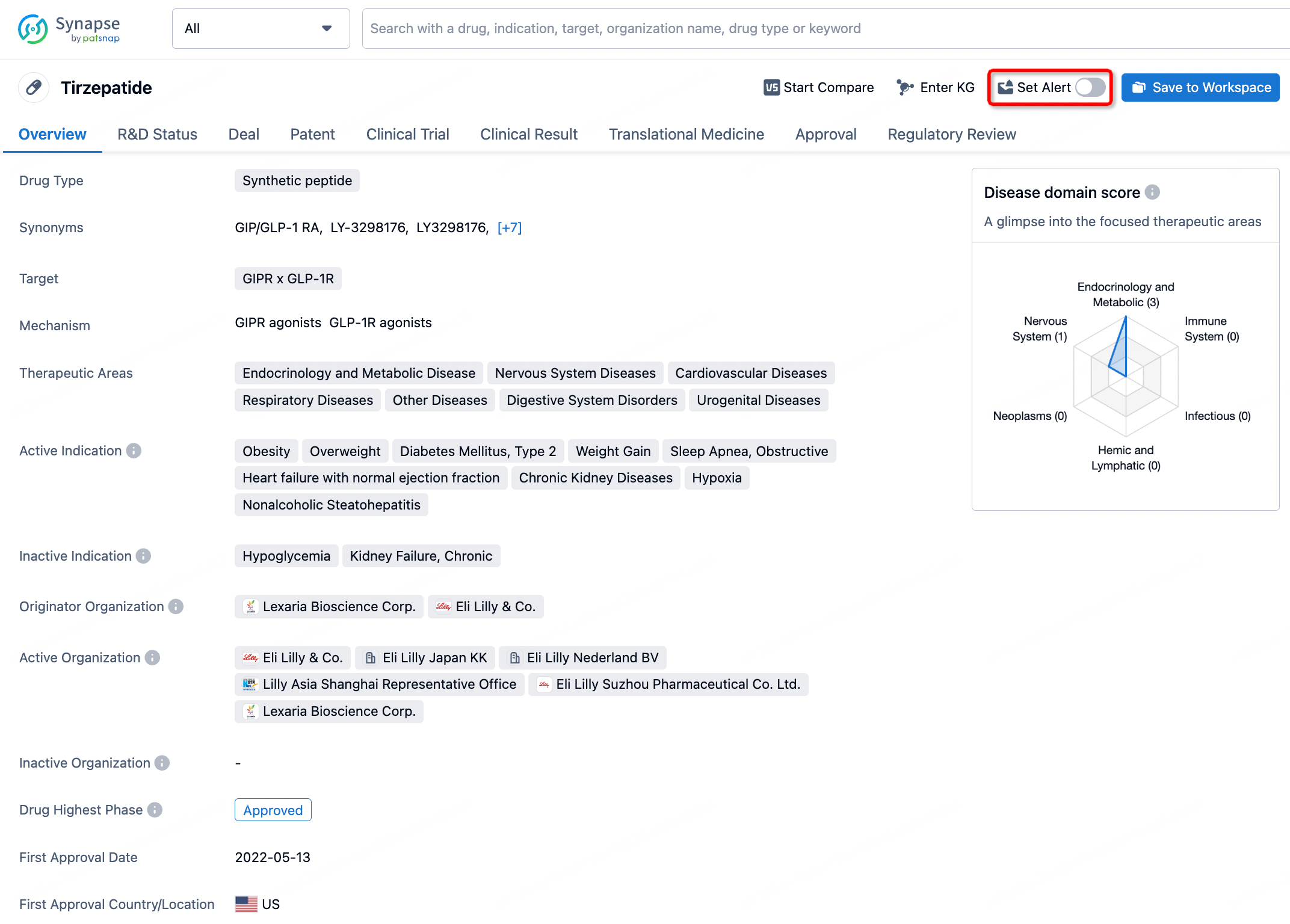
In the Synapse database, you can stay updated on the latest research and development advances of all drugs. This service is accessible anytime and anywhere, with updates available daily or weekly. Use the "Set Alert" function to stay informed. Click on the image below to embark on a brand new journey of drug discovery!


AI Agents Built for Biopharma Breakthroughs
Accelerate discovery. Empower decisions. Transform outcomes.
Get started for free today!
Accelerate Strategic R&D decision making with Synapse, PatSnap’s AI-powered Connected Innovation Intelligence Platform Built for Life Sciences Professionals.
Start your data trial now!
Synapse data is also accessible to external entities via APIs or data packages. Empower better decisions with the latest in pharmaceutical intelligence.