Request Demo
What is Tecovirimat used for?
14 June 2024
Tecovirimat, also known by its trade name TPOXX, is a groundbreaking antiviral medication that has garnered substantial attention in the field of infectious diseases. Developed primarily by SIGA Technologies, Tecovirimat is the first antiviral drug approved by the U.S. Food and Drug Administration (FDA) specifically for the treatment of smallpox. It holds the distinction of being a unique therapeutic option in a world where smallpox was declared eradicated in 1980 but remains a potential threat due to bioterrorism concerns. Additionally, Tecovirimat shows promise in treating other orthopoxvirus infections, including monkeypox, cowpox, and vaccinia virus infections. The drug represents a significant milestone in antiviral research and continues to be the subject of ongoing investigations aimed at expanding its therapeutic applications and understanding its full potential.
Tecovirimat works by targeting a specific protein in the orthopoxvirus family, known as p37. This protein plays a crucial role in the formation of enveloped virions, which are essential for the virus to spread within the host. By inhibiting the p37 protein, Tecovirimat prevents the formation of these enveloped virions, effectively halting the virus's ability to propagate and infect new cells. This mechanism of action is distinct from other antiviral drugs, which often target viral DNA replication or entry into host cells. The specificity of Tecovirimat's action on the p37 protein not only makes it highly effective against orthopoxviruses but also minimizes the likelihood of off-target effects, making it a more precise and safer option for patients.
Tecovirimat is administered orally in the form of capsules, typically taken with food to enhance absorption. The recommended dosage for adults is 600 mg (three 200 mg capsules) taken twice daily for 14 days. For pediatric patients weighing at least 13 kg, the dosage is adjusted based on body weight. The drug is also available in an intravenous formulation for patients who are unable to take it orally, though this route is less commonly used. The onset of action for Tecovirimat is relatively rapid, with measurable antiviral effects observed within hours of administration. However, the full therapeutic benefit is generally achieved over the course of the 14-day treatment regimen. It is crucial for patients to complete the entire course of therapy to ensure the maximum antiviral effect and reduce the risk of potential resistance.
Like all medications, Tecovirimat is associated with certain side effects and contraindications. Common side effects include headache, nausea, abdominal pain, and diarrhea. These side effects are generally mild and self-limiting, resolving on their own without the need for additional medical intervention. However, more serious side effects, though rare, can occur, such as hypersensitivity reactions manifesting as rash, itching, or difficulty breathing. Patients with a known hypersensitivity to Tecovirimat or any of its components should avoid using the drug. In addition, caution is advised when prescribing Tecovirimat to pregnant or breastfeeding women, as the safety of the drug in these populations has not been fully established. It is essential for healthcare providers to conduct a thorough medical history and assess potential risks before initiating therapy with Tecovirimat.
Drug interactions are an important consideration when prescribing Tecovirimat, as they can affect the drug's efficacy and safety profile. Tecovirimat is primarily metabolized by the liver enzyme CYP3A4, and co-administration with drugs that induce or inhibit this enzyme can alter Tecovirimat's plasma concentrations. For example, co-administration with strong CYP3A4 inhibitors, such as ketoconazole or ritonavir, can increase Tecovirimat levels, potentially leading to enhanced side effects. Conversely, co-administration with strong CYP3A4 inducers, such as rifampin or phenytoin, can decrease Tecovirimat levels, reducing its antiviral efficacy. Patients should inform their healthcare providers of all medications they are currently taking, including over-the-counter drugs and herbal supplements, to allow for appropriate adjustments and monitoring. Additionally, Tecovirimat has been shown to have minimal interaction with oral contraceptives, which is an important consideration for women of childbearing age.
In conclusion, Tecovirimat represents a significant advancement in the field of antiviral therapy, offering a targeted and effective treatment option for orthopoxvirus infections. Its unique mechanism of action, favorable safety profile, and potential for use in a variety of clinical scenarios make it a valuable asset in the fight against viral diseases. Ongoing research and clinical trials will continue to shed light on Tecovirimat's full capabilities and help refine its use in clinical practice. As our understanding of this innovative drug deepens, it holds the promise of enhancing our preparedness against both naturally occurring and bioterrorism-related viral threats, ultimately improving public health outcomes.
Tecovirimat works by targeting a specific protein in the orthopoxvirus family, known as p37. This protein plays a crucial role in the formation of enveloped virions, which are essential for the virus to spread within the host. By inhibiting the p37 protein, Tecovirimat prevents the formation of these enveloped virions, effectively halting the virus's ability to propagate and infect new cells. This mechanism of action is distinct from other antiviral drugs, which often target viral DNA replication or entry into host cells. The specificity of Tecovirimat's action on the p37 protein not only makes it highly effective against orthopoxviruses but also minimizes the likelihood of off-target effects, making it a more precise and safer option for patients.
Tecovirimat is administered orally in the form of capsules, typically taken with food to enhance absorption. The recommended dosage for adults is 600 mg (three 200 mg capsules) taken twice daily for 14 days. For pediatric patients weighing at least 13 kg, the dosage is adjusted based on body weight. The drug is also available in an intravenous formulation for patients who are unable to take it orally, though this route is less commonly used. The onset of action for Tecovirimat is relatively rapid, with measurable antiviral effects observed within hours of administration. However, the full therapeutic benefit is generally achieved over the course of the 14-day treatment regimen. It is crucial for patients to complete the entire course of therapy to ensure the maximum antiviral effect and reduce the risk of potential resistance.
Like all medications, Tecovirimat is associated with certain side effects and contraindications. Common side effects include headache, nausea, abdominal pain, and diarrhea. These side effects are generally mild and self-limiting, resolving on their own without the need for additional medical intervention. However, more serious side effects, though rare, can occur, such as hypersensitivity reactions manifesting as rash, itching, or difficulty breathing. Patients with a known hypersensitivity to Tecovirimat or any of its components should avoid using the drug. In addition, caution is advised when prescribing Tecovirimat to pregnant or breastfeeding women, as the safety of the drug in these populations has not been fully established. It is essential for healthcare providers to conduct a thorough medical history and assess potential risks before initiating therapy with Tecovirimat.
Drug interactions are an important consideration when prescribing Tecovirimat, as they can affect the drug's efficacy and safety profile. Tecovirimat is primarily metabolized by the liver enzyme CYP3A4, and co-administration with drugs that induce or inhibit this enzyme can alter Tecovirimat's plasma concentrations. For example, co-administration with strong CYP3A4 inhibitors, such as ketoconazole or ritonavir, can increase Tecovirimat levels, potentially leading to enhanced side effects. Conversely, co-administration with strong CYP3A4 inducers, such as rifampin or phenytoin, can decrease Tecovirimat levels, reducing its antiviral efficacy. Patients should inform their healthcare providers of all medications they are currently taking, including over-the-counter drugs and herbal supplements, to allow for appropriate adjustments and monitoring. Additionally, Tecovirimat has been shown to have minimal interaction with oral contraceptives, which is an important consideration for women of childbearing age.
In conclusion, Tecovirimat represents a significant advancement in the field of antiviral therapy, offering a targeted and effective treatment option for orthopoxvirus infections. Its unique mechanism of action, favorable safety profile, and potential for use in a variety of clinical scenarios make it a valuable asset in the fight against viral diseases. Ongoing research and clinical trials will continue to shed light on Tecovirimat's full capabilities and help refine its use in clinical practice. As our understanding of this innovative drug deepens, it holds the promise of enhancing our preparedness against both naturally occurring and bioterrorism-related viral threats, ultimately improving public health outcomes.
How to obtain the latest development progress of all drugs?
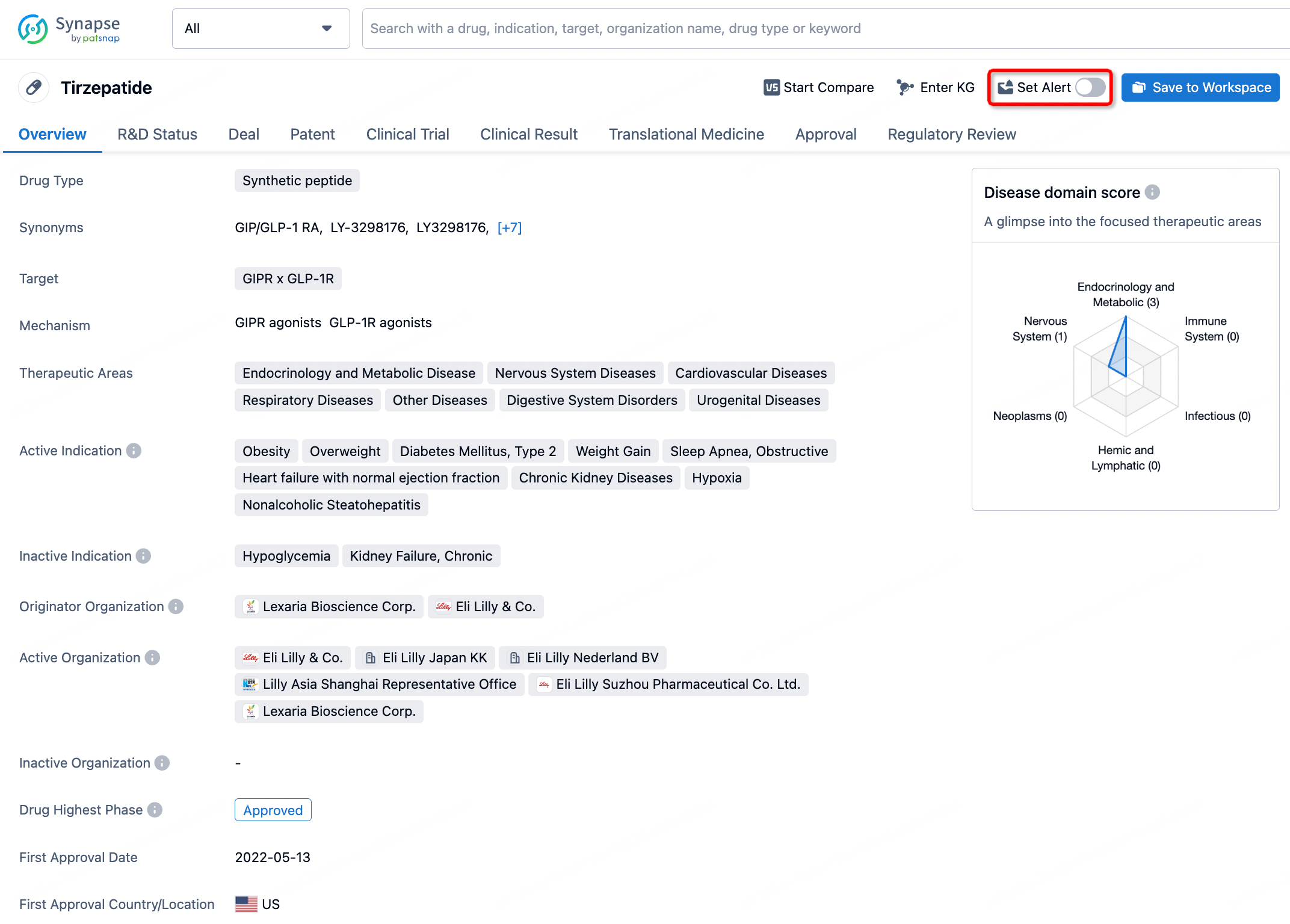
In the Synapse database, you can stay updated on the latest research and development advances of all drugs. This service is accessible anytime and anywhere, with updates available daily or weekly. Use the "Set Alert" function to stay informed. Click on the image below to embark on a brand new journey of drug discovery!


Hiro LS Researcher
The AI Search Engine Built to Accelerate Biopharma Decisions
Search across billion-scale life sciences data to uncover signals, validate evidence, and act with confidence.
Ask any biopharma research question→
Get started for free today!
Accelerate Strategic R&D decision making with Synapse, Patsnap’s AI-powered Connected Innovation Intelligence Platform Built for Life Sciences Professionals.
Discover Synapse Data Servers
Synapse data is now integrated into the PatSnap LS Model Context Protocol (MCP) service. Customize your LLM agent now using our MCP server!