Request Demo
What is the mechanism of Cetrorelix?
17 July 2024
Cetrorelix is a synthetic decapeptide that functions as a potent antagonist of gonadotropin-releasing hormone (GnRH). Understanding the mechanism of Cetrorelix requires delving into its interaction with the reproductive hormone axis, particularly its role in inhibiting the secretion of gonadotropins, luteinizing hormone (LH), and follicle-stimulating hormone (FSH).
The reproductive hormone axis starts with the hypothalamus, which secretes GnRH in a pulsatile manner. GnRH then binds to receptors on the anterior pituitary gland, stimulating the release of LH and FSH. These gonadotropins are crucial for regulating reproductive processes. LH stimulates the production of sex steroids from the gonads, such as testosterone in males and estrogen and progesterone in females. FSH is vital for the maturation of ovarian follicles in females and spermatogenesis in males.
Cetrorelix operates by competitively binding to GnRH receptors on the pituitary gland without activating them. This blockade prevents the natural GnRH from binding to its receptors, thereby inhibiting the downstream release of LH and FSH. By curbing the secretion of these hormones, Cetrorelix effectively reduces the stimulation of the gonads.
This mechanism is particularly beneficial in clinical settings where it is necessary to control and manipulate the body's natural hormonal cycles. One of the most common applications of Cetrorelix is in assisted reproductive technologies (ART), such as in vitro fertilization (IVF). During IVF treatments, it is crucial to prevent premature ovulation to ensure the retrieval of mature oocytes. By inhibiting the LH surge with Cetrorelix, clinicians can better control the timing of ovulation, thereby optimizing the chances of successful egg retrieval and fertilization.
Another application of Cetrorelix is in the treatment of hormone-sensitive cancers, such as prostate cancer. In prostate cancer, androgenic stimulation can fuel tumor growth. By suppressing LH, Cetrorelix reduces testosterone production, leading to decreased stimulation of cancer cells and potentially slowing disease progression.
In summary, Cetrorelix acts by binding to GnRH receptors in the anterior pituitary gland, thereby inhibiting the release of LH and FSH. This suppression of gonadotropins is utilized in various medical applications, including controlled ovarian hyperstimulation in ART and the management of hormone-sensitive cancers. Understanding the mechanism of Cetrorelix provides insight into its therapeutic potential and the critical role it plays in manipulating the body's hormonal environment for clinical benefit.
The reproductive hormone axis starts with the hypothalamus, which secretes GnRH in a pulsatile manner. GnRH then binds to receptors on the anterior pituitary gland, stimulating the release of LH and FSH. These gonadotropins are crucial for regulating reproductive processes. LH stimulates the production of sex steroids from the gonads, such as testosterone in males and estrogen and progesterone in females. FSH is vital for the maturation of ovarian follicles in females and spermatogenesis in males.
Cetrorelix operates by competitively binding to GnRH receptors on the pituitary gland without activating them. This blockade prevents the natural GnRH from binding to its receptors, thereby inhibiting the downstream release of LH and FSH. By curbing the secretion of these hormones, Cetrorelix effectively reduces the stimulation of the gonads.
This mechanism is particularly beneficial in clinical settings where it is necessary to control and manipulate the body's natural hormonal cycles. One of the most common applications of Cetrorelix is in assisted reproductive technologies (ART), such as in vitro fertilization (IVF). During IVF treatments, it is crucial to prevent premature ovulation to ensure the retrieval of mature oocytes. By inhibiting the LH surge with Cetrorelix, clinicians can better control the timing of ovulation, thereby optimizing the chances of successful egg retrieval and fertilization.
Another application of Cetrorelix is in the treatment of hormone-sensitive cancers, such as prostate cancer. In prostate cancer, androgenic stimulation can fuel tumor growth. By suppressing LH, Cetrorelix reduces testosterone production, leading to decreased stimulation of cancer cells and potentially slowing disease progression.
In summary, Cetrorelix acts by binding to GnRH receptors in the anterior pituitary gland, thereby inhibiting the release of LH and FSH. This suppression of gonadotropins is utilized in various medical applications, including controlled ovarian hyperstimulation in ART and the management of hormone-sensitive cancers. Understanding the mechanism of Cetrorelix provides insight into its therapeutic potential and the critical role it plays in manipulating the body's hormonal environment for clinical benefit.
How to obtain the latest development progress of all drugs?
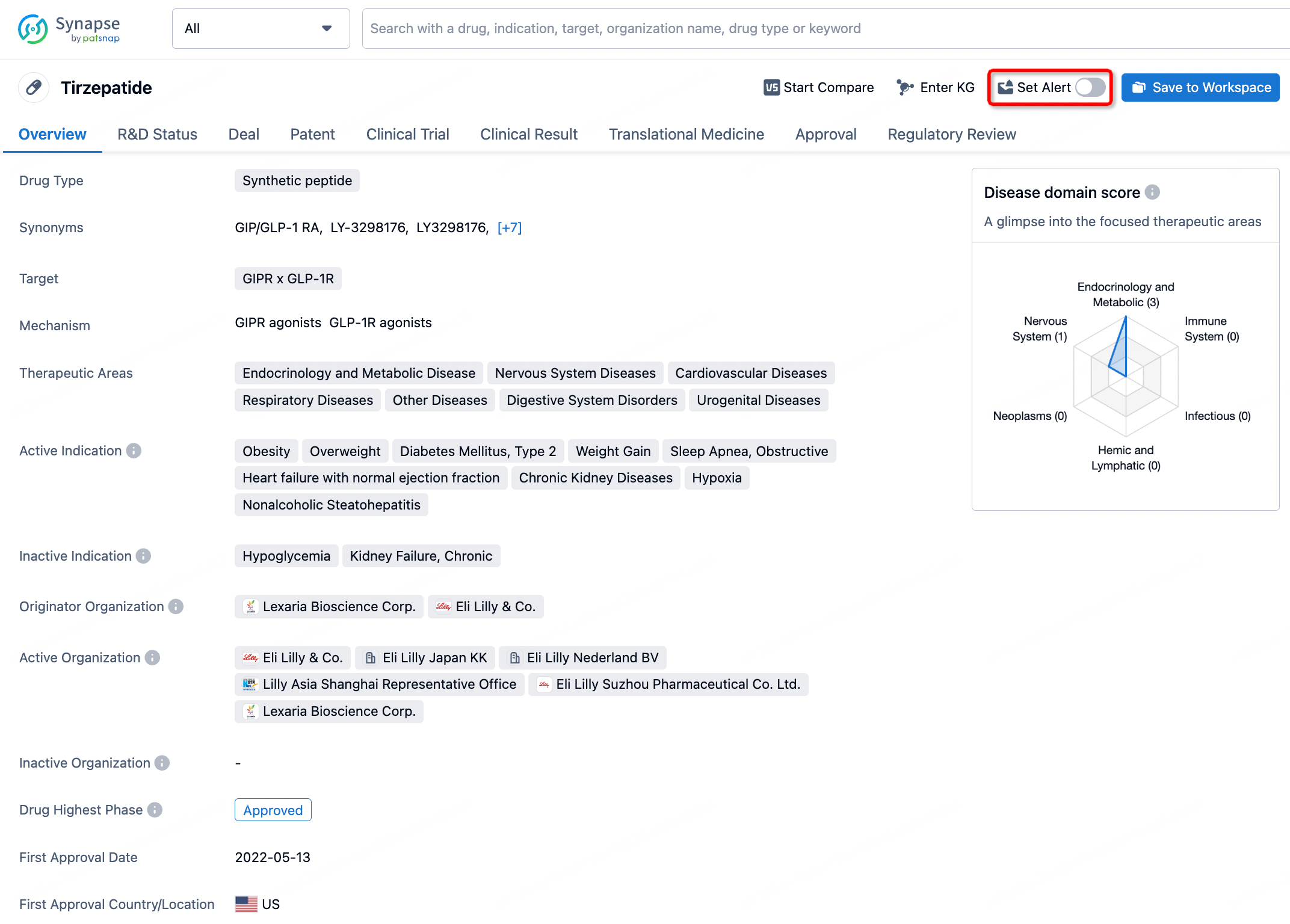
In the Synapse database, you can stay updated on the latest research and development advances of all drugs. This service is accessible anytime and anywhere, with updates available daily or weekly. Use the "Set Alert" function to stay informed. Click on the image below to embark on a brand new journey of drug discovery!


AI Agents Built for Biopharma Breakthroughs
Accelerate discovery. Empower decisions. Transform outcomes.
Get started for free today!
Accelerate Strategic R&D decision making with Synapse, PatSnap’s AI-powered Connected Innovation Intelligence Platform Built for Life Sciences Professionals.
Start your data trial now!
Synapse data is also accessible to external entities via APIs or data packages. Empower better decisions with the latest in pharmaceutical intelligence.