Request Demo
What is the mechanism of Daclizumab?
17 July 2024
Daclizumab is a humanized monoclonal antibody that functions as an immunosuppressive agent primarily used in the treatment of certain autoimmune diseases and to prevent organ transplant rejection. The drug operates through a specific mechanism targeting the interleukin-2 (IL-2) receptor pathway, which plays a crucial role in the activation and proliferation of T-cells. Understanding the exact mechanism of daclizumab can provide insights into its therapeutic effects and clinical applications.
Daclizumab specifically binds to the alpha subunit (CD25) of the high-affinity IL-2 receptor complex found on the surface of activated T-cells. IL-2 is a cytokine that is pivotal to the growth, proliferation, and differentiation of T-cells. When IL-2 binds to its receptor on T-cells, it initiates a cascade of intracellular signaling that promotes T-cell proliferation and survival. By targeting CD25, daclizumab effectively inhibits the IL-2/IL-2 receptor interaction, thereby preventing the activation and expansion of T-cells.
The inhibition of the IL-2 receptor by daclizumab results in a reduction of T-cell proliferation. This is particularly beneficial in conditions characterized by excessive or inappropriate T-cell activity, such as multiple sclerosis (MS) and in the context of organ transplantation where the immune system may attack the transplanted organ. By dampening the T-cell response, daclizumab helps to control the inflammatory processes that underlie these conditions.
Additionally, daclizumab has been shown to modulate other components of the immune system. For instance, it can increase the number of regulatory T-cells (Tregs), which are crucial for maintaining immune tolerance and preventing autoimmune responses. This increase in Tregs contributes to the overall immunosuppressive effect of daclizumab, enhancing its therapeutic efficacy.
Moreover, daclizumab has the ability to deplete IL-2 receptor-expressing activated T-cells through antibody-dependent cell-mediated cytotoxicity (ADCC). In this process, the Fc region of daclizumab interacts with Fc receptors on natural killer (NK) cells, leading to the targeted destruction of activated T-cells. This further reduces the pool of pathogenic T-cells, contributing to the drug’s immunosuppressive properties.
In clinical practice, daclizumab has been employed in the treatment of relapsing forms of multiple sclerosis, where it helps to reduce the frequency of clinical exacerbations and delay the progression of physical disability. Its use in organ transplantation is aimed at reducing the risk of acute rejection by suppressing the immune response to the transplanted organ.
Despite its efficacy, the use of daclizumab can be associated with certain adverse effects, primarily related to its immunosuppressive action. Potential side effects include an increased risk of infections, liver dysfunction, and hypersensitivity reactions. As with any immunosuppressive therapy, careful monitoring and management of these risks are essential to ensure patient safety.
In conclusion, daclizumab’s mechanism of action is centered on its ability to inhibit the IL-2 receptor on activated T-cells, thereby reducing T-cell proliferation and modulating the immune response. By targeting a critical pathway in T-cell activation, daclizumab offers therapeutic benefits in autoimmune diseases like multiple sclerosis and in preventing organ transplant rejection, although its use requires careful consideration of potential adverse effects.
Daclizumab specifically binds to the alpha subunit (CD25) of the high-affinity IL-2 receptor complex found on the surface of activated T-cells. IL-2 is a cytokine that is pivotal to the growth, proliferation, and differentiation of T-cells. When IL-2 binds to its receptor on T-cells, it initiates a cascade of intracellular signaling that promotes T-cell proliferation and survival. By targeting CD25, daclizumab effectively inhibits the IL-2/IL-2 receptor interaction, thereby preventing the activation and expansion of T-cells.
The inhibition of the IL-2 receptor by daclizumab results in a reduction of T-cell proliferation. This is particularly beneficial in conditions characterized by excessive or inappropriate T-cell activity, such as multiple sclerosis (MS) and in the context of organ transplantation where the immune system may attack the transplanted organ. By dampening the T-cell response, daclizumab helps to control the inflammatory processes that underlie these conditions.
Additionally, daclizumab has been shown to modulate other components of the immune system. For instance, it can increase the number of regulatory T-cells (Tregs), which are crucial for maintaining immune tolerance and preventing autoimmune responses. This increase in Tregs contributes to the overall immunosuppressive effect of daclizumab, enhancing its therapeutic efficacy.
Moreover, daclizumab has the ability to deplete IL-2 receptor-expressing activated T-cells through antibody-dependent cell-mediated cytotoxicity (ADCC). In this process, the Fc region of daclizumab interacts with Fc receptors on natural killer (NK) cells, leading to the targeted destruction of activated T-cells. This further reduces the pool of pathogenic T-cells, contributing to the drug’s immunosuppressive properties.
In clinical practice, daclizumab has been employed in the treatment of relapsing forms of multiple sclerosis, where it helps to reduce the frequency of clinical exacerbations and delay the progression of physical disability. Its use in organ transplantation is aimed at reducing the risk of acute rejection by suppressing the immune response to the transplanted organ.
Despite its efficacy, the use of daclizumab can be associated with certain adverse effects, primarily related to its immunosuppressive action. Potential side effects include an increased risk of infections, liver dysfunction, and hypersensitivity reactions. As with any immunosuppressive therapy, careful monitoring and management of these risks are essential to ensure patient safety.
In conclusion, daclizumab’s mechanism of action is centered on its ability to inhibit the IL-2 receptor on activated T-cells, thereby reducing T-cell proliferation and modulating the immune response. By targeting a critical pathway in T-cell activation, daclizumab offers therapeutic benefits in autoimmune diseases like multiple sclerosis and in preventing organ transplant rejection, although its use requires careful consideration of potential adverse effects.
How to obtain the latest development progress of all drugs?
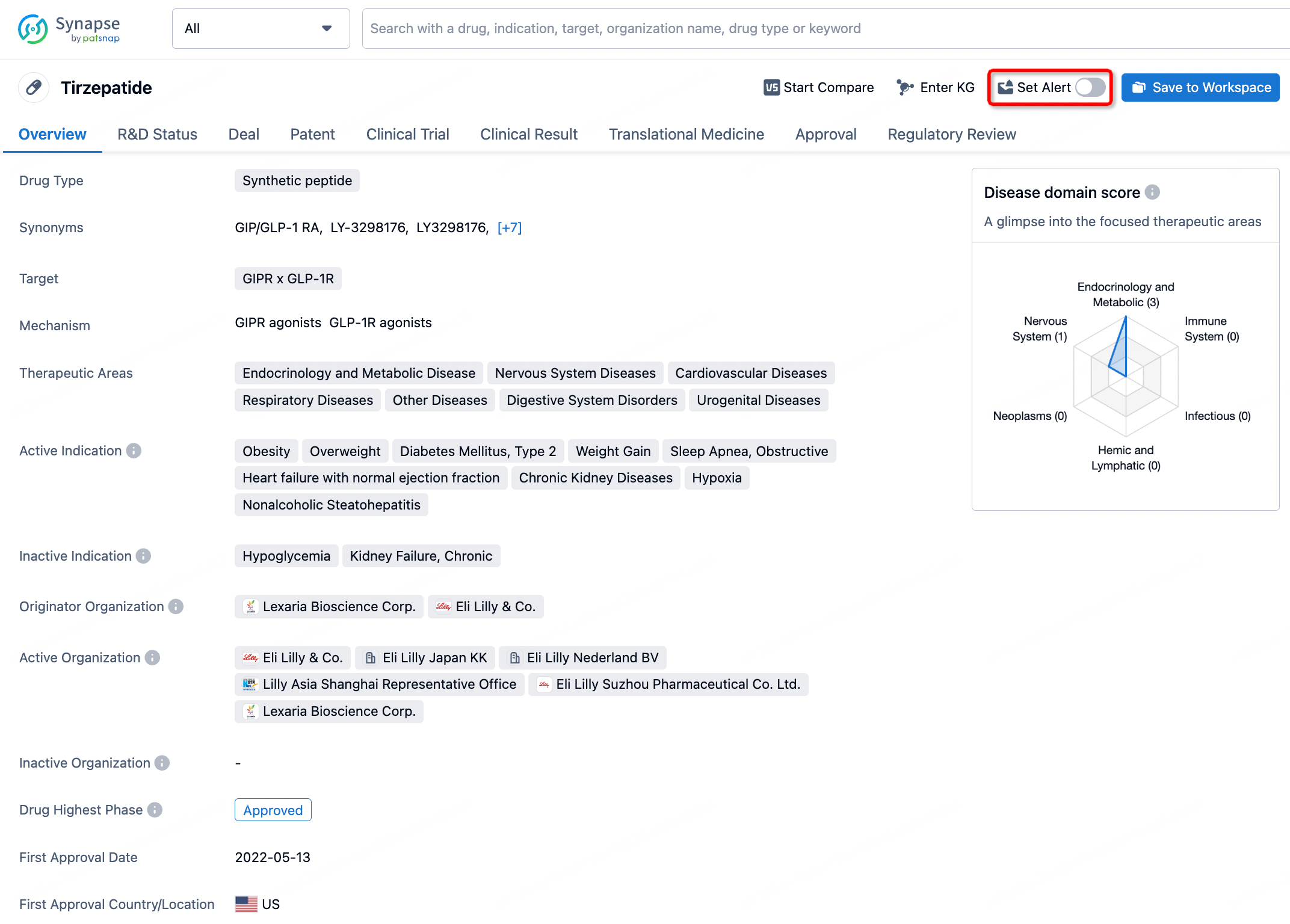
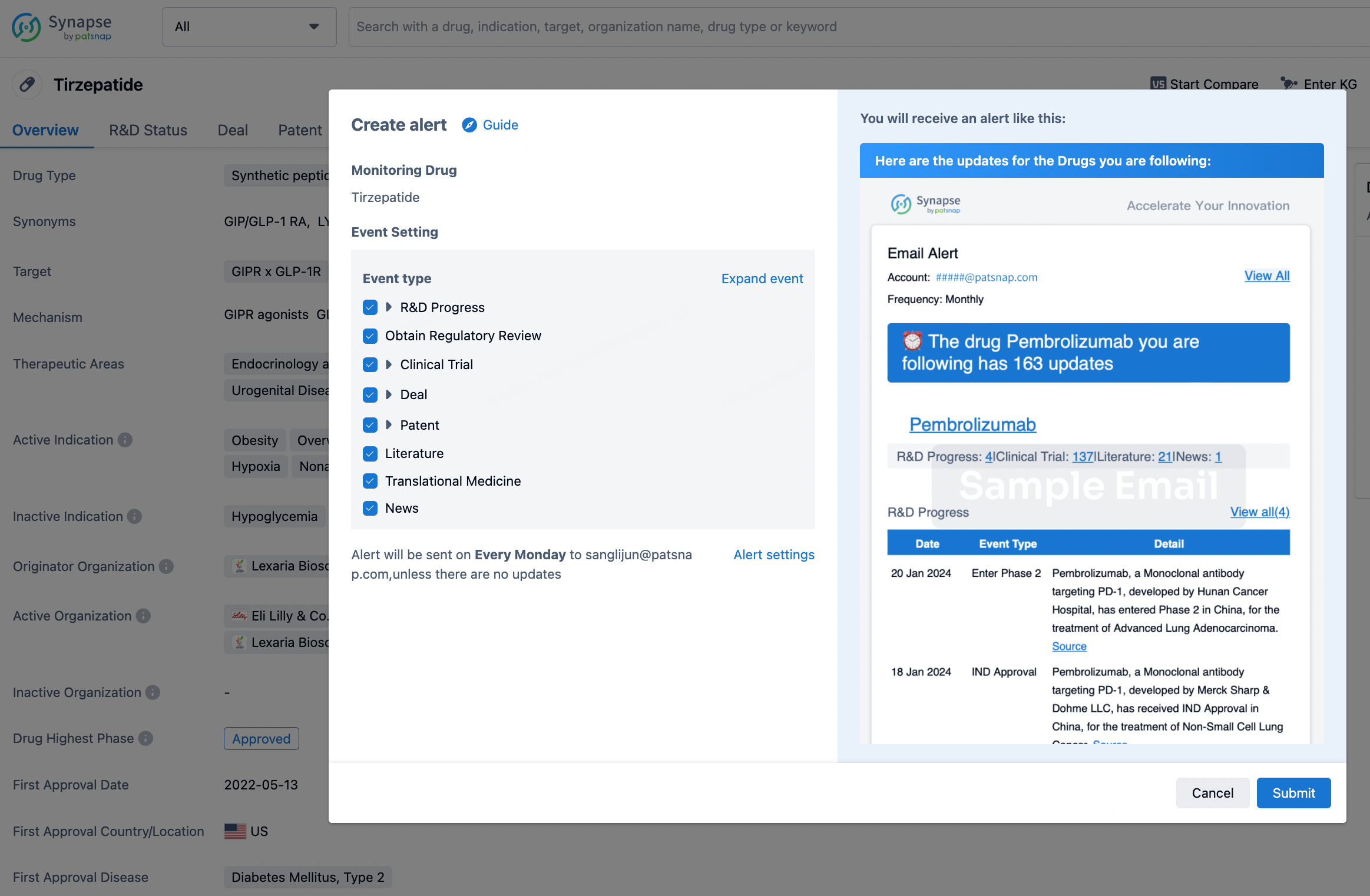
In the Synapse database, you can stay updated on the latest research and development advances of all drugs. This service is accessible anytime and anywhere, with updates available daily or weekly. Use the "Set Alert" function to stay informed. Click on the image below to embark on a brand new journey of drug discovery!

AI Agents Built for Biopharma Breakthroughs
Accelerate discovery. Empower decisions. Transform outcomes.
Get started for free today!
Accelerate Strategic R&D decision making with Synapse, PatSnap’s AI-powered Connected Innovation Intelligence Platform Built for Life Sciences Professionals.
Start your data trial now!
Synapse data is also accessible to external entities via APIs or data packages. Empower better decisions with the latest in pharmaceutical intelligence.