Request Demo
What is the mechanism of Dexrazoxane Hydrochloride?
17 July 2024
Dexrazoxane Hydrochloride is an important pharmaceutical agent used predominantly as a cardioprotective agent in patients undergoing chemotherapy with anthracyclines such as doxorubicin and daunorubicin. Understanding the mechanism of action of Dexrazoxane requires examining its pharmacodynamics and how it interacts at the molecular level to mitigate the cardiotoxic effects of anthracyclines.
Anthracyclines are highly effective chemotherapeutic agents, but their use is often limited by their potential to cause cumulative dose-dependent cardiotoxicity. This cardiotoxicity is primarily attributed to the formation of free radicals and the chelation of iron, leading to oxidative stress and subsequent damage to cardiac myocytes.
Dexrazoxane Hydrochloride exerts its cardioprotective effects through multiple mechanisms, primarily by functioning as an intracellular iron chelator. When administered, Dexrazoxane is rapidly hydrolyzed to its active form, ADR-925. ADR-925 chelates iron, reducing the availability of free iron that can participate in the Fenton reaction, a chemical reaction that produces highly reactive hydroxyl radicals. By limiting the formation of these radicals, Dexrazoxane reduces oxidative stress and minimizes damage to the cardiac tissue.
Furthermore, Dexrazoxane inhibits topoisomerase II, an enzyme that plays a critical role in DNA replication and repair. Anthracyclines exert their chemotherapeutic effects by stabilizing the topoisomerase II-DNA complex, leading to breaks in the DNA strands which prevent cancer cell proliferation. However, this interaction also contributes to the cardiotoxicity observed with anthracycline treatment. Dexrazoxane competitively inhibits the binding of anthracyclines to topoisomerase II in cardiac cells, thereby reducing the formation of these enzyme-DNA complexes and protecting cardiac myocytes from the associated damage.
Another noteworthy mechanism involves the modulation of apoptosis pathways. Dexrazoxane has been shown to inhibit the activation of caspases, which are vital to the execution of the apoptotic process. This inhibition results in reduced apoptosis of cardiac cells, which would otherwise be induced by the oxidative stress and DNA damage caused by anthracyclines.
In addition to its cardio-protective properties, Dexrazoxane is also used as an antidote for extravasation of anthracyclines, a condition where the drug leaks into the surrounding tissue during intravenous administration, causing severe tissue damage. In such scenarios, Dexrazoxane works by chelating the metal ions and decreasing the formation of the free radicals, thereby limiting the local tissue damage.
Dexrazoxane Hydrochloride is unique in its multifaceted approach to mitigating the adverse effects of anthracyclines while allowing these potent chemotherapeutic agents to perform their antineoplastic functions. Its role as an iron chelator, topoisomerase II inhibitor, and modulator of apoptosis underpins its efficacy as a cardioprotective agent.
Understanding these mechanisms provides valuable insights into how Dexrazoxane Hydrochloride protects cardiac tissue during chemotherapy, thereby improving the therapeutic index of anthracyclines. As research continues, further elucidation of Dexrazoxane's molecular interactions and potential broader applications may enhance its utility in clinical oncology.
Anthracyclines are highly effective chemotherapeutic agents, but their use is often limited by their potential to cause cumulative dose-dependent cardiotoxicity. This cardiotoxicity is primarily attributed to the formation of free radicals and the chelation of iron, leading to oxidative stress and subsequent damage to cardiac myocytes.
Dexrazoxane Hydrochloride exerts its cardioprotective effects through multiple mechanisms, primarily by functioning as an intracellular iron chelator. When administered, Dexrazoxane is rapidly hydrolyzed to its active form, ADR-925. ADR-925 chelates iron, reducing the availability of free iron that can participate in the Fenton reaction, a chemical reaction that produces highly reactive hydroxyl radicals. By limiting the formation of these radicals, Dexrazoxane reduces oxidative stress and minimizes damage to the cardiac tissue.
Furthermore, Dexrazoxane inhibits topoisomerase II, an enzyme that plays a critical role in DNA replication and repair. Anthracyclines exert their chemotherapeutic effects by stabilizing the topoisomerase II-DNA complex, leading to breaks in the DNA strands which prevent cancer cell proliferation. However, this interaction also contributes to the cardiotoxicity observed with anthracycline treatment. Dexrazoxane competitively inhibits the binding of anthracyclines to topoisomerase II in cardiac cells, thereby reducing the formation of these enzyme-DNA complexes and protecting cardiac myocytes from the associated damage.
Another noteworthy mechanism involves the modulation of apoptosis pathways. Dexrazoxane has been shown to inhibit the activation of caspases, which are vital to the execution of the apoptotic process. This inhibition results in reduced apoptosis of cardiac cells, which would otherwise be induced by the oxidative stress and DNA damage caused by anthracyclines.
In addition to its cardio-protective properties, Dexrazoxane is also used as an antidote for extravasation of anthracyclines, a condition where the drug leaks into the surrounding tissue during intravenous administration, causing severe tissue damage. In such scenarios, Dexrazoxane works by chelating the metal ions and decreasing the formation of the free radicals, thereby limiting the local tissue damage.
Dexrazoxane Hydrochloride is unique in its multifaceted approach to mitigating the adverse effects of anthracyclines while allowing these potent chemotherapeutic agents to perform their antineoplastic functions. Its role as an iron chelator, topoisomerase II inhibitor, and modulator of apoptosis underpins its efficacy as a cardioprotective agent.
Understanding these mechanisms provides valuable insights into how Dexrazoxane Hydrochloride protects cardiac tissue during chemotherapy, thereby improving the therapeutic index of anthracyclines. As research continues, further elucidation of Dexrazoxane's molecular interactions and potential broader applications may enhance its utility in clinical oncology.
How to obtain the latest development progress of all drugs?
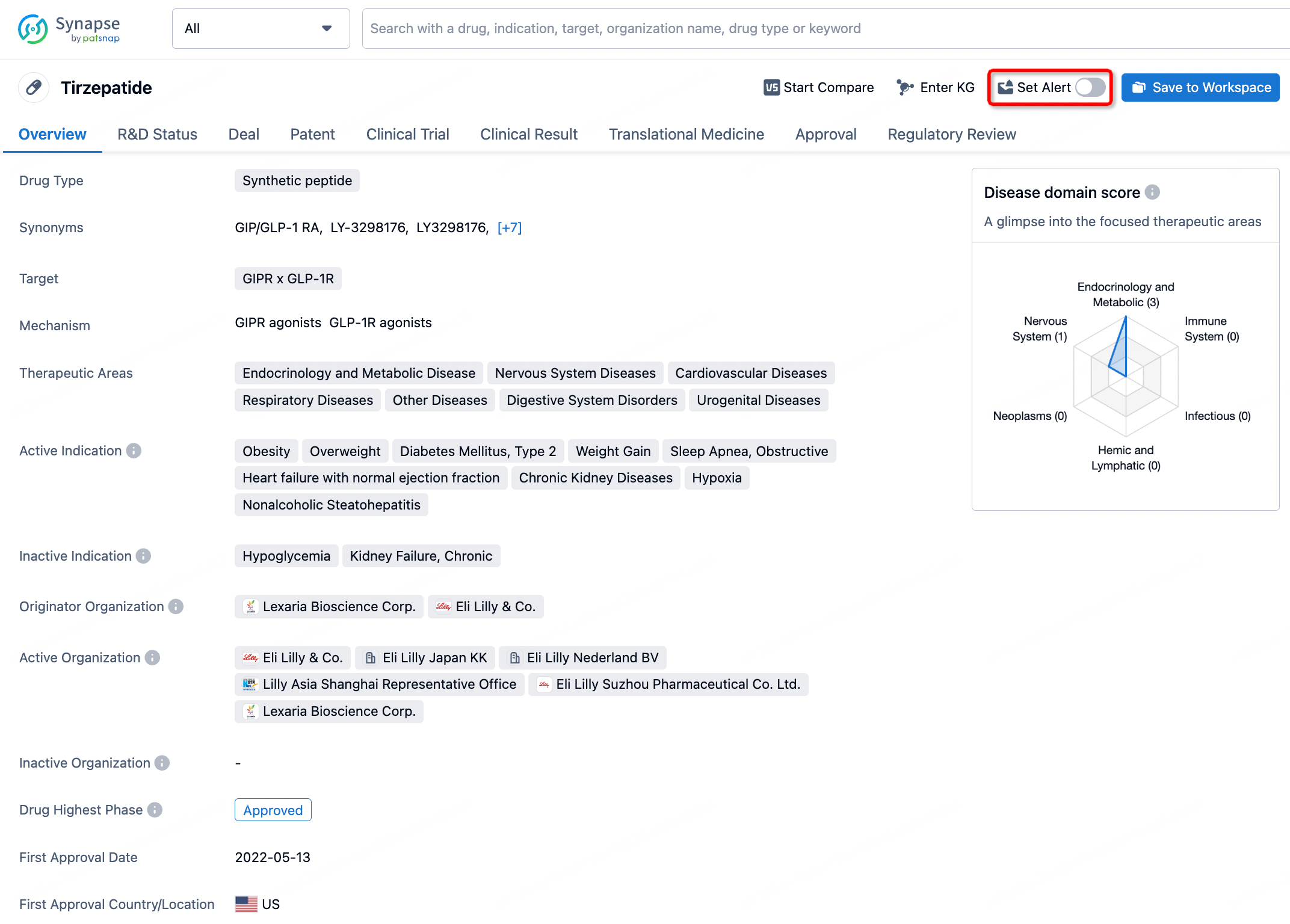
In the Synapse database, you can stay updated on the latest research and development advances of all drugs. This service is accessible anytime and anywhere, with updates available daily or weekly. Use the "Set Alert" function to stay informed. Click on the image below to embark on a brand new journey of drug discovery!


AI Agents Built for Biopharma Breakthroughs
Accelerate discovery. Empower decisions. Transform outcomes.
Get started for free today!
Accelerate Strategic R&D decision making with Synapse, PatSnap’s AI-powered Connected Innovation Intelligence Platform Built for Life Sciences Professionals.
Start your data trial now!
Synapse data is also accessible to external entities via APIs or data packages. Empower better decisions with the latest in pharmaceutical intelligence.