Request Demo
What is the mechanism of Ertugliflozin?
17 July 2024
Ertugliflozin is a medication belonging to the class of drugs known as sodium-glucose co-transporter-2 (SGLT2) inhibitors. It is primarily used for the management of type 2 diabetes mellitus. The mechanisms through which Ertugliflozin exerts its effects are quite specific and involve multiple pathways that collectively help in reducing blood glucose levels.
At the core of Ertugliflozin's mechanism of action is its inhibition of the SGLT2 protein, which is prominently located in the proximal tubules of the kidneys. Under normal physiological conditions, SGLT2 is responsible for reabsorbing the majority of glucose from the filtrate back into the bloodstream. By inhibiting this transporter, Ertugliflozin reduces the reabsorption of glucose, leading to its excretion in the urine. This process is known as glycosuria, and it directly lowers blood glucose levels.
Another significant aspect of Ertugliflozin's mechanism is its impact on renal threshold for glucose. The renal threshold is the blood glucose level at which the kidneys start to excrete glucose into the urine. By inhibiting SGLT2, Ertugliflozin lowers this threshold, promoting the excretion of glucose even at relatively lower blood glucose levels, which otherwise would be reabsorbed.
In addition to its primary effects on glucose regulation, Ertugliflozin also exerts several secondary benefits. The increase in urinary glucose excretion results in a loss of calories, which can contribute to modest weight loss in patients. This is particularly advantageous for individuals with type 2 diabetes, who often struggle with obesity and its related complications.
Furthermore, Ertugliflozin induces osmotic diuresis, which is the increased production of urine due to the excretion of glucose. This can lead to a reduction in blood pressure, offering an added cardiovascular benefit. The diuretic effect can also help in reducing the risk of heart failure, which is a common comorbidity in diabetic patients.
The metabolic effects of Ertugliflozin extend to lipid metabolism as well. Studies have shown that it can induce favorable changes in lipid profiles, although the precise mechanisms behind this are not fully understood. It is believed that the weight loss and improved glycemic control contribute to these lipid changes.
In summary, Ertugliflozin's primary mechanism involves the inhibition of the SGLT2 protein in the kidneys, leading to increased urinary glucose excretion, reduced blood glucose levels, and secondary benefits such as weight loss and lowered blood pressure. These combined effects make Ertugliflozin an effective therapeutic option for managing type 2 diabetes and its associated risks.
At the core of Ertugliflozin's mechanism of action is its inhibition of the SGLT2 protein, which is prominently located in the proximal tubules of the kidneys. Under normal physiological conditions, SGLT2 is responsible for reabsorbing the majority of glucose from the filtrate back into the bloodstream. By inhibiting this transporter, Ertugliflozin reduces the reabsorption of glucose, leading to its excretion in the urine. This process is known as glycosuria, and it directly lowers blood glucose levels.
Another significant aspect of Ertugliflozin's mechanism is its impact on renal threshold for glucose. The renal threshold is the blood glucose level at which the kidneys start to excrete glucose into the urine. By inhibiting SGLT2, Ertugliflozin lowers this threshold, promoting the excretion of glucose even at relatively lower blood glucose levels, which otherwise would be reabsorbed.
In addition to its primary effects on glucose regulation, Ertugliflozin also exerts several secondary benefits. The increase in urinary glucose excretion results in a loss of calories, which can contribute to modest weight loss in patients. This is particularly advantageous for individuals with type 2 diabetes, who often struggle with obesity and its related complications.
Furthermore, Ertugliflozin induces osmotic diuresis, which is the increased production of urine due to the excretion of glucose. This can lead to a reduction in blood pressure, offering an added cardiovascular benefit. The diuretic effect can also help in reducing the risk of heart failure, which is a common comorbidity in diabetic patients.
The metabolic effects of Ertugliflozin extend to lipid metabolism as well. Studies have shown that it can induce favorable changes in lipid profiles, although the precise mechanisms behind this are not fully understood. It is believed that the weight loss and improved glycemic control contribute to these lipid changes.
In summary, Ertugliflozin's primary mechanism involves the inhibition of the SGLT2 protein in the kidneys, leading to increased urinary glucose excretion, reduced blood glucose levels, and secondary benefits such as weight loss and lowered blood pressure. These combined effects make Ertugliflozin an effective therapeutic option for managing type 2 diabetes and its associated risks.
How to obtain the latest development progress of all drugs?
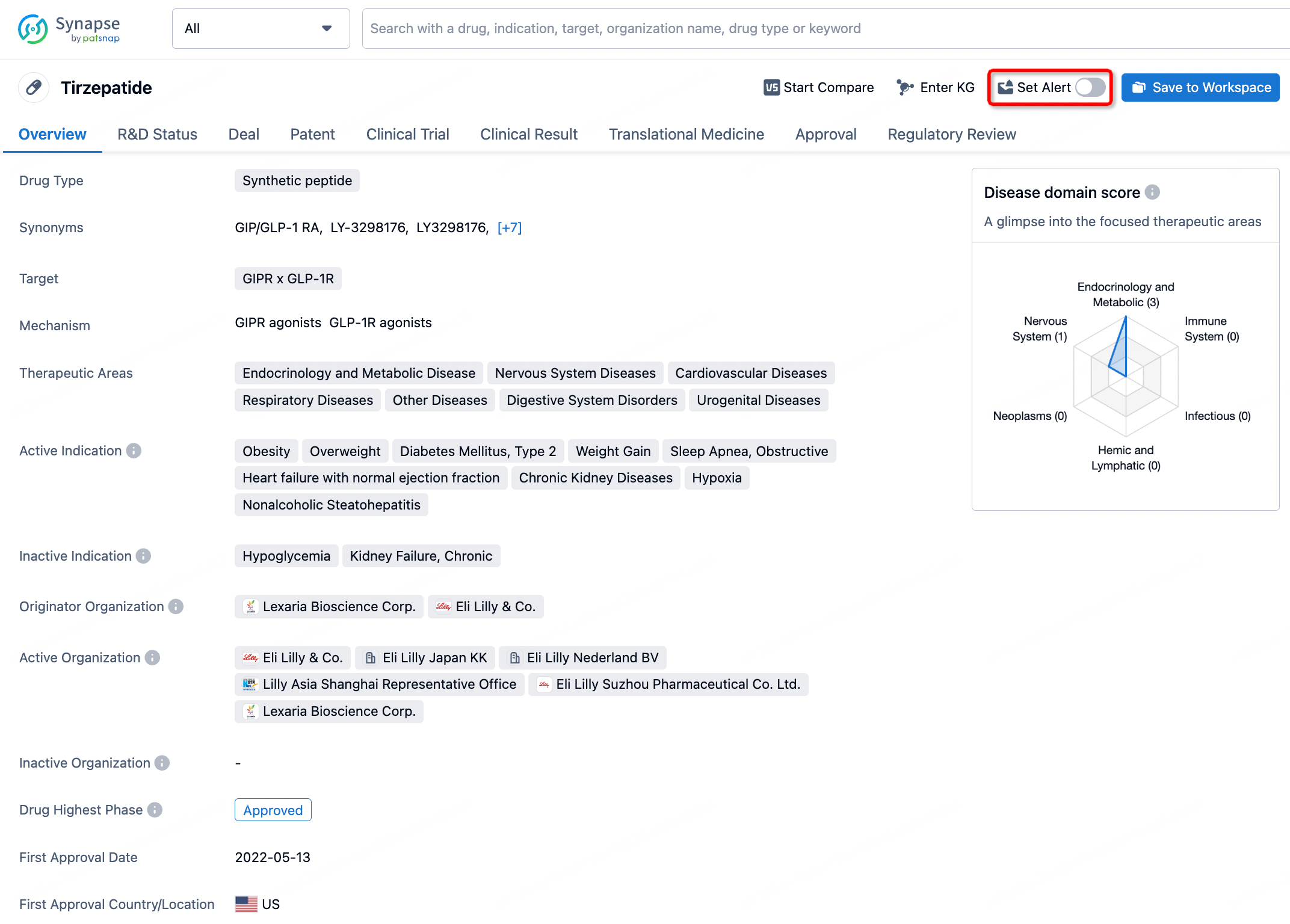
In the Synapse database, you can stay updated on the latest research and development advances of all drugs. This service is accessible anytime and anywhere, with updates available daily or weekly. Use the "Set Alert" function to stay informed. Click on the image below to embark on a brand new journey of drug discovery!


AI Agents Built for Biopharma Breakthroughs
Accelerate discovery. Empower decisions. Transform outcomes.
Get started for free today!
Accelerate Strategic R&D decision making with Synapse, PatSnap’s AI-powered Connected Innovation Intelligence Platform Built for Life Sciences Professionals.
Start your data trial now!
Synapse data is also accessible to external entities via APIs or data packages. Empower better decisions with the latest in pharmaceutical intelligence.