Request Demo
What is the mechanism of Iobenguane I-123?
17 July 2024
Iobenguane I-123, also known as metaiodobenzylguanidine (MIBG) labeled with iodine-123, is a radiopharmaceutical used primarily for diagnostic imaging in the field of nuclear medicine. It is particularly valuable for locating and characterizing neuroendocrine tumors, such as pheochromocytomas and neuroblastomas, as well as for evaluating certain cardiac conditions. Understanding the mechanism of Iobenguane I-123 involves delving into both its biochemical properties and its interaction with bodily tissues.
Iobenguane is an analog of the neurotransmitter norepinephrine and shares similar biochemical pathways. When administered to a patient, Iobenguane I-123 mimics norepinephrine and is actively transported into adrenergic nerve endings and neuroendocrine cells via the norepinephrine transporter (NET). This property allows it to concentrate in tissues where these cells are prevalent, such as the adrenal medulla, sympathetic nervous system, and certain types of tumors.
Once inside the target cells, Iobenguane is stored in neurosecretory granules, much like norepinephrine. These granules are specialized cellular structures designed for storing and releasing neurotransmitters. The iodine-123 isotope in the compound emits gamma radiation, which can be detected by a gamma camera or single-photon emission computed tomography (SPECT) scanner. This imaging capability enables physicians to visualize the distribution of Iobenguane in the body, identifying areas with high concentrations of neuroendocrine cells.
The use of iodine-123 as the radioactive label offers several advantages. Iodine-123 has a half-life of approximately 13 hours, which is long enough to perform detailed imaging studies but short enough to minimize radiation exposure to the patient. Additionally, its gamma radiation is suitable for producing high-resolution images, which is crucial for accurate diagnosis and treatment planning.
Clinically, Iobenguane I-123 scintigraphy is employed to diagnose and stage neuroendocrine tumors, assess the extent of metastatic disease, and sometimes evaluate the efficacy of treatment. In cardiac applications, it can be used to assess myocardial innervation, providing valuable information about conditions such as heart failure or ischemic heart disease.
The safety profile of Iobenguane I-123 is generally favorable. Adverse reactions are rare and typically mild, including symptoms like nausea, headache, or allergic reactions. Standard precautions are taken to protect the thyroid gland from radiation exposure, often involving pre-treatment with potassium iodide to block thyroid uptake of free iodine-123.
In conclusion, the mechanism of Iobenguane I-123 centers around its ability to mimic norepinephrine, allowing it to localize in adrenergic and neuroendocrine tissues. Its role in diagnostic imaging is pivotal for identifying and managing neuroendocrine tumors and certain cardiac conditions. The combination of its biochemical properties and the characteristics of iodine-123 makes it an invaluable tool in the field of nuclear medicine.
Iobenguane is an analog of the neurotransmitter norepinephrine and shares similar biochemical pathways. When administered to a patient, Iobenguane I-123 mimics norepinephrine and is actively transported into adrenergic nerve endings and neuroendocrine cells via the norepinephrine transporter (NET). This property allows it to concentrate in tissues where these cells are prevalent, such as the adrenal medulla, sympathetic nervous system, and certain types of tumors.
Once inside the target cells, Iobenguane is stored in neurosecretory granules, much like norepinephrine. These granules are specialized cellular structures designed for storing and releasing neurotransmitters. The iodine-123 isotope in the compound emits gamma radiation, which can be detected by a gamma camera or single-photon emission computed tomography (SPECT) scanner. This imaging capability enables physicians to visualize the distribution of Iobenguane in the body, identifying areas with high concentrations of neuroendocrine cells.
The use of iodine-123 as the radioactive label offers several advantages. Iodine-123 has a half-life of approximately 13 hours, which is long enough to perform detailed imaging studies but short enough to minimize radiation exposure to the patient. Additionally, its gamma radiation is suitable for producing high-resolution images, which is crucial for accurate diagnosis and treatment planning.
Clinically, Iobenguane I-123 scintigraphy is employed to diagnose and stage neuroendocrine tumors, assess the extent of metastatic disease, and sometimes evaluate the efficacy of treatment. In cardiac applications, it can be used to assess myocardial innervation, providing valuable information about conditions such as heart failure or ischemic heart disease.
The safety profile of Iobenguane I-123 is generally favorable. Adverse reactions are rare and typically mild, including symptoms like nausea, headache, or allergic reactions. Standard precautions are taken to protect the thyroid gland from radiation exposure, often involving pre-treatment with potassium iodide to block thyroid uptake of free iodine-123.
In conclusion, the mechanism of Iobenguane I-123 centers around its ability to mimic norepinephrine, allowing it to localize in adrenergic and neuroendocrine tissues. Its role in diagnostic imaging is pivotal for identifying and managing neuroendocrine tumors and certain cardiac conditions. The combination of its biochemical properties and the characteristics of iodine-123 makes it an invaluable tool in the field of nuclear medicine.
How to obtain the latest development progress of all drugs?
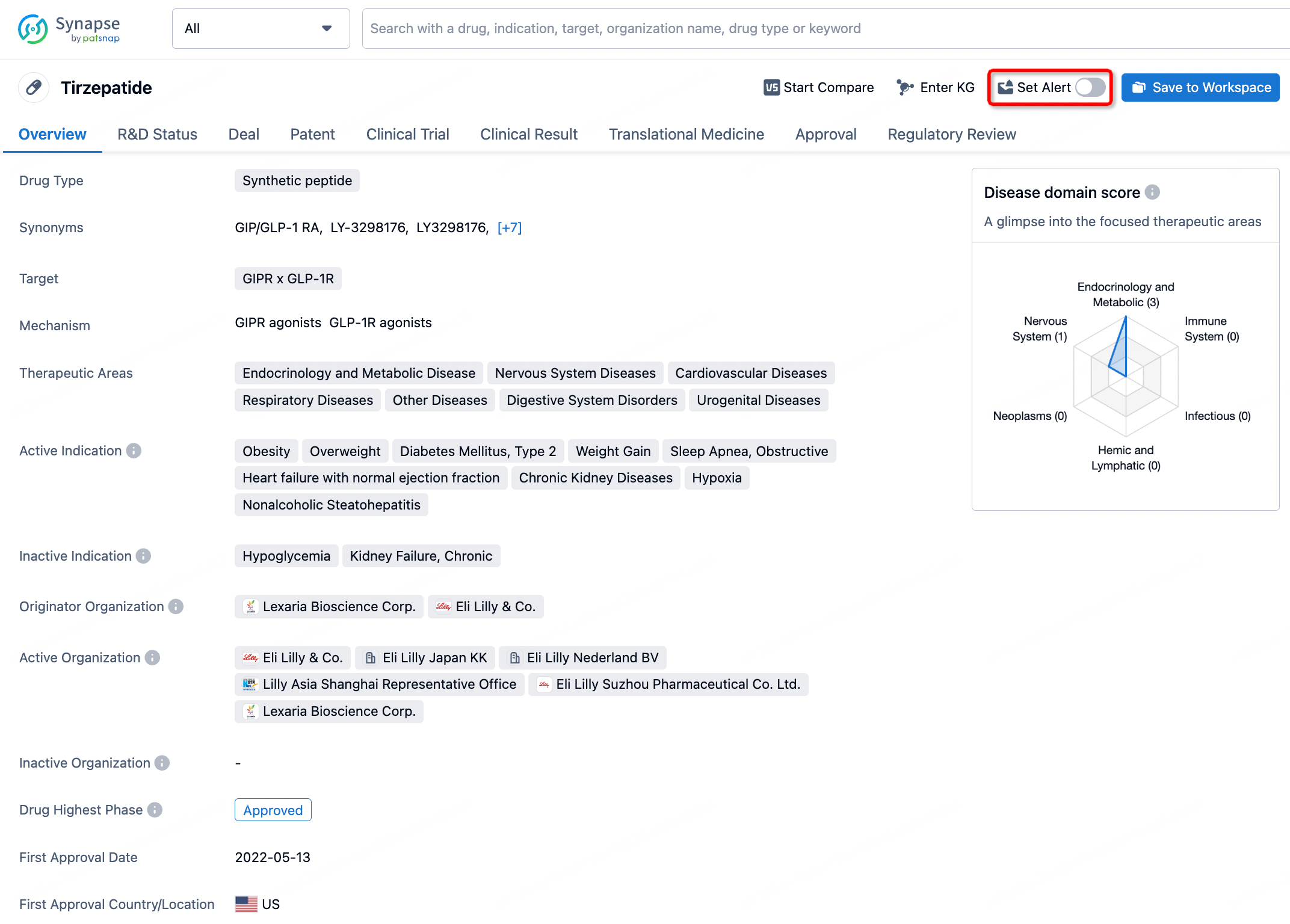
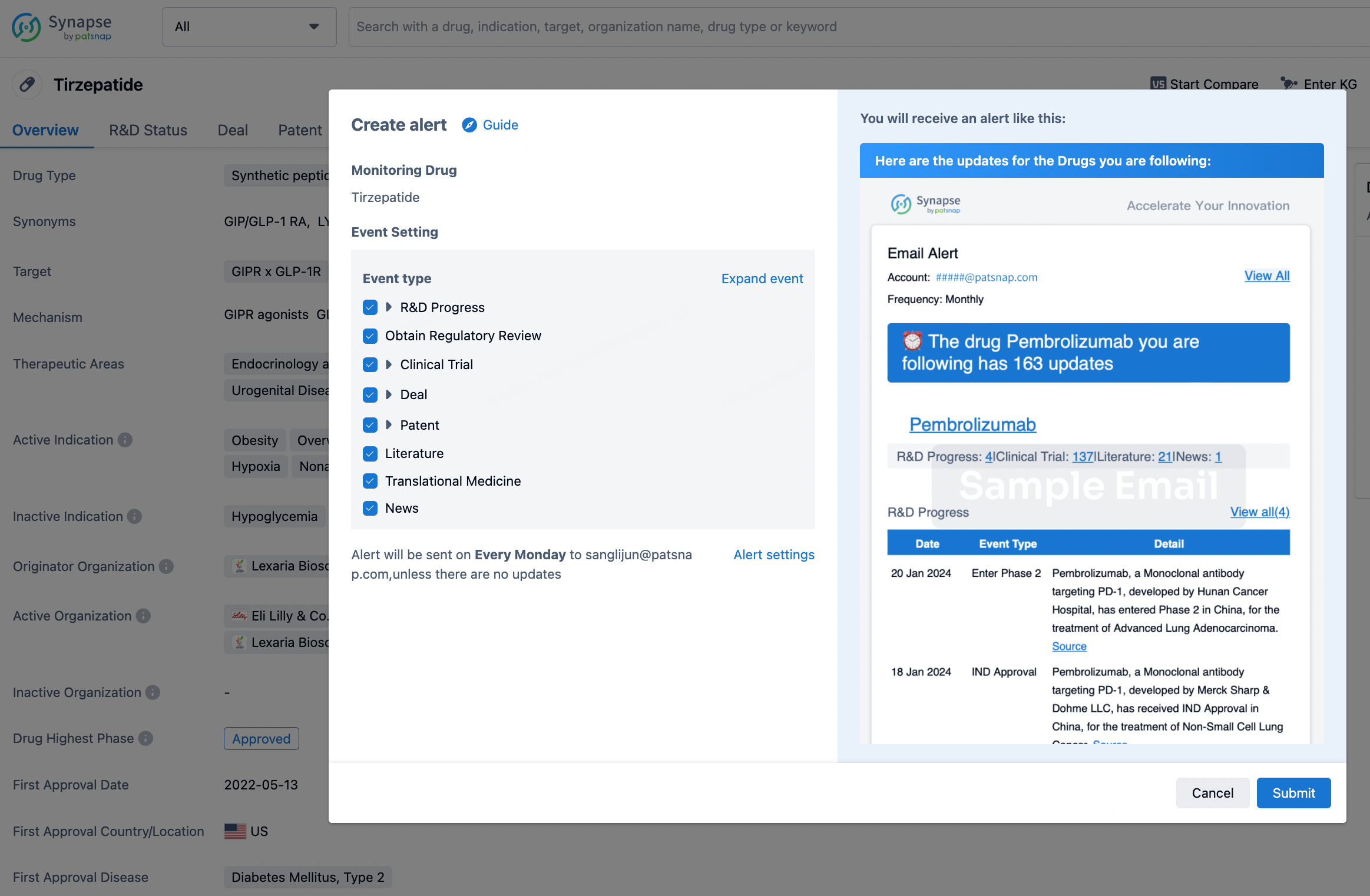
In the Synapse database, you can stay updated on the latest research and development advances of all drugs. This service is accessible anytime and anywhere, with updates available daily or weekly. Use the "Set Alert" function to stay informed. Click on the image below to embark on a brand new journey of drug discovery!
AI Agents Built for Biopharma Breakthroughs
Accelerate discovery. Empower decisions. Transform outcomes.
Get started for free today!
Accelerate Strategic R&D decision making with Synapse, PatSnap’s AI-powered Connected Innovation Intelligence Platform Built for Life Sciences Professionals.
Start your data trial now!
Synapse data is also accessible to external entities via APIs or data packages. Empower better decisions with the latest in pharmaceutical intelligence.