Request Demo
What is the mechanism of Sibutramine maleate?
17 July 2024
Sibutramine maleate is an oral anorexiant that was primarily used to treat obesity. Understanding its mechanism provides insight into how it assists in weight reduction and the potential side effects associated with its use.
Sibutramine works primarily through the inhibition of neurotransmitter reuptake. It is a serotonin-norepinephrine-dopamine reuptake inhibitor (SNDRI). This means that it prevents the reabsorption of these neurotransmitters into nerve cells, thereby increasing their levels in the brain. Elevated levels of serotonin and norepinephrine are associated with a suppression of appetite.
When an individual consumes food, serotonin levels naturally rise, leading to a sensation of satiety or fullness. By inhibiting the reuptake of serotonin, sibutramine maleate enhances and prolongs this feeling of fullness, making an individual less likely to overeat. Similarly, norepinephrine is responsible for activating the body's fight or flight response, which includes the suppression of appetite. By maintaining higher levels of norepinephrine, sibutramine further contributes to appetite suppression.
Moreover, dopamine also plays a role in the regulation of mood and reward mechanisms. By inhibiting dopamine reuptake, sibutramine can potentially alter the reward value of food, making eating less rewarding and thus reducing overall food intake.
Sibutramine maleate is metabolized in the liver, where it is converted into its active metabolites, which have a more prolonged effect on neurotransmitter reuptake inhibition. These metabolites are then excreted through the kidneys.
Despite its efficacy in promoting weight loss, sibutramine has been associated with several adverse effects. The most significant of these include an increase in blood pressure and heart rate, which raises concerns about cardiovascular risks. Additionally, there have been reports of dry mouth, constipation, and insomnia among users of the drug.
Due to these potential risks, the use of sibutramine maleate has been scrutinized and it has been withdrawn from the market in several countries. Healthcare providers and patients are urged to consider other weight management strategies that present a lower risk of adverse cardiovascular events.
In conclusion, sibutramine maleate operates by inhibiting the reuptake of serotonin, norepinephrine, and dopamine, which collectively aid in suppressing appetite and reducing food intake. However, its associated health risks, particularly concerning cardiovascular health, have led to its reduced availability and usage in clinical practice.
Sibutramine works primarily through the inhibition of neurotransmitter reuptake. It is a serotonin-norepinephrine-dopamine reuptake inhibitor (SNDRI). This means that it prevents the reabsorption of these neurotransmitters into nerve cells, thereby increasing their levels in the brain. Elevated levels of serotonin and norepinephrine are associated with a suppression of appetite.
When an individual consumes food, serotonin levels naturally rise, leading to a sensation of satiety or fullness. By inhibiting the reuptake of serotonin, sibutramine maleate enhances and prolongs this feeling of fullness, making an individual less likely to overeat. Similarly, norepinephrine is responsible for activating the body's fight or flight response, which includes the suppression of appetite. By maintaining higher levels of norepinephrine, sibutramine further contributes to appetite suppression.
Moreover, dopamine also plays a role in the regulation of mood and reward mechanisms. By inhibiting dopamine reuptake, sibutramine can potentially alter the reward value of food, making eating less rewarding and thus reducing overall food intake.
Sibutramine maleate is metabolized in the liver, where it is converted into its active metabolites, which have a more prolonged effect on neurotransmitter reuptake inhibition. These metabolites are then excreted through the kidneys.
Despite its efficacy in promoting weight loss, sibutramine has been associated with several adverse effects. The most significant of these include an increase in blood pressure and heart rate, which raises concerns about cardiovascular risks. Additionally, there have been reports of dry mouth, constipation, and insomnia among users of the drug.
Due to these potential risks, the use of sibutramine maleate has been scrutinized and it has been withdrawn from the market in several countries. Healthcare providers and patients are urged to consider other weight management strategies that present a lower risk of adverse cardiovascular events.
In conclusion, sibutramine maleate operates by inhibiting the reuptake of serotonin, norepinephrine, and dopamine, which collectively aid in suppressing appetite and reducing food intake. However, its associated health risks, particularly concerning cardiovascular health, have led to its reduced availability and usage in clinical practice.
How to obtain the latest development progress of all drugs?
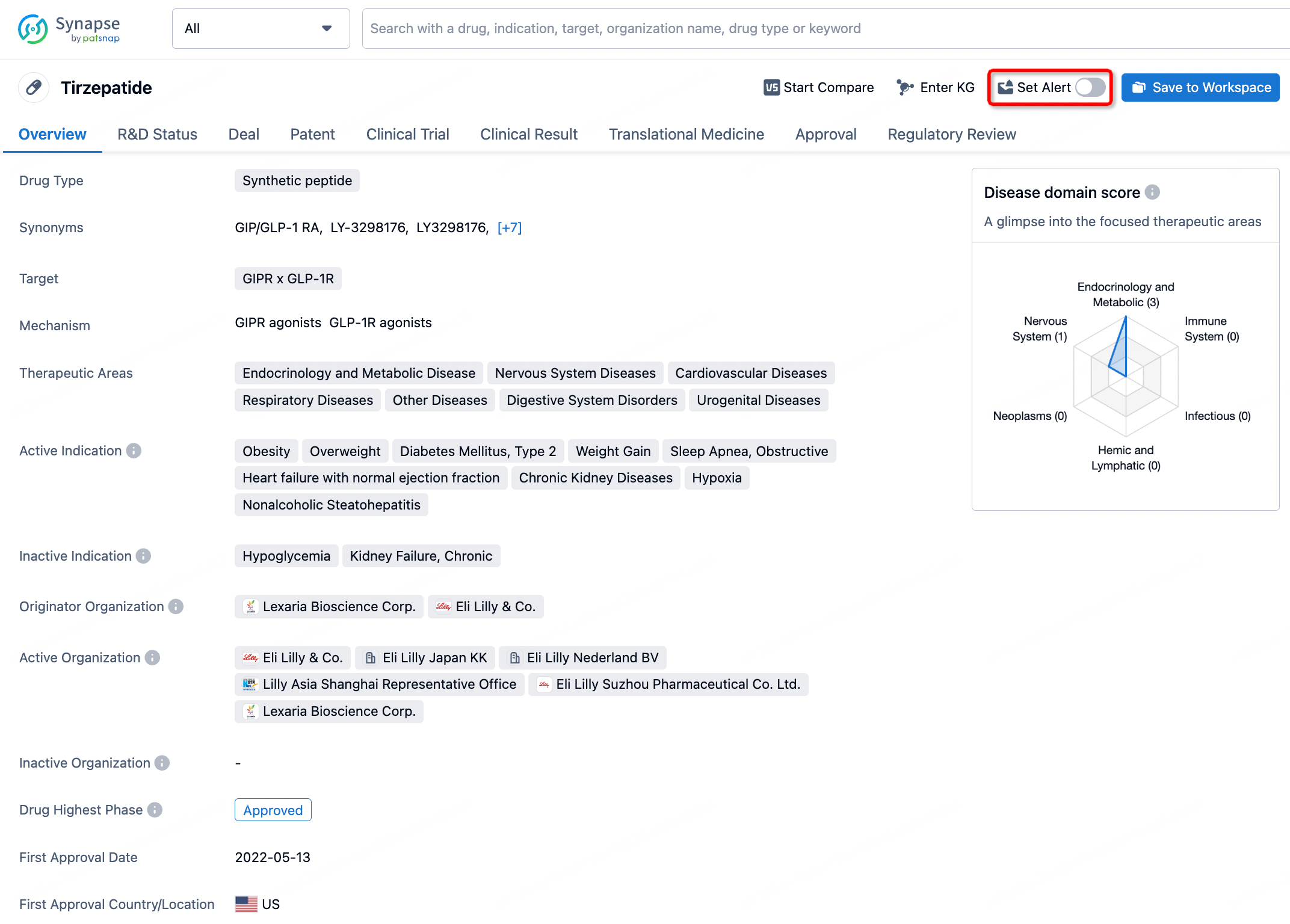
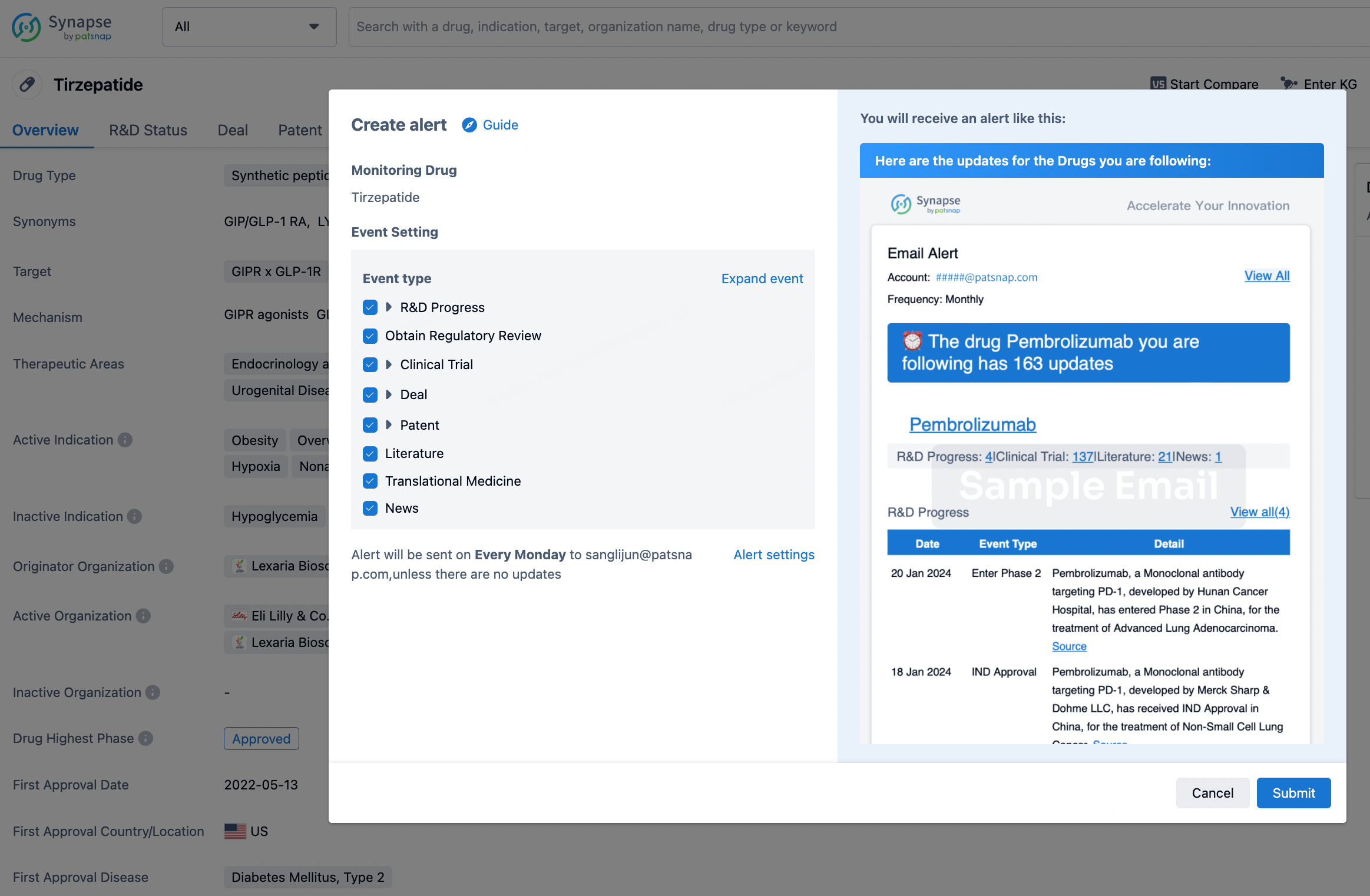
In the Synapse database, you can stay updated on the latest research and development advances of all drugs. This service is accessible anytime and anywhere, with updates available daily or weekly. Use the "Set Alert" function to stay informed. Click on the image below to embark on a brand new journey of drug discovery!
AI Agents Built for Biopharma Breakthroughs
Accelerate discovery. Empower decisions. Transform outcomes.
Get started for free today!
Accelerate Strategic R&D decision making with Synapse, PatSnap’s AI-powered Connected Innovation Intelligence Platform Built for Life Sciences Professionals.
Start your data trial now!
Synapse data is also accessible to external entities via APIs or data packages. Empower better decisions with the latest in pharmaceutical intelligence.