Request Demo
What is the mechanism of Tafluprost?
17 July 2024
Tafluprost is a prostaglandin analogue employed in the treatment of elevated intraocular pressure (IOP) in patients with open-angle glaucoma or ocular hypertension. Understanding the mechanism of Tafluprost involves delving into its pharmacodynamics, pharmacokinetics, and the underlying biological pathways it influences.
Tafluprost operates by mimicking the action of naturally occurring prostaglandin F2α, a group of lipid compounds that have diverse hormone-like effects in animals. Specifically, Tafluprost targets the prostanoid FP receptors located in the eye. Upon binding to these receptors, Tafluprost facilitates a series of cellular responses that ultimately increase the outflow of aqueous humor, the clear fluid filling the space in the front of the eyeball. By enhancing this outflow, Tafluprost helps to reduce the intraocular pressure, which can otherwise damage the optic nerve and lead to vision loss.
One of the primary pathways through which Tafluprost exerts its effect is the uveoscleral outflow mechanism. This pathway involves the drainage of aqueous humor through the uvea and sclera, which are part of the eye's vascular layer and outer protective structure, respectively. Tafluprost increases the permeability of the tissues in this pathway, promoting more efficient fluid drainage.
The drug is administered as an ophthalmic solution, meaning it is applied directly to the eyes in the form of drops. Once applied, Tafluprost undergoes hydrolysis to its active form, tafluprost acid. This transformation is crucial, as tafluprost acid is the entity that actively engages with the FP receptors to exert the therapeutic effects.
Further examination of Tafluprost's pharmacokinetics reveals that the drug exhibits good ocular penetration, ensuring adequate therapeutic levels are achieved at the site of action. Tafluprost acid, the active metabolite, has a half-life that allows for once-daily dosing, enhancing patient compliance.
It is worth noting that Tafluprost is generally well-tolerated, but like all medications, it may have side effects. Common adverse effects include ocular hyperemia, eye irritation, and changes in eyelash growth. More severe side effects are rare but necessitate prompt medical attention.
In summary, the mechanism of Tafluprost hinges on its role as a prostaglandin analogue that enhances the outflow of aqueous humor via the uveoscleral pathway by binding to FP receptors in the eye. This action effectively lowers intraocular pressure, providing therapeutic benefits for patients with glaucoma or ocular hypertension. Understanding these mechanisms not only highlights the efficacy of Tafluprost but also underscores the precision with which modern pharmacotherapy can address complex ocular conditions.
Tafluprost operates by mimicking the action of naturally occurring prostaglandin F2α, a group of lipid compounds that have diverse hormone-like effects in animals. Specifically, Tafluprost targets the prostanoid FP receptors located in the eye. Upon binding to these receptors, Tafluprost facilitates a series of cellular responses that ultimately increase the outflow of aqueous humor, the clear fluid filling the space in the front of the eyeball. By enhancing this outflow, Tafluprost helps to reduce the intraocular pressure, which can otherwise damage the optic nerve and lead to vision loss.
One of the primary pathways through which Tafluprost exerts its effect is the uveoscleral outflow mechanism. This pathway involves the drainage of aqueous humor through the uvea and sclera, which are part of the eye's vascular layer and outer protective structure, respectively. Tafluprost increases the permeability of the tissues in this pathway, promoting more efficient fluid drainage.
The drug is administered as an ophthalmic solution, meaning it is applied directly to the eyes in the form of drops. Once applied, Tafluprost undergoes hydrolysis to its active form, tafluprost acid. This transformation is crucial, as tafluprost acid is the entity that actively engages with the FP receptors to exert the therapeutic effects.
Further examination of Tafluprost's pharmacokinetics reveals that the drug exhibits good ocular penetration, ensuring adequate therapeutic levels are achieved at the site of action. Tafluprost acid, the active metabolite, has a half-life that allows for once-daily dosing, enhancing patient compliance.
It is worth noting that Tafluprost is generally well-tolerated, but like all medications, it may have side effects. Common adverse effects include ocular hyperemia, eye irritation, and changes in eyelash growth. More severe side effects are rare but necessitate prompt medical attention.
In summary, the mechanism of Tafluprost hinges on its role as a prostaglandin analogue that enhances the outflow of aqueous humor via the uveoscleral pathway by binding to FP receptors in the eye. This action effectively lowers intraocular pressure, providing therapeutic benefits for patients with glaucoma or ocular hypertension. Understanding these mechanisms not only highlights the efficacy of Tafluprost but also underscores the precision with which modern pharmacotherapy can address complex ocular conditions.
How to obtain the latest development progress of all drugs?
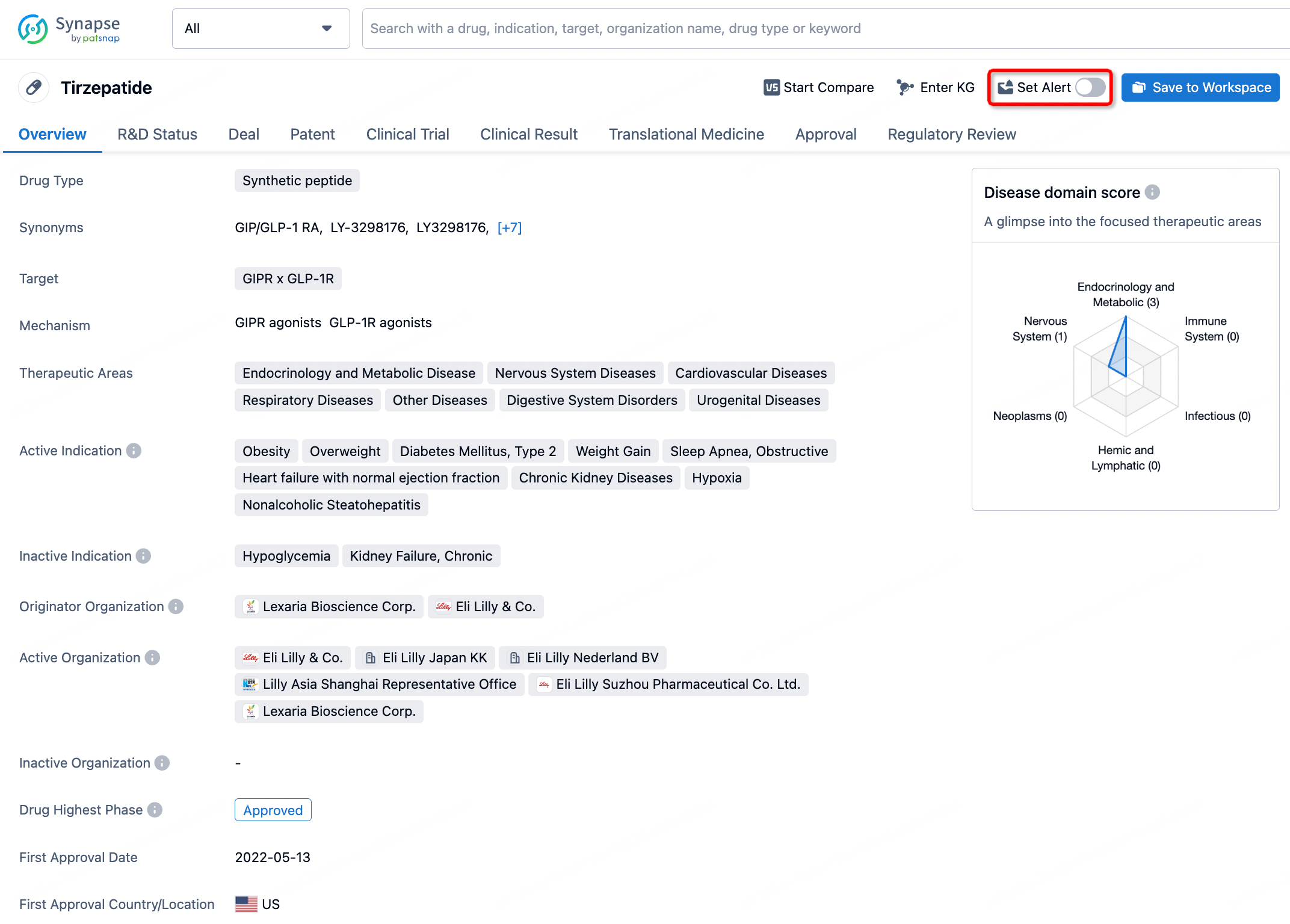
In the Synapse database, you can stay updated on the latest research and development advances of all drugs. This service is accessible anytime and anywhere, with updates available daily or weekly. Use the "Set Alert" function to stay informed. Click on the image below to embark on a brand new journey of drug discovery!


AI Agents Built for Biopharma Breakthroughs
Accelerate discovery. Empower decisions. Transform outcomes.
Get started for free today!
Accelerate Strategic R&D decision making with Synapse, PatSnap’s AI-powered Connected Innovation Intelligence Platform Built for Life Sciences Professionals.
Start your data trial now!
Synapse data is also accessible to external entities via APIs or data packages. Empower better decisions with the latest in pharmaceutical intelligence.