Request Demo
What is the mechanism of Tripamide?
17 July 2024
Tripamide is a diuretic medication used primarily for the management of hypertension and edema associated with heart failure, liver cirrhosis, and renal diseases. It belongs to the class of thiazide-like diuretics, which work by influencing the kidney's function in fluid and electrolyte balance. Understanding the mechanism of Tripamide involves exploring its pharmacodynamics, pharmacokinetics, and both its direct and indirect effects on the body.
At the molecular level, Tripamide exerts its diuretic effect by inhibiting sodium chloride reabsorption in the distal convoluted tubule of the nephron. This action is primarily achieved by blocking the sodium-chloride symporter (NCC), a membrane protein that facilitates the co-transport of sodium and chloride ions from the tubular fluid into the cells. By preventing the reabsorption of these ions, Tripamide promotes their excretion along with water, thereby increasing urine output.
The inhibition of sodium and chloride reabsorption leads to several downstream effects. Firstly, the reduction in plasma volume and extracellular fluid volume lowers blood pressure, which is beneficial for hypertensive patients. Secondly, the decreased reabsorption of these ions creates an osmotic gradient that further draws water into the tubular lumen, enhancing diuresis.
Furthermore, Tripamide has a moderate effect on other electrolytes. It increases the excretion of potassium and magnesium by secondary mechanisms related to the increased flow of sodium to the distal nephron segments. This may necessitate monitoring and, in some cases, supplementation of these electrolytes in patients undergoing long-term therapy.
Beyond its primary action on sodium and chloride transport, Tripamide also exerts some degree of vasodilatory effect. The exact mechanism for this is not entirely understood, but it is believed to involve the reduction in vascular resistance that accompanies the decrease in plasma volume and possibly the direct relaxation of vascular smooth muscle.
The pharmacokinetics of Tripamide reveals that it is well absorbed from the gastrointestinal tract, reaching peak plasma concentrations within a few hours post-ingestion. It undergoes partial hepatic metabolism, and its metabolites, along with the unchanged drug, are excreted primarily via the kidneys. The drug’s half-life allows for once-daily dosing, which enhances patient compliance.
Clinically, Tripamide is often used in combination with other antihypertensive agents to achieve additive or synergistic effects. Its role in treating edema is valuable in conditions where fluid overload is a concern, such as congestive heart failure and cirrhotic ascites. It is generally well-tolerated, though potential side effects include electrolyte imbalances, hyperglycemia, and increased serum lipid levels, which necessitate periodic monitoring.
In summary, Tripamide is a thiazide-like diuretic that lowers blood pressure and reduces edema through its inhibition of sodium and chloride reabsorption in the distal convoluted tubule. Its actions lead to increased excretion of these ions along with water, reducing plasma and extracellular fluid volumes. The pharmacokinetics of Tripamide support its use in a once-daily regimen, enhancing adherence to therapy. While effective and generally safe, it requires careful monitoring for electrolyte imbalances and other potential side effects. Through its multifaceted mechanisms, Tripamide remains a valuable agent in the management of hypertension and fluid retention disorders.
At the molecular level, Tripamide exerts its diuretic effect by inhibiting sodium chloride reabsorption in the distal convoluted tubule of the nephron. This action is primarily achieved by blocking the sodium-chloride symporter (NCC), a membrane protein that facilitates the co-transport of sodium and chloride ions from the tubular fluid into the cells. By preventing the reabsorption of these ions, Tripamide promotes their excretion along with water, thereby increasing urine output.
The inhibition of sodium and chloride reabsorption leads to several downstream effects. Firstly, the reduction in plasma volume and extracellular fluid volume lowers blood pressure, which is beneficial for hypertensive patients. Secondly, the decreased reabsorption of these ions creates an osmotic gradient that further draws water into the tubular lumen, enhancing diuresis.
Furthermore, Tripamide has a moderate effect on other electrolytes. It increases the excretion of potassium and magnesium by secondary mechanisms related to the increased flow of sodium to the distal nephron segments. This may necessitate monitoring and, in some cases, supplementation of these electrolytes in patients undergoing long-term therapy.
Beyond its primary action on sodium and chloride transport, Tripamide also exerts some degree of vasodilatory effect. The exact mechanism for this is not entirely understood, but it is believed to involve the reduction in vascular resistance that accompanies the decrease in plasma volume and possibly the direct relaxation of vascular smooth muscle.
The pharmacokinetics of Tripamide reveals that it is well absorbed from the gastrointestinal tract, reaching peak plasma concentrations within a few hours post-ingestion. It undergoes partial hepatic metabolism, and its metabolites, along with the unchanged drug, are excreted primarily via the kidneys. The drug’s half-life allows for once-daily dosing, which enhances patient compliance.
Clinically, Tripamide is often used in combination with other antihypertensive agents to achieve additive or synergistic effects. Its role in treating edema is valuable in conditions where fluid overload is a concern, such as congestive heart failure and cirrhotic ascites. It is generally well-tolerated, though potential side effects include electrolyte imbalances, hyperglycemia, and increased serum lipid levels, which necessitate periodic monitoring.
In summary, Tripamide is a thiazide-like diuretic that lowers blood pressure and reduces edema through its inhibition of sodium and chloride reabsorption in the distal convoluted tubule. Its actions lead to increased excretion of these ions along with water, reducing plasma and extracellular fluid volumes. The pharmacokinetics of Tripamide support its use in a once-daily regimen, enhancing adherence to therapy. While effective and generally safe, it requires careful monitoring for electrolyte imbalances and other potential side effects. Through its multifaceted mechanisms, Tripamide remains a valuable agent in the management of hypertension and fluid retention disorders.
How to obtain the latest development progress of all drugs?
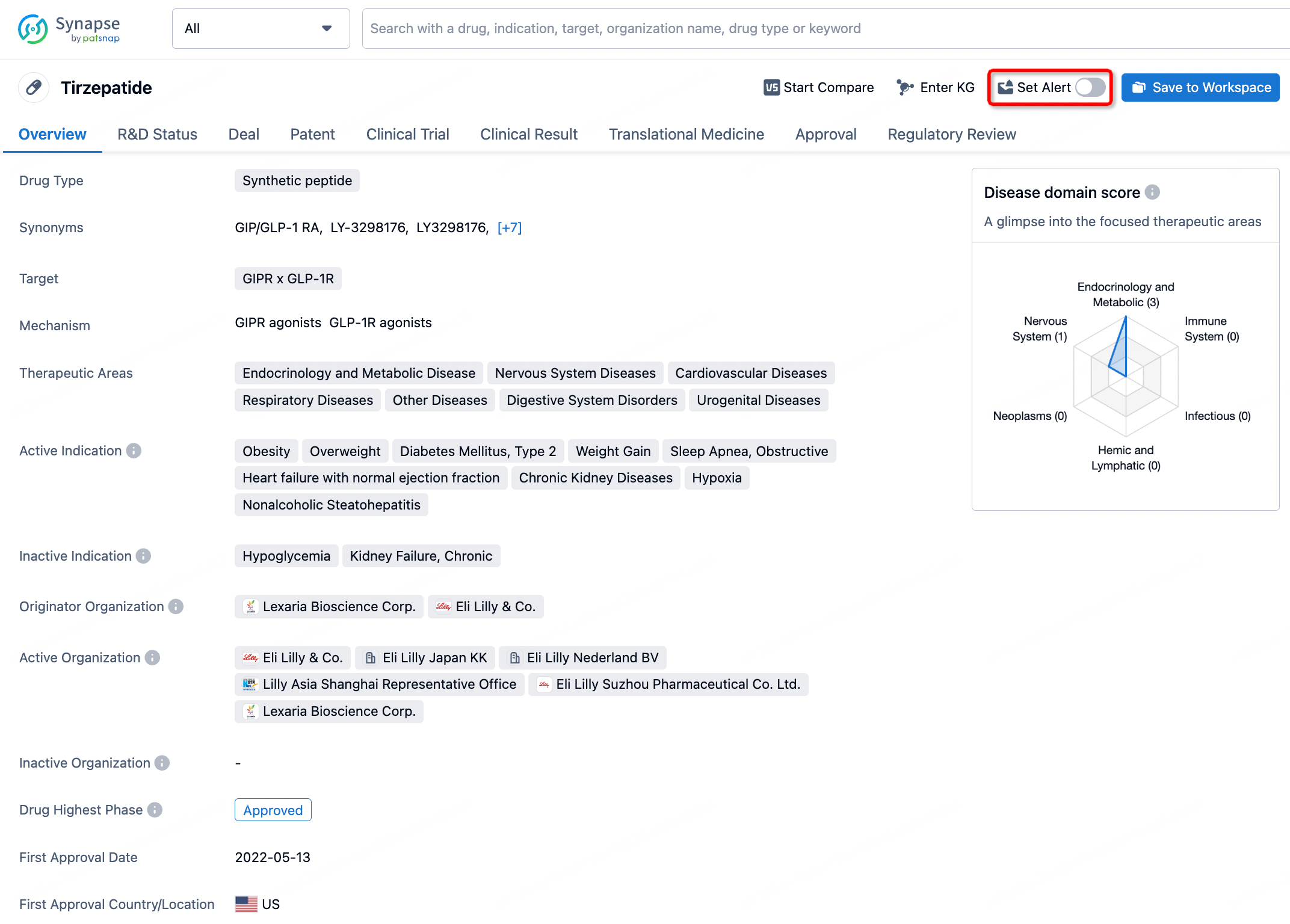
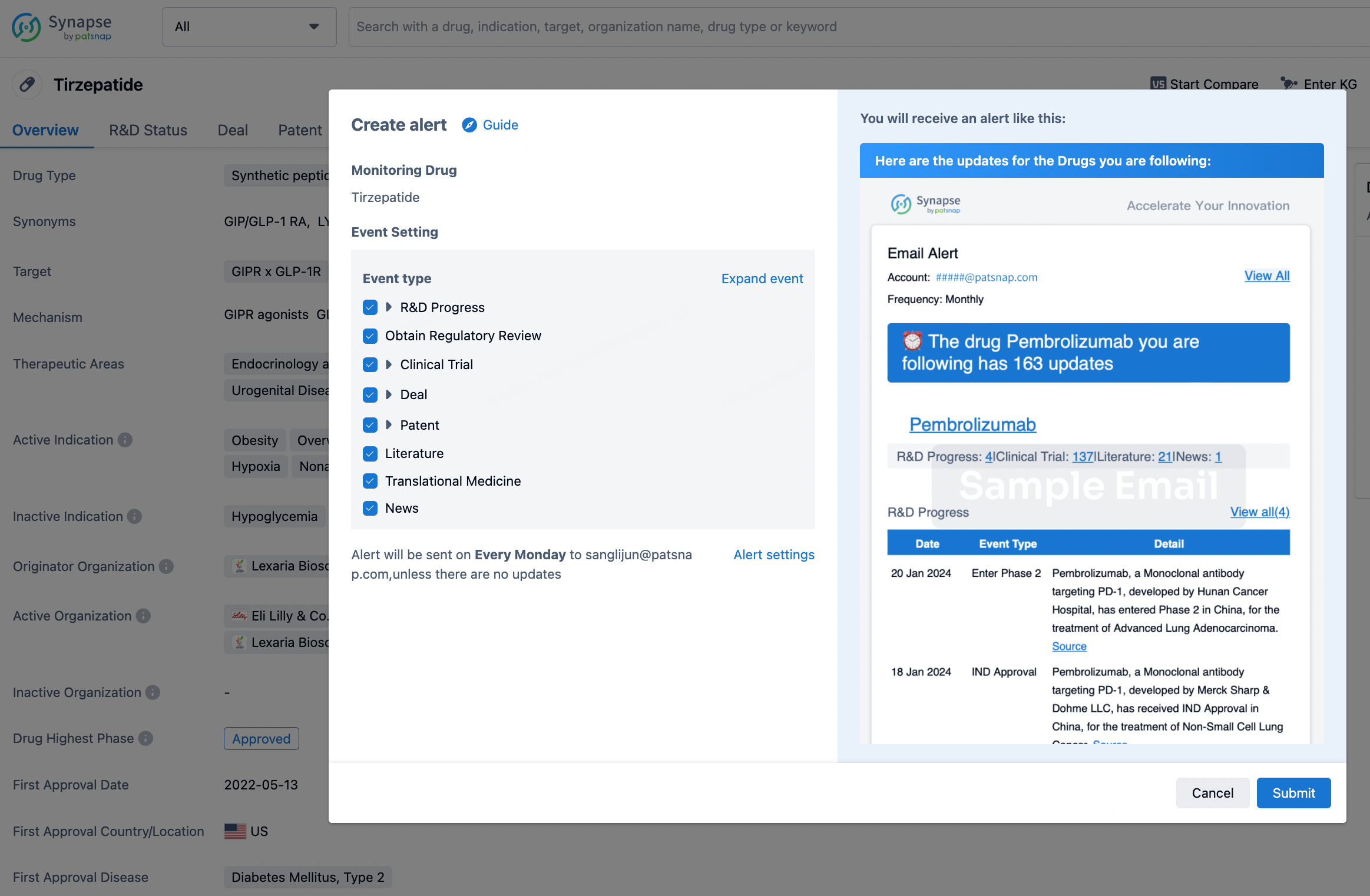
In the Synapse database, you can stay updated on the latest research and development advances of all drugs. This service is accessible anytime and anywhere, with updates available daily or weekly. Use the "Set Alert" function to stay informed. Click on the image below to embark on a brand new journey of drug discovery!

AI Agents Built for Biopharma Breakthroughs
Accelerate discovery. Empower decisions. Transform outcomes.
Get started for free today!
Accelerate Strategic R&D decision making with Synapse, PatSnap’s AI-powered Connected Innovation Intelligence Platform Built for Life Sciences Professionals.
Start your data trial now!
Synapse data is also accessible to external entities via APIs or data packages. Empower better decisions with the latest in pharmaceutical intelligence.