Request Demo
What is the mechanism of Tucatinib?
17 July 2024
Tucatinib is a targeted therapy drug that has shown promising results in the treatment of certain types of cancer, particularly HER2-positive breast cancer. Understanding the mechanism of action of Tucatinib is crucial for appreciating its role in cancer therapy and its potential benefits for patients.
Tucatinib is a small molecule tyrosine kinase inhibitor that specifically targets the human epidermal growth factor receptor 2 (HER2). HER2 is a protein that promotes the growth of cancer cells and is overexpressed in approximately 15-20% of breast cancers. This overexpression is associated with aggressive tumor growth and poor prognosis. By inhibiting HER2, Tucatinib helps to slow down or stop the proliferation of cancer cells that depend on this pathway for growth and survival.
The mechanism of action of Tucatinib involves its selective inhibition of the HER2 tyrosine kinase. Tyrosine kinases are enzymes that catalyze the transfer of a phosphate group from ATP to specific tyrosine residues on substrate proteins, a process that activates various signaling pathways essential for cell growth, survival, and differentiation. In HER2-positive cancers, the HER2 receptor is often overactive, leading to uncontrolled cellular division and tumor progression.
Tucatinib binds to the intracellular domain of the HER2 receptor, specifically targeting the tyrosine kinase domain. By doing so, it prevents the receptor from phosphorylating downstream signaling proteins, effectively disrupting the HER2-mediated signaling pathways. This inhibition leads to the suppression of cell proliferation and induces apoptosis, or programmed cell death, in cancer cells that rely on HER2 signaling.
One of the notable advantages of Tucatinib is its high selectivity for HER2. Unlike other HER2-targeted therapies, such as lapatinib, which also inhibit the epidermal growth factor receptor (EGFR), Tucatinib is designed to minimize off-target effects. This selective inhibition reduces the likelihood of adverse side effects typically associated with EGFR inhibition, such as skin rash and diarrhea, making Tucatinib a more tolerable option for many patients.
Clinical studies have demonstrated the efficacy of Tucatinib in combination with other HER2-targeted therapies and chemotherapeutic agents. For instance, the HER2CLIMB trial showed that the combination of Tucatinib with trastuzumab and capecitabine significantly improved progression-free survival and overall survival in patients with HER2-positive metastatic breast cancer, including those with brain metastases. This combination therapy effectively leverages multiple mechanisms of action to enhance anti-tumor activity and overcome resistance that may develop with single-agent treatments.
In summary, Tucatinib is a highly selective HER2 tyrosine kinase inhibitor that disrupts the HER2 signaling pathway, thereby inhibiting the growth and survival of HER2-positive cancer cells. Its specificity for HER2 over EGFR minimizes off-target side effects, offering a more favorable safety profile. The promising results from clinical trials underscore Tucatinib's potential as a valuable addition to the treatment landscape for HER2-positive breast cancer, particularly in patients with advanced disease.
Tucatinib is a small molecule tyrosine kinase inhibitor that specifically targets the human epidermal growth factor receptor 2 (HER2). HER2 is a protein that promotes the growth of cancer cells and is overexpressed in approximately 15-20% of breast cancers. This overexpression is associated with aggressive tumor growth and poor prognosis. By inhibiting HER2, Tucatinib helps to slow down or stop the proliferation of cancer cells that depend on this pathway for growth and survival.
The mechanism of action of Tucatinib involves its selective inhibition of the HER2 tyrosine kinase. Tyrosine kinases are enzymes that catalyze the transfer of a phosphate group from ATP to specific tyrosine residues on substrate proteins, a process that activates various signaling pathways essential for cell growth, survival, and differentiation. In HER2-positive cancers, the HER2 receptor is often overactive, leading to uncontrolled cellular division and tumor progression.
Tucatinib binds to the intracellular domain of the HER2 receptor, specifically targeting the tyrosine kinase domain. By doing so, it prevents the receptor from phosphorylating downstream signaling proteins, effectively disrupting the HER2-mediated signaling pathways. This inhibition leads to the suppression of cell proliferation and induces apoptosis, or programmed cell death, in cancer cells that rely on HER2 signaling.
One of the notable advantages of Tucatinib is its high selectivity for HER2. Unlike other HER2-targeted therapies, such as lapatinib, which also inhibit the epidermal growth factor receptor (EGFR), Tucatinib is designed to minimize off-target effects. This selective inhibition reduces the likelihood of adverse side effects typically associated with EGFR inhibition, such as skin rash and diarrhea, making Tucatinib a more tolerable option for many patients.
Clinical studies have demonstrated the efficacy of Tucatinib in combination with other HER2-targeted therapies and chemotherapeutic agents. For instance, the HER2CLIMB trial showed that the combination of Tucatinib with trastuzumab and capecitabine significantly improved progression-free survival and overall survival in patients with HER2-positive metastatic breast cancer, including those with brain metastases. This combination therapy effectively leverages multiple mechanisms of action to enhance anti-tumor activity and overcome resistance that may develop with single-agent treatments.
In summary, Tucatinib is a highly selective HER2 tyrosine kinase inhibitor that disrupts the HER2 signaling pathway, thereby inhibiting the growth and survival of HER2-positive cancer cells. Its specificity for HER2 over EGFR minimizes off-target side effects, offering a more favorable safety profile. The promising results from clinical trials underscore Tucatinib's potential as a valuable addition to the treatment landscape for HER2-positive breast cancer, particularly in patients with advanced disease.
How to obtain the latest development progress of all drugs?
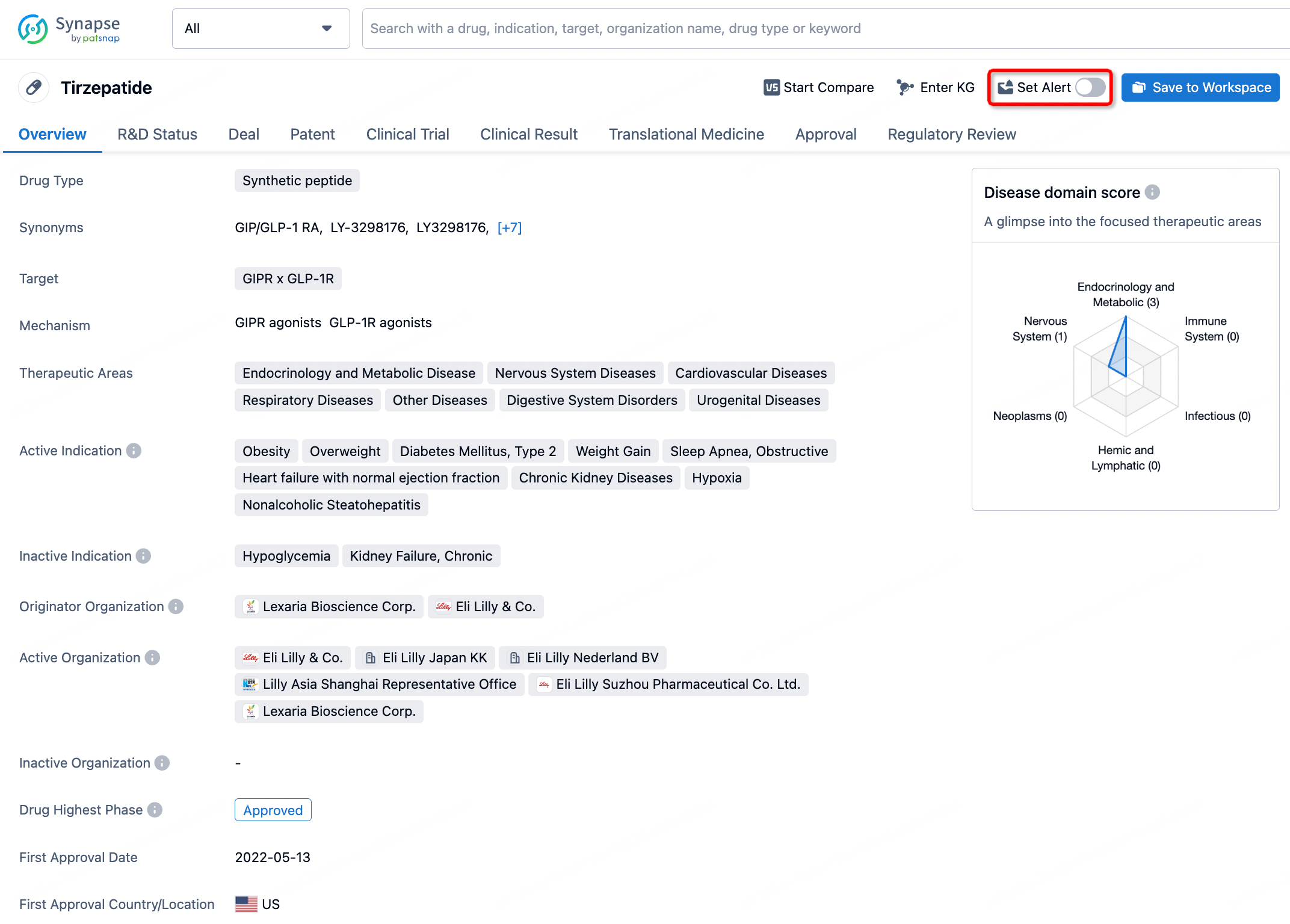
In the Synapse database, you can stay updated on the latest research and development advances of all drugs. This service is accessible anytime and anywhere, with updates available daily or weekly. Use the "Set Alert" function to stay informed. Click on the image below to embark on a brand new journey of drug discovery!


AI Agents Built for Biopharma Breakthroughs
Accelerate discovery. Empower decisions. Transform outcomes.
Get started for free today!
Accelerate Strategic R&D decision making with Synapse, PatSnap’s AI-powered Connected Innovation Intelligence Platform Built for Life Sciences Professionals.
Start your data trial now!
Synapse data is also accessible to external entities via APIs or data packages. Empower better decisions with the latest in pharmaceutical intelligence.