Request Demo
What is AG-TMB711 used for?
14 June 2024
AG-TMB711 is emerging as an innovative player in the pharmaceutical landscape, particularly in the realm of oncology. This investigational drug has garnered attention for its potential efficacy against certain types of cancer. Under the stewardship of various research institutions and pharmaceutical companies, AG-TMB711 is being rigorously scrutinized to validate its therapeutic promise.
The drug’s trade name, AG-TMB711, is designed to target specific cancer cells, making it a focal point in targeted cancer therapies. It belongs to a class of drugs known as tyrosine kinase inhibitors (TKIs), which are well-regarded for their ability to interfere with cellular signaling pathways that contribute to cancer progression. The primary indication for AG-TMB711 is the treatment of advanced or metastatic cancers, particularly those that have proven resistant to conventional treatments. Current research is primarily conducted in clinical trials, with several studies already in phase II and III, showing promising preliminary results.
AG-TMB711 Mechanism of Action
The mechanism of action of AG-TMB711 is closely tied to its classification as a tyrosine kinase inhibitor. Tyrosine kinases are enzymes that play a critical role in the regulation of various cellular processes, including growth, differentiation, and metabolism. In many cancers, these enzymes are abnormally active, driving the uncontrolled proliferation of malignant cells.
AG-TMB711 works by selectively inhibiting these overactive tyrosine kinases, thereby disrupting the signaling pathways essential for cancer cell survival and growth. Specifically, AG-TMB711 targets the epidermal growth factor receptor (EGFR) and anaplastic lymphoma kinase (ALK), both of which are commonly mutated or overexpressed in several cancer types. By blocking these pathways, AG-TMB711 effectively induces apoptosis (programmed cell death) and inhibits angiogenesis (the formation of new blood vessels), which are crucial for tumor growth and metastasis.
Moreover, AG-TMB711 has shown potential in overcoming resistance mechanisms that often limit the efficacy of other TKIs. For instance, in cases where cancer cells develop secondary mutations rendering first-line TKIs ineffective, AG-TMB711 has demonstrated the ability to bind to these altered enzyme configurations, maintaining its therapeutic efficacy. This adaptability makes AG-TMB711 a versatile and potent candidate in the ongoing battle against cancer.
How to Use AG-TMB711
When it comes to the administration of AG-TMB711, the regimen is meticulously designed to optimize its therapeutic benefits while minimizing adverse effects. AG-TMB711 is generally administered orally, which makes it more convenient compared to some other cancer therapies that require intravenous delivery. The oral form also facilitates easier dose adjustments based on patient response and tolerability.
The standard dosage of AG-TMB711 is determined by the patient’s body surface area and the specific type of cancer being treated. Typically, it is taken once daily, with or without food. It is crucial for patients to adhere to the prescribed schedule to maintain consistent drug levels in the bloodstream, thereby maximizing the drug’s efficacy.
The onset time of AG-TMB711 can vary depending on several factors, including the patient’s overall health, the stage of cancer, and any prior treatments. Generally, patients may start to notice clinical improvements within a few weeks of initiating therapy. However, it is essential to continue the medication as directed by the healthcare provider, even if symptoms appear to improve or stabilize, to ensure sustained therapeutic effects.
Follow-up appointments and regular monitoring are integral aspects of the treatment plan with AG-TMB711. These visits allow healthcare providers to assess the drug’s efficacy, monitor for any potential side effects, and make necessary adjustments to the dosage or administration schedule.
What are AG-TMB711 Side Effects
Like all medications, AG-TMB711 is associated with a spectrum of potential side effects. Understanding these side effects is crucial for both patients and healthcare providers to manage them effectively and maintain the overall quality of life during treatment.
Common side effects of AG-TMB711 include gastrointestinal disturbances such as nausea, vomiting, and diarrhea. These symptoms are generally manageable with supportive care and may subside as the patient’s body adjusts to the medication. In some cases, antiemetic or antidiarrheal medications may be prescribed to alleviate these issues.
Another frequently observed adverse effect is skin reactions, including rashes, dry skin, and itching. These dermatological issues are often mild to moderate in severity and can be treated with topical creams or other dermatologic interventions. However, it is important to report any severe or persistent skin problems to the healthcare provider, as they may necessitate a dosage adjustment or additional treatment.
More serious, albeit less common, side effects include hepatotoxicity (liver damage), cardiotoxicity (heart damage), and pulmonary toxicity (lung damage). Regular monitoring of liver function tests, cardiac assessments, and lung function evaluations are essential to detect any early signs of these toxicities. Prompt intervention can mitigate the severity of these adverse effects and ensure the safety of the patient.
Contraindications for AG-TMB711 include a history of severe hypersensitivity to the drug or any of its components. Patients with significant liver or kidney impairment should also exercise caution, as these conditions may affect the drug’s metabolism and excretion, potentially leading to increased toxicity. Additionally, pregnant or breastfeeding women are generally advised against using AG-TMB711 due to potential risks to the fetus or infant.
What Other Drugs Will Affect AG-TMB711
Drug interactions are an important consideration when prescribing AG-TMB711, as concomitant use of other medications can influence its efficacy and safety profile. Certain drugs can either enhance or inhibit the metabolic pathways responsible for processing AG-TMB711, leading to altered blood levels of the drug.
For instance, strong inhibitors of the cytochrome P450 enzyme CYP3A4, such as ketoconazole and erythromycin, can increase the plasma concentration of AG-TMB711, thereby elevating the risk of adverse effects. Conversely, strong inducers of CYP3A4, including rifampin and phenytoin, can decrease AG-TMB711 levels, potentially reducing its therapeutic effectiveness.
It is also important to consider potential interactions with other medications commonly used in cancer patients, such as anticoagulants, antihypertensives, and antidiabetics. Close monitoring and possible dose adjustments of these concomitant medications may be necessary to avoid complications.
In conclusion, AG-TMB711 represents a promising advancement in targeted cancer therapy, with its innovative mechanism of action and adaptive efficacy against resistant cancer forms. While it offers significant therapeutic potential, careful consideration of administration protocols, side effects, contraindications, and drug interactions is essential to maximize its benefits and ensure patient safety. As research continues to unfold, AG-TMB711 may well establish itself as a cornerstone in the future landscape of oncology treatments.
The drug’s trade name, AG-TMB711, is designed to target specific cancer cells, making it a focal point in targeted cancer therapies. It belongs to a class of drugs known as tyrosine kinase inhibitors (TKIs), which are well-regarded for their ability to interfere with cellular signaling pathways that contribute to cancer progression. The primary indication for AG-TMB711 is the treatment of advanced or metastatic cancers, particularly those that have proven resistant to conventional treatments. Current research is primarily conducted in clinical trials, with several studies already in phase II and III, showing promising preliminary results.
AG-TMB711 Mechanism of Action
The mechanism of action of AG-TMB711 is closely tied to its classification as a tyrosine kinase inhibitor. Tyrosine kinases are enzymes that play a critical role in the regulation of various cellular processes, including growth, differentiation, and metabolism. In many cancers, these enzymes are abnormally active, driving the uncontrolled proliferation of malignant cells.
AG-TMB711 works by selectively inhibiting these overactive tyrosine kinases, thereby disrupting the signaling pathways essential for cancer cell survival and growth. Specifically, AG-TMB711 targets the epidermal growth factor receptor (EGFR) and anaplastic lymphoma kinase (ALK), both of which are commonly mutated or overexpressed in several cancer types. By blocking these pathways, AG-TMB711 effectively induces apoptosis (programmed cell death) and inhibits angiogenesis (the formation of new blood vessels), which are crucial for tumor growth and metastasis.
Moreover, AG-TMB711 has shown potential in overcoming resistance mechanisms that often limit the efficacy of other TKIs. For instance, in cases where cancer cells develop secondary mutations rendering first-line TKIs ineffective, AG-TMB711 has demonstrated the ability to bind to these altered enzyme configurations, maintaining its therapeutic efficacy. This adaptability makes AG-TMB711 a versatile and potent candidate in the ongoing battle against cancer.
How to Use AG-TMB711
When it comes to the administration of AG-TMB711, the regimen is meticulously designed to optimize its therapeutic benefits while minimizing adverse effects. AG-TMB711 is generally administered orally, which makes it more convenient compared to some other cancer therapies that require intravenous delivery. The oral form also facilitates easier dose adjustments based on patient response and tolerability.
The standard dosage of AG-TMB711 is determined by the patient’s body surface area and the specific type of cancer being treated. Typically, it is taken once daily, with or without food. It is crucial for patients to adhere to the prescribed schedule to maintain consistent drug levels in the bloodstream, thereby maximizing the drug’s efficacy.
The onset time of AG-TMB711 can vary depending on several factors, including the patient’s overall health, the stage of cancer, and any prior treatments. Generally, patients may start to notice clinical improvements within a few weeks of initiating therapy. However, it is essential to continue the medication as directed by the healthcare provider, even if symptoms appear to improve or stabilize, to ensure sustained therapeutic effects.
Follow-up appointments and regular monitoring are integral aspects of the treatment plan with AG-TMB711. These visits allow healthcare providers to assess the drug’s efficacy, monitor for any potential side effects, and make necessary adjustments to the dosage or administration schedule.
What are AG-TMB711 Side Effects
Like all medications, AG-TMB711 is associated with a spectrum of potential side effects. Understanding these side effects is crucial for both patients and healthcare providers to manage them effectively and maintain the overall quality of life during treatment.
Common side effects of AG-TMB711 include gastrointestinal disturbances such as nausea, vomiting, and diarrhea. These symptoms are generally manageable with supportive care and may subside as the patient’s body adjusts to the medication. In some cases, antiemetic or antidiarrheal medications may be prescribed to alleviate these issues.
Another frequently observed adverse effect is skin reactions, including rashes, dry skin, and itching. These dermatological issues are often mild to moderate in severity and can be treated with topical creams or other dermatologic interventions. However, it is important to report any severe or persistent skin problems to the healthcare provider, as they may necessitate a dosage adjustment or additional treatment.
More serious, albeit less common, side effects include hepatotoxicity (liver damage), cardiotoxicity (heart damage), and pulmonary toxicity (lung damage). Regular monitoring of liver function tests, cardiac assessments, and lung function evaluations are essential to detect any early signs of these toxicities. Prompt intervention can mitigate the severity of these adverse effects and ensure the safety of the patient.
Contraindications for AG-TMB711 include a history of severe hypersensitivity to the drug or any of its components. Patients with significant liver or kidney impairment should also exercise caution, as these conditions may affect the drug’s metabolism and excretion, potentially leading to increased toxicity. Additionally, pregnant or breastfeeding women are generally advised against using AG-TMB711 due to potential risks to the fetus or infant.
What Other Drugs Will Affect AG-TMB711
Drug interactions are an important consideration when prescribing AG-TMB711, as concomitant use of other medications can influence its efficacy and safety profile. Certain drugs can either enhance or inhibit the metabolic pathways responsible for processing AG-TMB711, leading to altered blood levels of the drug.
For instance, strong inhibitors of the cytochrome P450 enzyme CYP3A4, such as ketoconazole and erythromycin, can increase the plasma concentration of AG-TMB711, thereby elevating the risk of adverse effects. Conversely, strong inducers of CYP3A4, including rifampin and phenytoin, can decrease AG-TMB711 levels, potentially reducing its therapeutic effectiveness.
It is also important to consider potential interactions with other medications commonly used in cancer patients, such as anticoagulants, antihypertensives, and antidiabetics. Close monitoring and possible dose adjustments of these concomitant medications may be necessary to avoid complications.
In conclusion, AG-TMB711 represents a promising advancement in targeted cancer therapy, with its innovative mechanism of action and adaptive efficacy against resistant cancer forms. While it offers significant therapeutic potential, careful consideration of administration protocols, side effects, contraindications, and drug interactions is essential to maximize its benefits and ensure patient safety. As research continues to unfold, AG-TMB711 may well establish itself as a cornerstone in the future landscape of oncology treatments.
How to obtain the latest development progress of all drugs?
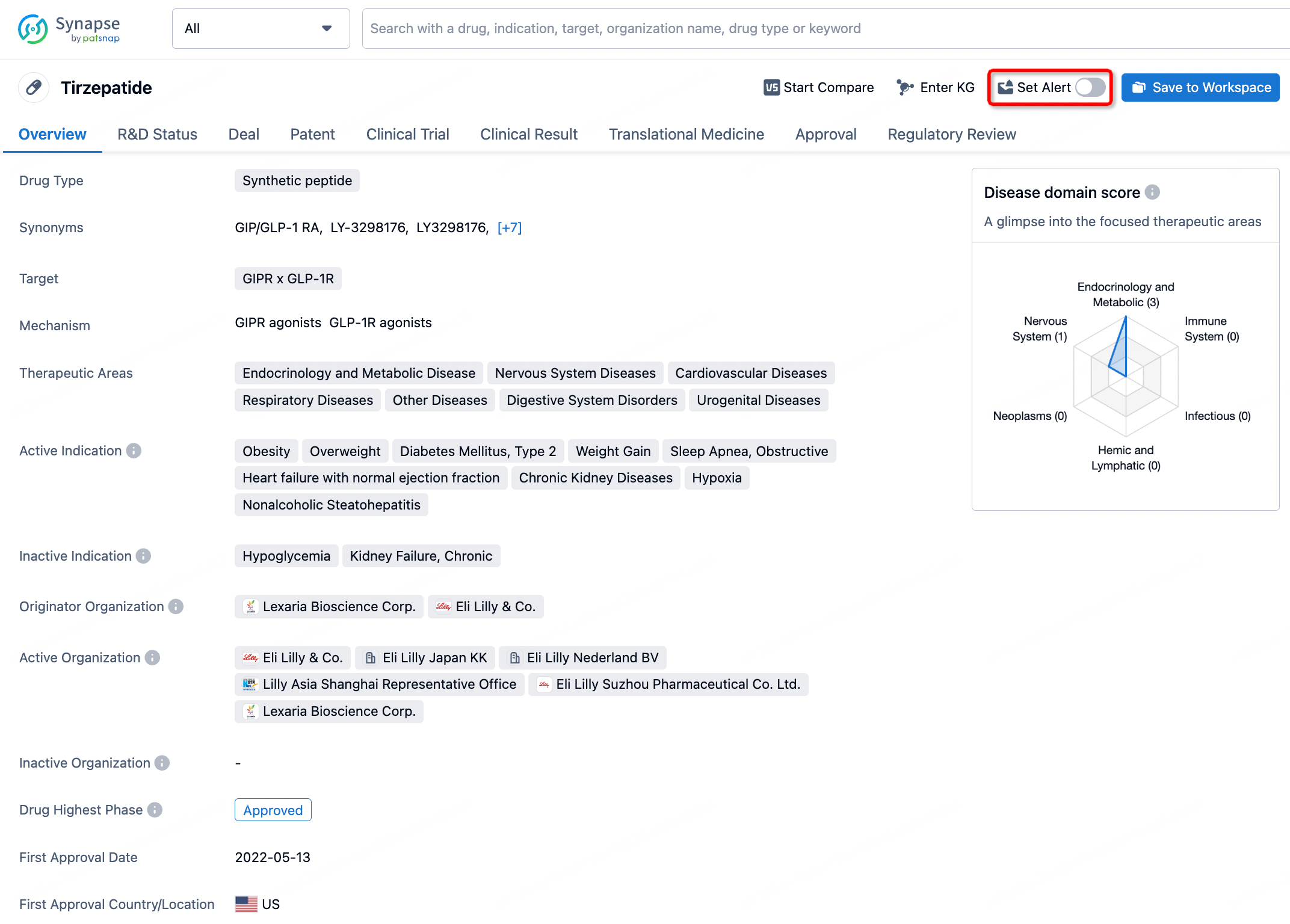
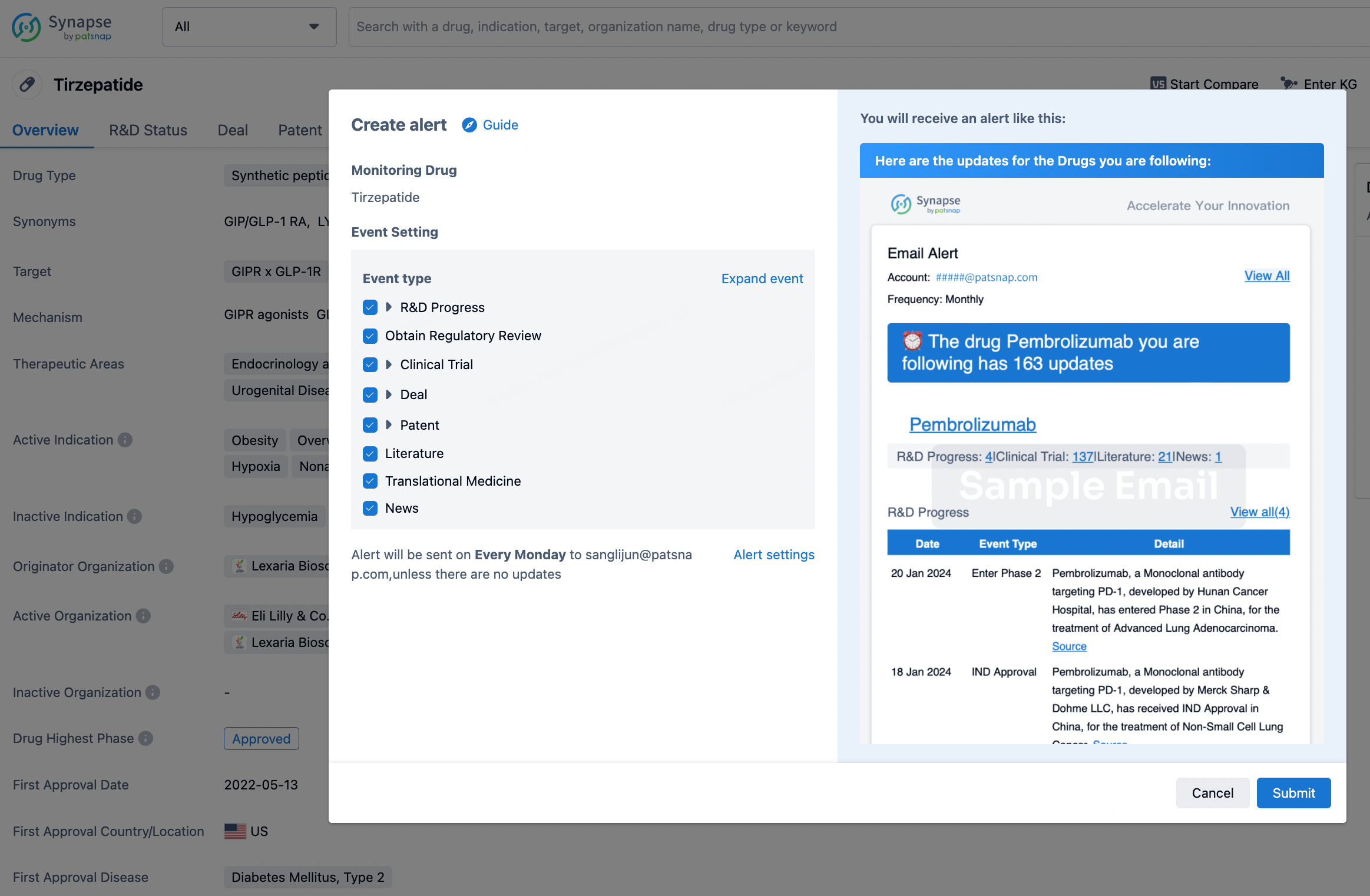
In the Synapse database, you can stay updated on the latest research and development advances of all drugs. This service is accessible anytime and anywhere, with updates available daily or weekly. Use the "Set Alert" function to stay informed. Click on the image below to embark on a brand new journey of drug discovery!
AI Agents Built for Biopharma Breakthroughs
Accelerate discovery. Empower decisions. Transform outcomes.
Get started for free today!
Accelerate Strategic R&D decision making with Synapse, PatSnap’s AI-powered Connected Innovation Intelligence Platform Built for Life Sciences Professionals.
Start your data trial now!
Synapse data is also accessible to external entities via APIs or data packages. Empower better decisions with the latest in pharmaceutical intelligence.