Request Demo
What is Basiliximab used for?
14 June 2024
Basiliximab, sold under the trade name Simulect, is a chimeric mouse-human monoclonal antibody that targets the interleukin-2 (IL-2) receptor alpha-chain, also known as CD25, on the surface of activated T-lymphocytes. It was developed by Novartis and is primarily used as an immunosuppressive agent. The drug has been approved for use in the prevention of acute organ rejection following kidney transplantation. Basiliximab is typically used in combination with other immunosuppressive agents such as corticosteroids, cyclosporine, or tacrolimus. Research and clinical trials have demonstrated its efficacy in reducing the incidence of acute organ rejection, making it a valuable addition to the arsenal of medications available for transplant patients.
Basiliximab Mechanism of Action
The primary mechanism of action of Basiliximab involves its binding to the alpha subunit (CD25) of the IL-2 receptor on the surface of activated T-cells. By binding to this receptor, Basiliximab effectively blocks the interaction between IL-2, a crucial cytokine for T-cell proliferation, and its receptor. This inhibition prevents the activation and proliferation of T-cells, which are central to the immune response that leads to organ rejection. By suppressing T-cell activity, Basiliximab helps to reduce the likelihood of the immune system attacking the transplanted organ. This targeted approach allows for more effective prevention of organ rejection with potentially fewer side effects compared to more generalized immunosuppressive therapies.
How to Use Basiliximab
Basiliximab is administered via intravenous infusion, typically in two doses. The first dose is given just before the transplantation surgery, usually within two hours prior to the procedure. The second dose is administered four days after the transplantation. Each dose is given over a 20 to 30-minute period. The onset of action of Basiliximab is relatively rapid, with the drug beginning to exert its immunosuppressive effects within hours of administration. The treatment regimen is designed to provide optimal immunosuppression during the critical period immediately following transplantation when the risk of acute rejection is highest. It is essential to follow the prescribed dosing schedule to achieve the best possible outcomes and minimize the risk of organ rejection.
What is Basiliximab Side Effects
While Basiliximab is generally well-tolerated, it can cause side effects in some patients. Common side effects include gastrointestinal symptoms such as nausea, vomiting, and diarrhea, as well as respiratory symptoms like coughing and shortness of breath. Some patients may also experience fever, headache, or increased susceptibility to infections. Serious side effects are rare but can include severe allergic reactions, such as anaphylaxis, which require immediate medical attention. Additionally, since Basiliximab suppresses the immune system, there is an increased risk of infections and malignancies. Contraindications for the use of Basiliximab include hypersensitivity to the drug or any of its components. It is also important to use caution when administering Basiliximab to patients with pre-existing infections or a history of malignancies.
What Other Drugs Will Affect Basiliximab
The use of Basiliximab in combination with other immunosuppressive agents is common practice in the context of organ transplantation. However, the concomitant use of other drugs can influence its efficacy and safety. Basiliximab is often used alongside corticosteroids, cyclosporine, or tacrolimus, and these drugs can have additive or synergistic effects in preventing organ rejection. It is crucial to monitor patients closely for signs of over-immunosuppression, which can increase the risk of infections and other complications. Additionally, drugs that affect the immune system, such as other monoclonal antibodies or immunomodulatory agents, can potentially interact with Basiliximab. It is essential to review a patient's medication history and current drug regimen to identify potential interactions and adjust treatment plans accordingly. Patients should also avoid live vaccines during treatment with Basiliximab, as their immune response may be insufficient to handle the attenuated virus or bacteria in the vaccine.
In summary, Basiliximab is a valuable medication in the prevention of acute organ rejection following kidney transplantation. Its targeted mechanism of action, involving the inhibition of IL-2 receptor signaling, provides effective immunosuppression with a relatively favorable side effect profile. Proper administration and monitoring are critical to maximizing the benefits of Basiliximab while minimizing potential risks. Understanding the possible side effects and drug interactions is essential for healthcare providers to optimize patient outcomes and ensure the success of transplantation procedures.
Basiliximab Mechanism of Action
The primary mechanism of action of Basiliximab involves its binding to the alpha subunit (CD25) of the IL-2 receptor on the surface of activated T-cells. By binding to this receptor, Basiliximab effectively blocks the interaction between IL-2, a crucial cytokine for T-cell proliferation, and its receptor. This inhibition prevents the activation and proliferation of T-cells, which are central to the immune response that leads to organ rejection. By suppressing T-cell activity, Basiliximab helps to reduce the likelihood of the immune system attacking the transplanted organ. This targeted approach allows for more effective prevention of organ rejection with potentially fewer side effects compared to more generalized immunosuppressive therapies.
How to Use Basiliximab
Basiliximab is administered via intravenous infusion, typically in two doses. The first dose is given just before the transplantation surgery, usually within two hours prior to the procedure. The second dose is administered four days after the transplantation. Each dose is given over a 20 to 30-minute period. The onset of action of Basiliximab is relatively rapid, with the drug beginning to exert its immunosuppressive effects within hours of administration. The treatment regimen is designed to provide optimal immunosuppression during the critical period immediately following transplantation when the risk of acute rejection is highest. It is essential to follow the prescribed dosing schedule to achieve the best possible outcomes and minimize the risk of organ rejection.
What is Basiliximab Side Effects
While Basiliximab is generally well-tolerated, it can cause side effects in some patients. Common side effects include gastrointestinal symptoms such as nausea, vomiting, and diarrhea, as well as respiratory symptoms like coughing and shortness of breath. Some patients may also experience fever, headache, or increased susceptibility to infections. Serious side effects are rare but can include severe allergic reactions, such as anaphylaxis, which require immediate medical attention. Additionally, since Basiliximab suppresses the immune system, there is an increased risk of infections and malignancies. Contraindications for the use of Basiliximab include hypersensitivity to the drug or any of its components. It is also important to use caution when administering Basiliximab to patients with pre-existing infections or a history of malignancies.
What Other Drugs Will Affect Basiliximab
The use of Basiliximab in combination with other immunosuppressive agents is common practice in the context of organ transplantation. However, the concomitant use of other drugs can influence its efficacy and safety. Basiliximab is often used alongside corticosteroids, cyclosporine, or tacrolimus, and these drugs can have additive or synergistic effects in preventing organ rejection. It is crucial to monitor patients closely for signs of over-immunosuppression, which can increase the risk of infections and other complications. Additionally, drugs that affect the immune system, such as other monoclonal antibodies or immunomodulatory agents, can potentially interact with Basiliximab. It is essential to review a patient's medication history and current drug regimen to identify potential interactions and adjust treatment plans accordingly. Patients should also avoid live vaccines during treatment with Basiliximab, as their immune response may be insufficient to handle the attenuated virus or bacteria in the vaccine.
In summary, Basiliximab is a valuable medication in the prevention of acute organ rejection following kidney transplantation. Its targeted mechanism of action, involving the inhibition of IL-2 receptor signaling, provides effective immunosuppression with a relatively favorable side effect profile. Proper administration and monitoring are critical to maximizing the benefits of Basiliximab while minimizing potential risks. Understanding the possible side effects and drug interactions is essential for healthcare providers to optimize patient outcomes and ensure the success of transplantation procedures.
How to obtain the latest development progress of all drugs?
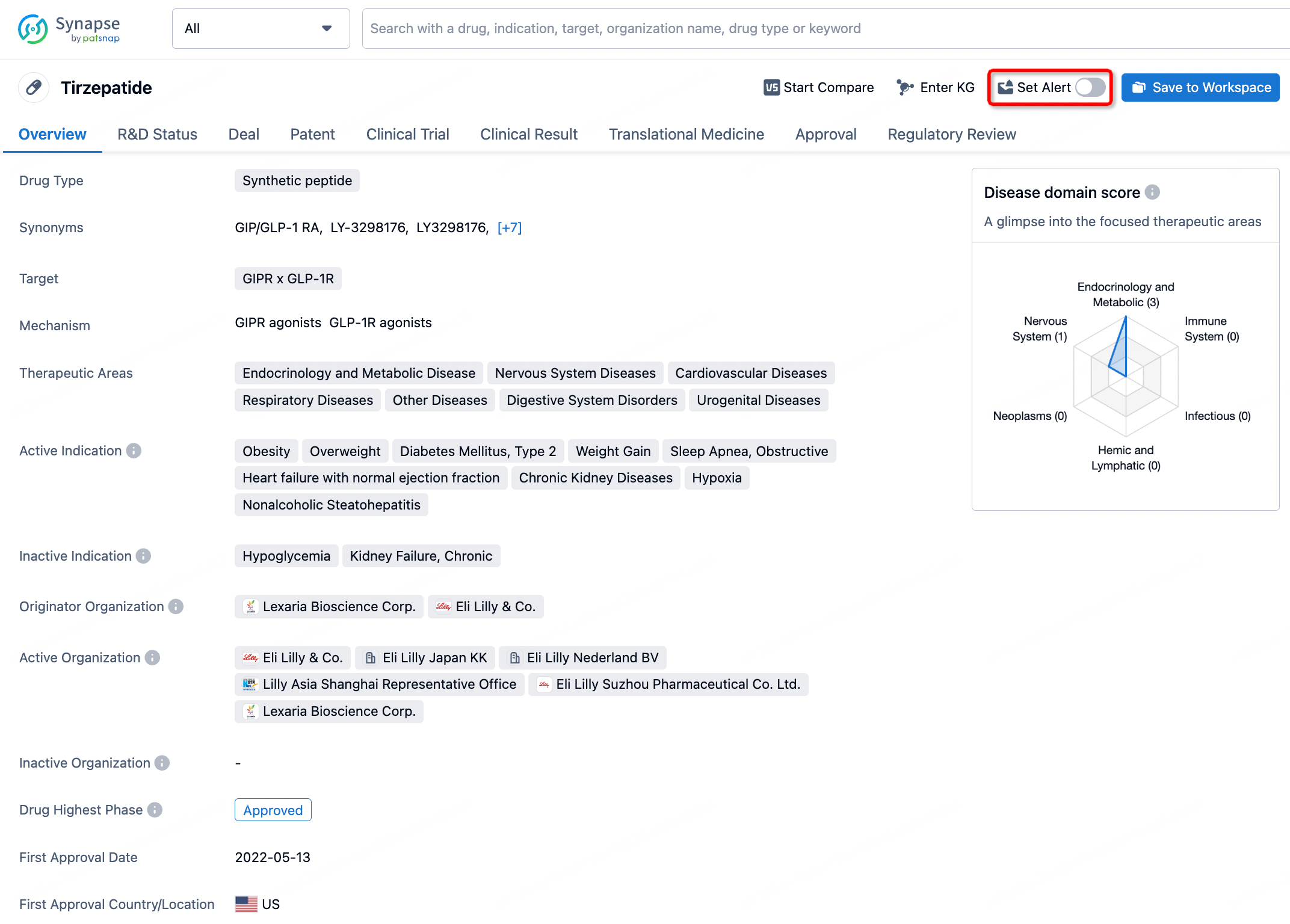
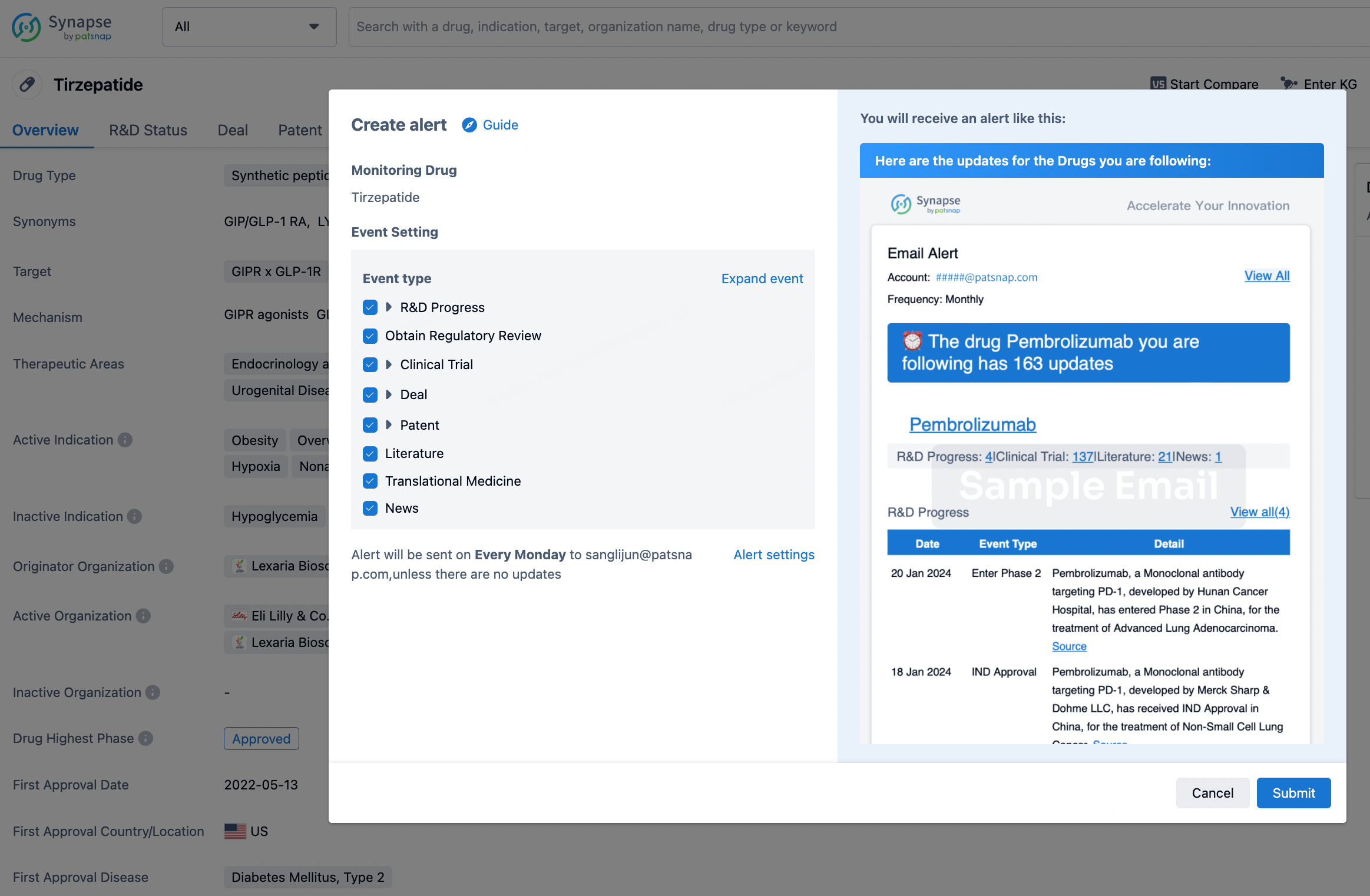
In the Synapse database, you can stay updated on the latest research and development advances of all drugs. This service is accessible anytime and anywhere, with updates available daily or weekly. Use the "Set Alert" function to stay informed. Click on the image below to embark on a brand new journey of drug discovery!
AI Agents Built for Biopharma Breakthroughs
Accelerate discovery. Empower decisions. Transform outcomes.
Get started for free today!
Accelerate Strategic R&D decision making with Synapse, PatSnap’s AI-powered Connected Innovation Intelligence Platform Built for Life Sciences Professionals.
Start your data trial now!
Synapse data is also accessible to external entities via APIs or data packages. Empower better decisions with the latest in pharmaceutical intelligence.