Request Demo
What is Binimetinib used for?
14 June 2024
Binimetinib, also known by its trade name Mektovi, is a promising therapeutic agent in the realm of targeted cancer treatments. It was developed by Array BioPharma, which was later acquired by Pfizer. Binimetinib is a type of targeted therapy known as a MEK inhibitor. It's designed to interfere with specific molecular pathways that contribute to cancer growth and survival, specifically those involving the MEK enzymes MEK1 and MEK2. These enzymes are part of the mitogen-activated protein kinase (MAPK) pathway, which is often aberrantly activated in various cancers. Binimetinib is primarily indicated for unresectable or metastatic melanoma with a BRAF V600E or V600K mutation, often in combination with other therapeutic agents such as encorafenib. Its efficacy is being examined in various clinical trials, and it has shown promising results, particularly when used in combination therapies to target multiple pathways involved in cancer proliferation.
Binimetinib's mechanism of action is rooted in its ability to inhibit MEK1 and MEK2, which are key components of the MAPK/ERK signaling pathway. This pathway plays a critical role in cell division, differentiation, and survival. Mutations in components of this pathway, such as BRAF, can lead to its continuous activation, promoting uncontrolled cell proliferation and cancer progression. Binimetinib binds to the ATP-binding site of MEK1/2, thereby inhibiting their activity and subsequent downstream signaling. This inhibition leads to a reduction in cell proliferation and induces apoptosis in tumor cells. Specifically, in cancers with BRAF mutations, this pathway is often hyperactivated, and MEK inhibitors like Binimetinib can effectively dampen this signaling, leading to decreased tumor growth. Additionally, when used in combination with BRAF inhibitors, Binimetinib can help to prevent or overcome resistance mechanisms that cancer cells might develop against single-agent therapy.
Binimetinib is typically administered orally in the form of tablets. The standard recommended dose is 45 mg taken twice daily, approximately 12 hours apart, with or without food. The drug's onset of action can vary, but patients often begin to see clinical benefits within a few weeks to a couple of months of starting therapy. It's important for patients to adhere to the prescribed dosing schedule to maintain consistent drug levels in their bloodstream, which can help maximize the therapeutic effects and minimize potential side effects. Additionally, patients should be regularly monitored through clinical assessments and imaging studies to evaluate their response to the treatment and adjust the dosing regimen if necessary.
Like all medications, Binimetinib has its share of side effects and contraindications. Common side effects include diarrhea, nausea, vomiting, abdominal pain, and fatigue. Some patients may also experience skin rashes, edema (swelling), and increased levels of liver enzymes, which indicate liver toxicity. More severe side effects can include cardiomyopathy, retinal vein occlusion, and interstitial lung disease. Because of these potential risks, Binimetinib is contraindicated in patients with a history of severe hypersensitivity to the drug or any of its components. Patients with pre-existing cardiovascular conditions should be closely monitored, given the risk of cardiomyopathy. Regular monitoring of liver function, cardiac function, and ocular health is essential to promptly identify and manage any adverse effects. It's crucial for patients to communicate any unusual symptoms or changes in their health status to their healthcare provider to ensure timely intervention and management.
The effectiveness and safety of Binimetinib can be influenced by interactions with other drugs. For instance, drugs that are strong inducers or inhibitors of the cytochrome P450 enzyme system, particularly CYP3A4, can affect the metabolism of Binimetinib. Strong CYP3A4 inhibitors, such as ketoconazole, can increase Binimetinib levels in the blood, potentially leading to enhanced side effects. Conversely, strong CYP3A4 inducers, such as rifampin, can reduce Binimetinib levels, thereby diminishing its efficacy. Additionally, the concurrent use of other medications that affect heart rhythm, such as certain antiarrhythmics or antipsychotics, may increase the risk of cardiomyopathy or other cardiac-related side effects. It's essential for patients to provide a complete list of all their medications, including over-the-counter drugs and supplements, to their healthcare provider to evaluate for potential interactions. Adjustments to the dosing regimen or additional monitoring may be necessary to safely manage the concurrent use of Binimetinib with other medications.
In summary, Binimetinib represents a significant advancement in targeted cancer therapy, offering hope for patients with specific genetic profiles of melanoma and other cancers. Its role as a MEK inhibitor allows it to disrupt critical signaling pathways involved in cancer progression, leading to improved clinical outcomes. However, its use requires careful consideration of potential side effects and drug interactions, necessitating close monitoring and communication between patients and their healthcare providers. As research continues, Binimetinib's application may expand, potentially offering benefits to a broader range of cancer patients.
Binimetinib's mechanism of action is rooted in its ability to inhibit MEK1 and MEK2, which are key components of the MAPK/ERK signaling pathway. This pathway plays a critical role in cell division, differentiation, and survival. Mutations in components of this pathway, such as BRAF, can lead to its continuous activation, promoting uncontrolled cell proliferation and cancer progression. Binimetinib binds to the ATP-binding site of MEK1/2, thereby inhibiting their activity and subsequent downstream signaling. This inhibition leads to a reduction in cell proliferation and induces apoptosis in tumor cells. Specifically, in cancers with BRAF mutations, this pathway is often hyperactivated, and MEK inhibitors like Binimetinib can effectively dampen this signaling, leading to decreased tumor growth. Additionally, when used in combination with BRAF inhibitors, Binimetinib can help to prevent or overcome resistance mechanisms that cancer cells might develop against single-agent therapy.
Binimetinib is typically administered orally in the form of tablets. The standard recommended dose is 45 mg taken twice daily, approximately 12 hours apart, with or without food. The drug's onset of action can vary, but patients often begin to see clinical benefits within a few weeks to a couple of months of starting therapy. It's important for patients to adhere to the prescribed dosing schedule to maintain consistent drug levels in their bloodstream, which can help maximize the therapeutic effects and minimize potential side effects. Additionally, patients should be regularly monitored through clinical assessments and imaging studies to evaluate their response to the treatment and adjust the dosing regimen if necessary.
Like all medications, Binimetinib has its share of side effects and contraindications. Common side effects include diarrhea, nausea, vomiting, abdominal pain, and fatigue. Some patients may also experience skin rashes, edema (swelling), and increased levels of liver enzymes, which indicate liver toxicity. More severe side effects can include cardiomyopathy, retinal vein occlusion, and interstitial lung disease. Because of these potential risks, Binimetinib is contraindicated in patients with a history of severe hypersensitivity to the drug or any of its components. Patients with pre-existing cardiovascular conditions should be closely monitored, given the risk of cardiomyopathy. Regular monitoring of liver function, cardiac function, and ocular health is essential to promptly identify and manage any adverse effects. It's crucial for patients to communicate any unusual symptoms or changes in their health status to their healthcare provider to ensure timely intervention and management.
The effectiveness and safety of Binimetinib can be influenced by interactions with other drugs. For instance, drugs that are strong inducers or inhibitors of the cytochrome P450 enzyme system, particularly CYP3A4, can affect the metabolism of Binimetinib. Strong CYP3A4 inhibitors, such as ketoconazole, can increase Binimetinib levels in the blood, potentially leading to enhanced side effects. Conversely, strong CYP3A4 inducers, such as rifampin, can reduce Binimetinib levels, thereby diminishing its efficacy. Additionally, the concurrent use of other medications that affect heart rhythm, such as certain antiarrhythmics or antipsychotics, may increase the risk of cardiomyopathy or other cardiac-related side effects. It's essential for patients to provide a complete list of all their medications, including over-the-counter drugs and supplements, to their healthcare provider to evaluate for potential interactions. Adjustments to the dosing regimen or additional monitoring may be necessary to safely manage the concurrent use of Binimetinib with other medications.
In summary, Binimetinib represents a significant advancement in targeted cancer therapy, offering hope for patients with specific genetic profiles of melanoma and other cancers. Its role as a MEK inhibitor allows it to disrupt critical signaling pathways involved in cancer progression, leading to improved clinical outcomes. However, its use requires careful consideration of potential side effects and drug interactions, necessitating close monitoring and communication between patients and their healthcare providers. As research continues, Binimetinib's application may expand, potentially offering benefits to a broader range of cancer patients.
How to obtain the latest development progress of all drugs?
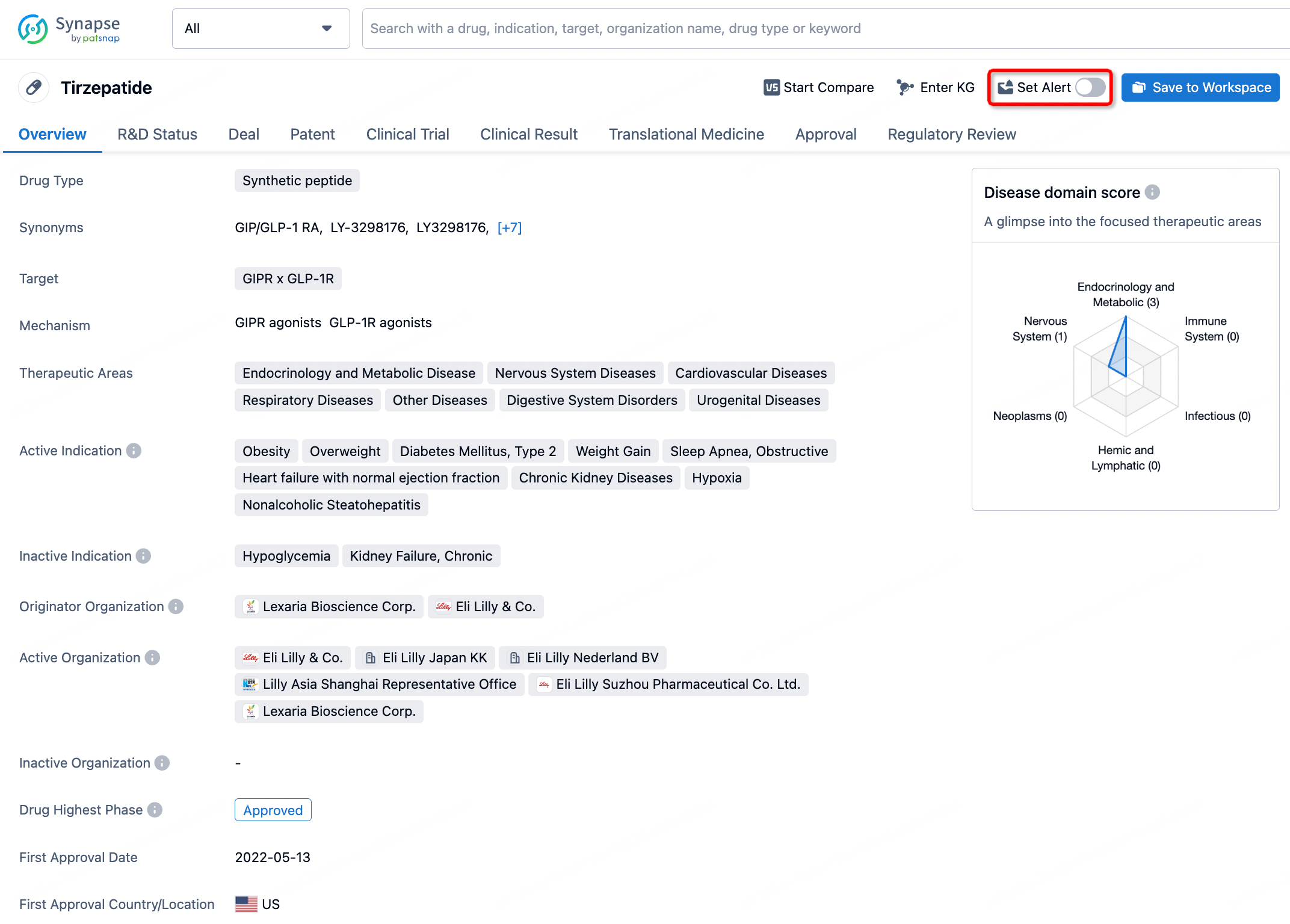
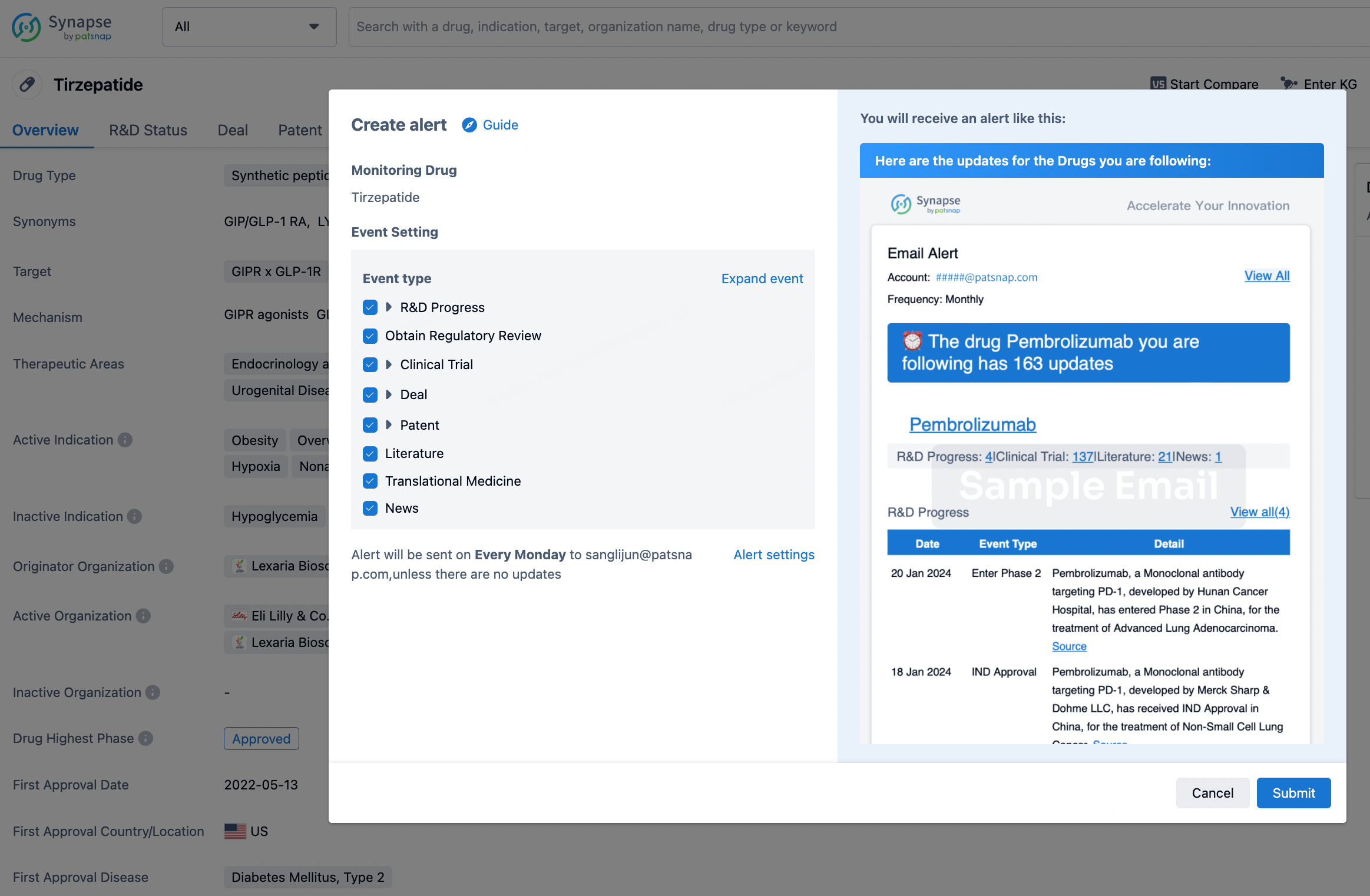
In the Synapse database, you can stay updated on the latest research and development advances of all drugs. This service is accessible anytime and anywhere, with updates available daily or weekly. Use the "Set Alert" function to stay informed. Click on the image below to embark on a brand new journey of drug discovery!
Hiro LS Researcher
The AI Search Engine Built to Accelerate Biopharma Decisions
Search across billion-scale life sciences data to uncover signals, validate evidence, and act with confidence.
Ask any biopharma research question→
Get started for free today!
Accelerate Strategic R&D decision making with Synapse, Patsnap’s AI-powered Connected Innovation Intelligence Platform Built for Life Sciences Professionals.
Discover Synapse Data Servers
Synapse data is now integrated into the PatSnap LS Model Context Protocol (MCP) service. Customize your LLM agent now using our MCP server!