Request Demo
What is Cefpirome Sulfate used for?
14 June 2024
Cefpirome Sulfate is a fourth-generation cephalosporin antibiotic that has garnered significant attention in the medical community for its broad-spectrum antibacterial activity. As a member of the cephalosporin class, it offers a robust defense against a wide range of Gram-positive and Gram-negative bacteria, making it an invaluable tool in the treatment of severe infections. Under trade names such as Cefrom, Cefir, and Keoprim, Cefpirome is primarily manufactured and researched by pharmaceutical companies like Hoechst Marion Roussel and its successors. This drug is particularly indicated for severe infections, including those of the respiratory tract, urinary tract, skin and soft tissues, and septicemia. Over the years, extensive research and clinical trials have validated its efficacy, positioning it as a reliable option for combating complex bacterial infections.
Cefpirome Sulfate Mechanism of Action
Cefpirome Sulfate exerts its antibacterial effects by disrupting the synthesis of the bacterial cell wall. Like other cephalosporins, its mechanism of action revolves around its ability to bind to penicillin-binding proteins (PBPs) located within the bacterial cell wall. PBPs are essential for the cross-linking of peptidoglycan, a critical component of the bacterial cell wall that provides structural integrity. By binding to these proteins, Cefpirome inhibits their function, leading to the weakening and eventual rupture of the cell wall. This, in turn, results in bacterial cell lysis and death. The broad-spectrum activity of Cefpirome stems from its strong affinity for multiple PBPs, which allows it to effectively target a diverse array of bacterial species. Furthermore, Cefpirome demonstrates good stability against beta-lactamases, enzymes produced by some bacteria that degrade beta-lactam antibiotics, rendering them ineffective. This resistance to enzymatic degradation enhances its utility against beta-lactamase-producing bacterial strains, further solidifying its role as a potent anti-infective agent.
How to Use Cefpirome Sulfate
Cefpirome Sulfate is typically administered via intravenous (IV) infusion, a method chosen to ensure rapid and precise delivery of the medication into the bloodstream, thereby maximizing its therapeutic effects. The standard dosing regimen often involves administering the drug every 12 hours, although the exact dosage and frequency can vary based on the severity of the infection, the patient's renal function, and other individual factors. The onset of action for Cefpirome is generally swift, with therapeutic levels achieved in the bloodstream within minutes of IV administration. This rapid onset makes Cefpirome an ideal choice for treating severe, acute infections where timely intervention is critical. For adult patients, the dosage usually ranges from 1 to 2 grams per administration, though in cases of severe infections, higher doses may be warranted. It's important to adjust the dosage for patients with renal impairment to avoid accumulation of the drug, which could lead to toxicity. The duration of treatment is typically determined by the type and severity of the infection, as well as the patient's overall clinical response. As always, it is crucial to follow the prescribing physician's guidelines and complete the full course of therapy, even if symptoms subside early on, to prevent the development of antibiotic resistance and ensure the infection is fully eradicated.
What is Cefpirome Sulfate Side Effects
While Cefpirome Sulfate is generally well-tolerated, it is not without its side effects. Common adverse reactions include gastrointestinal disturbances such as nausea, vomiting, and diarrhea. These symptoms are typically mild and transient, resolving on their own without the need for additional treatment. More serious gastrointestinal side effects, such as pseudomembranous colitis, although rare, can occur and necessitate immediate medical attention. Allergic reactions, ranging from mild rash and itching to severe anaphylaxis, are also potential risks, particularly in individuals with a known allergy to cephalosporins or penicillins. Hematologic side effects, including transient leukopenia, thrombocytopenia, and eosinophilia, have been reported but are usually reversible upon discontinuation of the drug. Renal toxicity, though uncommon, is a concern, especially in patients with pre-existing renal conditions, necessitating careful monitoring of renal function during treatment. Contraindications for Cefpirome use include patients with a known hypersensitivity to cephalosporins or any component of the formulation. Caution is also advised when prescribing Cefpirome to patients with a history of gastrointestinal disease, particularly colitis, as well as those with renal impairment, where dosage adjustments may be necessary to prevent accumulation and toxicity. Given its potential for serious allergic reactions, it is crucial to obtain a thorough patient history regarding drug allergies prior to initiating therapy with Cefpirome.
What Other Drugs Will Affect Cefpirome Sulfate
Cefpirome Sulfate, like many antibiotics, can interact with other medications, potentially altering its efficacy or increasing the risk of adverse effects. One significant interaction is with aminoglycosides, another class of antibiotics. Concurrent use of Cefpirome and aminoglycosides can enhance the nephrotoxic potential of both drugs, necessitating careful monitoring of renal function and possibly adjusting dosages to mitigate this risk. Additionally, the use of potent diuretics such as furosemide may also increase the risk of nephrotoxicity when used alongside Cefpirome. Anticoagulants, particularly warfarin, may interact with Cefpirome, leading to an increased risk of bleeding. This interaction is believed to be due to the potential alteration of vitamin K metabolism by the cephalosporin class, necessitating close monitoring of coagulation parameters and adjustment of anticoagulant dosage as needed. Probenecid, a medication used to manage gout, can also interact with Cefpirome by inhibiting renal excretion, leading to increased levels of Cefpirome in the blood. This necessitates careful dose management and monitoring to avoid potential toxicity. As always, it is imperative for healthcare providers to review all medications that a patient is taking to identify potential interactions and adjust treatment plans accordingly. By understanding and managing these interactions, clinicians can optimize the therapeutic efficacy of Cefpirome Sulfate while minimizing the risk of adverse effects.
Cefpirome Sulfate Mechanism of Action
Cefpirome Sulfate exerts its antibacterial effects by disrupting the synthesis of the bacterial cell wall. Like other cephalosporins, its mechanism of action revolves around its ability to bind to penicillin-binding proteins (PBPs) located within the bacterial cell wall. PBPs are essential for the cross-linking of peptidoglycan, a critical component of the bacterial cell wall that provides structural integrity. By binding to these proteins, Cefpirome inhibits their function, leading to the weakening and eventual rupture of the cell wall. This, in turn, results in bacterial cell lysis and death. The broad-spectrum activity of Cefpirome stems from its strong affinity for multiple PBPs, which allows it to effectively target a diverse array of bacterial species. Furthermore, Cefpirome demonstrates good stability against beta-lactamases, enzymes produced by some bacteria that degrade beta-lactam antibiotics, rendering them ineffective. This resistance to enzymatic degradation enhances its utility against beta-lactamase-producing bacterial strains, further solidifying its role as a potent anti-infective agent.
How to Use Cefpirome Sulfate
Cefpirome Sulfate is typically administered via intravenous (IV) infusion, a method chosen to ensure rapid and precise delivery of the medication into the bloodstream, thereby maximizing its therapeutic effects. The standard dosing regimen often involves administering the drug every 12 hours, although the exact dosage and frequency can vary based on the severity of the infection, the patient's renal function, and other individual factors. The onset of action for Cefpirome is generally swift, with therapeutic levels achieved in the bloodstream within minutes of IV administration. This rapid onset makes Cefpirome an ideal choice for treating severe, acute infections where timely intervention is critical. For adult patients, the dosage usually ranges from 1 to 2 grams per administration, though in cases of severe infections, higher doses may be warranted. It's important to adjust the dosage for patients with renal impairment to avoid accumulation of the drug, which could lead to toxicity. The duration of treatment is typically determined by the type and severity of the infection, as well as the patient's overall clinical response. As always, it is crucial to follow the prescribing physician's guidelines and complete the full course of therapy, even if symptoms subside early on, to prevent the development of antibiotic resistance and ensure the infection is fully eradicated.
What is Cefpirome Sulfate Side Effects
While Cefpirome Sulfate is generally well-tolerated, it is not without its side effects. Common adverse reactions include gastrointestinal disturbances such as nausea, vomiting, and diarrhea. These symptoms are typically mild and transient, resolving on their own without the need for additional treatment. More serious gastrointestinal side effects, such as pseudomembranous colitis, although rare, can occur and necessitate immediate medical attention. Allergic reactions, ranging from mild rash and itching to severe anaphylaxis, are also potential risks, particularly in individuals with a known allergy to cephalosporins or penicillins. Hematologic side effects, including transient leukopenia, thrombocytopenia, and eosinophilia, have been reported but are usually reversible upon discontinuation of the drug. Renal toxicity, though uncommon, is a concern, especially in patients with pre-existing renal conditions, necessitating careful monitoring of renal function during treatment. Contraindications for Cefpirome use include patients with a known hypersensitivity to cephalosporins or any component of the formulation. Caution is also advised when prescribing Cefpirome to patients with a history of gastrointestinal disease, particularly colitis, as well as those with renal impairment, where dosage adjustments may be necessary to prevent accumulation and toxicity. Given its potential for serious allergic reactions, it is crucial to obtain a thorough patient history regarding drug allergies prior to initiating therapy with Cefpirome.
What Other Drugs Will Affect Cefpirome Sulfate
Cefpirome Sulfate, like many antibiotics, can interact with other medications, potentially altering its efficacy or increasing the risk of adverse effects. One significant interaction is with aminoglycosides, another class of antibiotics. Concurrent use of Cefpirome and aminoglycosides can enhance the nephrotoxic potential of both drugs, necessitating careful monitoring of renal function and possibly adjusting dosages to mitigate this risk. Additionally, the use of potent diuretics such as furosemide may also increase the risk of nephrotoxicity when used alongside Cefpirome. Anticoagulants, particularly warfarin, may interact with Cefpirome, leading to an increased risk of bleeding. This interaction is believed to be due to the potential alteration of vitamin K metabolism by the cephalosporin class, necessitating close monitoring of coagulation parameters and adjustment of anticoagulant dosage as needed. Probenecid, a medication used to manage gout, can also interact with Cefpirome by inhibiting renal excretion, leading to increased levels of Cefpirome in the blood. This necessitates careful dose management and monitoring to avoid potential toxicity. As always, it is imperative for healthcare providers to review all medications that a patient is taking to identify potential interactions and adjust treatment plans accordingly. By understanding and managing these interactions, clinicians can optimize the therapeutic efficacy of Cefpirome Sulfate while minimizing the risk of adverse effects.
How to obtain the latest development progress of all drugs?
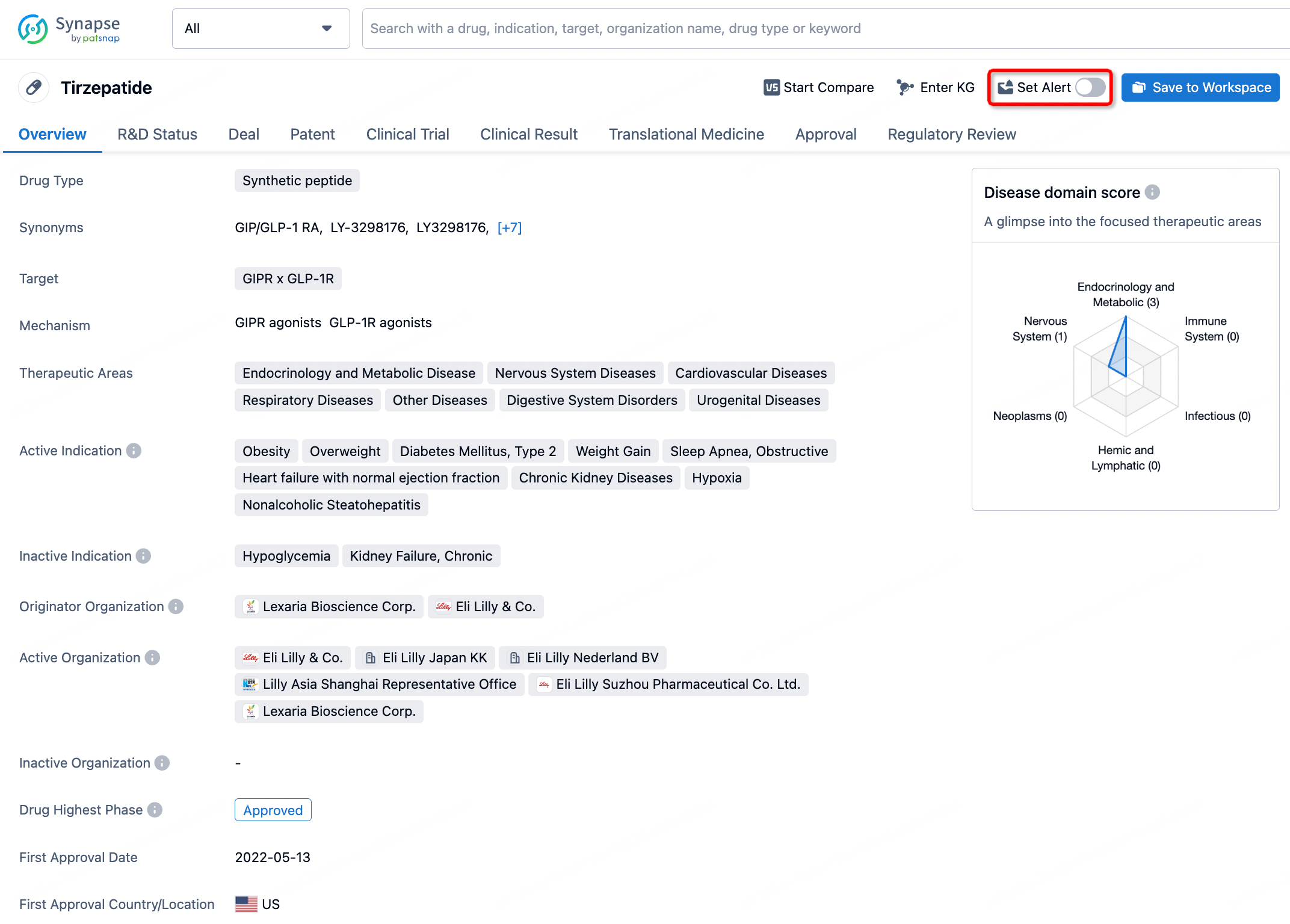
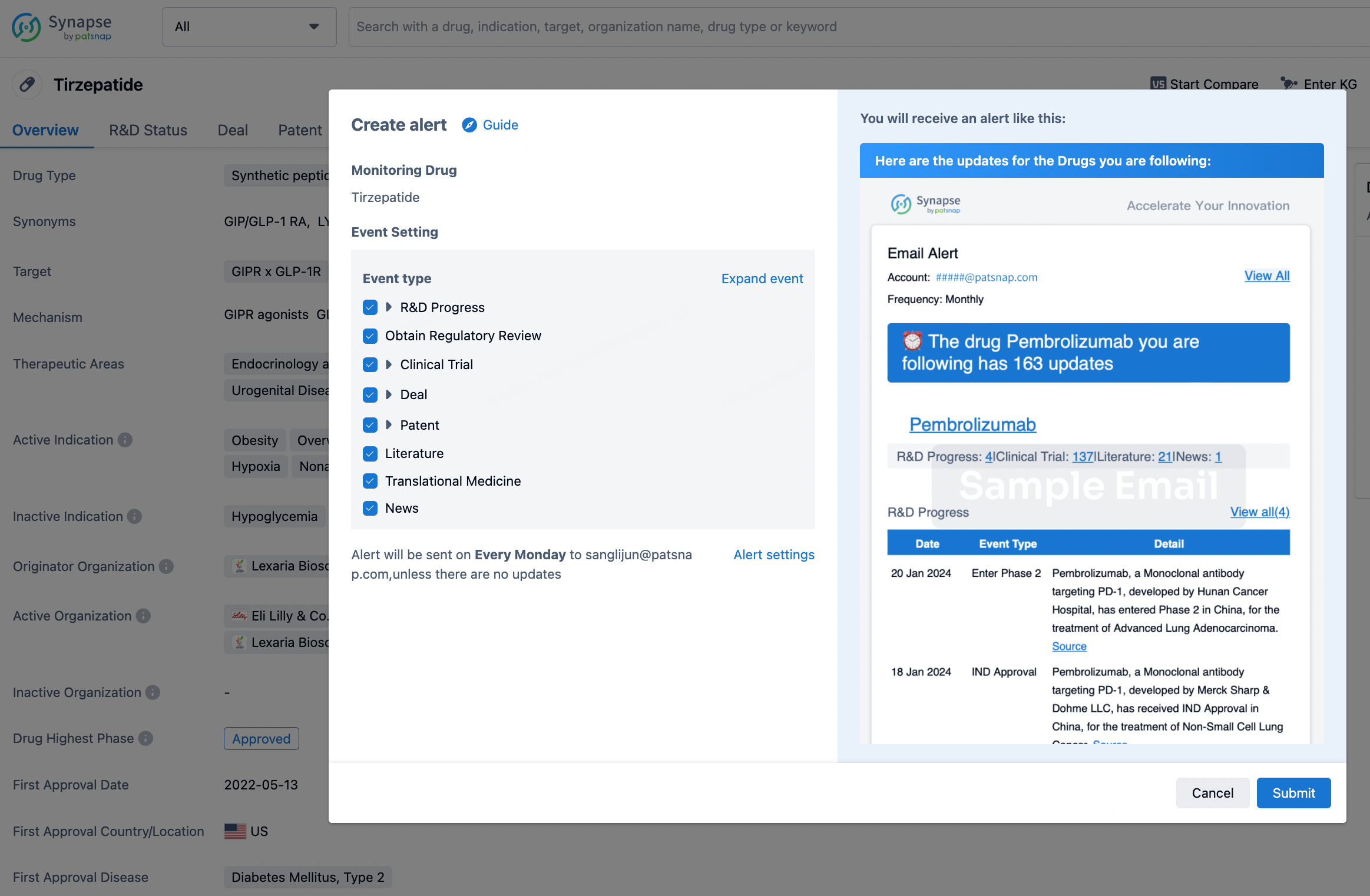
In the Synapse database, you can stay updated on the latest research and development advances of all drugs. This service is accessible anytime and anywhere, with updates available daily or weekly. Use the "Set Alert" function to stay informed. Click on the image below to embark on a brand new journey of drug discovery!

AI Agents Built for Biopharma Breakthroughs
Accelerate discovery. Empower decisions. Transform outcomes.
Get started for free today!
Accelerate Strategic R&D decision making with Synapse, PatSnap’s AI-powered Connected Innovation Intelligence Platform Built for Life Sciences Professionals.
Start your data trial now!
Synapse data is also accessible to external entities via APIs or data packages. Empower better decisions with the latest in pharmaceutical intelligence.