Request Demo
What is Efavirenz used for?
14 June 2024
Efavirenz (EFV) is a widely recognized antiretroviral drug used predominantly in the treatment of human immunodeficiency virus (HIV) infection. Marketed under brand names such as Sustiva and Stocrin, Efavirenz is classified as a non-nucleoside reverse transcriptase inhibitor (NNRTI). Since its approval by the U.S. Food and Drug Administration (FDA) in 1998, it has been a cornerstone in the management of HIV-1 infection, often included in combination therapies like the popular Atripla. The drug primarily targets the reverse transcriptase enzyme, crucial for viral replication. Efavirenz's discovery and development involved collaboration between several institutions, including Merck & Co. and the National Institute of Allergy and Infectious Diseases (NIAID). Over the years, extensive clinical research has established its efficacy and safety profile, cementing its role in antiretroviral therapy (ART).
Efavirenz functions by inhibiting the reverse transcriptase enzyme, an essential component in the life cycle of HIV-1. The virus uses this enzyme to convert its RNA into DNA, a critical step for integrating its genetic material into the host cell's genome. Efavirenz binds to a specific site on the reverse transcriptase enzyme, causing a conformational change that inhibits its activity. This action effectively hampers the replication of the virus within the host cells, reducing viral load and slowing disease progression. Unlike nucleoside reverse transcriptase inhibitors (NRTIs), which mimic the building blocks of DNA and terminate the elongation process, NNRTIs like Efavirenz act directly on the enzyme, offering a different mechanism of action that enhances the overall effectiveness of combination therapies.
Efavirenz is administered orally, typically as a 600 mg tablet taken once daily. It is advised to take the medication on an empty stomach, preferably at bedtime, to minimize the risk of central nervous system (CNS) side effects such as dizziness and vivid dreams. The drug is rapidly absorbed, with peak plasma concentrations generally reached within 3 to 5 hours post-administration. Efavirenz has a long half-life, ranging from 40 to 55 hours, allowing for once-daily dosing. This pharmacokinetic profile makes it a convenient option for patients, contributing to better adherence rates. It's important for patients to take Efavirenz consistently as prescribed to maintain effective drug levels in the body and prevent the development of drug resistance.
Like all medications, Efavirenz comes with a spectrum of potential side effects. Commonly reported adverse effects include CNS symptoms such as dizziness, insomnia, impaired concentration, and abnormal dreams. These symptoms are generally transient and tend to resolve within the first few weeks of therapy. However, some patients may experience more persistent or severe CNS effects, requiring medical attention. Other side effects can include rash, nausea, and elevated liver enzymes. Efavirenz is contraindicated in individuals with known hypersensitivity to the drug or its components. It is also not recommended for use during pregnancy, particularly in the first trimester, due to the potential risk of birth defects. Patients with a history of psychiatric disorders should use Efavirenz with caution, as it can exacerbate conditions such as depression and anxiety. Regular monitoring and open communication with healthcare providers are essential to manage and mitigate these side effects.
Efavirenz is metabolized by the liver enzyme CYP2B6, and to a lesser extent by CYP3A4. Consequently, it can interact with a variety of other medications that are either substrates, inhibitors, or inducers of these enzymes. For instance, concomitant use of Efavirenz with certain anticonvulsants like phenytoin and carbamazepine can lead to reduced plasma levels of Efavirenz, potentially diminishing its efficacy. Conversely, drugs such as ritonavir, a protease inhibitor, can increase Efavirenz levels, raising the risk of side effects. Rifampin, an antibiotic used to treat tuberculosis, can also lower Efavirenz concentrations, necessitating dosage adjustments. Additionally, St. John’s Wort, a herbal supplement, can significantly reduce Efavirenz levels and should be avoided. Patients should always inform their healthcare providers of all medications and supplements they are taking to ensure potential drug interactions are appropriately managed.
In conclusion, Efavirenz remains a vital component in the fight against HIV/AIDS. Its unique mechanism of action, convenient once-daily dosing, and proven efficacy in reducing viral load have made it a mainstay in antiretroviral therapy. However, like all medications, it is not without its challenges. Managing side effects and potential drug interactions requires careful monitoring and open communication between patients and healthcare providers. With ongoing research and development, the goal is to continue optimizing HIV treatment regimens to improve patient outcomes and quality of life.
Efavirenz functions by inhibiting the reverse transcriptase enzyme, an essential component in the life cycle of HIV-1. The virus uses this enzyme to convert its RNA into DNA, a critical step for integrating its genetic material into the host cell's genome. Efavirenz binds to a specific site on the reverse transcriptase enzyme, causing a conformational change that inhibits its activity. This action effectively hampers the replication of the virus within the host cells, reducing viral load and slowing disease progression. Unlike nucleoside reverse transcriptase inhibitors (NRTIs), which mimic the building blocks of DNA and terminate the elongation process, NNRTIs like Efavirenz act directly on the enzyme, offering a different mechanism of action that enhances the overall effectiveness of combination therapies.
Efavirenz is administered orally, typically as a 600 mg tablet taken once daily. It is advised to take the medication on an empty stomach, preferably at bedtime, to minimize the risk of central nervous system (CNS) side effects such as dizziness and vivid dreams. The drug is rapidly absorbed, with peak plasma concentrations generally reached within 3 to 5 hours post-administration. Efavirenz has a long half-life, ranging from 40 to 55 hours, allowing for once-daily dosing. This pharmacokinetic profile makes it a convenient option for patients, contributing to better adherence rates. It's important for patients to take Efavirenz consistently as prescribed to maintain effective drug levels in the body and prevent the development of drug resistance.
Like all medications, Efavirenz comes with a spectrum of potential side effects. Commonly reported adverse effects include CNS symptoms such as dizziness, insomnia, impaired concentration, and abnormal dreams. These symptoms are generally transient and tend to resolve within the first few weeks of therapy. However, some patients may experience more persistent or severe CNS effects, requiring medical attention. Other side effects can include rash, nausea, and elevated liver enzymes. Efavirenz is contraindicated in individuals with known hypersensitivity to the drug or its components. It is also not recommended for use during pregnancy, particularly in the first trimester, due to the potential risk of birth defects. Patients with a history of psychiatric disorders should use Efavirenz with caution, as it can exacerbate conditions such as depression and anxiety. Regular monitoring and open communication with healthcare providers are essential to manage and mitigate these side effects.
Efavirenz is metabolized by the liver enzyme CYP2B6, and to a lesser extent by CYP3A4. Consequently, it can interact with a variety of other medications that are either substrates, inhibitors, or inducers of these enzymes. For instance, concomitant use of Efavirenz with certain anticonvulsants like phenytoin and carbamazepine can lead to reduced plasma levels of Efavirenz, potentially diminishing its efficacy. Conversely, drugs such as ritonavir, a protease inhibitor, can increase Efavirenz levels, raising the risk of side effects. Rifampin, an antibiotic used to treat tuberculosis, can also lower Efavirenz concentrations, necessitating dosage adjustments. Additionally, St. John’s Wort, a herbal supplement, can significantly reduce Efavirenz levels and should be avoided. Patients should always inform their healthcare providers of all medications and supplements they are taking to ensure potential drug interactions are appropriately managed.
In conclusion, Efavirenz remains a vital component in the fight against HIV/AIDS. Its unique mechanism of action, convenient once-daily dosing, and proven efficacy in reducing viral load have made it a mainstay in antiretroviral therapy. However, like all medications, it is not without its challenges. Managing side effects and potential drug interactions requires careful monitoring and open communication between patients and healthcare providers. With ongoing research and development, the goal is to continue optimizing HIV treatment regimens to improve patient outcomes and quality of life.
How to obtain the latest development progress of all drugs?
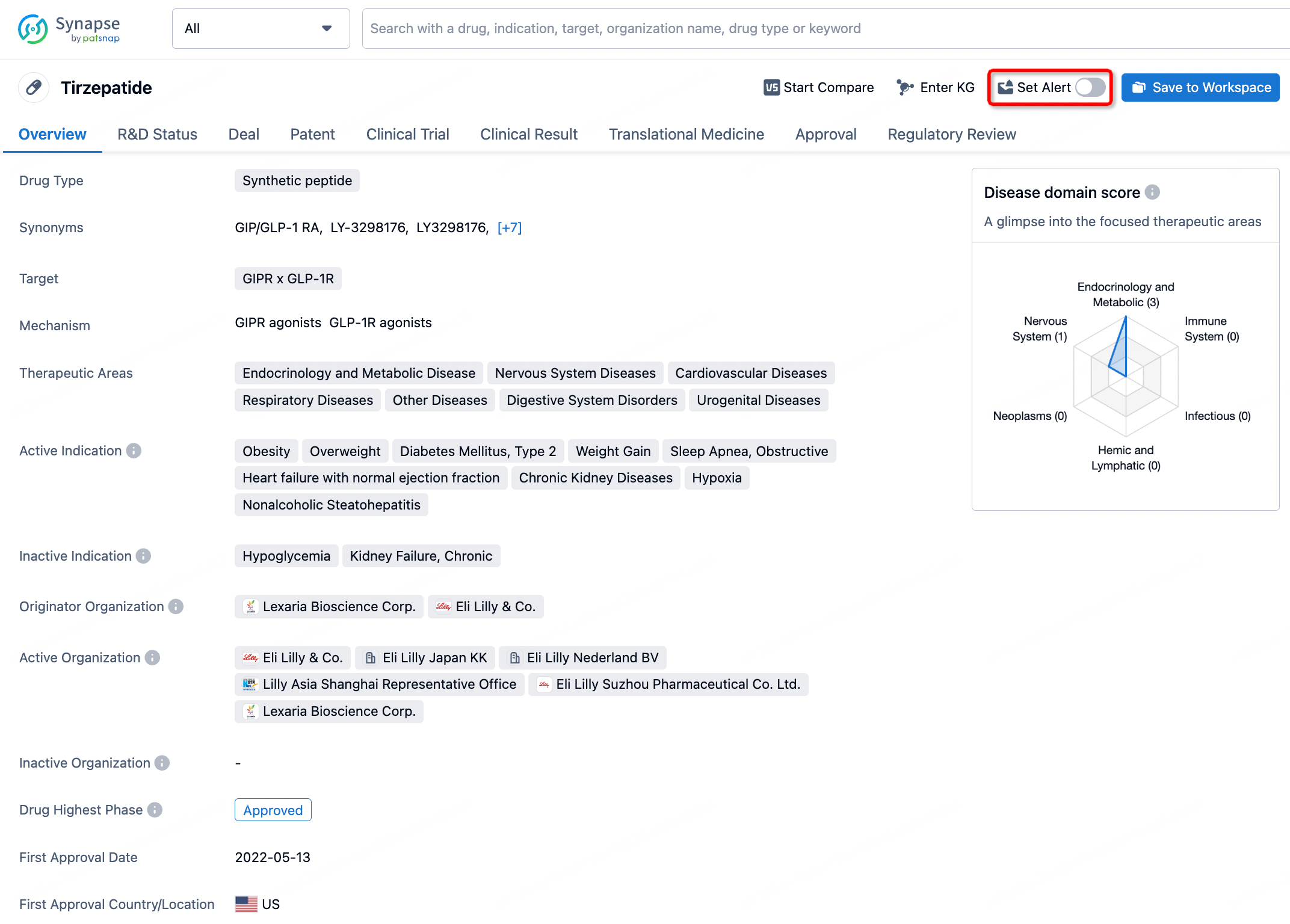
In the Synapse database, you can stay updated on the latest research and development advances of all drugs. This service is accessible anytime and anywhere, with updates available daily or weekly. Use the "Set Alert" function to stay informed. Click on the image below to embark on a brand new journey of drug discovery!


AI Agents Built for Biopharma Breakthroughs
Accelerate discovery. Empower decisions. Transform outcomes.
Get started for free today!
Accelerate Strategic R&D decision making with Synapse, PatSnap’s AI-powered Connected Innovation Intelligence Platform Built for Life Sciences Professionals.
Start your data trial now!
Synapse data is also accessible to external entities via APIs or data packages. Empower better decisions with the latest in pharmaceutical intelligence.