Request Demo
What is Elbasvir used for?
14 June 2024
Elbasvir is a relatively recent addition to the landscape of antiviral medications, specifically designed to combat hepatitis C virus (HCV) infections. Marketed under trade names like Zepatier, Elbasvir has garnered significant attention for its effectiveness and favorable safety profile. Initially developed by Merck & Co., this medication has been a critical component in the evolving treatment paradigms for HCV. Elbasvir is often used in combination with another antiviral agent, grazoprevir, to enhance its efficacy. The drug targets nonstructural protein 5A (NS5A) of the HCV, a crucial component in the viral replication process.
Elbasvir is particularly indicated for the treatment of chronic hepatitis C virus infection in adults. It is effective against multiple genotypes of HCV, including genotypes 1 and 4, which are among the most prevalent. The approval of Elbasvir was preceded by rigorous clinical trials that demonstrated its high cure rates and manageable side effect profile. Its development is part of a broader research effort aimed at eradicating HCV as a major public health concern.
The mechanism of action of Elbasvir centers around its role as an NS5A inhibitor. The NS5A protein is essential for the HCV replication process and functions in both RNA replication and assembly of the virus. By inhibiting NS5A, Elbasvir disrupts these processes, thereby preventing the virus from multiplying and spreading within the host. This mechanism is particularly potent because NS5A is involved in multiple stages of the HCV life cycle, making it a critical target for antiviral therapy.
Elbasvir’s inhibition of NS5A is achieved by binding to the protein and causing conformational changes that render it nonfunctional. This not only hampers the replication machinery of the virus but also disrupts the formation of the viral assembly line, leading to a significant reduction in viral load. The inhibition effect is rapid, and when combined with grazoprevir, which targets the NS3/4A protease, the treatment becomes a one-two punch against the virus, addressing different components of the viral lifecycle.
Administering Elbasvir is straightforward, contributing to its appeal as a treatment option. It is typically taken orally in the form of a tablet, with or without food, once daily. The onset of action is relatively quick, with the drug beginning to inhibit viral replication soon after administration. This rapid action is crucial in managing the viral load and mitigating the progression of liver disease associated with chronic HCV infection.
The duration of treatment with Elbasvir varies depending on several factors, including the HCV genotype, the presence of cirrhosis, and whether the patient has been previously treated for HCV. Generally, the treatment course ranges from 12 to 16 weeks. Adherence to the prescribed regimen is crucial for achieving optimal outcomes, as missed doses can lead to suboptimal viral suppression and the potential for resistance development.
Like any medication, Elbasvir is associated with potential side effects. Most patients tolerate the drug well, but some may experience adverse reactions. Common side effects include headache, fatigue, nausea, and insomnia. These side effects are generally mild and tend to resolve as the body adjusts to the medication. However, patients should be aware of more serious side effects, such as elevated liver enzymes, which can indicate liver injury. Regular monitoring of liver function is recommended during treatment to catch and manage any potential issues early.
Contraindications for Elbasvir include severe liver impairment and a history of hypersensitivity to the drug or any of its components. Additionally, Elbasvir is contraindicated in patients who are taking medications that are potent inducers of cytochrome P450 enzymes, as these can reduce the effectiveness of Elbasvir by increasing its metabolism. Pregnant women and those planning to become pregnant should also avoid Elbasvir due to potential risks to the fetus.
Elbasvir can interact with other medications, which is an important consideration for patients managing multiple health conditions. Drugs that affect the cytochrome P450 enzyme system can influence the levels of Elbasvir in the blood, either reducing its efficacy or increasing the risk of side effects. For example, strong inducers of cytochrome P450 enzymes, such as rifampin, St. John’s Wort, and certain anticonvulsants, can significantly lower Elbasvir levels, making the treatment less effective. On the other hand, strong inhibitors of these enzymes, like certain antifungal medications and antibiotics, can increase Elbasvir levels, potentially leading to toxicity.
Elbasvir can also interact with other antiviral medications used to treat conditions like HIV. Co-administration with certain protease inhibitors or non-nucleoside reverse transcriptase inhibitors can lead to significant drug-drug interactions. Patients should always inform their healthcare provider about all medications they are taking, including over-the-counter drugs and supplements, to avoid potential interactions.
In conclusion, Elbasvir represents a significant advance in the treatment of chronic hepatitis C virus infection, offering high cure rates and a favorable safety profile. Understanding its mechanism of action, appropriate administration, potential side effects, and interactions with other drugs is crucial for optimizing its use and achieving the best possible outcomes for patients. As research continues and new data emerge, Elbasvir is likely to remain a cornerstone in the fight against HCV, contributing to the broader goal of eradicating this persistent viral infection.
Elbasvir is particularly indicated for the treatment of chronic hepatitis C virus infection in adults. It is effective against multiple genotypes of HCV, including genotypes 1 and 4, which are among the most prevalent. The approval of Elbasvir was preceded by rigorous clinical trials that demonstrated its high cure rates and manageable side effect profile. Its development is part of a broader research effort aimed at eradicating HCV as a major public health concern.
The mechanism of action of Elbasvir centers around its role as an NS5A inhibitor. The NS5A protein is essential for the HCV replication process and functions in both RNA replication and assembly of the virus. By inhibiting NS5A, Elbasvir disrupts these processes, thereby preventing the virus from multiplying and spreading within the host. This mechanism is particularly potent because NS5A is involved in multiple stages of the HCV life cycle, making it a critical target for antiviral therapy.
Elbasvir’s inhibition of NS5A is achieved by binding to the protein and causing conformational changes that render it nonfunctional. This not only hampers the replication machinery of the virus but also disrupts the formation of the viral assembly line, leading to a significant reduction in viral load. The inhibition effect is rapid, and when combined with grazoprevir, which targets the NS3/4A protease, the treatment becomes a one-two punch against the virus, addressing different components of the viral lifecycle.
Administering Elbasvir is straightforward, contributing to its appeal as a treatment option. It is typically taken orally in the form of a tablet, with or without food, once daily. The onset of action is relatively quick, with the drug beginning to inhibit viral replication soon after administration. This rapid action is crucial in managing the viral load and mitigating the progression of liver disease associated with chronic HCV infection.
The duration of treatment with Elbasvir varies depending on several factors, including the HCV genotype, the presence of cirrhosis, and whether the patient has been previously treated for HCV. Generally, the treatment course ranges from 12 to 16 weeks. Adherence to the prescribed regimen is crucial for achieving optimal outcomes, as missed doses can lead to suboptimal viral suppression and the potential for resistance development.
Like any medication, Elbasvir is associated with potential side effects. Most patients tolerate the drug well, but some may experience adverse reactions. Common side effects include headache, fatigue, nausea, and insomnia. These side effects are generally mild and tend to resolve as the body adjusts to the medication. However, patients should be aware of more serious side effects, such as elevated liver enzymes, which can indicate liver injury. Regular monitoring of liver function is recommended during treatment to catch and manage any potential issues early.
Contraindications for Elbasvir include severe liver impairment and a history of hypersensitivity to the drug or any of its components. Additionally, Elbasvir is contraindicated in patients who are taking medications that are potent inducers of cytochrome P450 enzymes, as these can reduce the effectiveness of Elbasvir by increasing its metabolism. Pregnant women and those planning to become pregnant should also avoid Elbasvir due to potential risks to the fetus.
Elbasvir can interact with other medications, which is an important consideration for patients managing multiple health conditions. Drugs that affect the cytochrome P450 enzyme system can influence the levels of Elbasvir in the blood, either reducing its efficacy or increasing the risk of side effects. For example, strong inducers of cytochrome P450 enzymes, such as rifampin, St. John’s Wort, and certain anticonvulsants, can significantly lower Elbasvir levels, making the treatment less effective. On the other hand, strong inhibitors of these enzymes, like certain antifungal medications and antibiotics, can increase Elbasvir levels, potentially leading to toxicity.
Elbasvir can also interact with other antiviral medications used to treat conditions like HIV. Co-administration with certain protease inhibitors or non-nucleoside reverse transcriptase inhibitors can lead to significant drug-drug interactions. Patients should always inform their healthcare provider about all medications they are taking, including over-the-counter drugs and supplements, to avoid potential interactions.
In conclusion, Elbasvir represents a significant advance in the treatment of chronic hepatitis C virus infection, offering high cure rates and a favorable safety profile. Understanding its mechanism of action, appropriate administration, potential side effects, and interactions with other drugs is crucial for optimizing its use and achieving the best possible outcomes for patients. As research continues and new data emerge, Elbasvir is likely to remain a cornerstone in the fight against HCV, contributing to the broader goal of eradicating this persistent viral infection.
How to obtain the latest development progress of all drugs?
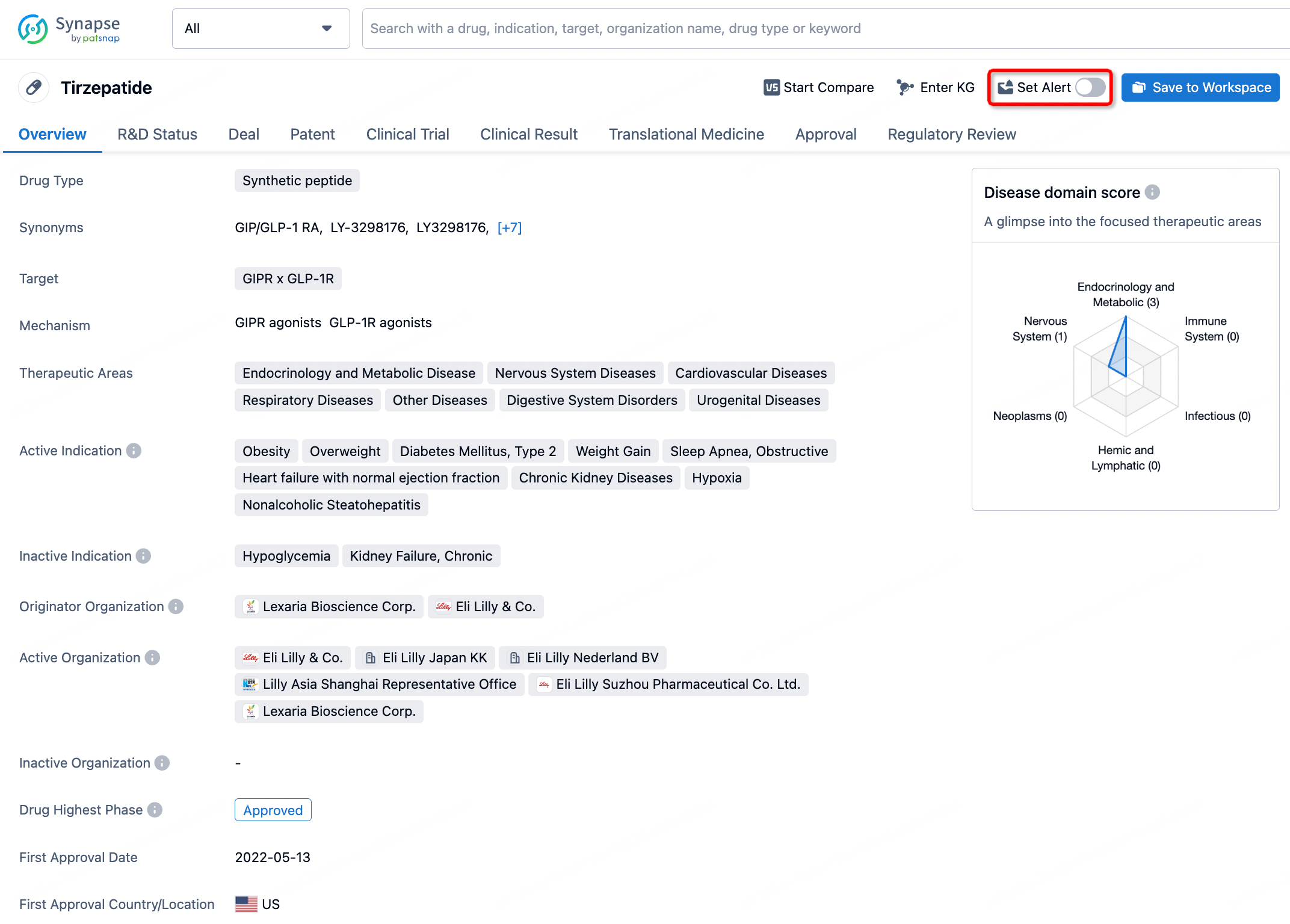
In the Synapse database, you can stay updated on the latest research and development advances of all drugs. This service is accessible anytime and anywhere, with updates available daily or weekly. Use the "Set Alert" function to stay informed. Click on the image below to embark on a brand new journey of drug discovery!


AI Agents Built for Biopharma Breakthroughs
Accelerate discovery. Empower decisions. Transform outcomes.
Get started for free today!
Accelerate Strategic R&D decision making with Synapse, PatSnap’s AI-powered Connected Innovation Intelligence Platform Built for Life Sciences Professionals.
Start your data trial now!
Synapse data is also accessible to external entities via APIs or data packages. Empower better decisions with the latest in pharmaceutical intelligence.