Request Demo
What is Eluxadoline used for?
14 June 2024
Eluxadoline is a relatively newer player in the pharmaceutical landscape, primarily used in the management of irritable bowel syndrome with diarrhea (IBS-D). Marketed under the trade name Viberzi, Eluxadoline was developed by Furiex Pharmaceuticals, a subsidiary of Allergan. The drug was approved by the U.S. Food and Drug Administration (FDA) in 2015, reflecting a significant advancement in addressing gastrointestinal disorders. Eluxadoline belongs to a class of medication known as mixed opioid receptor agonists/antagonists, which target specific receptors in the nervous system to alleviate symptoms associated with IBS-D. This condition, characterized by chronic abdominal pain and frequent diarrhea, affects a significant portion of the population, and the introduction of Eluxadoline provides a much-needed therapeutic option for those who have not found relief from other treatments.
The mechanism of action of Eluxadoline is both sophisticated and targeted. The drug primarily operates through its interaction with opioid receptors in the gut. Specifically, Eluxadoline acts as an agonist at the mu-opioid receptor and as an antagonist at the delta-opioid receptor, while also exhibiting agonistic properties at the kappa-opioid receptor. This multi-receptor interaction results in a dual effect: it reduces bowel contractions and motility, thereby alleviating diarrhea, and modulates pain perception, providing relief from abdominal pain. The selective targeting of these receptors in the gastrointestinal tract, rather than the central nervous system, minimizes the risk of potential side effects commonly associated with systemic opioid use, such as sedation and dependency.
Administering Eluxadoline is straightforward but must be approached with careful adherence to prescribed guidelines to ensure efficacy and minimize potential risks. The drug is available in tablet form and is typically taken orally twice a day, with food. This method of administration allows for consistent absorption and effectiveness. The onset of action can vary among individuals but generally occurs within a few hours after ingestion, providing relatively prompt relief from IBS-D symptoms. It's crucial for patients to follow their healthcare provider’s instructions regarding dosage and frequency, as improper use can lead to suboptimal results or increased risk of adverse effects. The standard dosage is often 100 mg twice daily; however, in cases of mild to moderate hepatic impairment, lower dosages might be recommended to prevent accumulation of the drug in the system.
As with any medication, Eluxadoline is not without its potential side effects and contraindications, which should be thoroughly understood by both patients and healthcare providers. Common side effects of Eluxadoline include nausea, constipation, and abdominal pain, which can occur as the body adjusts to the medication. Less commonly, patients might experience dizziness, fatigue, and increased levels of liver enzymes, indicating a need for periodic monitoring of liver function during treatment. Serious but rare side effects can include pancreatitis, which is particularly a risk in patients without a gallbladder, and sphincter of Oddi spasm, a condition that can cause severe abdominal pain and increased liver enzymes. Consequently, Eluxadoline is contraindicated in patients with a history of bile duct obstruction, pancreatitis, severe liver impairment, or those who consume more than three alcoholic beverages per day, as these conditions can exacerbate the risk of severe adverse reactions.
Drug interactions are another critical consideration when prescribing and taking Eluxadoline. Because the drug is metabolized primarily through hepatic pathways, concurrent use of other medications that impact liver enzymes can alter its effectiveness and safety profile. For example, strong inhibitors of the enzyme OATP1B1, such as cyclosporine and gemfibrozil, can increase Eluxadoline levels in the blood, heightening the risk of adverse effects. Conversely, strong inducers of CYP3A4, like rifampin, can reduce the efficacy of Eluxadoline by accelerating its metabolism. Furthermore, concurrent use of other central nervous system depressants, including benzodiazepines and alcohol, can compound sedative effects and increase the risk of severe side effects. Therefore, it is imperative for patients to inform their healthcare providers of all medications and supplements they are taking to adequately assess potential drug interactions and adjust treatment plans accordingly.
In summary, Eluxadoline, marketed as Viberzi, represents an important therapeutic advancement for managing IBS-D, offering relief through its targeted action on opioid receptors in the gastrointestinal system. Its administration is straightforward but requires careful adherence to prescribed dosages and consideration of potential side effects and contraindications. Understanding and managing drug interactions is also critical to ensure the safety and effectiveness of Eluxadoline therapy. As always, ongoing communication between patients and healthcare providers is essential to optimize treatment outcomes and mitigate risks.
The mechanism of action of Eluxadoline is both sophisticated and targeted. The drug primarily operates through its interaction with opioid receptors in the gut. Specifically, Eluxadoline acts as an agonist at the mu-opioid receptor and as an antagonist at the delta-opioid receptor, while also exhibiting agonistic properties at the kappa-opioid receptor. This multi-receptor interaction results in a dual effect: it reduces bowel contractions and motility, thereby alleviating diarrhea, and modulates pain perception, providing relief from abdominal pain. The selective targeting of these receptors in the gastrointestinal tract, rather than the central nervous system, minimizes the risk of potential side effects commonly associated with systemic opioid use, such as sedation and dependency.
Administering Eluxadoline is straightforward but must be approached with careful adherence to prescribed guidelines to ensure efficacy and minimize potential risks. The drug is available in tablet form and is typically taken orally twice a day, with food. This method of administration allows for consistent absorption and effectiveness. The onset of action can vary among individuals but generally occurs within a few hours after ingestion, providing relatively prompt relief from IBS-D symptoms. It's crucial for patients to follow their healthcare provider’s instructions regarding dosage and frequency, as improper use can lead to suboptimal results or increased risk of adverse effects. The standard dosage is often 100 mg twice daily; however, in cases of mild to moderate hepatic impairment, lower dosages might be recommended to prevent accumulation of the drug in the system.
As with any medication, Eluxadoline is not without its potential side effects and contraindications, which should be thoroughly understood by both patients and healthcare providers. Common side effects of Eluxadoline include nausea, constipation, and abdominal pain, which can occur as the body adjusts to the medication. Less commonly, patients might experience dizziness, fatigue, and increased levels of liver enzymes, indicating a need for periodic monitoring of liver function during treatment. Serious but rare side effects can include pancreatitis, which is particularly a risk in patients without a gallbladder, and sphincter of Oddi spasm, a condition that can cause severe abdominal pain and increased liver enzymes. Consequently, Eluxadoline is contraindicated in patients with a history of bile duct obstruction, pancreatitis, severe liver impairment, or those who consume more than three alcoholic beverages per day, as these conditions can exacerbate the risk of severe adverse reactions.
Drug interactions are another critical consideration when prescribing and taking Eluxadoline. Because the drug is metabolized primarily through hepatic pathways, concurrent use of other medications that impact liver enzymes can alter its effectiveness and safety profile. For example, strong inhibitors of the enzyme OATP1B1, such as cyclosporine and gemfibrozil, can increase Eluxadoline levels in the blood, heightening the risk of adverse effects. Conversely, strong inducers of CYP3A4, like rifampin, can reduce the efficacy of Eluxadoline by accelerating its metabolism. Furthermore, concurrent use of other central nervous system depressants, including benzodiazepines and alcohol, can compound sedative effects and increase the risk of severe side effects. Therefore, it is imperative for patients to inform their healthcare providers of all medications and supplements they are taking to adequately assess potential drug interactions and adjust treatment plans accordingly.
In summary, Eluxadoline, marketed as Viberzi, represents an important therapeutic advancement for managing IBS-D, offering relief through its targeted action on opioid receptors in the gastrointestinal system. Its administration is straightforward but requires careful adherence to prescribed dosages and consideration of potential side effects and contraindications. Understanding and managing drug interactions is also critical to ensure the safety and effectiveness of Eluxadoline therapy. As always, ongoing communication between patients and healthcare providers is essential to optimize treatment outcomes and mitigate risks.
How to obtain the latest development progress of all drugs?
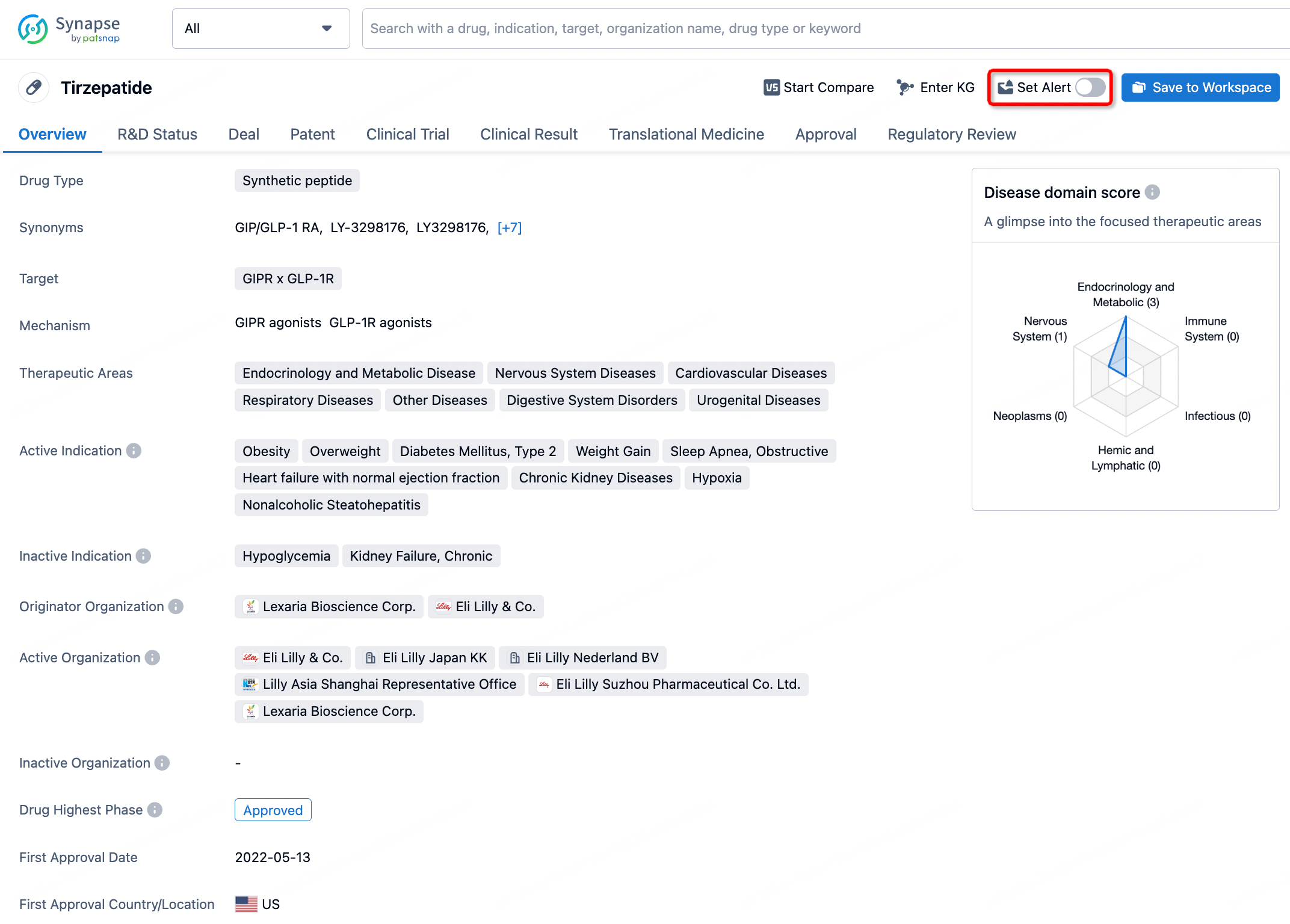
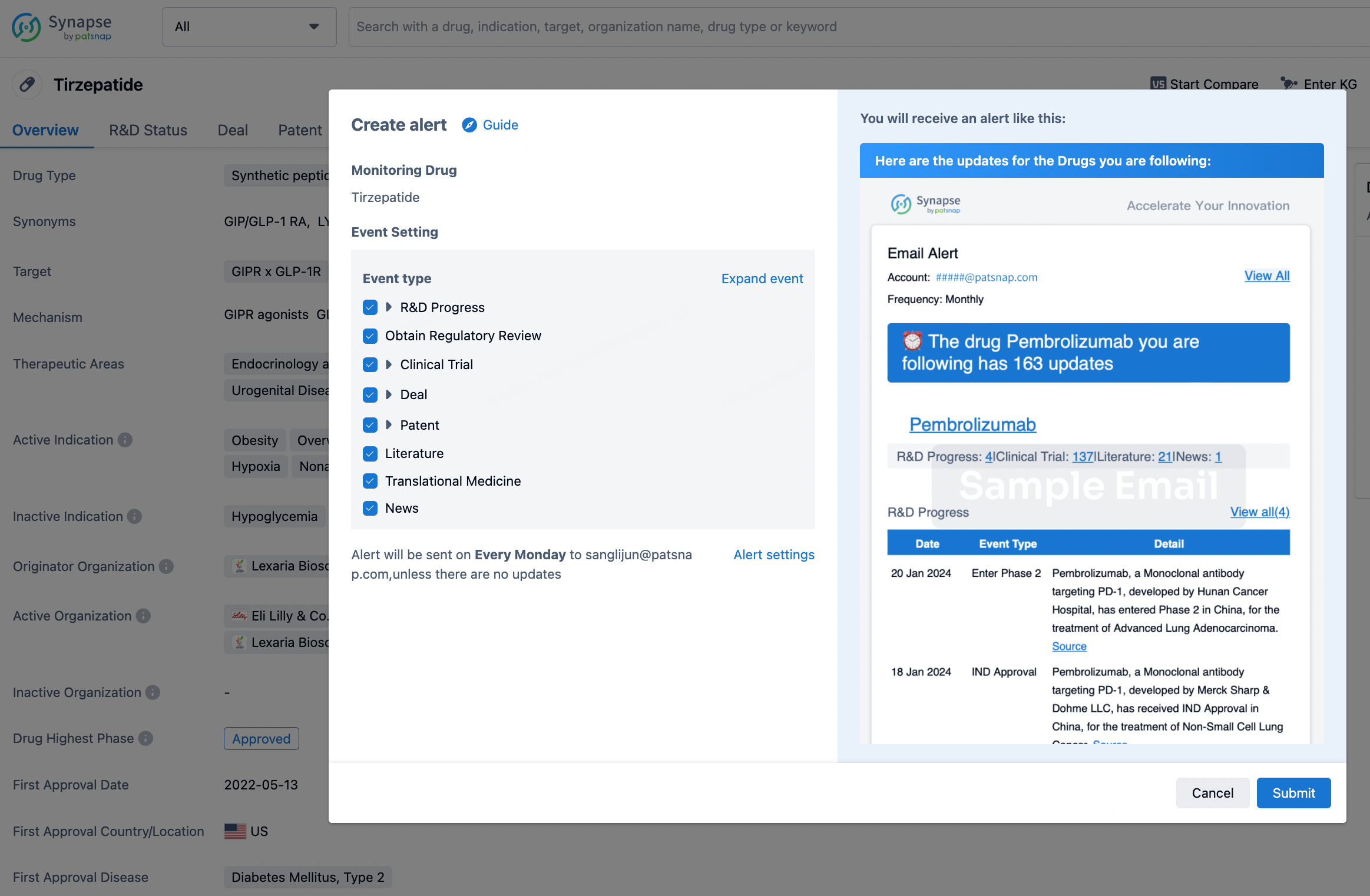
In the Synapse database, you can stay updated on the latest research and development advances of all drugs. This service is accessible anytime and anywhere, with updates available daily or weekly. Use the "Set Alert" function to stay informed. Click on the image below to embark on a brand new journey of drug discovery!

Hiro LS Researcher
The AI Search Engine Built to Accelerate Biopharma Decisions
Search across billion-scale life sciences data to uncover signals, validate evidence, and act with confidence.
Ask any biopharma research question→
Get started for free today!
Accelerate Strategic R&D decision making with Synapse, Patsnap’s AI-powered Connected Innovation Intelligence Platform Built for Life Sciences Professionals.
Discover Synapse Data Servers
Synapse data is now integrated into the PatSnap LS Model Context Protocol (MCP) service. Customize your LLM agent now using our MCP server!