Request Demo
What is Isolorydine Hydrochloride used for?
15 June 2024
Isolorydine Hydrochloride is a promising pharmaceutical compound currently under research and development. This investigational drug has garnered attention in the medical community for its potential therapeutic applications. While it is still in the experimental stages, preliminary studies indicate that Isolorydine Hydrochloride could serve as a valuable treatment option for several conditions. Let's explore the details surrounding this drug, including its mechanism of action, administration methods, side effects, and potential drug interactions.
Isolorydine Hydrochloride is not yet available under any trade names, as it is still primarily being studied in clinical settings. The drug is being researched by several leading institutions and pharmaceutical companies, which are keen on unlocking its full potential. It is classified as a novel therapeutic agent, and current investigations focus on its application for treating specific neurological and psychiatric conditions, such as anxiety and depression. Preliminary findings suggest that Isolorydine Hydrochloride works by modulating neurotransmitter activity in the brain, which could help alleviate symptoms associated with these mental health disorders.
The mechanism of action for Isolorydine Hydrochloride is both intriguing and complex. It primarily targets the central nervous system (CNS), specifically interacting with neurotransmitter receptors. Studies indicate that the drug has a high affinity for serotonin and dopamine receptors, which play a crucial role in regulating mood, emotion, and cognition. By modulating the activity of these receptors, Isolorydine Hydrochloride is believed to help restore the balance of neurotransmitters in the brain. This balance is often disrupted in individuals suffering from anxiety and depression, leading to the symptoms commonly associated with these conditions. Researchers are also investigating the drug's potential neuroprotective effects, which could provide additional benefits for patients with neurodegenerative disorders.
Administering Isolorydine Hydrochloride involves methods that are standard for many CNS-active drugs. The drug can be administered orally in tablet or capsule form, making it a convenient option for patients. In some experimental setups, an intravenous (IV) form is also being explored for cases that may require rapid onset of action. The onset time for the oral form of Isolorydine Hydrochloride typically ranges from 30 minutes to an hour, depending on individual metabolism and other factors. This relatively quick onset is beneficial for patients experiencing acute anxiety or panic attacks, as it provides timely relief from distressing symptoms. For chronic conditions, the drug is usually prescribed as a daily regimen to maintain therapeutic levels in the bloodstream, ensuring continuous symptom management.
As with any medication, it is essential to be aware of the potential side effects and contraindications associated with Isolorydine Hydrochloride. Common side effects observed in clinical trials include nausea, dizziness, headache, and dry mouth. These side effects are generally mild and tend to diminish as the body adjusts to the drug. However, some patients may experience more severe reactions, such as allergic responses or cardiovascular issues like hypertension. It is crucial for individuals with pre-existing medical conditions or those taking other medications to consult their healthcare provider before starting Isolorydine Hydrochloride. The drug is contraindicated in patients with a known hypersensitivity to its components, as well as in pregnant or breastfeeding women due to the potential risks to the fetus or infant.
Understanding potential drug interactions is vital for the safe and effective use of Isolorydine Hydrochloride. The drug's metabolism is primarily mediated by the cytochrome P450 enzyme system in the liver, which is responsible for metabolizing many other medications. Consequently, drugs that inhibit or induce these enzymes can significantly affect the pharmacokinetics of Isolorydine Hydrochloride. For instance, concurrent use of enzyme inhibitors like ketoconazole or erythromycin can increase the levels of Isolorydine Hydrochloride in the body, potentially leading to toxicity. Conversely, enzyme inducers such as rifampin or carbamazepine can reduce the drug's effectiveness by accelerating its metabolism.
Moreover, Isolorydine Hydrochloride's interaction with serotonin and dopamine receptors necessitates caution when used alongside other CNS-active drugs. Combining it with selective serotonin reuptake inhibitors (SSRIs) or monoamine oxidase inhibitors (MAOIs) can increase the risk of serotonin syndrome, a potentially life-threatening condition characterized by symptoms like agitation, hallucinations, and rapid heart rate. Similarly, combining the drug with other dopamine agonists or antagonists can lead to unpredictable effects on mood and behavior, complicating the management of the patient's condition.
In conclusion, Isolorydine Hydrochloride holds significant promise as a therapeutic agent for neurological and psychiatric conditions. Its mechanism of action, which involves modulating key neurotransmitter receptors, provides a robust foundation for its potential efficacy. While the drug's administration methods are straightforward, and its onset time is relatively quick, it is essential to monitor for side effects and be mindful of potential drug interactions. As research progresses, further studies will likely shed more light on the optimal use and safety profile of Isolorydine Hydrochloride, paving the way for its eventual introduction into clinical practice.
Isolorydine Hydrochloride is not yet available under any trade names, as it is still primarily being studied in clinical settings. The drug is being researched by several leading institutions and pharmaceutical companies, which are keen on unlocking its full potential. It is classified as a novel therapeutic agent, and current investigations focus on its application for treating specific neurological and psychiatric conditions, such as anxiety and depression. Preliminary findings suggest that Isolorydine Hydrochloride works by modulating neurotransmitter activity in the brain, which could help alleviate symptoms associated with these mental health disorders.
The mechanism of action for Isolorydine Hydrochloride is both intriguing and complex. It primarily targets the central nervous system (CNS), specifically interacting with neurotransmitter receptors. Studies indicate that the drug has a high affinity for serotonin and dopamine receptors, which play a crucial role in regulating mood, emotion, and cognition. By modulating the activity of these receptors, Isolorydine Hydrochloride is believed to help restore the balance of neurotransmitters in the brain. This balance is often disrupted in individuals suffering from anxiety and depression, leading to the symptoms commonly associated with these conditions. Researchers are also investigating the drug's potential neuroprotective effects, which could provide additional benefits for patients with neurodegenerative disorders.
Administering Isolorydine Hydrochloride involves methods that are standard for many CNS-active drugs. The drug can be administered orally in tablet or capsule form, making it a convenient option for patients. In some experimental setups, an intravenous (IV) form is also being explored for cases that may require rapid onset of action. The onset time for the oral form of Isolorydine Hydrochloride typically ranges from 30 minutes to an hour, depending on individual metabolism and other factors. This relatively quick onset is beneficial for patients experiencing acute anxiety or panic attacks, as it provides timely relief from distressing symptoms. For chronic conditions, the drug is usually prescribed as a daily regimen to maintain therapeutic levels in the bloodstream, ensuring continuous symptom management.
As with any medication, it is essential to be aware of the potential side effects and contraindications associated with Isolorydine Hydrochloride. Common side effects observed in clinical trials include nausea, dizziness, headache, and dry mouth. These side effects are generally mild and tend to diminish as the body adjusts to the drug. However, some patients may experience more severe reactions, such as allergic responses or cardiovascular issues like hypertension. It is crucial for individuals with pre-existing medical conditions or those taking other medications to consult their healthcare provider before starting Isolorydine Hydrochloride. The drug is contraindicated in patients with a known hypersensitivity to its components, as well as in pregnant or breastfeeding women due to the potential risks to the fetus or infant.
Understanding potential drug interactions is vital for the safe and effective use of Isolorydine Hydrochloride. The drug's metabolism is primarily mediated by the cytochrome P450 enzyme system in the liver, which is responsible for metabolizing many other medications. Consequently, drugs that inhibit or induce these enzymes can significantly affect the pharmacokinetics of Isolorydine Hydrochloride. For instance, concurrent use of enzyme inhibitors like ketoconazole or erythromycin can increase the levels of Isolorydine Hydrochloride in the body, potentially leading to toxicity. Conversely, enzyme inducers such as rifampin or carbamazepine can reduce the drug's effectiveness by accelerating its metabolism.
Moreover, Isolorydine Hydrochloride's interaction with serotonin and dopamine receptors necessitates caution when used alongside other CNS-active drugs. Combining it with selective serotonin reuptake inhibitors (SSRIs) or monoamine oxidase inhibitors (MAOIs) can increase the risk of serotonin syndrome, a potentially life-threatening condition characterized by symptoms like agitation, hallucinations, and rapid heart rate. Similarly, combining the drug with other dopamine agonists or antagonists can lead to unpredictable effects on mood and behavior, complicating the management of the patient's condition.
In conclusion, Isolorydine Hydrochloride holds significant promise as a therapeutic agent for neurological and psychiatric conditions. Its mechanism of action, which involves modulating key neurotransmitter receptors, provides a robust foundation for its potential efficacy. While the drug's administration methods are straightforward, and its onset time is relatively quick, it is essential to monitor for side effects and be mindful of potential drug interactions. As research progresses, further studies will likely shed more light on the optimal use and safety profile of Isolorydine Hydrochloride, paving the way for its eventual introduction into clinical practice.
How to obtain the latest development progress of all drugs?
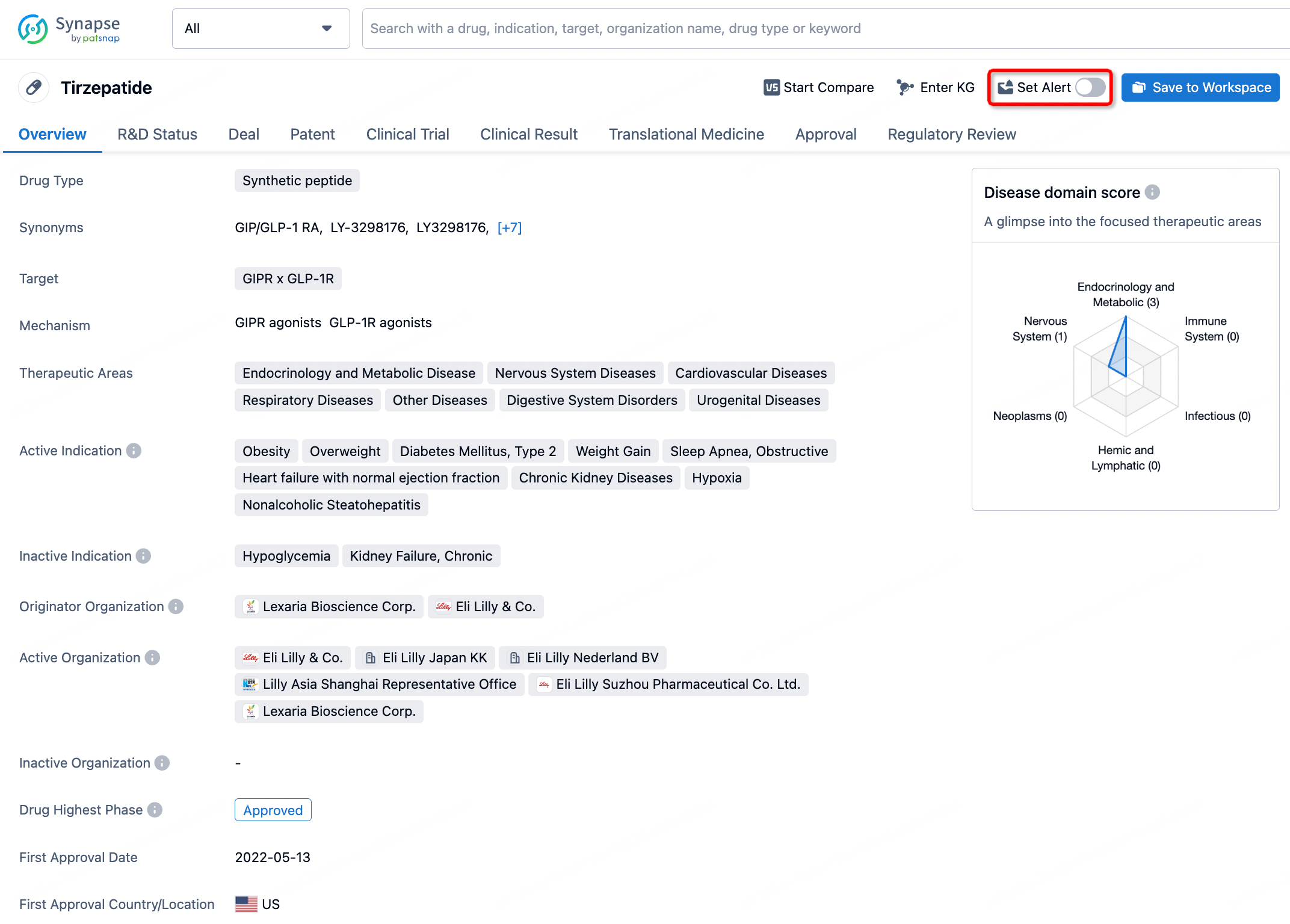
In the Synapse database, you can stay updated on the latest research and development advances of all drugs. This service is accessible anytime and anywhere, with updates available daily or weekly. Use the "Set Alert" function to stay informed. Click on the image below to embark on a brand new journey of drug discovery!


AI Agents Built for Biopharma Breakthroughs
Accelerate discovery. Empower decisions. Transform outcomes.
Get started for free today!
Accelerate Strategic R&D decision making with Synapse, PatSnap’s AI-powered Connected Innovation Intelligence Platform Built for Life Sciences Professionals.
Start your data trial now!
Synapse data is also accessible to external entities via APIs or data packages. Empower better decisions with the latest in pharmaceutical intelligence.