Request Demo
What is Letermovir used for?
14 June 2024
Introduction to Letermovir
Letermovir is an antiviral medication that has garnered significant attention in the medical community for its specificity and efficacy in combating cytomegalovirus (CMV) infections. Marketed under the trade name Prevymis, Letermovir was developed and is marketed by Merck & Co., a leading global healthcare company. The drug is specifically designed to target CMV, making it a critical tool in the prevention of CMV infection in patients undergoing allogeneic hematopoietic stem cell transplantation (HSCT). CMV is a common virus that can cause severe complications in immunocompromised individuals, including those who have received organ or stem cell transplants.
Letermovir is classified as an antiviral drug and is unique in its action against CMV when compared to other antiviral drugs that typically target a broad spectrum of viruses. The specificity of Letermovir's action makes it particularly effective in preventing CMV infections without the broader spectrum side effects commonly associated with other antiviral medications. The drug has undergone extensive research and clinical trials, demonstrating its efficacy and safety, leading to its approval by regulatory agencies such as the FDA and EMA.
Letermovir Mechanism of Action
The mechanism of action of Letermovir is both intricate and highly targeted. Unlike other antiviral drugs that often inhibit viral DNA polymerase, Letermovir specifically inhibits the CMV DNA terminase complex. This complex is essential for the viral replication cycle, particularly in the maturation and packaging of viral DNA into nascent virions. By inhibiting this complex, Letermovir effectively disrupts the production of new infectious viral particles. This targeted mechanism reduces the likelihood of off-target effects and minimizes the development of drug resistance when compared to other antiviral agents that may have broader targets within the viral replication cycle.
The DNA terminase complex consists of three subunits: UL51, UL56, and UL89. Letermovir primarily targets the UL56 subunit, which plays a crucial role in processing and packaging viral DNA. By binding to this subunit, Letermovir prevents the cleavage and packaging of the viral genome, leading to the production of non-infectious viral particles. This specific inhibition not only curtails the spread of the virus within the host but also reduces the viral load, thereby mitigating the potential for severe CMV-related complications.
How to Use Letermovir
Letermovir is administered either orally in tablet form or intravenously, providing flexibility and convenience for different patient needs. The standard dosage for adults is 480 mg once daily, starting from the day of HSCT and continuing through the post-transplant period, typically up to 100 days. If Letermovir is given alongside cyclosporine, a commonly used immunosuppressant in transplant patients, the dosage should be reduced to 240 mg once daily due to pharmacokinetic interactions that increase Letermovir levels in the blood.
The oral tablets should be taken with or without food, and the IV infusion should be administered over a period of one hour. The onset of action for Letermovir is relatively rapid, with plasma concentrations reaching effective levels within a few hours of administration. It is crucial to adhere to the prescribed dosing schedule to maintain consistent drug levels in the bloodstream, thereby ensuring optimal prophylactic efficacy against CMV infection.
For patients who miss a dose, it is advised to take the missed dose as soon as possible unless it is almost time for the next scheduled dose. In such cases, the missed dose should be skipped, and the patient should continue with the regular dosing schedule. Double dosing to make up for a missed one is not recommended.
What are Letermovir Side Effects
While Letermovir is generally well-tolerated, like all medications, it can cause side effects. The most commonly reported side effects include nausea, diarrhea, and vomiting. These gastrointestinal symptoms are usually mild to moderate in severity and tend to resolve with continued use of the medication. Other less common side effects may include headache, fatigue, and abdominal pain.
Severe side effects are rare but can occur. These may include hypersensitivity reactions such as rash, pruritus, or more severe manifestations like anaphylaxis. Patients should be monitored for signs of hypersensitivity, especially during the initial phase of treatment. Liver enzyme elevations have also been reported, necessitating regular monitoring of liver function tests during therapy.
Letermovir is contraindicated in patients with known hypersensitivity to the drug or any of its components. Additionally, caution is advised when administering Letermovir to patients with severe hepatic impairment since the drug’s metabolism and clearance may be significantly affected. Pregnant and breastfeeding women should avoid using Letermovir unless the potential benefits outweigh the risks, as there is limited data on the drug’s safety in these populations.
What Other Drugs Will Affect Letermovir
Drug interactions are an important consideration when prescribing Letermovir, as concomitant use of other medications can affect its efficacy and safety. Letermovir is primarily metabolized by the liver enzyme CYP3A and is a substrate of the organic anion-transporting polypeptide (OATP) 1B1/3. Therefore, drugs that inhibit or induce these pathways can alter the pharmacokinetics of Letermovir.
Cyclosporine, a common immunosuppressant used in transplant patients, increases Letermovir plasma concentrations by inhibiting OATP1B1/3. As such, the Letermovir dose should be reduced by half in patients receiving cyclosporine. Conversely, strong inducers of CYP3A, such as rifampin, could decrease Letermovir concentrations, potentially reducing its efficacy. Co-administration with such drugs is generally not recommended.
Additionally, Letermovir can interact with other drugs metabolized by CYP3A, potentially affecting their plasma levels. For example, co-administration with statins metabolized by CYP3A may increase the risk of statin-related side effects, such as myopathy or rhabdomyolysis. Careful monitoring and dose adjustments of the interacting drugs may be necessary to mitigate these risks.
In conclusion, Letermovir represents a significant advancement in the prevention of CMV infections in immunocompromised patients, particularly those undergoing HSCT. Its targeted mechanism of action, flexible administration routes, and favorable safety profile make it a valuable addition to the antiviral arsenal. However, careful consideration of potential side effects and drug interactions is essential to optimize its use and ensure patient safety.
Letermovir is an antiviral medication that has garnered significant attention in the medical community for its specificity and efficacy in combating cytomegalovirus (CMV) infections. Marketed under the trade name Prevymis, Letermovir was developed and is marketed by Merck & Co., a leading global healthcare company. The drug is specifically designed to target CMV, making it a critical tool in the prevention of CMV infection in patients undergoing allogeneic hematopoietic stem cell transplantation (HSCT). CMV is a common virus that can cause severe complications in immunocompromised individuals, including those who have received organ or stem cell transplants.
Letermovir is classified as an antiviral drug and is unique in its action against CMV when compared to other antiviral drugs that typically target a broad spectrum of viruses. The specificity of Letermovir's action makes it particularly effective in preventing CMV infections without the broader spectrum side effects commonly associated with other antiviral medications. The drug has undergone extensive research and clinical trials, demonstrating its efficacy and safety, leading to its approval by regulatory agencies such as the FDA and EMA.
Letermovir Mechanism of Action
The mechanism of action of Letermovir is both intricate and highly targeted. Unlike other antiviral drugs that often inhibit viral DNA polymerase, Letermovir specifically inhibits the CMV DNA terminase complex. This complex is essential for the viral replication cycle, particularly in the maturation and packaging of viral DNA into nascent virions. By inhibiting this complex, Letermovir effectively disrupts the production of new infectious viral particles. This targeted mechanism reduces the likelihood of off-target effects and minimizes the development of drug resistance when compared to other antiviral agents that may have broader targets within the viral replication cycle.
The DNA terminase complex consists of three subunits: UL51, UL56, and UL89. Letermovir primarily targets the UL56 subunit, which plays a crucial role in processing and packaging viral DNA. By binding to this subunit, Letermovir prevents the cleavage and packaging of the viral genome, leading to the production of non-infectious viral particles. This specific inhibition not only curtails the spread of the virus within the host but also reduces the viral load, thereby mitigating the potential for severe CMV-related complications.
How to Use Letermovir
Letermovir is administered either orally in tablet form or intravenously, providing flexibility and convenience for different patient needs. The standard dosage for adults is 480 mg once daily, starting from the day of HSCT and continuing through the post-transplant period, typically up to 100 days. If Letermovir is given alongside cyclosporine, a commonly used immunosuppressant in transplant patients, the dosage should be reduced to 240 mg once daily due to pharmacokinetic interactions that increase Letermovir levels in the blood.
The oral tablets should be taken with or without food, and the IV infusion should be administered over a period of one hour. The onset of action for Letermovir is relatively rapid, with plasma concentrations reaching effective levels within a few hours of administration. It is crucial to adhere to the prescribed dosing schedule to maintain consistent drug levels in the bloodstream, thereby ensuring optimal prophylactic efficacy against CMV infection.
For patients who miss a dose, it is advised to take the missed dose as soon as possible unless it is almost time for the next scheduled dose. In such cases, the missed dose should be skipped, and the patient should continue with the regular dosing schedule. Double dosing to make up for a missed one is not recommended.
What are Letermovir Side Effects
While Letermovir is generally well-tolerated, like all medications, it can cause side effects. The most commonly reported side effects include nausea, diarrhea, and vomiting. These gastrointestinal symptoms are usually mild to moderate in severity and tend to resolve with continued use of the medication. Other less common side effects may include headache, fatigue, and abdominal pain.
Severe side effects are rare but can occur. These may include hypersensitivity reactions such as rash, pruritus, or more severe manifestations like anaphylaxis. Patients should be monitored for signs of hypersensitivity, especially during the initial phase of treatment. Liver enzyme elevations have also been reported, necessitating regular monitoring of liver function tests during therapy.
Letermovir is contraindicated in patients with known hypersensitivity to the drug or any of its components. Additionally, caution is advised when administering Letermovir to patients with severe hepatic impairment since the drug’s metabolism and clearance may be significantly affected. Pregnant and breastfeeding women should avoid using Letermovir unless the potential benefits outweigh the risks, as there is limited data on the drug’s safety in these populations.
What Other Drugs Will Affect Letermovir
Drug interactions are an important consideration when prescribing Letermovir, as concomitant use of other medications can affect its efficacy and safety. Letermovir is primarily metabolized by the liver enzyme CYP3A and is a substrate of the organic anion-transporting polypeptide (OATP) 1B1/3. Therefore, drugs that inhibit or induce these pathways can alter the pharmacokinetics of Letermovir.
Cyclosporine, a common immunosuppressant used in transplant patients, increases Letermovir plasma concentrations by inhibiting OATP1B1/3. As such, the Letermovir dose should be reduced by half in patients receiving cyclosporine. Conversely, strong inducers of CYP3A, such as rifampin, could decrease Letermovir concentrations, potentially reducing its efficacy. Co-administration with such drugs is generally not recommended.
Additionally, Letermovir can interact with other drugs metabolized by CYP3A, potentially affecting their plasma levels. For example, co-administration with statins metabolized by CYP3A may increase the risk of statin-related side effects, such as myopathy or rhabdomyolysis. Careful monitoring and dose adjustments of the interacting drugs may be necessary to mitigate these risks.
In conclusion, Letermovir represents a significant advancement in the prevention of CMV infections in immunocompromised patients, particularly those undergoing HSCT. Its targeted mechanism of action, flexible administration routes, and favorable safety profile make it a valuable addition to the antiviral arsenal. However, careful consideration of potential side effects and drug interactions is essential to optimize its use and ensure patient safety.
How to obtain the latest development progress of all drugs?
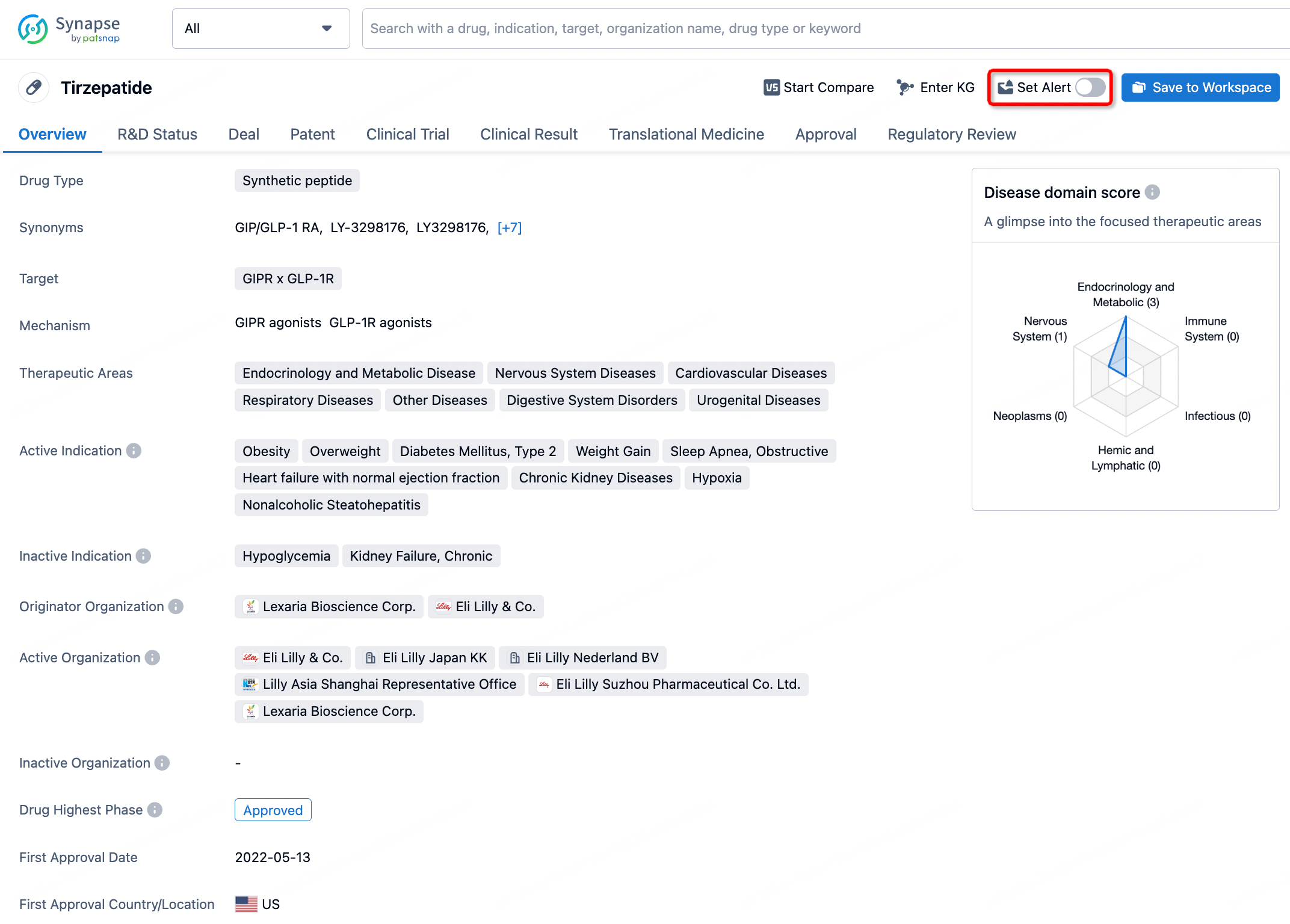
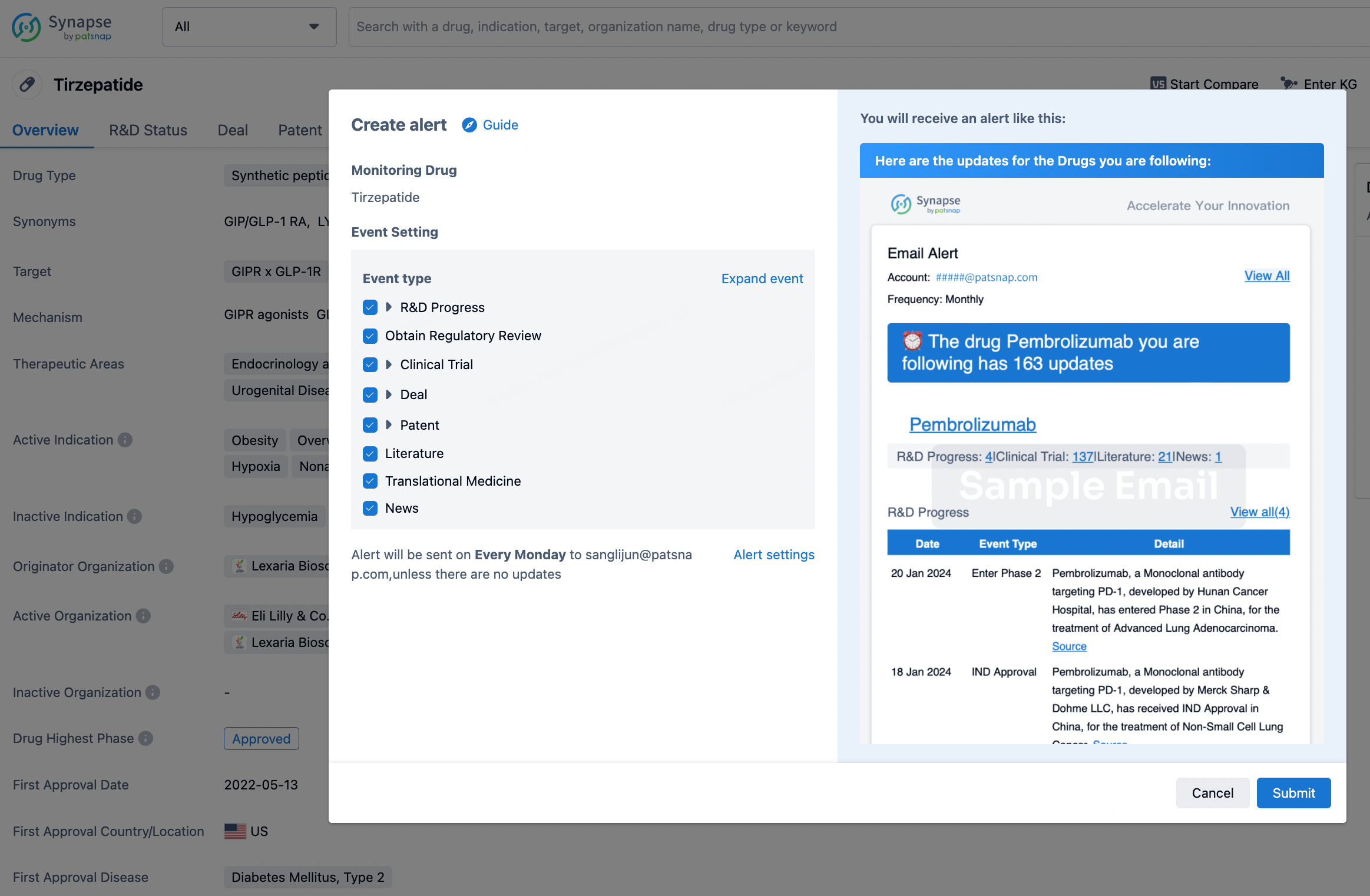
In the Synapse database, you can stay updated on the latest research and development advances of all drugs. This service is accessible anytime and anywhere, with updates available daily or weekly. Use the "Set Alert" function to stay informed. Click on the image below to embark on a brand new journey of drug discovery!

Hiro LS Researcher
The AI Search Engine Built to Accelerate Biopharma Decisions
Search across billion-scale life sciences data to uncover signals, validate evidence, and act with confidence.
Ask any biopharma research question→
Get started for free today!
Accelerate Strategic R&D decision making with Synapse, Patsnap’s AI-powered Connected Innovation Intelligence Platform Built for Life Sciences Professionals.
Discover Synapse Data Servers
Synapse data is now integrated into the PatSnap LS Model Context Protocol (MCP) service. Customize your LLM agent now using our MCP server!