Request Demo
What is Naphthoquine used for?
14 June 2024
Naphthoquine, known under trade names such as ARCO®, is a synthetic anti-malarial agent. It belongs to the class of drugs known as aminoquinolines and is often combined with artemisinin derivatives, forming a potent armament against malaria, a disease caused by Plasmodium parasites. Primary targets include Plasmodium falciparum and Plasmodium vivax, the two most deadly and widespread malaria species. Notable research institutions involved in naphthoquine research include the Walter Reed Army Institute of Research and the National Institute of Malariology, Parasitology, and Entomology. Naphthoquine has emerged as a vital component in the fight against malaria, especially in areas where resistance to older drugs like chloroquine and sulfadoxine-pyrimethamine is prevalent. Research progress shows that naphthoquine, particularly in the naphthoquine-artemisinin combination, has been highly effective in treating and reducing the incidence of malaria in various endemic regions.
Naphthoquine's mechanism of action involves disrupting the detoxification processes of the Plasmodium parasite within red blood cells. Specifically, it interferes with the polymerization of heme into hemozoin, a non-toxic form, within the parasite's digestive vacuole. The free heme accumulates and exerts a toxic effect, leading to the parasite's death. When combined with artemisinin derivatives, naphthoquine benefits from the rapid action of artemisinin, which targets the parasite at an early stage of its lifecycle. Artemisinin generates reactive oxygen species within the parasite, causing damage to its proteins and cell membranes. The combination therapy ensures both immediate and prolonged action against the parasite, reducing the likelihood of resistance development and increasing the overall efficacy of the treatment.
Naphthoquine is typically administered orally, and it is often co-formulated with an artemisinin derivative like dihydroartemisinin. The standard method of administration involves taking the drug with food to enhance absorption and reduce gastrointestinal side effects. Naphthoquine has a longer half-life compared to many other anti-malarial drugs, which allows for less frequent dosing. The onset of action is relatively fast, especially when combined with artemisinin derivatives, which have a rapid parasiticidal effect. Usually, a single or a few doses are sufficient to clear the infection, providing the convenience of a shorter treatment regimen compared to older anti-malarial therapies. This ease of administration makes it particularly valuable in resource-limited settings where adherence to extended treatment schedules can be challenging.
While naphthoquine is effective, it is not without side effects. Common side effects include gastrointestinal disturbances like nausea, vomiting, and abdominal pain. Some patients may experience dizziness, headaches, or allergic reactions such as skin rashes and itching. Serious but rare side effects include neuropsychiatric symptoms, such as confusion and hallucinations, particularly in individuals with a predisposition to mental health issues. Naphthoquine is contraindicated in individuals with a history of hypersensitivity to aminoquinolines or artemisinin derivatives. It is also not recommended for use during the first trimester of pregnancy due to potential teratogenic effects. Patients with severe hepatic or renal impairment should use naphthoquine with caution, as these conditions can alter the drug's metabolism and excretion, potentially leading to toxicity. It is crucial to monitor patients for any adverse reactions during treatment and provide appropriate supportive care if side effects occur.
Several drugs can affect the efficacy and safety of naphthoquine. Concurrent use of other anti-malarial drugs can lead to additive or synergistic effects, which might be beneficial or detrimental depending on the specific combination. For instance, combining naphthoquine with mefloquine or quinine can increase the risk of neuropsychiatric side effects. Drugs that affect hepatic enzymes, such as rifampicin (an enzyme inducer) or ketoconazole (an enzyme inhibitor), can alter naphthoquine's metabolism, leading to either subtherapeutic levels or increased toxicity. Additionally, antacids containing magnesium or aluminum can interfere with naphthoquine absorption, reducing its efficacy. It is essential to manage drug interactions carefully and adjust dosing regimens as needed to ensure both the safety and effectiveness of naphthoquine therapy. Patients should inform their healthcare providers of all medications they are taking, including over-the-counter drugs and supplements, to avoid potential interactions and adverse effects.
Naphthoquine's mechanism of action involves disrupting the detoxification processes of the Plasmodium parasite within red blood cells. Specifically, it interferes with the polymerization of heme into hemozoin, a non-toxic form, within the parasite's digestive vacuole. The free heme accumulates and exerts a toxic effect, leading to the parasite's death. When combined with artemisinin derivatives, naphthoquine benefits from the rapid action of artemisinin, which targets the parasite at an early stage of its lifecycle. Artemisinin generates reactive oxygen species within the parasite, causing damage to its proteins and cell membranes. The combination therapy ensures both immediate and prolonged action against the parasite, reducing the likelihood of resistance development and increasing the overall efficacy of the treatment.
Naphthoquine is typically administered orally, and it is often co-formulated with an artemisinin derivative like dihydroartemisinin. The standard method of administration involves taking the drug with food to enhance absorption and reduce gastrointestinal side effects. Naphthoquine has a longer half-life compared to many other anti-malarial drugs, which allows for less frequent dosing. The onset of action is relatively fast, especially when combined with artemisinin derivatives, which have a rapid parasiticidal effect. Usually, a single or a few doses are sufficient to clear the infection, providing the convenience of a shorter treatment regimen compared to older anti-malarial therapies. This ease of administration makes it particularly valuable in resource-limited settings where adherence to extended treatment schedules can be challenging.
While naphthoquine is effective, it is not without side effects. Common side effects include gastrointestinal disturbances like nausea, vomiting, and abdominal pain. Some patients may experience dizziness, headaches, or allergic reactions such as skin rashes and itching. Serious but rare side effects include neuropsychiatric symptoms, such as confusion and hallucinations, particularly in individuals with a predisposition to mental health issues. Naphthoquine is contraindicated in individuals with a history of hypersensitivity to aminoquinolines or artemisinin derivatives. It is also not recommended for use during the first trimester of pregnancy due to potential teratogenic effects. Patients with severe hepatic or renal impairment should use naphthoquine with caution, as these conditions can alter the drug's metabolism and excretion, potentially leading to toxicity. It is crucial to monitor patients for any adverse reactions during treatment and provide appropriate supportive care if side effects occur.
Several drugs can affect the efficacy and safety of naphthoquine. Concurrent use of other anti-malarial drugs can lead to additive or synergistic effects, which might be beneficial or detrimental depending on the specific combination. For instance, combining naphthoquine with mefloquine or quinine can increase the risk of neuropsychiatric side effects. Drugs that affect hepatic enzymes, such as rifampicin (an enzyme inducer) or ketoconazole (an enzyme inhibitor), can alter naphthoquine's metabolism, leading to either subtherapeutic levels or increased toxicity. Additionally, antacids containing magnesium or aluminum can interfere with naphthoquine absorption, reducing its efficacy. It is essential to manage drug interactions carefully and adjust dosing regimens as needed to ensure both the safety and effectiveness of naphthoquine therapy. Patients should inform their healthcare providers of all medications they are taking, including over-the-counter drugs and supplements, to avoid potential interactions and adverse effects.
How to obtain the latest development progress of all drugs?
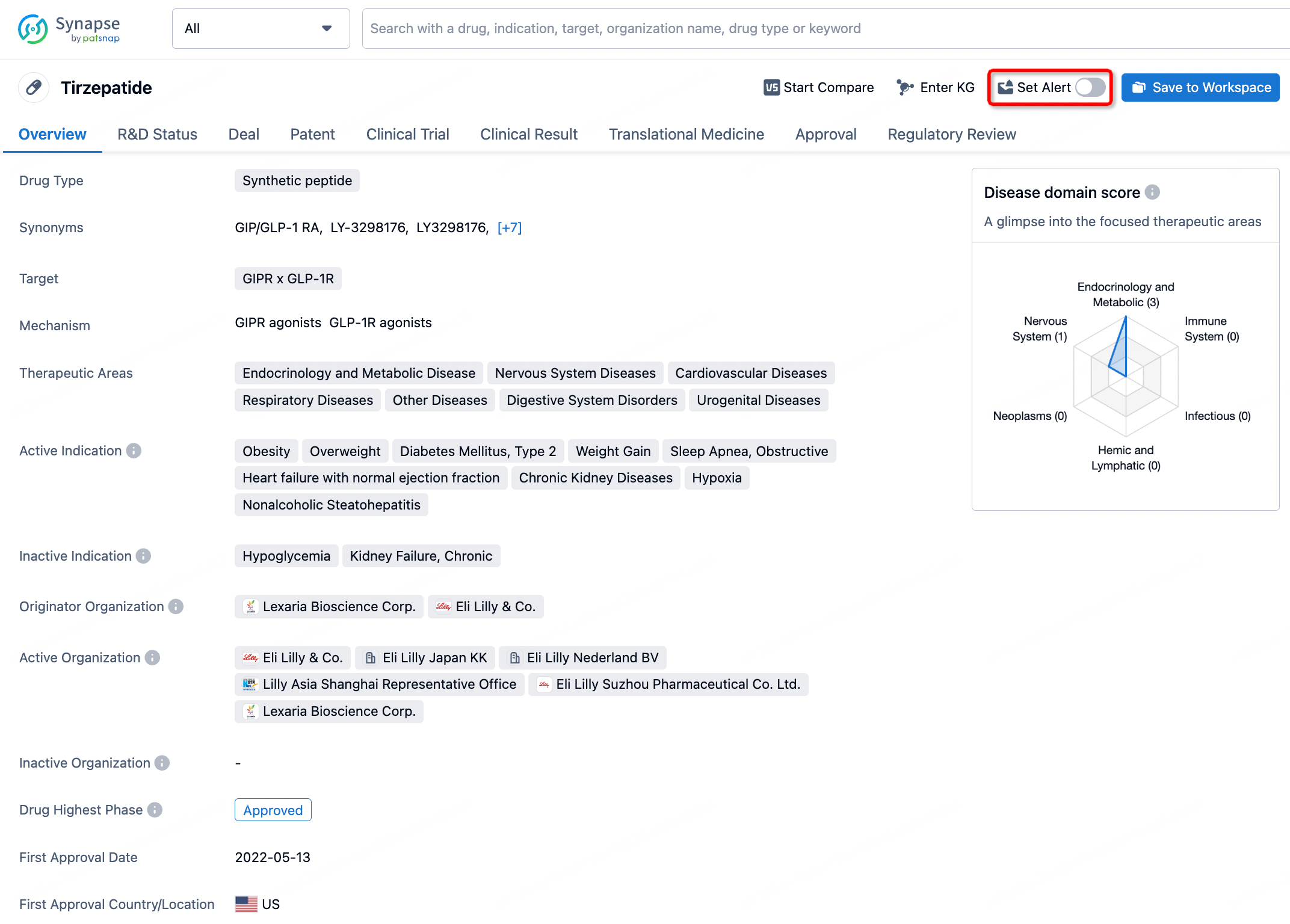
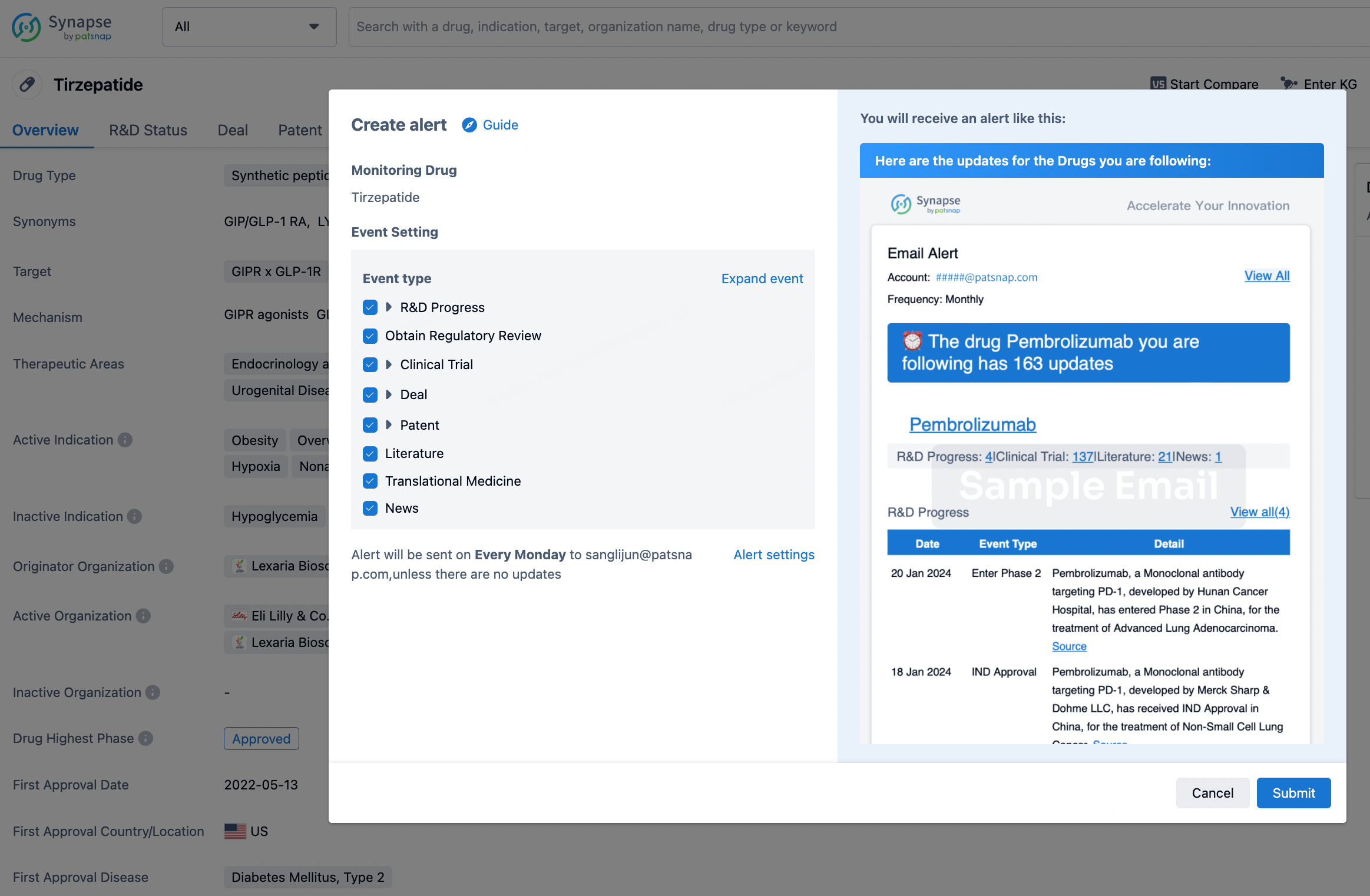
In the Synapse database, you can stay updated on the latest research and development advances of all drugs. This service is accessible anytime and anywhere, with updates available daily or weekly. Use the "Set Alert" function to stay informed. Click on the image below to embark on a brand new journey of drug discovery!
Hiro LS Researcher
The AI Search Engine Built to Accelerate Biopharma Decisions
Search across billion-scale life sciences data to uncover signals, validate evidence, and act with confidence.
Ask any biopharma research question→
Get started for free today!
Accelerate Strategic R&D decision making with Synapse, Patsnap’s AI-powered Connected Innovation Intelligence Platform Built for Life Sciences Professionals.
Discover Synapse Data Servers
Synapse data is now integrated into the PatSnap LS Model Context Protocol (MCP) service. Customize your LLM agent now using our MCP server!