Request Demo
What is Tenofovir Disoproxil Fumarate used for?
14 June 2024
Tenofovir Disoproxil Fumarate (TDF) is an antiviral medication primarily used to manage chronic hepatitis B and prevent and treat HIV/AIDS. It is marketed under various trade names, with Viread being the most well-known. TDF is classified as a nucleotide reverse transcriptase inhibitor (NtRTI), targeting the reverse transcriptase enzyme, which is vital for the replication of HIV and hepatitis B viruses. The drug was developed through extensive research by Gilead Sciences, a biopharmaceutical company renowned for its work in antiviral therapies. Since its approval by the U.S. Food and Drug Administration (FDA) in 2001, TDF has become a cornerstone in antiretroviral therapy (ART) regimens, showing promising results in both clinical trials and real-world applications.
The mechanism of action of Tenofovir Disoproxil Fumarate is both intricate and highly effective. Once ingested, TDF undergoes rapid absorption and is converted into its active form, tenofovir diphosphate, within the cells. Tenofovir diphosphate then competes with the natural substrate deoxyadenosine 5’-triphosphate (dATP) for incorporation into viral DNA. By inserting itself into the viral DNA chain, tenofovir diphosphate causes premature chain termination, thereby halting the virus's ability to replicate. This mechanism is particularly effective against both HIV-1 and HIV-2, as well as hepatitis B virus (HBV). The inhibition of viral replication helps to reduce the viral load in the body, prevent disease progression, and improve patients' immune function.
Administering Tenofovir Disoproxil Fumarate is straightforward yet requires adherence to specific guidelines to maximize its efficacy. TDF is usually taken orally, in the form of a tablet. It is often prescribed once daily, with or without food, depending on the patient's specific medical condition and the healthcare provider's recommendations. The onset of action for TDF is relatively quick, with measurable reductions in viral load observed within the first few weeks of therapy. However, it is crucial to continue taking the medication as prescribed, even if patients begin to feel better, to ensure the virus remains suppressed and to prevent the development of drug resistance. Skipping doses or discontinuing treatment without medical advice can lead to viral rebound and resistance, complicating future treatment options.
While Tenofovir Disoproxil Fumarate is generally well-tolerated, it is not without its side effects and contraindications. Common side effects include gastrointestinal symptoms such as nausea, vomiting, diarrhea, and abdominal pain. Some patients may also experience headache, dizziness, or fatigue. More severe, though less common, side effects include renal toxicity and bone density loss, which necessitate regular monitoring of kidney function and bone health during long-term use. Patients with pre-existing renal impairment should use TDF with caution, and dose adjustments may be required. Additionally, TDF is contraindicated in individuals with known hypersensitivity to tenofovir or any component of the formulation. Pregnant women and breastfeeding mothers should consult their healthcare providers to weigh the benefits and risks before starting TDF.
Drug interactions are an essential consideration when prescribing Tenofovir Disoproxil Fumarate. Concurrent use of other nephrotoxic drugs, such as nonsteroidal anti-inflammatory drugs (NSAIDs) or certain antibiotics, can exacerbate the risk of renal impairment. Additionally, drugs that affect renal function can alter TDF's excretion, potentially leading to increased toxicity or decreased efficacy. Other antiretrovirals, particularly those used in combination therapies for HIV, can also interact with TDF, necessitating careful coordination and monitoring by healthcare providers. For instance, co-administration with didanosine can increase the concentration of both drugs, heightening the risk of adverse effects. Patients should always inform their healthcare providers of all medications and supplements they are taking to ensure safe and effective use of TDF.
In summary, Tenofovir Disoproxil Fumarate is a vital medication in the fight against HIV and hepatitis B. Its well-defined mechanism of action, ease of use, and proven efficacy make it a mainstay in antiretroviral therapy. However, like all medications, it requires careful management to mitigate side effects and avoid drug interactions. Regular monitoring and open communication with healthcare providers are essential to optimize treatment outcomes and maintain the health and well-being of those affected by these chronic viral infections.
The mechanism of action of Tenofovir Disoproxil Fumarate is both intricate and highly effective. Once ingested, TDF undergoes rapid absorption and is converted into its active form, tenofovir diphosphate, within the cells. Tenofovir diphosphate then competes with the natural substrate deoxyadenosine 5’-triphosphate (dATP) for incorporation into viral DNA. By inserting itself into the viral DNA chain, tenofovir diphosphate causes premature chain termination, thereby halting the virus's ability to replicate. This mechanism is particularly effective against both HIV-1 and HIV-2, as well as hepatitis B virus (HBV). The inhibition of viral replication helps to reduce the viral load in the body, prevent disease progression, and improve patients' immune function.
Administering Tenofovir Disoproxil Fumarate is straightforward yet requires adherence to specific guidelines to maximize its efficacy. TDF is usually taken orally, in the form of a tablet. It is often prescribed once daily, with or without food, depending on the patient's specific medical condition and the healthcare provider's recommendations. The onset of action for TDF is relatively quick, with measurable reductions in viral load observed within the first few weeks of therapy. However, it is crucial to continue taking the medication as prescribed, even if patients begin to feel better, to ensure the virus remains suppressed and to prevent the development of drug resistance. Skipping doses or discontinuing treatment without medical advice can lead to viral rebound and resistance, complicating future treatment options.
While Tenofovir Disoproxil Fumarate is generally well-tolerated, it is not without its side effects and contraindications. Common side effects include gastrointestinal symptoms such as nausea, vomiting, diarrhea, and abdominal pain. Some patients may also experience headache, dizziness, or fatigue. More severe, though less common, side effects include renal toxicity and bone density loss, which necessitate regular monitoring of kidney function and bone health during long-term use. Patients with pre-existing renal impairment should use TDF with caution, and dose adjustments may be required. Additionally, TDF is contraindicated in individuals with known hypersensitivity to tenofovir or any component of the formulation. Pregnant women and breastfeeding mothers should consult their healthcare providers to weigh the benefits and risks before starting TDF.
Drug interactions are an essential consideration when prescribing Tenofovir Disoproxil Fumarate. Concurrent use of other nephrotoxic drugs, such as nonsteroidal anti-inflammatory drugs (NSAIDs) or certain antibiotics, can exacerbate the risk of renal impairment. Additionally, drugs that affect renal function can alter TDF's excretion, potentially leading to increased toxicity or decreased efficacy. Other antiretrovirals, particularly those used in combination therapies for HIV, can also interact with TDF, necessitating careful coordination and monitoring by healthcare providers. For instance, co-administration with didanosine can increase the concentration of both drugs, heightening the risk of adverse effects. Patients should always inform their healthcare providers of all medications and supplements they are taking to ensure safe and effective use of TDF.
In summary, Tenofovir Disoproxil Fumarate is a vital medication in the fight against HIV and hepatitis B. Its well-defined mechanism of action, ease of use, and proven efficacy make it a mainstay in antiretroviral therapy. However, like all medications, it requires careful management to mitigate side effects and avoid drug interactions. Regular monitoring and open communication with healthcare providers are essential to optimize treatment outcomes and maintain the health and well-being of those affected by these chronic viral infections.
How to obtain the latest development progress of all drugs?
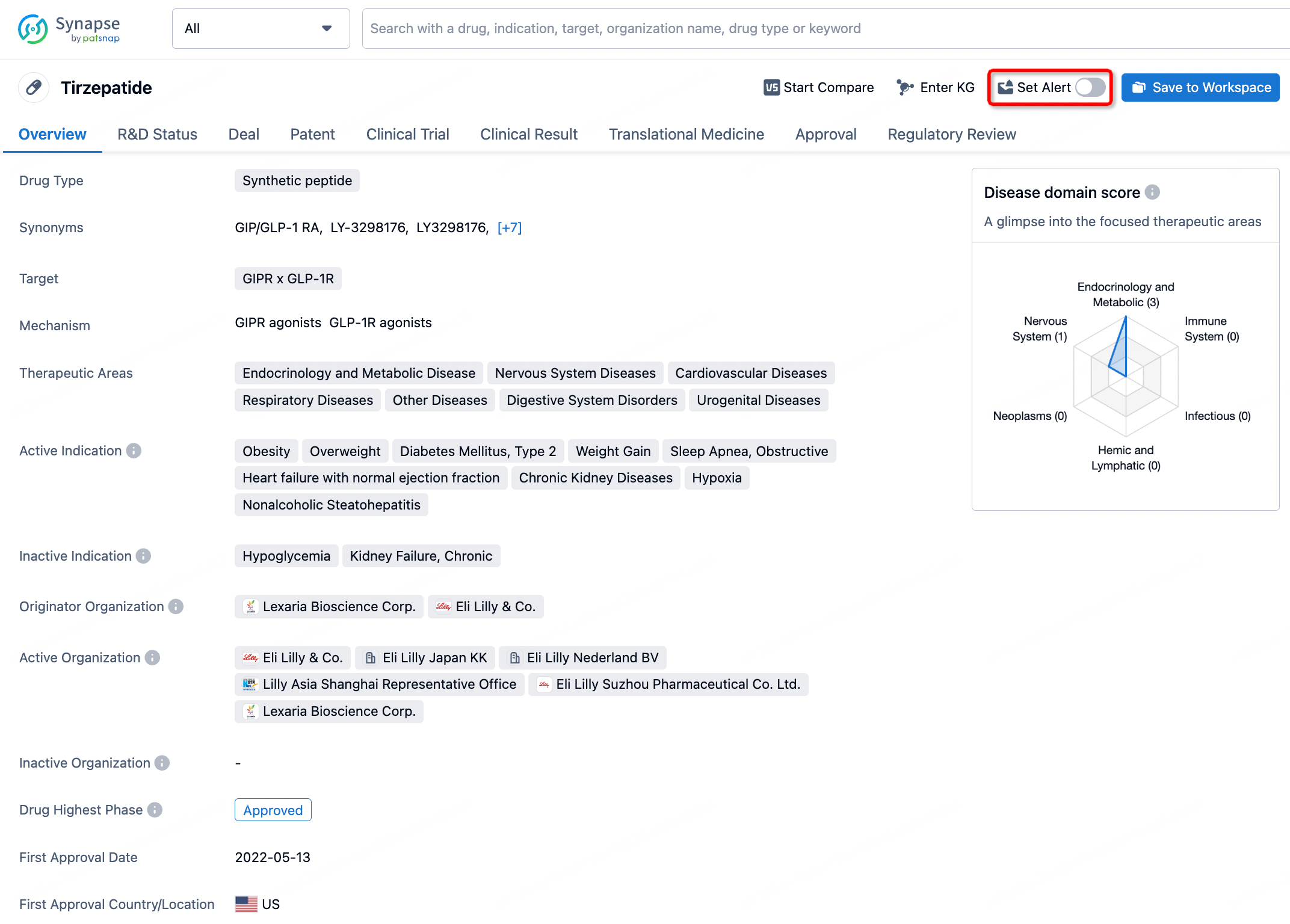
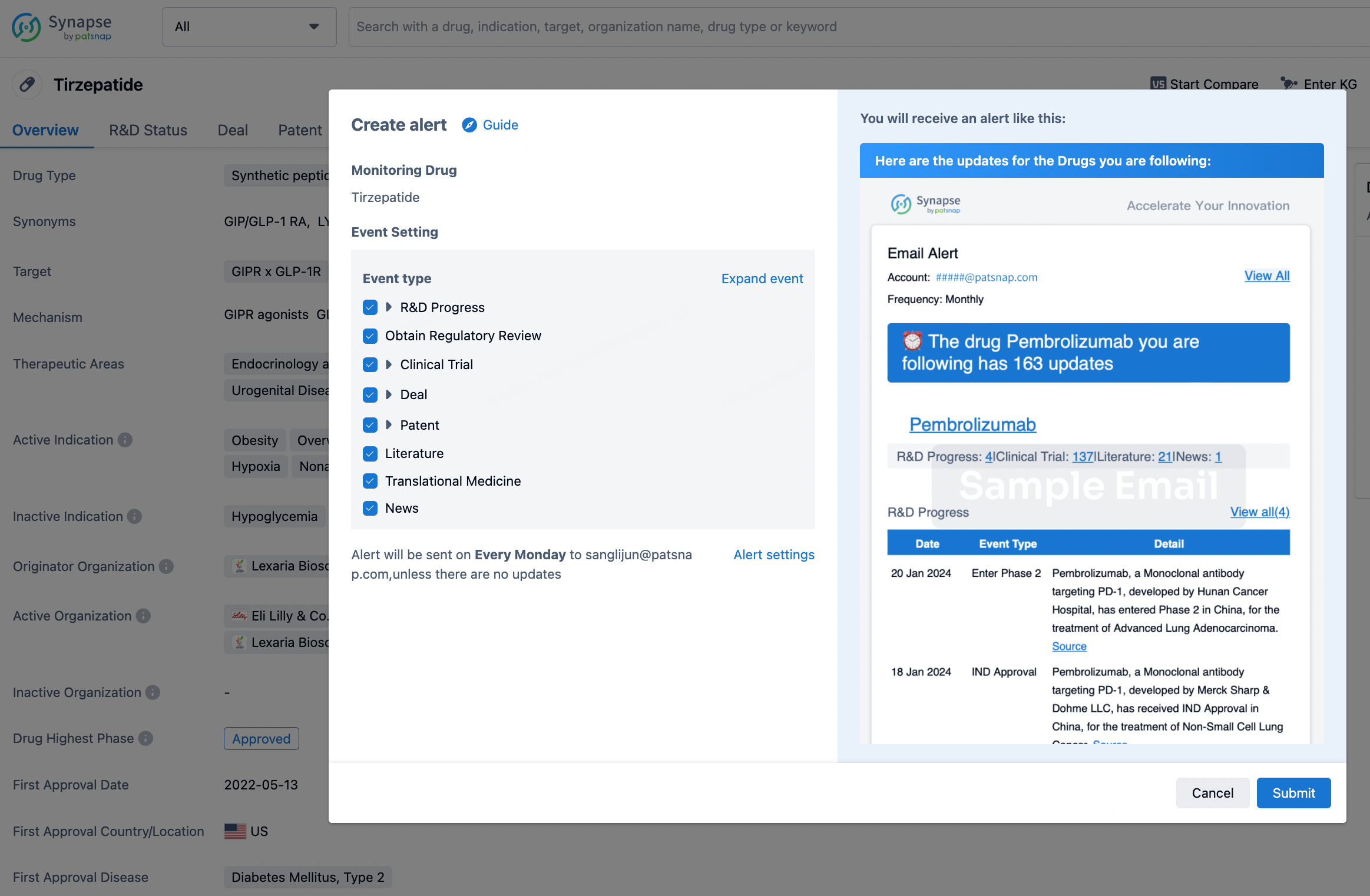
In the Synapse database, you can stay updated on the latest research and development advances of all drugs. This service is accessible anytime and anywhere, with updates available daily or weekly. Use the "Set Alert" function to stay informed. Click on the image below to embark on a brand new journey of drug discovery!
AI Agents Built for Biopharma Breakthroughs
Accelerate discovery. Empower decisions. Transform outcomes.
Get started for free today!
Accelerate Strategic R&D decision making with Synapse, PatSnap’s AI-powered Connected Innovation Intelligence Platform Built for Life Sciences Professionals.
Start your data trial now!
Synapse data is also accessible to external entities via APIs or data packages. Empower better decisions with the latest in pharmaceutical intelligence.