Request Demo
What is the mechanism of Enarodustat?
17 July 2024
Enarodustat is an innovative pharmaceutical agent that has garnered attention in the treatment of anemia associated with chronic kidney disease (CKD). Understanding its mechanism requires an exploration of the underlying biological pathways it influences and the clinical implications of these interactions.
At the core of Enarodustat's mechanism is its role as a hypoxia-inducible factor prolyl hydroxylase (HIF-PH) inhibitor. Hypoxia-inducible factors (HIFs) are transcription factors that respond to decreases in available oxygen in the cellular environment, a condition known as hypoxia. These factors are crucial for the regulation of genes involved in erythropoiesis, the process by which red blood cells are produced, as well as in iron metabolism and angiogenesis.
Under normal oxygen conditions, HIFs are hydroxylated by HIF-PH enzymes, marking them for degradation via the ubiquitin-proteasome pathway. This hydroxylation process involves the addition of hydroxyl groups to specific proline residues on HIF-α subunits, a modification that paves the way for their recognition and subsequent breakdown by the von Hippel-Lindau (VHL) protein complex.
Enarodustat's primary action is to inhibit these HIF-PH enzymes, thereby preventing the hydroxylation of HIF-α subunits. This inhibition mimics a hypoxic condition, stabilizing HIF-α. The stabilized HIF-α translocates to the nucleus, where it dimerizes with HIF-β subunits. The HIF complex then binds to hypoxia-responsive elements (HREs) in the promoters of target genes, initiating the transcription of genes that are instrumental in erythropoiesis and iron metabolism.
One of the key gene products upregulated by this pathway is erythropoietin (EPO), a glycoprotein hormone that plays a central role in the production of red blood cells. EPO acts on erythroid progenitor cells in the bone marrow, stimulating their survival, proliferation, and differentiation into mature red blood cells. By enhancing endogenous EPO production, Enarodustat offers a therapeutic avenue to address anemia, particularly in CKD patients who often suffer from reduced EPO levels due to impaired renal function.
Furthermore, Enarodustat’s impact on iron metabolism is notable. The HIF pathway also regulates the expression of genes involved in iron absorption, transport, and utilization. For instance, HIF can induce the expression of genes like divalent metal transporter 1 (DMT1) and ferroportin, which facilitate iron uptake and release, respectively. Additionally, it can downregulate hepcidin, a hormone that inhibits iron absorption and release. By modulating these pathways, Enarodustat helps enhance the availability of iron, which is crucial for hemoglobin synthesis and effective erythropoiesis.
In clinical contexts, Enarodustat's efficacy and safety have been evaluated through various stages of CKD, with promising results indicating its potential to reduce the need for exogenous EPO and iron supplements. Its oral administration route also offers advantages over injectable erythropoiesis-stimulating agents (ESAs), contributing to better patient compliance and quality of life.
In summary, Enarodustat operates by inhibiting HIF-PH enzymes, leading to the stabilization and activation of HIF pathways that upregulate genes crucial for erythropoiesis and iron metabolism. This mechanism helps increase endogenous EPO production and improve iron homeostasis, addressing the multifaceted nature of anemia in CKD. As ongoing research and clinical trials continue to explore its full potential, Enarodustat represents a significant advancement in the management of CKD-related anemia.
At the core of Enarodustat's mechanism is its role as a hypoxia-inducible factor prolyl hydroxylase (HIF-PH) inhibitor. Hypoxia-inducible factors (HIFs) are transcription factors that respond to decreases in available oxygen in the cellular environment, a condition known as hypoxia. These factors are crucial for the regulation of genes involved in erythropoiesis, the process by which red blood cells are produced, as well as in iron metabolism and angiogenesis.
Under normal oxygen conditions, HIFs are hydroxylated by HIF-PH enzymes, marking them for degradation via the ubiquitin-proteasome pathway. This hydroxylation process involves the addition of hydroxyl groups to specific proline residues on HIF-α subunits, a modification that paves the way for their recognition and subsequent breakdown by the von Hippel-Lindau (VHL) protein complex.
Enarodustat's primary action is to inhibit these HIF-PH enzymes, thereby preventing the hydroxylation of HIF-α subunits. This inhibition mimics a hypoxic condition, stabilizing HIF-α. The stabilized HIF-α translocates to the nucleus, where it dimerizes with HIF-β subunits. The HIF complex then binds to hypoxia-responsive elements (HREs) in the promoters of target genes, initiating the transcription of genes that are instrumental in erythropoiesis and iron metabolism.
One of the key gene products upregulated by this pathway is erythropoietin (EPO), a glycoprotein hormone that plays a central role in the production of red blood cells. EPO acts on erythroid progenitor cells in the bone marrow, stimulating their survival, proliferation, and differentiation into mature red blood cells. By enhancing endogenous EPO production, Enarodustat offers a therapeutic avenue to address anemia, particularly in CKD patients who often suffer from reduced EPO levels due to impaired renal function.
Furthermore, Enarodustat’s impact on iron metabolism is notable. The HIF pathway also regulates the expression of genes involved in iron absorption, transport, and utilization. For instance, HIF can induce the expression of genes like divalent metal transporter 1 (DMT1) and ferroportin, which facilitate iron uptake and release, respectively. Additionally, it can downregulate hepcidin, a hormone that inhibits iron absorption and release. By modulating these pathways, Enarodustat helps enhance the availability of iron, which is crucial for hemoglobin synthesis and effective erythropoiesis.
In clinical contexts, Enarodustat's efficacy and safety have been evaluated through various stages of CKD, with promising results indicating its potential to reduce the need for exogenous EPO and iron supplements. Its oral administration route also offers advantages over injectable erythropoiesis-stimulating agents (ESAs), contributing to better patient compliance and quality of life.
In summary, Enarodustat operates by inhibiting HIF-PH enzymes, leading to the stabilization and activation of HIF pathways that upregulate genes crucial for erythropoiesis and iron metabolism. This mechanism helps increase endogenous EPO production and improve iron homeostasis, addressing the multifaceted nature of anemia in CKD. As ongoing research and clinical trials continue to explore its full potential, Enarodustat represents a significant advancement in the management of CKD-related anemia.
How to obtain the latest development progress of all drugs?
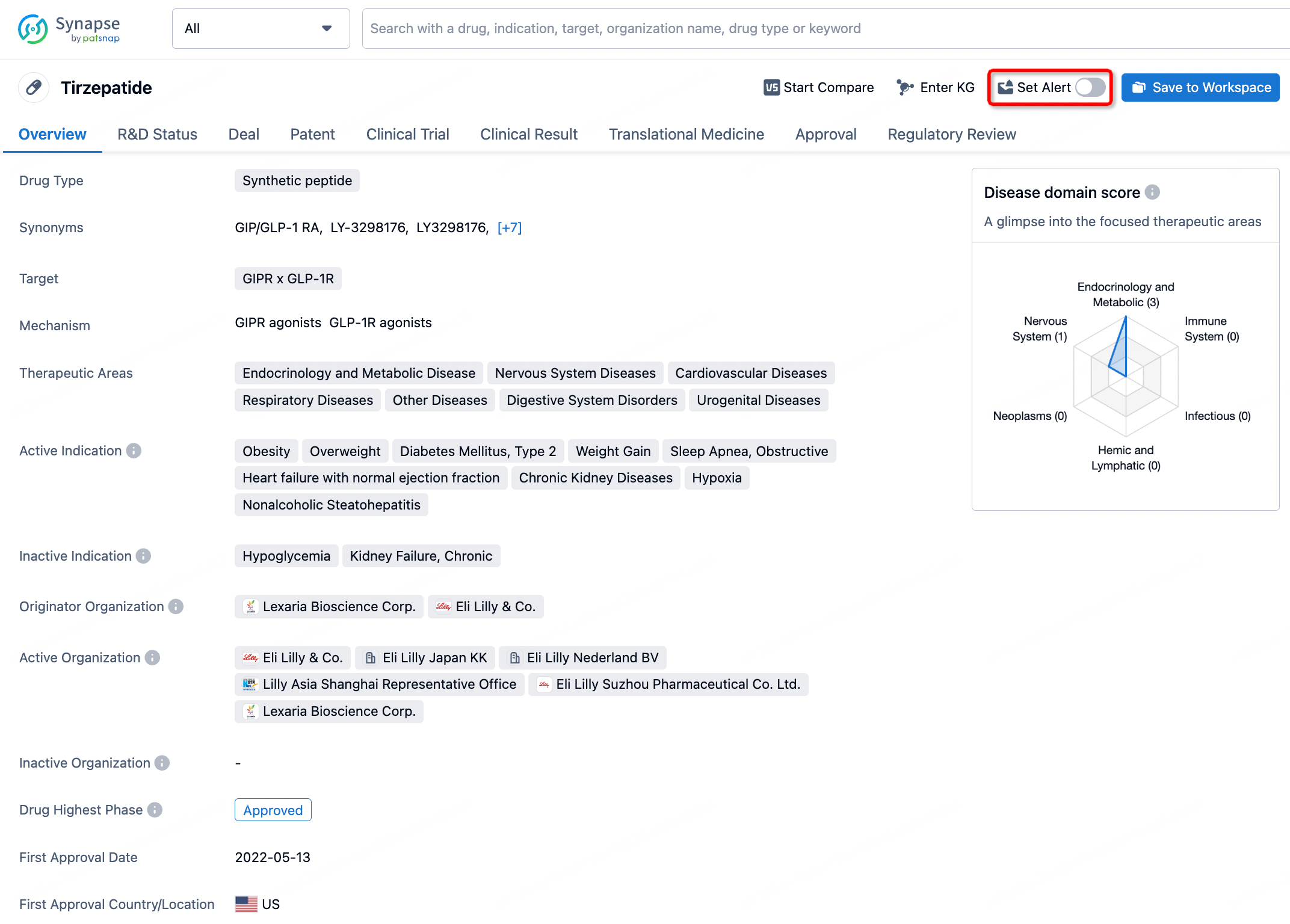
In the Synapse database, you can stay updated on the latest research and development advances of all drugs. This service is accessible anytime and anywhere, with updates available daily or weekly. Use the "Set Alert" function to stay informed. Click on the image below to embark on a brand new journey of drug discovery!


AI Agents Built for Biopharma Breakthroughs
Accelerate discovery. Empower decisions. Transform outcomes.
Get started for free today!
Accelerate Strategic R&D decision making with Synapse, PatSnap’s AI-powered Connected Innovation Intelligence Platform Built for Life Sciences Professionals.
Start your data trial now!
Synapse data is also accessible to external entities via APIs or data packages. Empower better decisions with the latest in pharmaceutical intelligence.