Request Demo
What is Vinorelbine Tartrate used for?
15 June 2024
Vinorelbine Tartrate, commonly known by its trade names such as Navelbine, is a chemotherapy drug that has been extensively researched and used in the treatment of various cancers. Developed by Pierre Fabre Laboratories and initially approved by the FDA in 1994, Vinorelbine Tartrate has become a cornerstone in oncological therapies. It is part of the vinca alkaloid class of drugs, which are derived from the periwinkle plant (Vinca rosea). Vinorelbine Tartrate is primarily indicated for the treatment of non-small cell lung cancer (NSCLC) and advanced breast cancer, although ongoing research is exploring its efficacy in other cancer types as well.
The drug works by targeting rapidly dividing cells, a hallmark of cancerous tissues. By disrupting the mitotic spindle formation during cell division, Vinorelbine Tartrate effectively halts the proliferation of cancer cells. Research institutions worldwide continue to study this drug to better understand its mechanisms and potential applications. Clinical trials have shown promising results, especially when used in combination with other chemotherapy agents, and new formulations are continually being developed to improve its efficacy and minimize side effects.
Vinorelbine Tartrate operates by inhibiting the polymerization of tubulin, a protein that makes up microtubules which are essential for cell division. By binding to tubulin, Vinorelbine Tartrate prevents the formation of the mitotic spindle, thereby arresting cells in metaphase. This disruption of the mitotic process leads to cell cycle arrest and subsequently induces apoptosis, or programmed cell death, in cancer cells. Unlike some other vinca alkaloids, Vinorelbine Tartrate has a preferential affinity for mitotic microtubules over axonal microtubules, which are found in neurons. This selective action contributes to its relatively lower neurotoxicity compared to other drugs in its class. The drug's efficacy in targeting tumor cells while sparing most normal cells makes it a valuable asset in chemotherapy regimens.
Vinorelbine Tartrate can be administered via intravenous (IV) infusion or orally in capsule form. The method of administration often depends on the specific medical condition being treated, the patient's overall health, and the treatment plan laid out by the healthcare provider. Intravenous administration typically involves infusions over 6 to 10 minutes, usually on a weekly schedule. Oral capsules, on the other hand, are taken with water and should not be chewed or crushed. The onset of action for Vinorelbine Tartrate can vary, but therapeutic effects are generally observed within a few weeks of initiation of therapy. Monitoring and adjustments may be necessary to optimize the treatment outcomes while minimizing side effects.
As with any potent chemotherapy agent, Vinorelbine Tartrate comes with a range of potential side effects. Common side effects include nausea, vomiting, constipation, fatigue, and hair loss. Hematologic toxicities such as neutropenia, anemia, and thrombocytopenia are also frequent, necessitating regular blood count monitoring. Less commonly, patients may experience neurotoxicity, manifested as peripheral neuropathy, though this is generally less severe than with other vinca alkaloids. Serious but rare side effects include severe allergic reactions, hepatotoxicity, and respiratory issues. Contraindications for the use of Vinorelbine Tartrate include severe liver impairment and known hypersensitivity to the drug or its components. Additionally, it should be used with caution in patients with pre-existing neuropathies or those who have recently received radiation therapy.
Several drugs can interact with Vinorelbine Tartrate, potentially altering its efficacy or increasing the risk of adverse effects. For instance, drugs that inhibit or induce the cytochrome P450 3A4 enzyme can affect the metabolism of Vinorelbine Tartrate. CYP3A4 inhibitors such as ketoconazole, erythromycin, and grapefruit juice can increase the drug levels in the blood, potentially leading to heightened toxicity. Conversely, CYP3A4 inducers like rifampin and St. John's Wort can decrease the drug's effectiveness by accelerating its metabolism. Additionally, caution should be exercised when co-administering Vinorelbine Tartrate with other myelosuppressive agents, as this can exacerbate hematologic toxicities. Concomitant use of live vaccines is also contraindicated due to the immunosuppressive effects of chemotherapy, which can increase the risk of severe infections.
In conclusion, Vinorelbine Tartrate is a vital drug in the fight against cancer, offering hope and improved outcomes for patients with conditions like non-small cell lung cancer and advanced breast cancer. Understanding its mechanism of action, appropriate usage guidelines, potential side effects, and drug interactions can help healthcare providers optimize treatment regimens and enhance patient care. Ongoing research continues to expand our knowledge of Vinorelbine Tartrate, promising even greater therapeutic benefits in the future.
The drug works by targeting rapidly dividing cells, a hallmark of cancerous tissues. By disrupting the mitotic spindle formation during cell division, Vinorelbine Tartrate effectively halts the proliferation of cancer cells. Research institutions worldwide continue to study this drug to better understand its mechanisms and potential applications. Clinical trials have shown promising results, especially when used in combination with other chemotherapy agents, and new formulations are continually being developed to improve its efficacy and minimize side effects.
Vinorelbine Tartrate operates by inhibiting the polymerization of tubulin, a protein that makes up microtubules which are essential for cell division. By binding to tubulin, Vinorelbine Tartrate prevents the formation of the mitotic spindle, thereby arresting cells in metaphase. This disruption of the mitotic process leads to cell cycle arrest and subsequently induces apoptosis, or programmed cell death, in cancer cells. Unlike some other vinca alkaloids, Vinorelbine Tartrate has a preferential affinity for mitotic microtubules over axonal microtubules, which are found in neurons. This selective action contributes to its relatively lower neurotoxicity compared to other drugs in its class. The drug's efficacy in targeting tumor cells while sparing most normal cells makes it a valuable asset in chemotherapy regimens.
Vinorelbine Tartrate can be administered via intravenous (IV) infusion or orally in capsule form. The method of administration often depends on the specific medical condition being treated, the patient's overall health, and the treatment plan laid out by the healthcare provider. Intravenous administration typically involves infusions over 6 to 10 minutes, usually on a weekly schedule. Oral capsules, on the other hand, are taken with water and should not be chewed or crushed. The onset of action for Vinorelbine Tartrate can vary, but therapeutic effects are generally observed within a few weeks of initiation of therapy. Monitoring and adjustments may be necessary to optimize the treatment outcomes while minimizing side effects.
As with any potent chemotherapy agent, Vinorelbine Tartrate comes with a range of potential side effects. Common side effects include nausea, vomiting, constipation, fatigue, and hair loss. Hematologic toxicities such as neutropenia, anemia, and thrombocytopenia are also frequent, necessitating regular blood count monitoring. Less commonly, patients may experience neurotoxicity, manifested as peripheral neuropathy, though this is generally less severe than with other vinca alkaloids. Serious but rare side effects include severe allergic reactions, hepatotoxicity, and respiratory issues. Contraindications for the use of Vinorelbine Tartrate include severe liver impairment and known hypersensitivity to the drug or its components. Additionally, it should be used with caution in patients with pre-existing neuropathies or those who have recently received radiation therapy.
Several drugs can interact with Vinorelbine Tartrate, potentially altering its efficacy or increasing the risk of adverse effects. For instance, drugs that inhibit or induce the cytochrome P450 3A4 enzyme can affect the metabolism of Vinorelbine Tartrate. CYP3A4 inhibitors such as ketoconazole, erythromycin, and grapefruit juice can increase the drug levels in the blood, potentially leading to heightened toxicity. Conversely, CYP3A4 inducers like rifampin and St. John's Wort can decrease the drug's effectiveness by accelerating its metabolism. Additionally, caution should be exercised when co-administering Vinorelbine Tartrate with other myelosuppressive agents, as this can exacerbate hematologic toxicities. Concomitant use of live vaccines is also contraindicated due to the immunosuppressive effects of chemotherapy, which can increase the risk of severe infections.
In conclusion, Vinorelbine Tartrate is a vital drug in the fight against cancer, offering hope and improved outcomes for patients with conditions like non-small cell lung cancer and advanced breast cancer. Understanding its mechanism of action, appropriate usage guidelines, potential side effects, and drug interactions can help healthcare providers optimize treatment regimens and enhance patient care. Ongoing research continues to expand our knowledge of Vinorelbine Tartrate, promising even greater therapeutic benefits in the future.
How to obtain the latest development progress of all drugs?
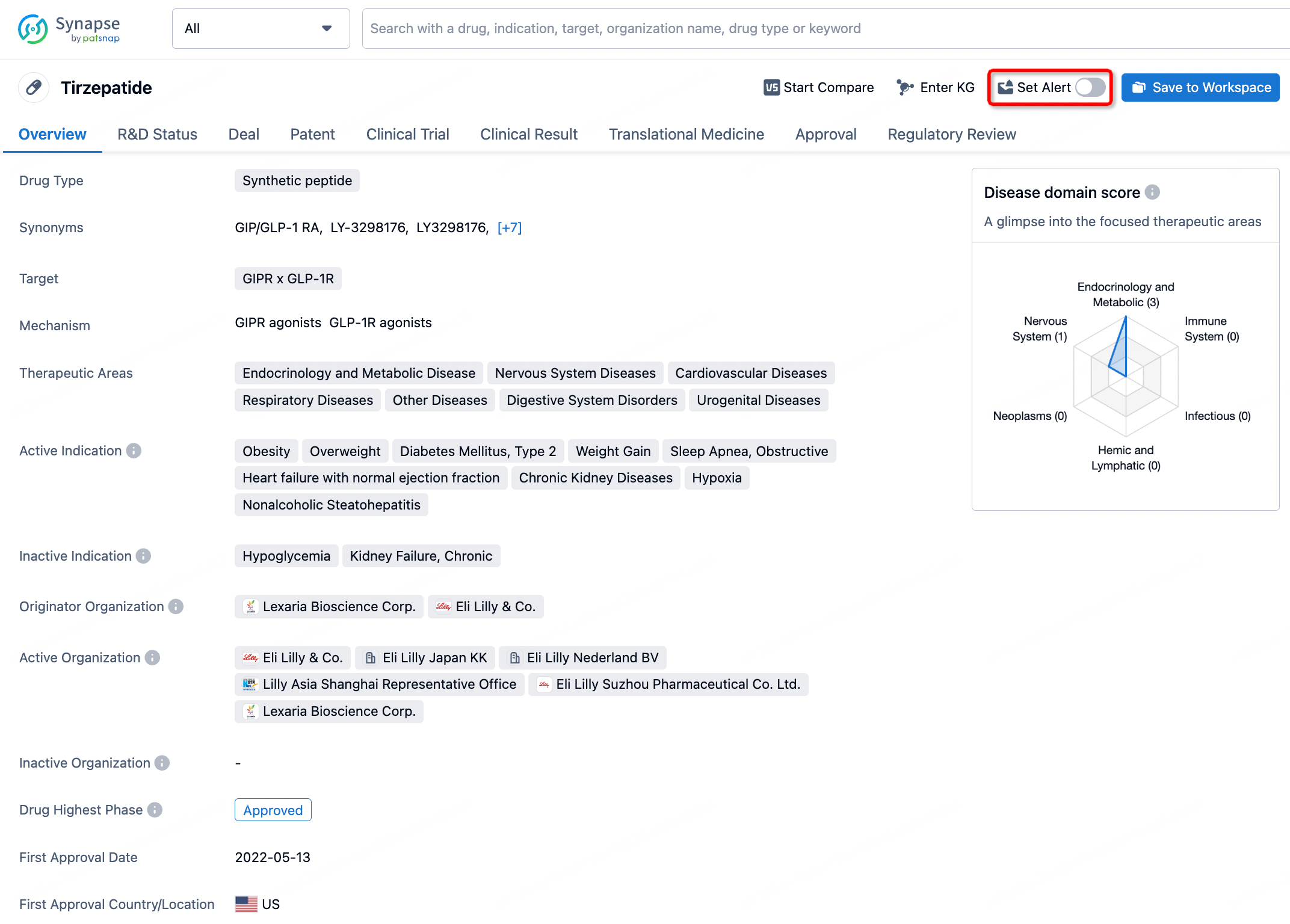
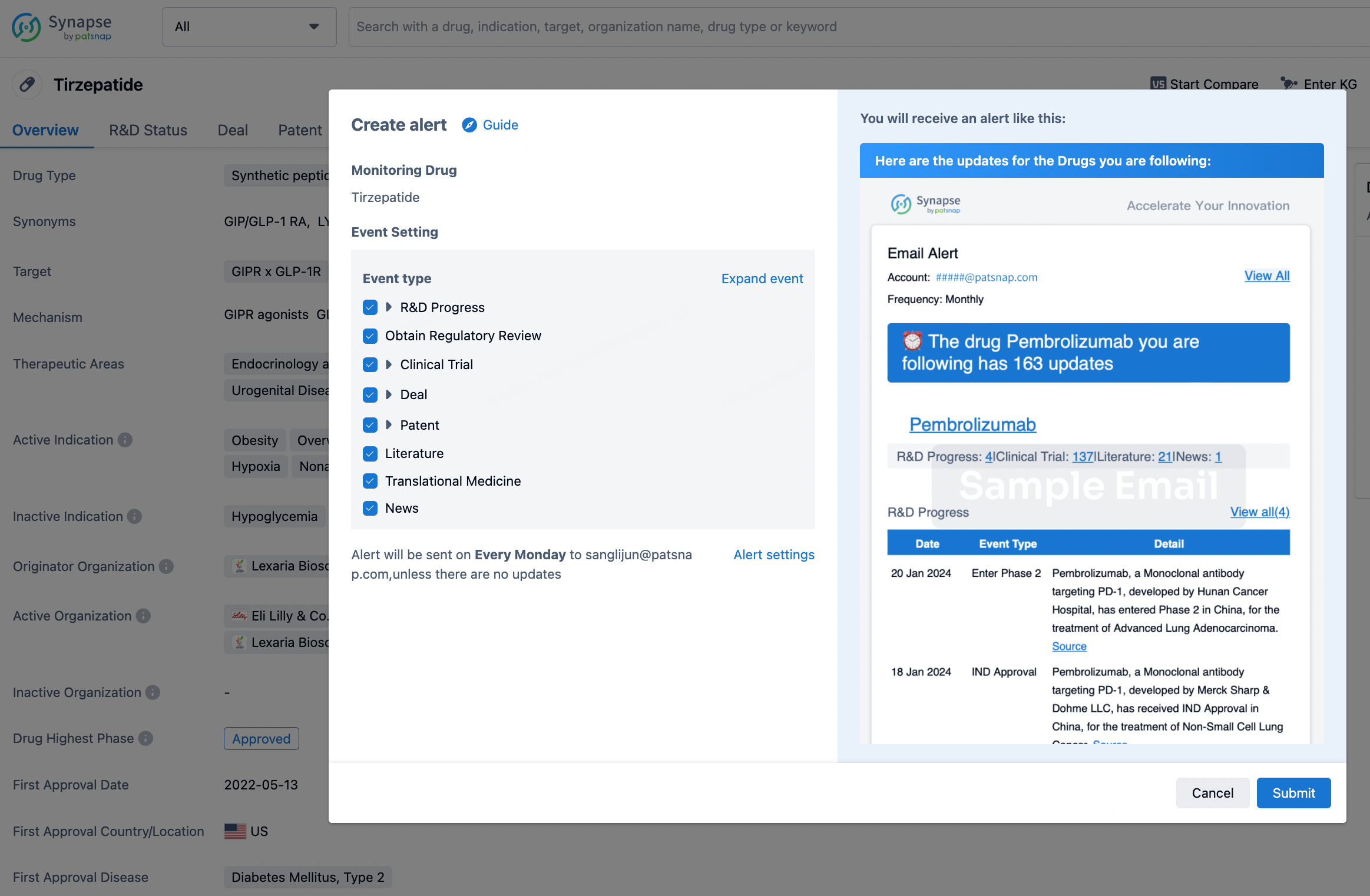
In the Synapse database, you can stay updated on the latest research and development advances of all drugs. This service is accessible anytime and anywhere, with updates available daily or weekly. Use the "Set Alert" function to stay informed. Click on the image below to embark on a brand new journey of drug discovery!

AI Agents Built for Biopharma Breakthroughs
Accelerate discovery. Empower decisions. Transform outcomes.
Get started for free today!
Accelerate Strategic R&D decision making with Synapse, PatSnap’s AI-powered Connected Innovation Intelligence Platform Built for Life Sciences Professionals.
Start your data trial now!
Synapse data is also accessible to external entities via APIs or data packages. Empower better decisions with the latest in pharmaceutical intelligence.