Request Demo
What is Eptifibatide used for?
14 June 2024
Eptifibatide is a potent and selective antiplatelet agent that has garnered significant attention in the medical community for its efficacy in treating acute coronary syndromes (ACS) and during percutaneous coronary intervention (PCI). Marketed under the trade names Integrilin and others, Eptifibatide is primarily known for its ability to prevent platelet aggregation, which is a critical factor in the formation of blood clots that can lead to heart attacks and other cardiovascular complications. Developed by COR Therapeutics, which was later acquired by Millennium Pharmaceuticals, Eptifibatide is a synthetic cyclic heptapeptide derived from a protein found in the venom of the southeastern pygmy rattlesnake. Its primary targets are the glycoprotein IIb/IIIa receptors on the surface of platelets. The drug has undergone extensive clinical trials and research, establishing its efficacy and safety profile for its approved indications.
Eptifibatide Mechanism of Action
Eptifibatide exerts its antiplatelet effects by inhibiting the glycoprotein IIb/IIIa receptor, which is pivotal in the final common pathway for platelet aggregation. The glycoprotein IIb/IIIa receptors are integrin complexes found on the surface of platelets, and upon activation, they bind to fibrinogen and von Willebrand factor, facilitating platelet cross-linking and the formation of a platelet plug. Eptifibatide mimics the arginine-glycine-aspartic acid (RGD) sequence found in fibrinogen, thereby competitively inhibiting the binding of fibrinogen to the glycoprotein IIb/IIIa receptors. This inhibition prevents the receptors from binding to fibrinogen and other ligands necessary for platelet aggregation. As a result, Eptifibatide effectively reduces the risk of thrombus formation in patients with acute ischemic events, particularly in those undergoing procedures like PCI, where platelet activation and aggregation are significant concerns.
How to Use Eptifibatide
Eptifibatide is administered intravenously, and the dosing regimen typically begins with a bolus injection, followed by a continuous infusion. The initial bolus dose is generally 180 micrograms per kilogram of body weight, followed by a continuous infusion of 2 micrograms per kilogram per minute. This regimen is often adjusted based on the patient's renal function, as impaired renal function can necessitate dosage modifications to avoid potential toxicity. The onset of action of Eptifibatide is rapid, with the inhibition of platelet aggregation occurring within minutes of administration. This rapid onset is particularly advantageous in acute settings such as ACS or during PCI, where immediate antithrombotic action is required to mitigate the risk of adverse cardiovascular events. The duration of treatment with Eptifibatide can vary but generally ranges from 18 to 24 hours, depending on the clinical scenario and patient response.
What is Eptifibatide Side Effects
Like all medications, Eptifibatide is associated with a range of potential side effects, some of which can be severe. The most common side effect is bleeding, which can occur in various forms, from minor bruising and bleeding at the injection site to more severe gastrointestinal or intracranial hemorrhages. Due to its potent antiplatelet effects, Eptifibatide is contraindicated in patients with active internal bleeding, a history of hemorrhagic stroke, recent major surgery or trauma, or severe uncontrolled hypertension. Other potential side effects include thrombocytopenia, which is a condition characterized by an abnormally low number of platelets that can further increase the risk of bleeding. Hypersensitivity reactions, including anaphylaxis, have also been reported, although these are relatively rare. It is crucial for healthcare providers to closely monitor patients receiving Eptifibatide for any signs of bleeding or other adverse reactions and to adjust the treatment regimen as necessary.
What Other Drugs Will Affect Eptifibatide
Eptifibatide can interact with other medications, which may enhance its antiplatelet effects and increase the risk of bleeding. Concomitant use of other anticoagulants, such as heparin, warfarin, or thrombolytic agents, can potentiate the risk of bleeding complications. Nonsteroidal anti-inflammatory drugs (NSAIDs) and other antiplatelet agents, such as aspirin and clopidogrel, may also increase the bleeding risk when used alongside Eptifibatide. It is essential for healthcare providers to review all medications that a patient is taking before initiating Eptifibatide therapy to identify and manage potential drug interactions. Additionally, certain medical conditions, such as renal impairment, necessitate careful consideration and possible dosage adjustments to mitigate the risk of adverse effects. Patients should be advised to inform their healthcare provider of all medications they are currently taking, including over-the-counter drugs and supplements, to ensure safe and effective use of Eptifibatide.
In conclusion, Eptifibatide is a critical therapeutic agent in the management of acute coronary syndromes and during percutaneous coronary interventions. Its mechanism of action as a glycoprotein IIb/IIIa inhibitor enables it to effectively prevent platelet aggregation and thrombus formation, thereby reducing the risk of adverse cardiovascular events. While its administration requires careful monitoring due to potential side effects and drug interactions, Eptifibatide remains a valuable tool in the arsenal of antithrombotic therapies. Ongoing research and clinical experience continue to refine its use, ensuring that patients receive the maximum benefit with the minimum risk of complications.
Eptifibatide Mechanism of Action
Eptifibatide exerts its antiplatelet effects by inhibiting the glycoprotein IIb/IIIa receptor, which is pivotal in the final common pathway for platelet aggregation. The glycoprotein IIb/IIIa receptors are integrin complexes found on the surface of platelets, and upon activation, they bind to fibrinogen and von Willebrand factor, facilitating platelet cross-linking and the formation of a platelet plug. Eptifibatide mimics the arginine-glycine-aspartic acid (RGD) sequence found in fibrinogen, thereby competitively inhibiting the binding of fibrinogen to the glycoprotein IIb/IIIa receptors. This inhibition prevents the receptors from binding to fibrinogen and other ligands necessary for platelet aggregation. As a result, Eptifibatide effectively reduces the risk of thrombus formation in patients with acute ischemic events, particularly in those undergoing procedures like PCI, where platelet activation and aggregation are significant concerns.
How to Use Eptifibatide
Eptifibatide is administered intravenously, and the dosing regimen typically begins with a bolus injection, followed by a continuous infusion. The initial bolus dose is generally 180 micrograms per kilogram of body weight, followed by a continuous infusion of 2 micrograms per kilogram per minute. This regimen is often adjusted based on the patient's renal function, as impaired renal function can necessitate dosage modifications to avoid potential toxicity. The onset of action of Eptifibatide is rapid, with the inhibition of platelet aggregation occurring within minutes of administration. This rapid onset is particularly advantageous in acute settings such as ACS or during PCI, where immediate antithrombotic action is required to mitigate the risk of adverse cardiovascular events. The duration of treatment with Eptifibatide can vary but generally ranges from 18 to 24 hours, depending on the clinical scenario and patient response.
What is Eptifibatide Side Effects
Like all medications, Eptifibatide is associated with a range of potential side effects, some of which can be severe. The most common side effect is bleeding, which can occur in various forms, from minor bruising and bleeding at the injection site to more severe gastrointestinal or intracranial hemorrhages. Due to its potent antiplatelet effects, Eptifibatide is contraindicated in patients with active internal bleeding, a history of hemorrhagic stroke, recent major surgery or trauma, or severe uncontrolled hypertension. Other potential side effects include thrombocytopenia, which is a condition characterized by an abnormally low number of platelets that can further increase the risk of bleeding. Hypersensitivity reactions, including anaphylaxis, have also been reported, although these are relatively rare. It is crucial for healthcare providers to closely monitor patients receiving Eptifibatide for any signs of bleeding or other adverse reactions and to adjust the treatment regimen as necessary.
What Other Drugs Will Affect Eptifibatide
Eptifibatide can interact with other medications, which may enhance its antiplatelet effects and increase the risk of bleeding. Concomitant use of other anticoagulants, such as heparin, warfarin, or thrombolytic agents, can potentiate the risk of bleeding complications. Nonsteroidal anti-inflammatory drugs (NSAIDs) and other antiplatelet agents, such as aspirin and clopidogrel, may also increase the bleeding risk when used alongside Eptifibatide. It is essential for healthcare providers to review all medications that a patient is taking before initiating Eptifibatide therapy to identify and manage potential drug interactions. Additionally, certain medical conditions, such as renal impairment, necessitate careful consideration and possible dosage adjustments to mitigate the risk of adverse effects. Patients should be advised to inform their healthcare provider of all medications they are currently taking, including over-the-counter drugs and supplements, to ensure safe and effective use of Eptifibatide.
In conclusion, Eptifibatide is a critical therapeutic agent in the management of acute coronary syndromes and during percutaneous coronary interventions. Its mechanism of action as a glycoprotein IIb/IIIa inhibitor enables it to effectively prevent platelet aggregation and thrombus formation, thereby reducing the risk of adverse cardiovascular events. While its administration requires careful monitoring due to potential side effects and drug interactions, Eptifibatide remains a valuable tool in the arsenal of antithrombotic therapies. Ongoing research and clinical experience continue to refine its use, ensuring that patients receive the maximum benefit with the minimum risk of complications.
How to obtain the latest development progress of all drugs?
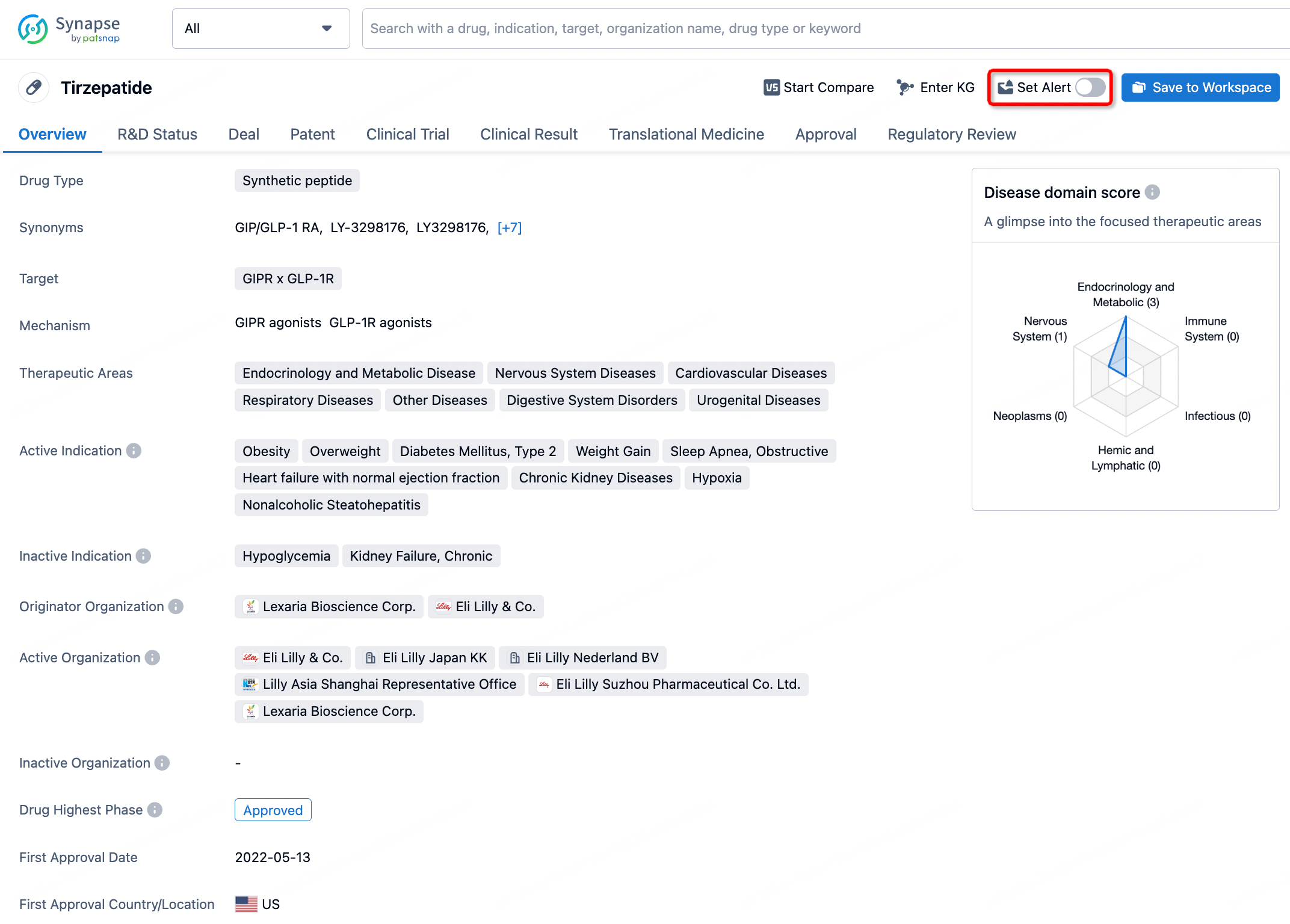
In the Synapse database, you can stay updated on the latest research and development advances of all drugs. This service is accessible anytime and anywhere, with updates available daily or weekly. Use the "Set Alert" function to stay informed. Click on the image below to embark on a brand new journey of drug discovery!

AI Agents Built for Biopharma Breakthroughs
Accelerate discovery. Empower decisions. Transform outcomes.
Get started for free today!
Accelerate Strategic R&D decision making with Synapse, PatSnap’s AI-powered Connected Innovation Intelligence Platform Built for Life Sciences Professionals.
Start your data trial now!
Synapse data is also accessible to external entities via APIs or data packages. Empower better decisions with the latest in pharmaceutical intelligence.