Request Demo
What is Lusutrombopag used for?
14 June 2024
Lusutrombopag is an orally administered thrombopoietin receptor agonist, primarily used to treat thrombocytopenia in patients with chronic liver disease who are scheduled to undergo a medical or dental procedure. It is marketed under the trade name Mulpleta by Shionogi Inc., a Japanese pharmaceutical company. Lusutrombopag was developed to address the significant unmet need for effective treatment options for thrombocytopenia—an often challenging condition that can lead to severe bleeding during invasive procedures.
The drug targets the thrombopoietin receptor (TPO-R) on the surface of megakaryocytes and their progenitor cells, playing a crucial role in increasing platelet production. Lusutrombopag has received approval from the U.S. Food and Drug Administration (FDA) and the European Medicines Agency (EMA), indicating its efficacy and safety based on clinical trials. These studies have demonstrated that Lusutrombopag effectively increases platelet counts, thereby reducing the need for platelet transfusions and lowering the risk of bleeding complications during procedures.
Lusutrombopag Mechanism of Action
Understanding the mechanism of action of Lusutrombopag helps elucidate its role in treating thrombocytopenia. Lusutrombopag is a small-molecule agonist that specifically binds to and activates the thrombopoietin receptor (TPO-R), also known as c-Mpl. Thrombopoietin is a natural hormone produced by the liver and kidneys that regulates the production of platelets by stimulating the proliferation and differentiation of megakaryocyte progenitor cells in the bone marrow.
Upon binding to the TPO-R, Lusutrombopag mimics the effects of endogenous thrombopoietin, leading to the activation of intracellular signaling pathways that promote the survival, growth, and maturation of megakaryocytes. These mature megakaryocytes then produce and release platelets into the bloodstream, thereby increasing the overall platelet count. This mechanism is particularly beneficial for patients with chronic liver disease, where the impaired production or increased destruction of platelets often leads to thrombocytopenia.
How to Use Lusutrombopag
Lusutrombopag is administered orally, typically as a once-daily tablet. The dosage and duration of treatment are determined based on the patient's platelet count and the timing of the planned medical or dental procedure. Generally, the recommended starting dose is 3 mg once daily. The treatment usually begins 8-14 days before the procedure and continues for up to 7 days, or until an adequate platelet count is achieved. The goal is to ensure that platelets reach a sufficient level to minimize the risk of bleeding during the procedure.
Patients are advised to take Lusutrombopag with or without food, at the same time each day, to maintain consistent blood levels of the drug. It is crucial to follow the healthcare provider's instructions carefully and complete the full course of treatment, even if platelet counts increase early in the treatment period. The onset of action for Lusutrombopag typically occurs within a few days, with a notable increase in platelet count observed between days 5 and 8 of therapy.
What is Lusutrombopag Side Effects
Like all medications, Lusutrombopag may cause side effects. The most commonly reported adverse effects include headache, fatigue, nausea, and nasopharyngitis. These side effects are generally mild to moderate in severity and tend to resolve as the body adjusts to the medication. However, patients should be monitored for any signs of more serious side effects and report any unusual symptoms to their healthcare provider promptly.
One significant concern with thrombopoietin receptor agonists like Lusutrombopag is the potential risk of thromboembolic events, such as deep vein thrombosis or pulmonary embolism. This risk is particularly relevant for patients with a history of thromboembolic disorders. Therefore, Lusutrombopag should be used with caution in patients who have risk factors for thrombosis, and these individuals should be closely monitored during treatment.
Contraindications for Lusutrombopag use include hypersensitivity to the drug or any of its components. Additionally, it is essential to evaluate the risk-benefit profile in patients with a history of thromboembolic events or those who have a propensity for clotting disorders.
What Other Drugs Will Affect Lusutrombopag
Drug interactions can significantly impact the effectiveness and safety of Lusutrombopag. Therefore, it is crucial to be aware of potential interactions with other medications. Notably, Lusutrombopag is metabolized primarily by the liver enzymes CYP3A and CYP2C8. As such, drugs that inhibit or induce these enzymes can affect Lusutrombopag's metabolism and alter its therapeutic levels.
For instance, strong CYP3A inhibitors (such as ketoconazole, itraconazole, and clarithromycin) can increase Lusutrombopag exposure, potentially leading to higher plasma concentrations and an increased risk of adverse effects. Conversely, CYP3A inducers (such as rifampin, carbamazepine, and St. John's wort) can decrease Lusutrombopag levels, potentially reducing its efficacy.
Additionally, co-administration of Lusutrombopag with other medications that affect platelet function or coagulation (such as anticoagulants or antiplatelet agents) may increase the risk of bleeding complications. Therefore, healthcare providers should carefully review all concomitant medications and consider potential interactions when prescribing Lusutrombopag. It is essential for patients to inform their healthcare providers of all medications they are taking, including over-the-counter drugs, herbal supplements, and vitamins.
In conclusion, Lusutrombopag represents a significant advancement in the management of thrombocytopenia in patients with chronic liver disease. Its targeted mechanism of action effectively increases platelet counts, reducing the need for platelet transfusions and lowering the risk of bleeding during invasive procedures. Careful adherence to prescribed dosing regimens, monitoring for side effects, and awareness of potential drug interactions are essential to optimize treatment outcomes and ensure patient safety. With proper use, Lusutrombopag offers a valuable therapeutic option for patients facing the challenges of thrombocytopenia.
The drug targets the thrombopoietin receptor (TPO-R) on the surface of megakaryocytes and their progenitor cells, playing a crucial role in increasing platelet production. Lusutrombopag has received approval from the U.S. Food and Drug Administration (FDA) and the European Medicines Agency (EMA), indicating its efficacy and safety based on clinical trials. These studies have demonstrated that Lusutrombopag effectively increases platelet counts, thereby reducing the need for platelet transfusions and lowering the risk of bleeding complications during procedures.
Lusutrombopag Mechanism of Action
Understanding the mechanism of action of Lusutrombopag helps elucidate its role in treating thrombocytopenia. Lusutrombopag is a small-molecule agonist that specifically binds to and activates the thrombopoietin receptor (TPO-R), also known as c-Mpl. Thrombopoietin is a natural hormone produced by the liver and kidneys that regulates the production of platelets by stimulating the proliferation and differentiation of megakaryocyte progenitor cells in the bone marrow.
Upon binding to the TPO-R, Lusutrombopag mimics the effects of endogenous thrombopoietin, leading to the activation of intracellular signaling pathways that promote the survival, growth, and maturation of megakaryocytes. These mature megakaryocytes then produce and release platelets into the bloodstream, thereby increasing the overall platelet count. This mechanism is particularly beneficial for patients with chronic liver disease, where the impaired production or increased destruction of platelets often leads to thrombocytopenia.
How to Use Lusutrombopag
Lusutrombopag is administered orally, typically as a once-daily tablet. The dosage and duration of treatment are determined based on the patient's platelet count and the timing of the planned medical or dental procedure. Generally, the recommended starting dose is 3 mg once daily. The treatment usually begins 8-14 days before the procedure and continues for up to 7 days, or until an adequate platelet count is achieved. The goal is to ensure that platelets reach a sufficient level to minimize the risk of bleeding during the procedure.
Patients are advised to take Lusutrombopag with or without food, at the same time each day, to maintain consistent blood levels of the drug. It is crucial to follow the healthcare provider's instructions carefully and complete the full course of treatment, even if platelet counts increase early in the treatment period. The onset of action for Lusutrombopag typically occurs within a few days, with a notable increase in platelet count observed between days 5 and 8 of therapy.
What is Lusutrombopag Side Effects
Like all medications, Lusutrombopag may cause side effects. The most commonly reported adverse effects include headache, fatigue, nausea, and nasopharyngitis. These side effects are generally mild to moderate in severity and tend to resolve as the body adjusts to the medication. However, patients should be monitored for any signs of more serious side effects and report any unusual symptoms to their healthcare provider promptly.
One significant concern with thrombopoietin receptor agonists like Lusutrombopag is the potential risk of thromboembolic events, such as deep vein thrombosis or pulmonary embolism. This risk is particularly relevant for patients with a history of thromboembolic disorders. Therefore, Lusutrombopag should be used with caution in patients who have risk factors for thrombosis, and these individuals should be closely monitored during treatment.
Contraindications for Lusutrombopag use include hypersensitivity to the drug or any of its components. Additionally, it is essential to evaluate the risk-benefit profile in patients with a history of thromboembolic events or those who have a propensity for clotting disorders.
What Other Drugs Will Affect Lusutrombopag
Drug interactions can significantly impact the effectiveness and safety of Lusutrombopag. Therefore, it is crucial to be aware of potential interactions with other medications. Notably, Lusutrombopag is metabolized primarily by the liver enzymes CYP3A and CYP2C8. As such, drugs that inhibit or induce these enzymes can affect Lusutrombopag's metabolism and alter its therapeutic levels.
For instance, strong CYP3A inhibitors (such as ketoconazole, itraconazole, and clarithromycin) can increase Lusutrombopag exposure, potentially leading to higher plasma concentrations and an increased risk of adverse effects. Conversely, CYP3A inducers (such as rifampin, carbamazepine, and St. John's wort) can decrease Lusutrombopag levels, potentially reducing its efficacy.
Additionally, co-administration of Lusutrombopag with other medications that affect platelet function or coagulation (such as anticoagulants or antiplatelet agents) may increase the risk of bleeding complications. Therefore, healthcare providers should carefully review all concomitant medications and consider potential interactions when prescribing Lusutrombopag. It is essential for patients to inform their healthcare providers of all medications they are taking, including over-the-counter drugs, herbal supplements, and vitamins.
In conclusion, Lusutrombopag represents a significant advancement in the management of thrombocytopenia in patients with chronic liver disease. Its targeted mechanism of action effectively increases platelet counts, reducing the need for platelet transfusions and lowering the risk of bleeding during invasive procedures. Careful adherence to prescribed dosing regimens, monitoring for side effects, and awareness of potential drug interactions are essential to optimize treatment outcomes and ensure patient safety. With proper use, Lusutrombopag offers a valuable therapeutic option for patients facing the challenges of thrombocytopenia.
How to obtain the latest development progress of all drugs?
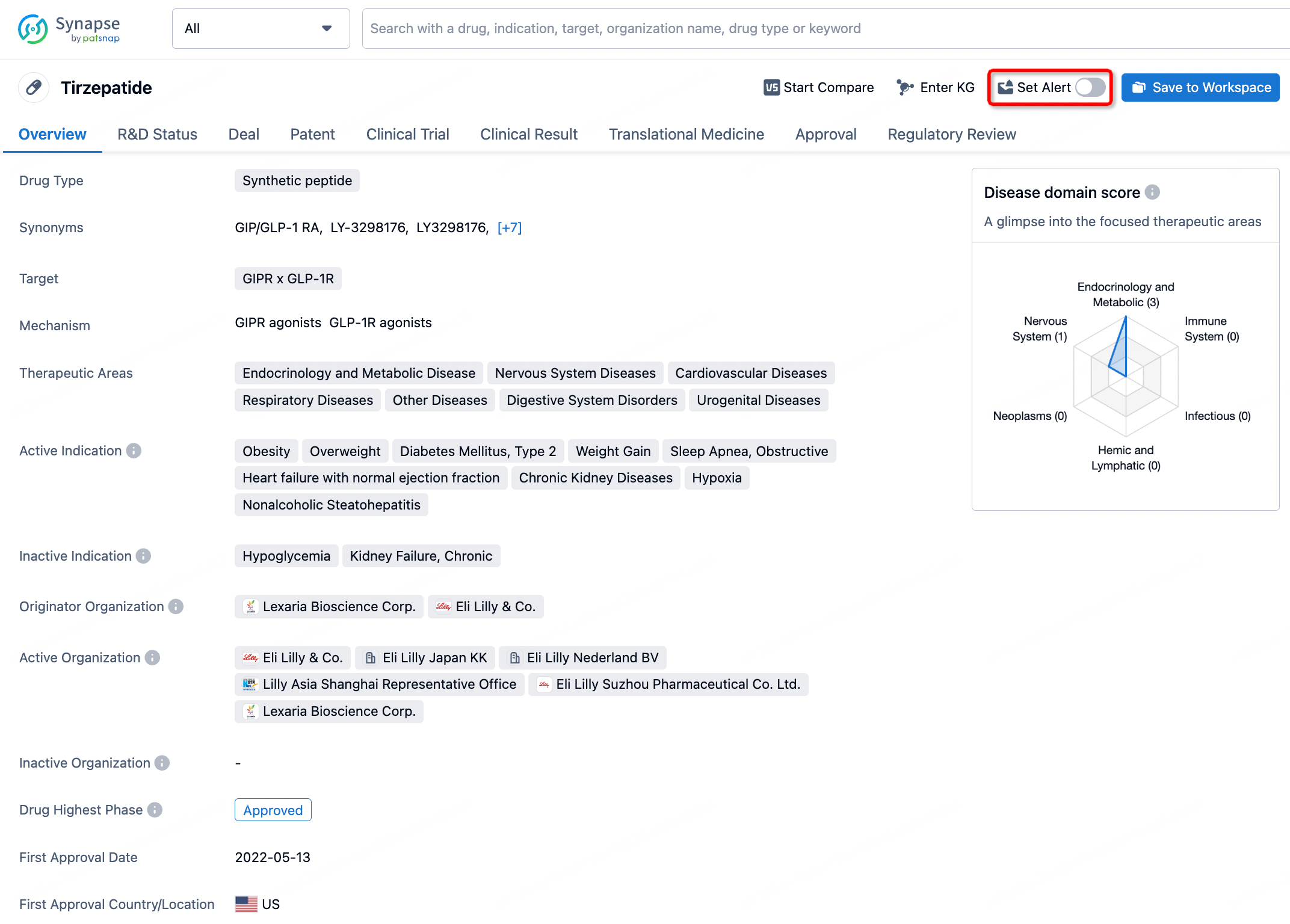
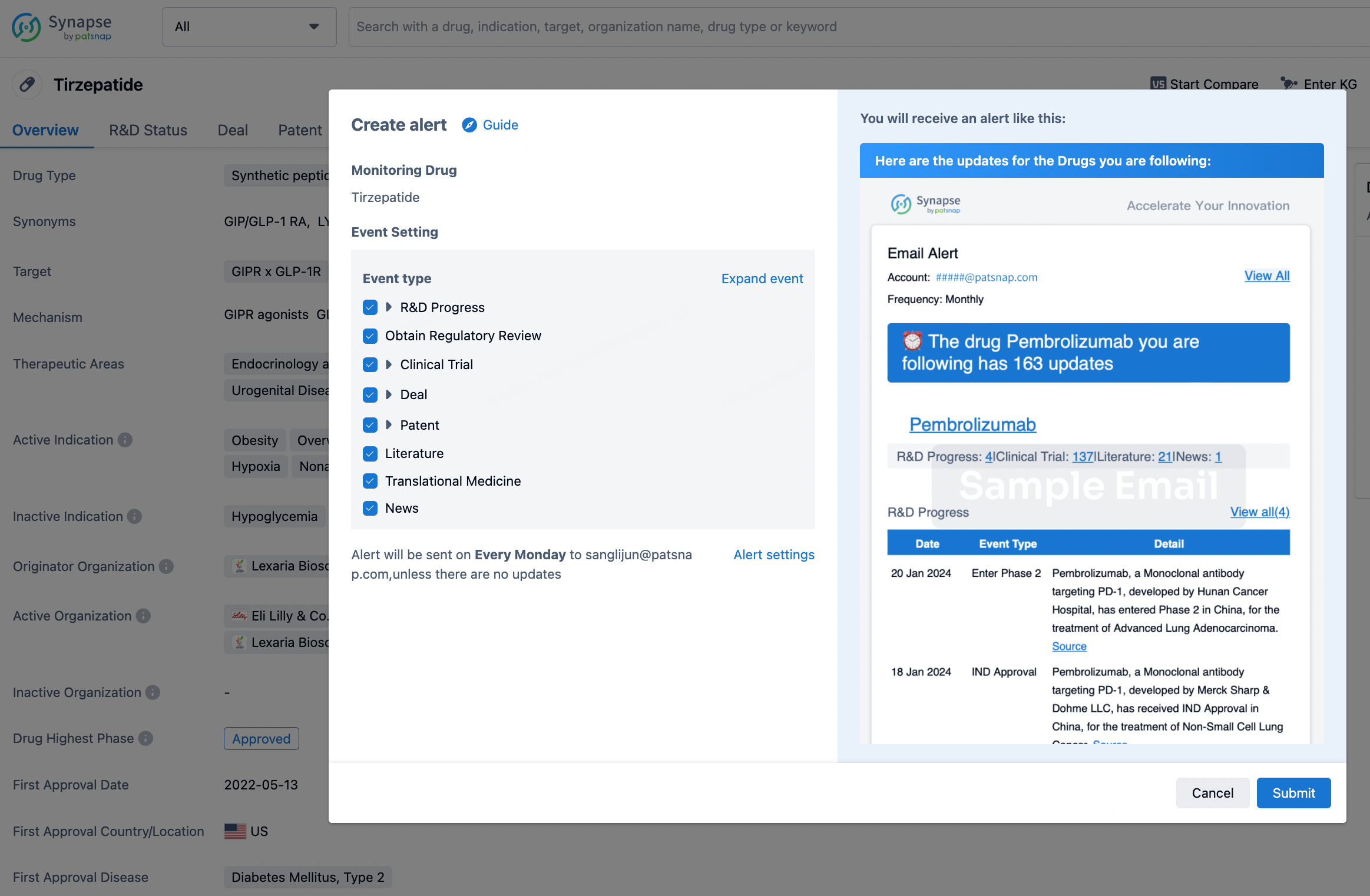
In the Synapse database, you can stay updated on the latest research and development advances of all drugs. This service is accessible anytime and anywhere, with updates available daily or weekly. Use the "Set Alert" function to stay informed. Click on the image below to embark on a brand new journey of drug discovery!
Hiro LS Researcher
The AI Search Engine Built to Accelerate Biopharma Decisions
Search across billion-scale life sciences data to uncover signals, validate evidence, and act with confidence.
Ask any biopharma research question→
Get started for free today!
Accelerate Strategic R&D decision making with Synapse, Patsnap’s AI-powered Connected Innovation Intelligence Platform Built for Life Sciences Professionals.
Discover Synapse Data Servers
Synapse data is now integrated into the PatSnap LS Model Context Protocol (MCP) service. Customize your LLM agent now using our MCP server!