Request Demo
What is Pegaspargase used for?
14 June 2024
Pegaspargase, a revolutionary drug in the field of oncology, has been instrumental in the treatment of acute lymphoblastic leukemia (ALL). Marketed under trade names such as Oncaspar, this drug has been a game-changer, particularly for patients who are hypersensitive to the native form of asparaginase derived from E. coli or Erwinia. Developed through extensive research by institutions like the National Cancer Institute and pharmaceutical companies such as Servier and Shire, Pegaspargase has demonstrated significant efficacy in pediatric and adult patients with ALL. This injectable drug is classified as an enzyme, specifically a modified version of L-asparaginase, and has been approved for medical use by regulatory agencies like the FDA and EMA. It is primarily indicated for first-line treatment of ALL and in some cases, non-Hodgkin lymphoma.
The mechanism of action of Pegaspargase is quite fascinating. Essentially, it works by depleting the amino acid asparagine, which is crucial for the survival of leukemic cells. Normal cells can synthesize asparagine internally, but leukemic cells cannot. By breaking down asparagine in the bloodstream into aspartic acid and ammonia, Pegaspargase effectively starves the leukemia cells, leading to their death. This enzyme replacement therapy has been shown to be particularly effective because it utilizes a polyethylene glycol (PEG) molecule to modify the asparaginase, thereby prolonging its half-life and reducing the frequency of administration. Additionally, PEGylation reduces the immunogenicity of the enzyme, making it less likely for patients to develop hypersensitivity reactions.
Administering Pegaspargase is straightforward yet requires careful medical oversight. It is typically given as an intramuscular injection or intravenously, with the method depending on the patient's specific treatment protocol and tolerance. The onset of action is relatively quick, with the drug starting to deplete serum asparagine levels within hours. The dosing schedule can vary but is usually administered every two weeks, allowing for effective management of the disease with fewer injections compared to non-PEGylated forms of asparaginase. Given its mode of administration, it is crucial that Pegaspargase is given in a clinical setting where appropriate monitoring and emergency care are available.
Like all medications, Pegaspargase is not without its side effects. The most common adverse effects include allergic reactions, pancreatitis, and abnormalities in liver function tests. Severe hypersensitivity reactions can occur, although these are less frequent compared to the native forms of asparaginase. Other potential side effects include thrombotic events, hyperglycemia, and neurotoxicity. Due to these risks, Pegaspargase is contraindicated in patients with a history of severe pancreatitis, thrombotic events associated with prior L-asparaginase therapy, and severe liver dysfunction. Monitoring liver enzymes, blood glucose levels, and coagulation parameters is essential during treatment. Patients should be educated about the signs and symptoms of these adverse effects and instructed to seek immediate medical attention if they experience severe abdominal pain, jaundice, or signs of an allergic reaction.
The interaction of Pegaspargase with other drugs is an important consideration in its clinical use. Concomitant use of Pegaspargase with other chemotherapeutic agents can enhance its effectiveness but also increase the risk of toxicities. For instance, when used alongside methotrexate or vincristine, there may be an increased risk of hepatotoxicity and neurotoxicity. Additionally, drugs that affect liver enzymes, such as phenytoin or carbamazepine, can alter the metabolism of Pegaspargase, potentially leading to suboptimal drug levels or increased toxicity. Corticosteroids, commonly used in ALL treatment protocols, can also interact with Pegaspargase, necessitating careful monitoring of blood sugar levels and liver function. Because of these potential interactions, it is crucial that healthcare providers review all medications a patient is taking, including over-the-counter drugs and supplements, to avoid adverse effects and ensure optimal therapeutic outcomes.
In summary, Pegaspargase is a cornerstone in the treatment of acute lymphoblastic leukemia, offering a modified enzyme therapy with prolonged activity and reduced immunogenicity. Its mechanism of action targets the metabolic vulnerabilities of leukemia cells, making it a potent option in oncological therapeutics. While its administration is relatively simple, it requires vigilant monitoring for potential side effects and interactions with other medications. As research progresses, the continued evaluation of Pegaspargase in combination therapies and its long-term outcomes will be essential in refining its use and improving patient care in leukemia treatment.
The mechanism of action of Pegaspargase is quite fascinating. Essentially, it works by depleting the amino acid asparagine, which is crucial for the survival of leukemic cells. Normal cells can synthesize asparagine internally, but leukemic cells cannot. By breaking down asparagine in the bloodstream into aspartic acid and ammonia, Pegaspargase effectively starves the leukemia cells, leading to their death. This enzyme replacement therapy has been shown to be particularly effective because it utilizes a polyethylene glycol (PEG) molecule to modify the asparaginase, thereby prolonging its half-life and reducing the frequency of administration. Additionally, PEGylation reduces the immunogenicity of the enzyme, making it less likely for patients to develop hypersensitivity reactions.
Administering Pegaspargase is straightforward yet requires careful medical oversight. It is typically given as an intramuscular injection or intravenously, with the method depending on the patient's specific treatment protocol and tolerance. The onset of action is relatively quick, with the drug starting to deplete serum asparagine levels within hours. The dosing schedule can vary but is usually administered every two weeks, allowing for effective management of the disease with fewer injections compared to non-PEGylated forms of asparaginase. Given its mode of administration, it is crucial that Pegaspargase is given in a clinical setting where appropriate monitoring and emergency care are available.
Like all medications, Pegaspargase is not without its side effects. The most common adverse effects include allergic reactions, pancreatitis, and abnormalities in liver function tests. Severe hypersensitivity reactions can occur, although these are less frequent compared to the native forms of asparaginase. Other potential side effects include thrombotic events, hyperglycemia, and neurotoxicity. Due to these risks, Pegaspargase is contraindicated in patients with a history of severe pancreatitis, thrombotic events associated with prior L-asparaginase therapy, and severe liver dysfunction. Monitoring liver enzymes, blood glucose levels, and coagulation parameters is essential during treatment. Patients should be educated about the signs and symptoms of these adverse effects and instructed to seek immediate medical attention if they experience severe abdominal pain, jaundice, or signs of an allergic reaction.
The interaction of Pegaspargase with other drugs is an important consideration in its clinical use. Concomitant use of Pegaspargase with other chemotherapeutic agents can enhance its effectiveness but also increase the risk of toxicities. For instance, when used alongside methotrexate or vincristine, there may be an increased risk of hepatotoxicity and neurotoxicity. Additionally, drugs that affect liver enzymes, such as phenytoin or carbamazepine, can alter the metabolism of Pegaspargase, potentially leading to suboptimal drug levels or increased toxicity. Corticosteroids, commonly used in ALL treatment protocols, can also interact with Pegaspargase, necessitating careful monitoring of blood sugar levels and liver function. Because of these potential interactions, it is crucial that healthcare providers review all medications a patient is taking, including over-the-counter drugs and supplements, to avoid adverse effects and ensure optimal therapeutic outcomes.
In summary, Pegaspargase is a cornerstone in the treatment of acute lymphoblastic leukemia, offering a modified enzyme therapy with prolonged activity and reduced immunogenicity. Its mechanism of action targets the metabolic vulnerabilities of leukemia cells, making it a potent option in oncological therapeutics. While its administration is relatively simple, it requires vigilant monitoring for potential side effects and interactions with other medications. As research progresses, the continued evaluation of Pegaspargase in combination therapies and its long-term outcomes will be essential in refining its use and improving patient care in leukemia treatment.
How to obtain the latest development progress of all drugs?
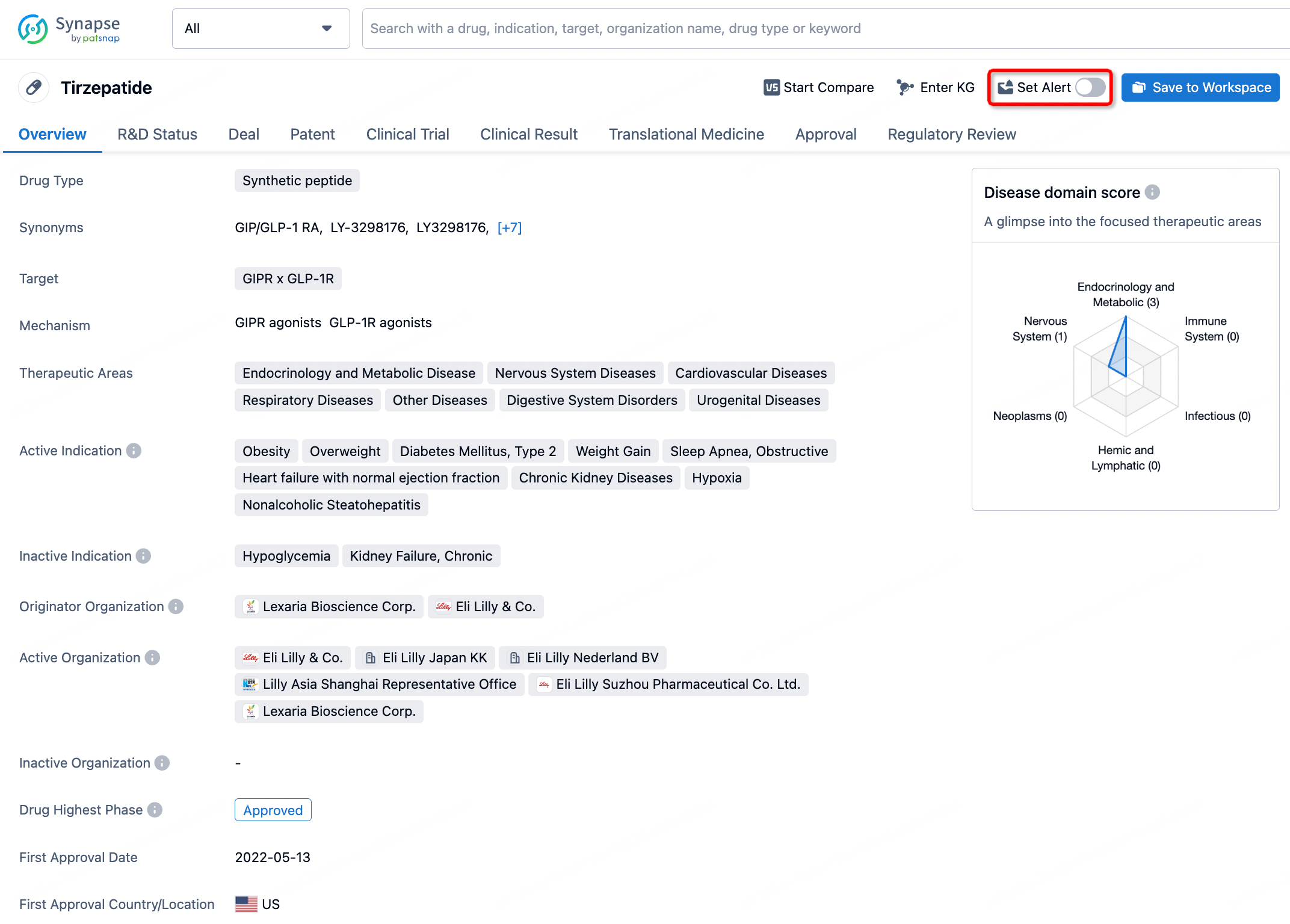
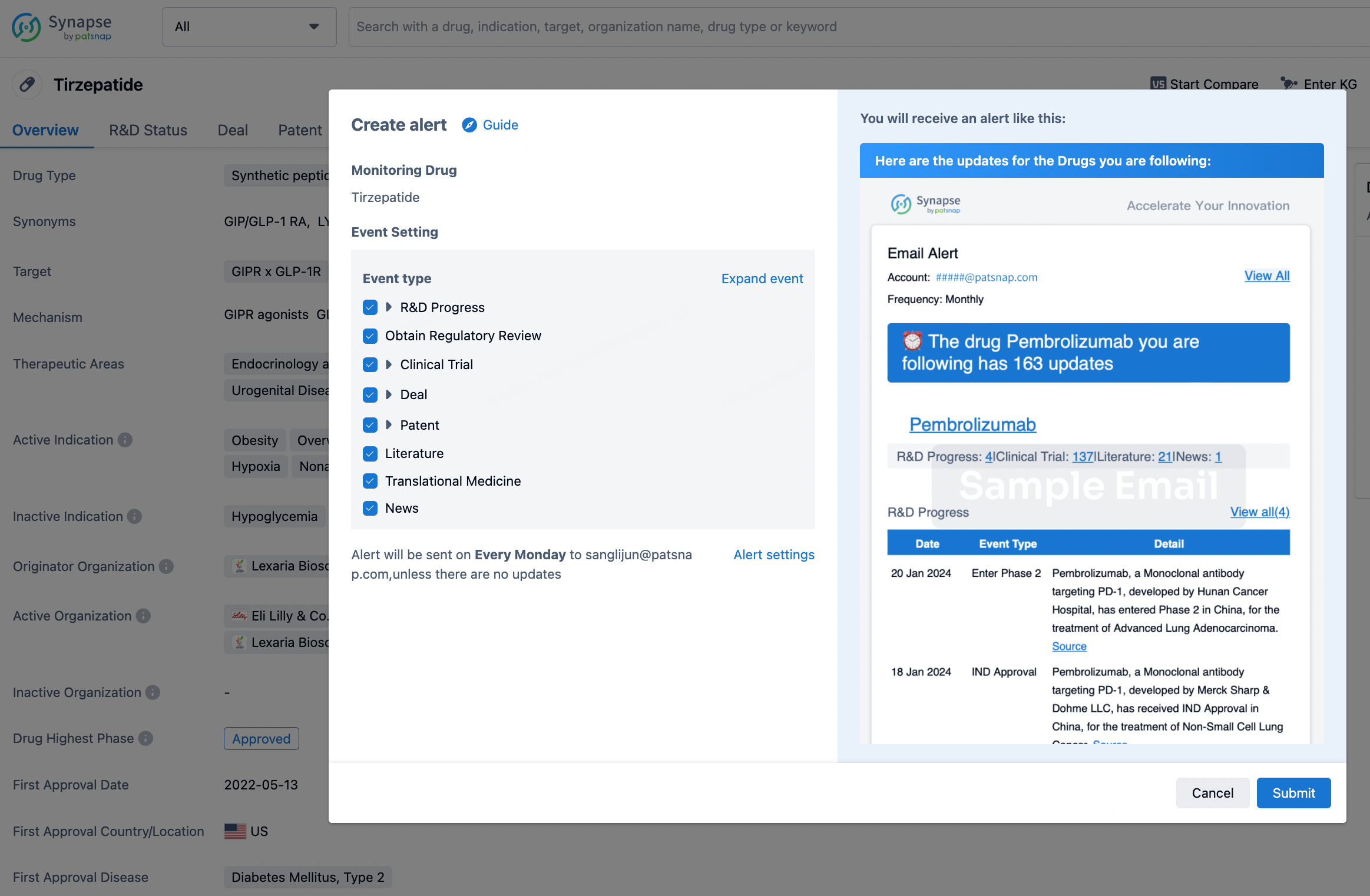
In the Synapse database, you can stay updated on the latest research and development advances of all drugs. This service is accessible anytime and anywhere, with updates available daily or weekly. Use the "Set Alert" function to stay informed. Click on the image below to embark on a brand new journey of drug discovery!
AI Agents Built for Biopharma Breakthroughs
Accelerate discovery. Empower decisions. Transform outcomes.
Get started for free today!
Accelerate Strategic R&D decision making with Synapse, PatSnap’s AI-powered Connected Innovation Intelligence Platform Built for Life Sciences Professionals.
Start your data trial now!
Synapse data is also accessible to external entities via APIs or data packages. Empower better decisions with the latest in pharmaceutical intelligence.