Request Demo
What is Pifatidine used for?
14 June 2024
Pifatidine is an emerging pharmaceutical compound that has garnered significant attention in the medical community due to its promising therapeutic potential. Although it is still under extensive research, early results indicate that Pifatidine could become a major player in treating certain medical conditions. Currently, the drug does not have a widely recognized trade name, but it is being developed by several leading research institutions, including renowned universities and private pharmaceutical companies. Pifatidine is classified as a small molecule inhibitor targeting specific enzymes involved in inflammatory processes. Its primary indications include inflammatory diseases such as rheumatoid arthritis, inflammatory bowel disease, and possibly even certain types of cancers. Research is still in the pre-clinical or early clinical stages, but the preliminary data are promising, suggesting that Pifatidine has the potential to significantly improve patient outcomes.
Pifatidine Mechanism of Action
Understanding the mechanism of action of Pifatidine requires a bit of a deep dive into biochemistry. Pifatidine works by specifically inhibiting a class of enzymes known as kinases, which are crucial regulators of cellular functions. These kinases are often overactive in various inflammatory conditions, leading to excessive cellular proliferation and inflammation. By inhibiting these enzymes, Pifatidine effectively reduces the inflammatory response at the cellular level.
The drug primarily targets a subset of kinases known as JAK (Janus kinase) and STAT (Signal Transducer and Activator of Transcription) pathways. These pathways play a pivotal role in mediating the signaling processes that lead to inflammation and immune responses. By blocking these pathways, Pifatidine reduces not just the symptoms but also addresses the underlying causes of inflammation. This dual-action mechanism makes it a particularly attractive candidate for treating chronic inflammatory conditions.
Moreover, Pifatidine has been shown to have a high affinity for its target enzymes, which means it can achieve therapeutic effects at relatively low concentrations. This minimizes the risk of off-target effects and enhances the drug's safety profile. The specificity of Pifatidine for its target enzymes also reduces the likelihood of developing resistance, a common issue with many current treatments for inflammatory conditions.
How to Use Pifatidine
The administration of Pifatidine is designed to be straightforward to encourage compliance and maximize its therapeutic benefits. The drug is available in both oral and intravenous formulations, making it versatile for different clinical settings. For chronic conditions like rheumatoid arthritis, the oral formulation is generally preferred for long-term management. Patients are advised to take the medication once daily, with or without food, which offers convenience and ease of use.
Intravenous administration is typically reserved for acute flare-ups or severe cases that require immediate intervention. In such situations, Pifatidine is administered in a clinical setting under the supervision of healthcare professionals. The onset of action for the intravenous form is faster, often providing relief within hours, whereas the oral form may take a few days to achieve its full therapeutic effect.
It's crucial to follow the prescribed dosage and administration guidelines to achieve optimal results. Skipping doses or discontinuing the medication abruptly can reduce its efficacy and may lead to a resurgence of symptoms. Regular follow-ups with healthcare providers are recommended to monitor the drug's effectiveness and make any necessary adjustments to the treatment regimen.
What is Pifatidine Side Effects
While Pifatidine appears to be generally well-tolerated, it is not without its side effects. The most commonly reported adverse effects include gastrointestinal symptoms such as nausea, vomiting, and diarrhea. These are usually mild and tend to resolve on their own as the body adjusts to the medication.
More severe side effects, though rare, can include liver toxicity and hematological changes, such as a decrease in white blood cells or platelets. Therefore, regular monitoring of liver function tests and complete blood counts is advised for patients on long-term Pifatidine therapy. Any signs of jaundice, severe fatigue, or unexplained bruising should be reported to a healthcare provider immediately.
Pifatidine is contraindicated in patients with a known hypersensitivity to the drug or any of its components. It should also be used with caution in patients with a history of liver disease or hematologic disorders. Pregnant or breastfeeding women should avoid using Pifatidine unless absolutely necessary, as its effects on fetal and neonatal development are not yet fully understood.
What Other Drugs Will Affect Pifatidine
Drug interactions are an important consideration when prescribing Pifatidine. The drug is metabolized primarily through the liver, and co-administration with other medications that affect liver enzymes can alter its efficacy and safety profile. For instance, drugs that induce liver enzymes, such as certain antiepileptics like carbamazepine and phenytoin, can reduce the plasma concentration of Pifatidine, potentially diminishing its therapeutic effects.
Conversely, medications that inhibit liver enzymes, including some antifungals like ketoconazole and certain antibiotics like erythromycin, can increase the concentration of Pifatidine, raising the risk of toxicity. It is essential to review a patient's medication history thoroughly to identify potential interactions and make any necessary adjustments.
Non-steroidal anti-inflammatory drugs (NSAIDs) and corticosteroids, commonly used to manage inflammatory conditions, may also interact with Pifatidine. While these drugs do not appear to affect Pifatidine's metabolism directly, their combined use can increase the risk of gastrointestinal side effects. Patients using these combinations should be monitored closely for any signs of gastrointestinal distress.
Lastly, Pifatidine's immunosuppressive effects mean that it should be used cautiously with other immunosuppressants to avoid an excessive reduction in immune function, which can increase the risk of infections. Regular monitoring and a tailored therapeutic approach are essential to minimize risks and ensure the efficacy of the treatment regimen.
Pifatidine Mechanism of Action
Understanding the mechanism of action of Pifatidine requires a bit of a deep dive into biochemistry. Pifatidine works by specifically inhibiting a class of enzymes known as kinases, which are crucial regulators of cellular functions. These kinases are often overactive in various inflammatory conditions, leading to excessive cellular proliferation and inflammation. By inhibiting these enzymes, Pifatidine effectively reduces the inflammatory response at the cellular level.
The drug primarily targets a subset of kinases known as JAK (Janus kinase) and STAT (Signal Transducer and Activator of Transcription) pathways. These pathways play a pivotal role in mediating the signaling processes that lead to inflammation and immune responses. By blocking these pathways, Pifatidine reduces not just the symptoms but also addresses the underlying causes of inflammation. This dual-action mechanism makes it a particularly attractive candidate for treating chronic inflammatory conditions.
Moreover, Pifatidine has been shown to have a high affinity for its target enzymes, which means it can achieve therapeutic effects at relatively low concentrations. This minimizes the risk of off-target effects and enhances the drug's safety profile. The specificity of Pifatidine for its target enzymes also reduces the likelihood of developing resistance, a common issue with many current treatments for inflammatory conditions.
How to Use Pifatidine
The administration of Pifatidine is designed to be straightforward to encourage compliance and maximize its therapeutic benefits. The drug is available in both oral and intravenous formulations, making it versatile for different clinical settings. For chronic conditions like rheumatoid arthritis, the oral formulation is generally preferred for long-term management. Patients are advised to take the medication once daily, with or without food, which offers convenience and ease of use.
Intravenous administration is typically reserved for acute flare-ups or severe cases that require immediate intervention. In such situations, Pifatidine is administered in a clinical setting under the supervision of healthcare professionals. The onset of action for the intravenous form is faster, often providing relief within hours, whereas the oral form may take a few days to achieve its full therapeutic effect.
It's crucial to follow the prescribed dosage and administration guidelines to achieve optimal results. Skipping doses or discontinuing the medication abruptly can reduce its efficacy and may lead to a resurgence of symptoms. Regular follow-ups with healthcare providers are recommended to monitor the drug's effectiveness and make any necessary adjustments to the treatment regimen.
What is Pifatidine Side Effects
While Pifatidine appears to be generally well-tolerated, it is not without its side effects. The most commonly reported adverse effects include gastrointestinal symptoms such as nausea, vomiting, and diarrhea. These are usually mild and tend to resolve on their own as the body adjusts to the medication.
More severe side effects, though rare, can include liver toxicity and hematological changes, such as a decrease in white blood cells or platelets. Therefore, regular monitoring of liver function tests and complete blood counts is advised for patients on long-term Pifatidine therapy. Any signs of jaundice, severe fatigue, or unexplained bruising should be reported to a healthcare provider immediately.
Pifatidine is contraindicated in patients with a known hypersensitivity to the drug or any of its components. It should also be used with caution in patients with a history of liver disease or hematologic disorders. Pregnant or breastfeeding women should avoid using Pifatidine unless absolutely necessary, as its effects on fetal and neonatal development are not yet fully understood.
What Other Drugs Will Affect Pifatidine
Drug interactions are an important consideration when prescribing Pifatidine. The drug is metabolized primarily through the liver, and co-administration with other medications that affect liver enzymes can alter its efficacy and safety profile. For instance, drugs that induce liver enzymes, such as certain antiepileptics like carbamazepine and phenytoin, can reduce the plasma concentration of Pifatidine, potentially diminishing its therapeutic effects.
Conversely, medications that inhibit liver enzymes, including some antifungals like ketoconazole and certain antibiotics like erythromycin, can increase the concentration of Pifatidine, raising the risk of toxicity. It is essential to review a patient's medication history thoroughly to identify potential interactions and make any necessary adjustments.
Non-steroidal anti-inflammatory drugs (NSAIDs) and corticosteroids, commonly used to manage inflammatory conditions, may also interact with Pifatidine. While these drugs do not appear to affect Pifatidine's metabolism directly, their combined use can increase the risk of gastrointestinal side effects. Patients using these combinations should be monitored closely for any signs of gastrointestinal distress.
Lastly, Pifatidine's immunosuppressive effects mean that it should be used cautiously with other immunosuppressants to avoid an excessive reduction in immune function, which can increase the risk of infections. Regular monitoring and a tailored therapeutic approach are essential to minimize risks and ensure the efficacy of the treatment regimen.
How to obtain the latest development progress of all drugs?
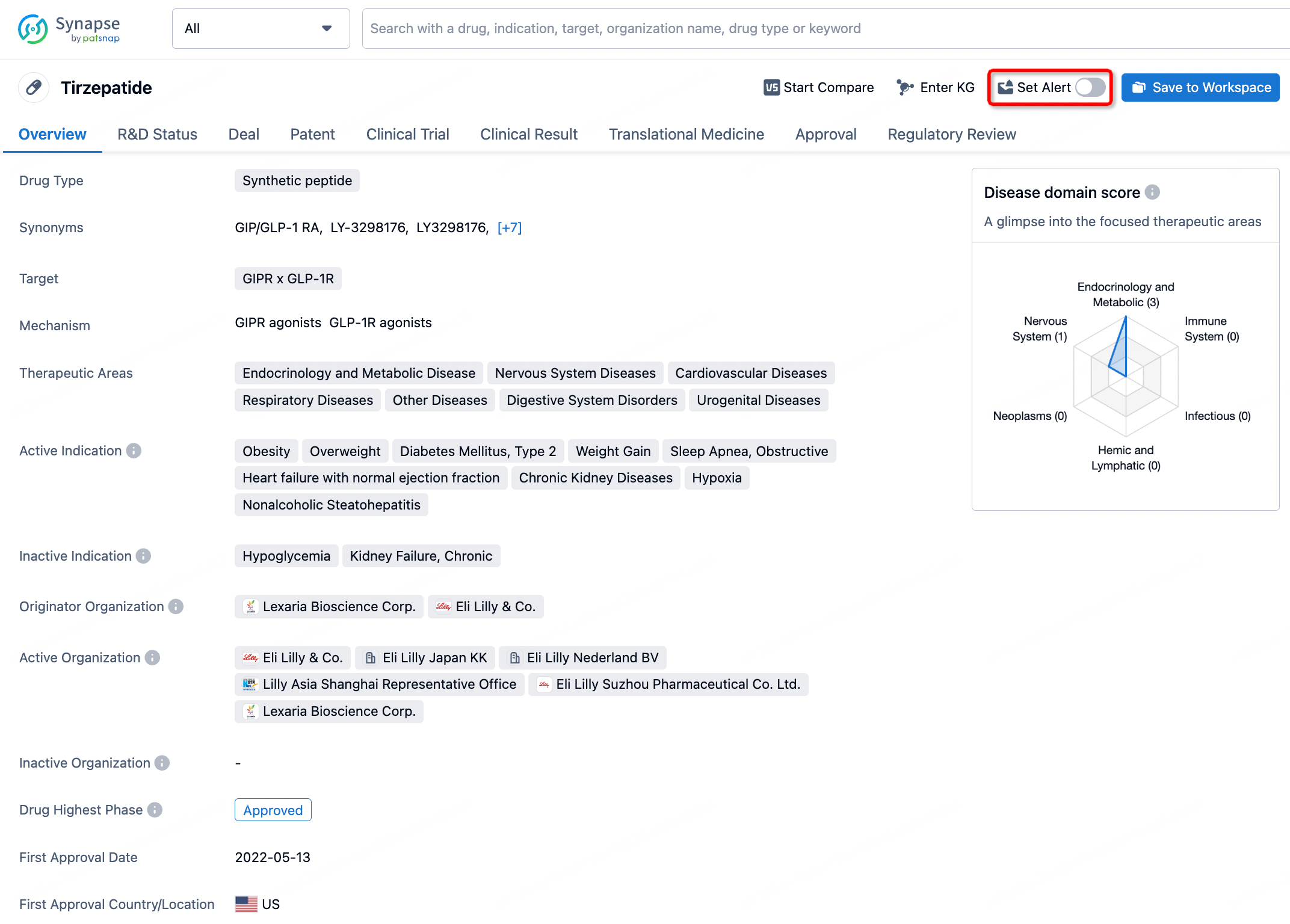
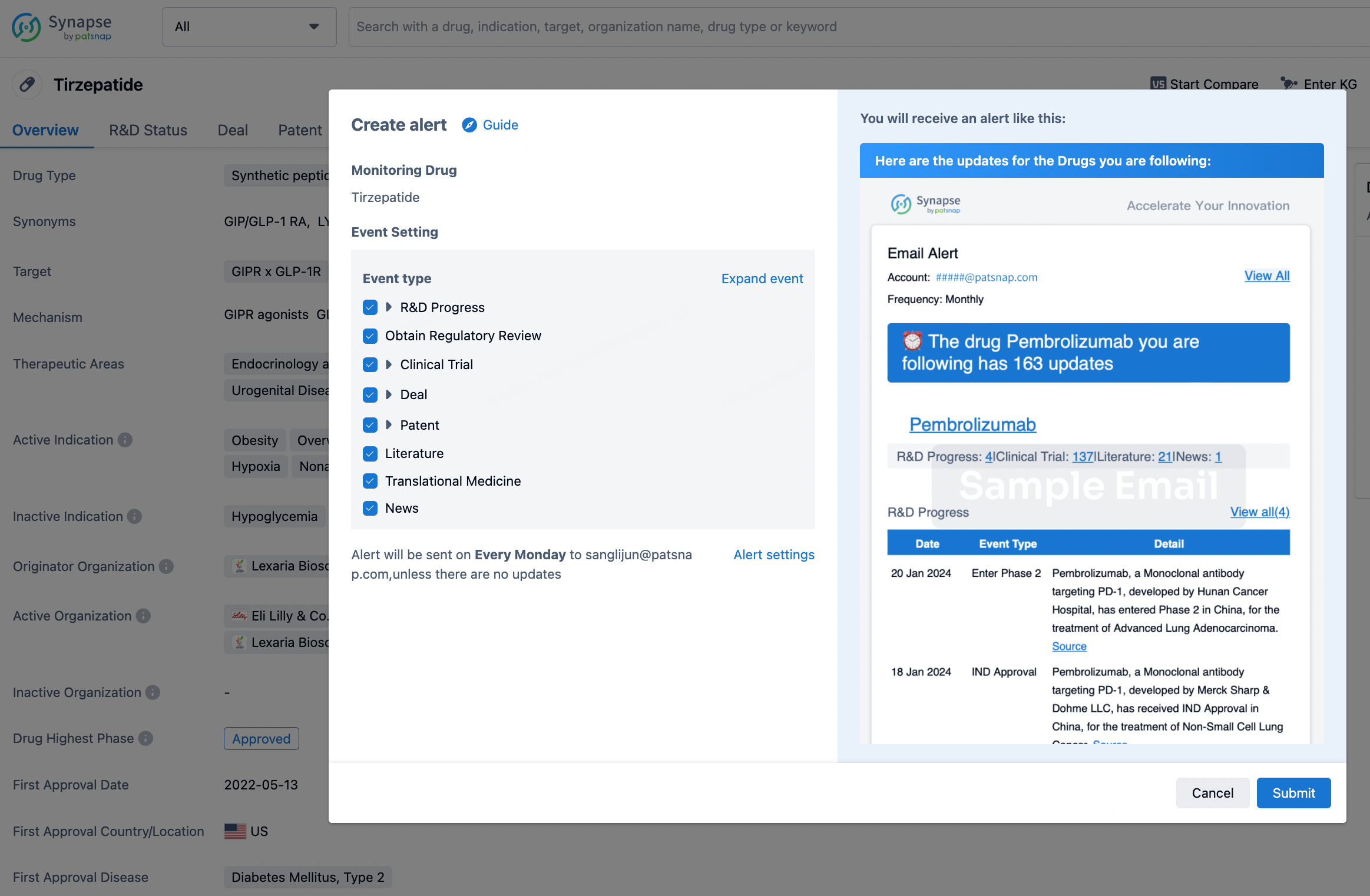
In the Synapse database, you can stay updated on the latest research and development advances of all drugs. This service is accessible anytime and anywhere, with updates available daily or weekly. Use the "Set Alert" function to stay informed. Click on the image below to embark on a brand new journey of drug discovery!

AI Agents Built for Biopharma Breakthroughs
Accelerate discovery. Empower decisions. Transform outcomes.
Get started for free today!
Accelerate Strategic R&D decision making with Synapse, PatSnap’s AI-powered Connected Innovation Intelligence Platform Built for Life Sciences Professionals.
Start your data trial now!
Synapse data is also accessible to external entities via APIs or data packages. Empower better decisions with the latest in pharmaceutical intelligence.