Request Demo
What is Zidovudine used for?
15 June 2024
Zidovudine, often referred to by its trade name Retrovir, is a significant milestone in the treatment of Human Immunodeficiency Virus (HIV). It stands out as one of the first antiretroviral drugs introduced to combat HIV, offering hope and extending the lives of many patients afflicted by this virus. Developed by the pharmaceutical company Burroughs Wellcome, now a part of GlaxoSmithKline, Zidovudine has been extensively researched and remains a critical component in the fight against HIV/AIDS. Initially synthesized in 1964 as a potential anticancer agent, Zidovudine found its true calling in the mid-1980s when researchers discovered its efficacy against HIV. Zidovudine, a nucleoside reverse transcriptase inhibitor (NRTI), was the first drug to be approved by the U.S. Food and Drug Administration (FDA) for the treatment of HIV in 1987.
Zidovudine is primarily indicated for the treatment of HIV-1 infection in conjunction with other antiretrovirals. Additionally, it is used to prevent mother-to-child transmission of HIV during childbirth and as a part of post-exposure prophylaxis (PEP) regimens for individuals exposed to HIV. Over the years, significant research and numerous clinical trials have corroborated Zidovudine's efficacy, solidifying its role in antiretroviral therapy (ART).
Zidovudine's mechanism of action is centered on its role as an NRTI. The drug targets the HIV reverse transcriptase enzyme, which is crucial for the replication of the virus. Upon entering the body, Zidovudine is converted into its active form, zidovudine triphosphate, through phosphorylation by cellular kinases. This active form mimics the natural nucleosides that the virus incorporates into its DNA during replication. However, unlike natural nucleosides, zidovudine triphosphate lacks the necessary components for further DNA elongation. Consequently, when reverse transcriptase incorporates zidovudine triphosphate into the viral DNA, it leads to premature termination of the DNA chain, effectively halting the replication process of HIV. This disruption in the viral replication cycle reduces the viral load in the patient's body, thereby slowing the progression of the disease and providing the immune system with an opportunity to recover and combat opportunistic infections.
Zidovudine can be administered orally in the form of capsules, tablets, or syrup, and intravenously for patients who cannot take medications orally. The typical adult dose for oral administration is 300 mg twice daily, although the dosage may vary based on individual patient needs and responses. For intravenous administration, the usual dose is 1 to 2 mg per kg every four hours. The onset of action for Zidovudine can be relatively quick, with measurable decreases in viral load observed within weeks of initiation. However, it is essential for patients to adhere strictly to their prescribed regimen to maintain effective drug levels and avoid the development of resistance.
As with any medication, Zidovudine is associated with a range of side effects. Common side effects include headache, nausea, vomiting, and fatigue. These symptoms are generally mild and tend to subside as the body adjusts to the medication. However, Zidovudine can also cause more serious adverse effects. Hematologic toxicities, such as anemia and neutropenia, are notable concerns, necessitating regular monitoring of blood counts. Myopathy, characterized by muscle pain and weakness, is another potential side effect, particularly with long-term use.
Contraindications for Zidovudine use include known hypersensitivity to the drug or any of its components. It is also contraindicated in patients with significantly reduced bone marrow function, such as those with severe anemia or neutropenia, unless the benefits outweigh the risks. Additionally, caution is advised when administering Zidovudine to patients with pre-existing liver disease, as the drug can exacerbate hepatic conditions.
The efficacy and safety of Zidovudine can be influenced by the concomitant use of other medications. Certain drugs can interact with Zidovudine, altering its pharmacokinetics and pharmacodynamics. For instance, co-administration with drugs that are myelosuppressive or cytotoxic, such as ganciclovir, ribavirin, or interferon, can increase the risk of hematologic toxicities. Similarly, drugs that impair renal function can affect Zidovudine clearance, requiring dose adjustments to avoid potential toxicity.
Conversely, certain medications can reduce the effectiveness of Zidovudine. For example, drugs like rifampicin and phenytoin, which induce hepatic enzymes, can accelerate Zidovudine metabolism, lowering its plasma concentration and potentially diminishing its therapeutic efficacy. It is crucial for healthcare providers to thoroughly review a patient's medication history to identify and manage potential drug interactions effectively.
In conclusion, Zidovudine remains a cornerstone in the treatment of HIV/AIDS, with a proven track record of efficacy and safety. Its introduction marked a significant advance in the management of HIV, offering patients a means to control the virus and improve their quality of life. While the drug is associated with certain side effects and potential drug interactions, careful monitoring and adherence to prescribed regimens can mitigate these risks. As research continues to advance, Zidovudine's legacy as a pioneering antiretroviral agent endures, contributing to the ongoing battle against HIV/AIDS.
Zidovudine is primarily indicated for the treatment of HIV-1 infection in conjunction with other antiretrovirals. Additionally, it is used to prevent mother-to-child transmission of HIV during childbirth and as a part of post-exposure prophylaxis (PEP) regimens for individuals exposed to HIV. Over the years, significant research and numerous clinical trials have corroborated Zidovudine's efficacy, solidifying its role in antiretroviral therapy (ART).
Zidovudine's mechanism of action is centered on its role as an NRTI. The drug targets the HIV reverse transcriptase enzyme, which is crucial for the replication of the virus. Upon entering the body, Zidovudine is converted into its active form, zidovudine triphosphate, through phosphorylation by cellular kinases. This active form mimics the natural nucleosides that the virus incorporates into its DNA during replication. However, unlike natural nucleosides, zidovudine triphosphate lacks the necessary components for further DNA elongation. Consequently, when reverse transcriptase incorporates zidovudine triphosphate into the viral DNA, it leads to premature termination of the DNA chain, effectively halting the replication process of HIV. This disruption in the viral replication cycle reduces the viral load in the patient's body, thereby slowing the progression of the disease and providing the immune system with an opportunity to recover and combat opportunistic infections.
Zidovudine can be administered orally in the form of capsules, tablets, or syrup, and intravenously for patients who cannot take medications orally. The typical adult dose for oral administration is 300 mg twice daily, although the dosage may vary based on individual patient needs and responses. For intravenous administration, the usual dose is 1 to 2 mg per kg every four hours. The onset of action for Zidovudine can be relatively quick, with measurable decreases in viral load observed within weeks of initiation. However, it is essential for patients to adhere strictly to their prescribed regimen to maintain effective drug levels and avoid the development of resistance.
As with any medication, Zidovudine is associated with a range of side effects. Common side effects include headache, nausea, vomiting, and fatigue. These symptoms are generally mild and tend to subside as the body adjusts to the medication. However, Zidovudine can also cause more serious adverse effects. Hematologic toxicities, such as anemia and neutropenia, are notable concerns, necessitating regular monitoring of blood counts. Myopathy, characterized by muscle pain and weakness, is another potential side effect, particularly with long-term use.
Contraindications for Zidovudine use include known hypersensitivity to the drug or any of its components. It is also contraindicated in patients with significantly reduced bone marrow function, such as those with severe anemia or neutropenia, unless the benefits outweigh the risks. Additionally, caution is advised when administering Zidovudine to patients with pre-existing liver disease, as the drug can exacerbate hepatic conditions.
The efficacy and safety of Zidovudine can be influenced by the concomitant use of other medications. Certain drugs can interact with Zidovudine, altering its pharmacokinetics and pharmacodynamics. For instance, co-administration with drugs that are myelosuppressive or cytotoxic, such as ganciclovir, ribavirin, or interferon, can increase the risk of hematologic toxicities. Similarly, drugs that impair renal function can affect Zidovudine clearance, requiring dose adjustments to avoid potential toxicity.
Conversely, certain medications can reduce the effectiveness of Zidovudine. For example, drugs like rifampicin and phenytoin, which induce hepatic enzymes, can accelerate Zidovudine metabolism, lowering its plasma concentration and potentially diminishing its therapeutic efficacy. It is crucial for healthcare providers to thoroughly review a patient's medication history to identify and manage potential drug interactions effectively.
In conclusion, Zidovudine remains a cornerstone in the treatment of HIV/AIDS, with a proven track record of efficacy and safety. Its introduction marked a significant advance in the management of HIV, offering patients a means to control the virus and improve their quality of life. While the drug is associated with certain side effects and potential drug interactions, careful monitoring and adherence to prescribed regimens can mitigate these risks. As research continues to advance, Zidovudine's legacy as a pioneering antiretroviral agent endures, contributing to the ongoing battle against HIV/AIDS.
How to obtain the latest development progress of all drugs?
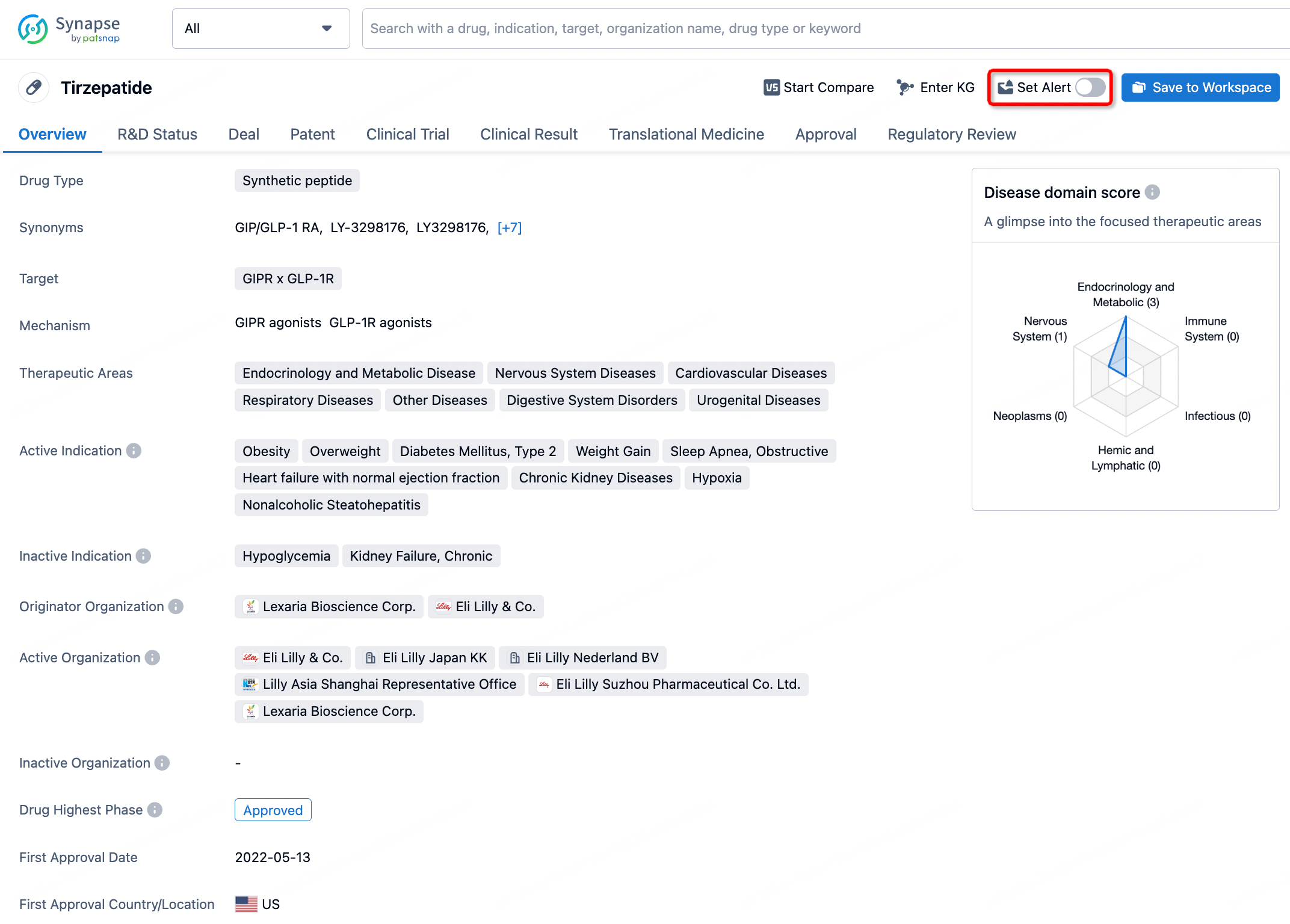
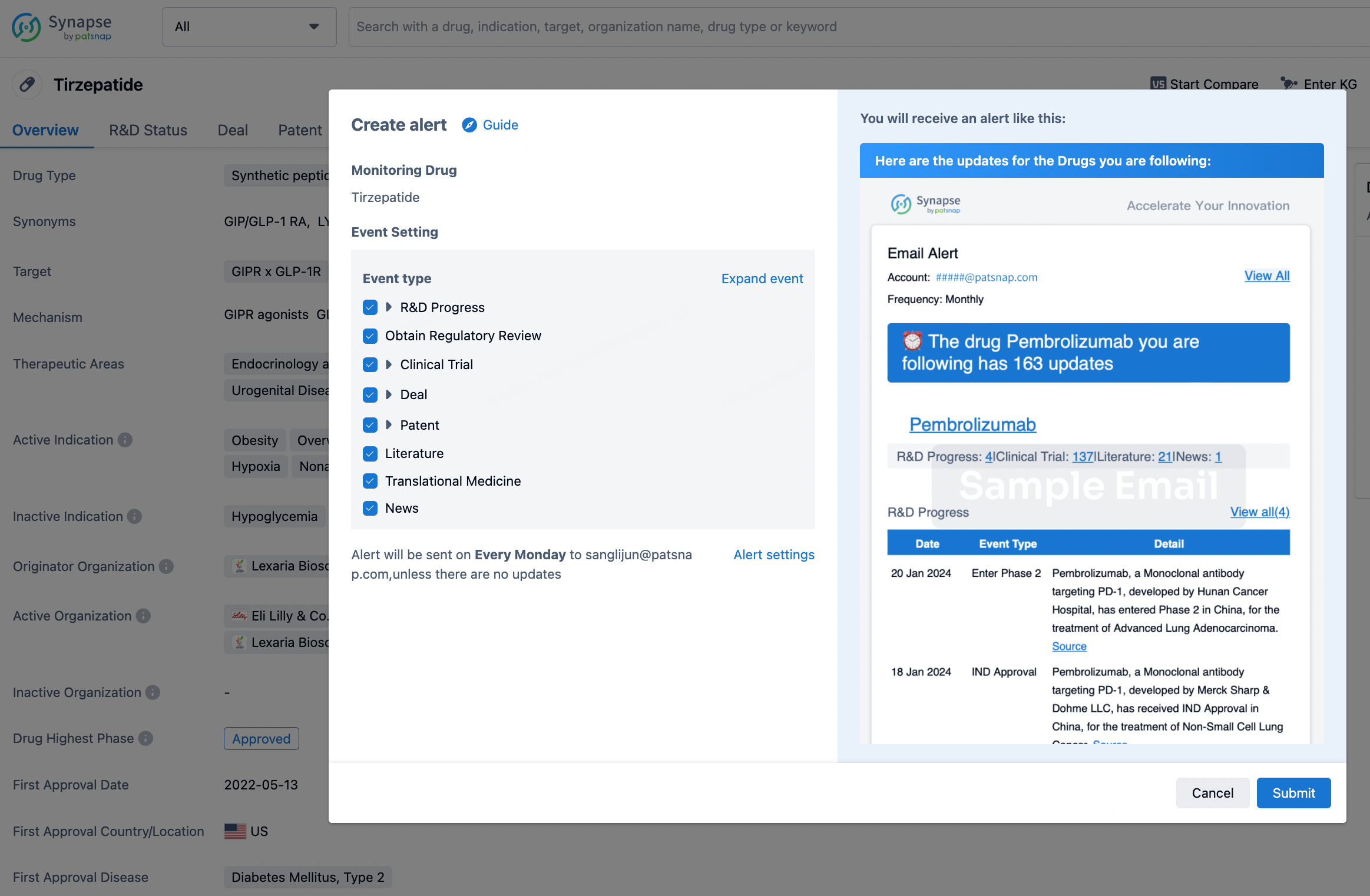
In the Synapse database, you can stay updated on the latest research and development advances of all drugs. This service is accessible anytime and anywhere, with updates available daily or weekly. Use the "Set Alert" function to stay informed. Click on the image below to embark on a brand new journey of drug discovery!
AI Agents Built for Biopharma Breakthroughs
Accelerate discovery. Empower decisions. Transform outcomes.
Get started for free today!
Accelerate Strategic R&D decision making with Synapse, PatSnap’s AI-powered Connected Innovation Intelligence Platform Built for Life Sciences Professionals.
Start your data trial now!
Synapse data is also accessible to external entities via APIs or data packages. Empower better decisions with the latest in pharmaceutical intelligence.