Request Demo
What is Deucravacitinib used for?
14 June 2024
Deucravacitinib is a promising new player in the realm of immunomodulatory drugs, particularly designed to tackle autoimmune and inflammatory diseases. Marketed under the trade name Sotyktu, Deucravacitinib has emerged as a selective inhibitor targeting the tyrosine kinase 2 (TYK2) pathway. This pathway plays a crucial role in the signaling of cytokines involved in various immune responses. The drug was primarily developed by Bristol-Myers Squibb, a well-known biopharmaceutical company that has invested heavily in its research and development.
Initially, Deucravacitinib has been indicated for the treatment of moderate to severe plaque psoriasis, a chronic skin condition characterized by red, scaly patches. However, its potential extends far beyond psoriasis, as ongoing clinical trials are exploring its efficacy in treating various autoimmune disorders such as psoriatic arthritis, Crohn's disease, and systemic lupus erythematosus. As of the latest updates, Deucravacitinib has shown promising results in Phase III clinical trials, making it a frontrunner in next-generation therapies for autoimmune diseases.
Deucravacitinib's mechanism of action is centered around its selective inhibition of the TYK2 enzyme. TYK2 is a member of the Janus kinase (JAK) family, which is instrumental in the signaling pathways of several key cytokines, including interleukin-23 (IL-23), interleukin-12 (IL-12), and type I interferons. These cytokines are pivotal in the pathogenesis of various autoimmune and inflammatory conditions. By inhibiting TYK2, Deucravacitinib effectively interrupts these signaling pathways, thereby reducing inflammation and modulating the immune response.
What sets Deucravacitinib apart from other JAK inhibitors is its high selectivity for TYK2. Traditional JAK inhibitors often target multiple JAK enzymes, leading to a broader range of effects and potentially more side effects. Deucravacitinib's specificity for TYK2 allows for a more targeted approach, aiming to minimize off-target effects and maximize therapeutic efficacy.
Deucravacitinib is administered orally, making it a convenient option for patients. The standard dosage is typically one tablet taken once daily, although the exact dosage may vary based on the condition being treated and the patient's overall health profile. The onset of action for Deucravacitinib can differ depending on the individual and the condition being treated. In clinical trials for plaque psoriasis, significant improvements were often observed within the first few weeks of treatment, with optimal results generally seen after 12-16 weeks of consistent use.
It's important to follow the prescribed dosage and schedule meticulously to achieve the best results and minimize potential side effects. Patients are advised to take the medication at the same time each day to maintain consistent levels of the drug in their system.
As with any medication, Deucravacitinib comes with its own set of potential side effects. Common side effects observed in clinical trials include nasopharyngitis (common cold), headache, and increased blood creatine phosphokinase levels. While these side effects are generally mild to moderate, it is crucial for patients to report any adverse effects to their healthcare provider promptly.
More serious side effects, although rare, can also occur. These may include increased risk of infections due to the immunosuppressive nature of the drug. Patients with a history of recurrent infections or chronic infections should use Deucravacitinib with caution. Additionally, there is a potential risk for developing malignancies, as with other immunosuppressive therapies, although long-term data is still being collected to fully understand this risk.
Contraindications for Deucravacitinib include known hypersensitivity to the drug or any of its components. It is also not recommended for use in pregnant or breastfeeding women due to the lack of sufficient safety data in these populations. Patients with severe hepatic impairment should use this medication cautiously, and regular monitoring of liver function may be necessary.
Drug interactions are an important consideration when prescribing Deucravacitinib. Certain medications can affect the way Deucravacitinib works and vice versa. For example, strong inducers of the enzyme CYP3A4, such as rifampin or phenytoin, can decrease the plasma concentration of Deucravacitinib, potentially reducing its efficacy. Conversely, strong inhibitors of CYP3A4, like ketoconazole or erythromycin, can increase the plasma concentration of Deucravacitinib, which may heighten the risk of side effects.
Patients should always inform their healthcare provider about all medications they are currently taking, including over-the-counter drugs, vitamins, and herbal supplements. This will help in identifying any potential interactions and adjusting the treatment plan accordingly.
In conclusion, Deucravacitinib represents a significant advancement in the treatment of autoimmune and inflammatory diseases. With its targeted mechanism of action, convenient oral administration, and ongoing research into its broader applications, it holds great promise for improving patient outcomes. However, as with any medication, it is essential to be aware of its potential side effects and interactions. By working closely with healthcare providers, patients can optimize their treatment regimen and achieve the best possible results with Deucravacitinib.
Initially, Deucravacitinib has been indicated for the treatment of moderate to severe plaque psoriasis, a chronic skin condition characterized by red, scaly patches. However, its potential extends far beyond psoriasis, as ongoing clinical trials are exploring its efficacy in treating various autoimmune disorders such as psoriatic arthritis, Crohn's disease, and systemic lupus erythematosus. As of the latest updates, Deucravacitinib has shown promising results in Phase III clinical trials, making it a frontrunner in next-generation therapies for autoimmune diseases.
Deucravacitinib's mechanism of action is centered around its selective inhibition of the TYK2 enzyme. TYK2 is a member of the Janus kinase (JAK) family, which is instrumental in the signaling pathways of several key cytokines, including interleukin-23 (IL-23), interleukin-12 (IL-12), and type I interferons. These cytokines are pivotal in the pathogenesis of various autoimmune and inflammatory conditions. By inhibiting TYK2, Deucravacitinib effectively interrupts these signaling pathways, thereby reducing inflammation and modulating the immune response.
What sets Deucravacitinib apart from other JAK inhibitors is its high selectivity for TYK2. Traditional JAK inhibitors often target multiple JAK enzymes, leading to a broader range of effects and potentially more side effects. Deucravacitinib's specificity for TYK2 allows for a more targeted approach, aiming to minimize off-target effects and maximize therapeutic efficacy.
Deucravacitinib is administered orally, making it a convenient option for patients. The standard dosage is typically one tablet taken once daily, although the exact dosage may vary based on the condition being treated and the patient's overall health profile. The onset of action for Deucravacitinib can differ depending on the individual and the condition being treated. In clinical trials for plaque psoriasis, significant improvements were often observed within the first few weeks of treatment, with optimal results generally seen after 12-16 weeks of consistent use.
It's important to follow the prescribed dosage and schedule meticulously to achieve the best results and minimize potential side effects. Patients are advised to take the medication at the same time each day to maintain consistent levels of the drug in their system.
As with any medication, Deucravacitinib comes with its own set of potential side effects. Common side effects observed in clinical trials include nasopharyngitis (common cold), headache, and increased blood creatine phosphokinase levels. While these side effects are generally mild to moderate, it is crucial for patients to report any adverse effects to their healthcare provider promptly.
More serious side effects, although rare, can also occur. These may include increased risk of infections due to the immunosuppressive nature of the drug. Patients with a history of recurrent infections or chronic infections should use Deucravacitinib with caution. Additionally, there is a potential risk for developing malignancies, as with other immunosuppressive therapies, although long-term data is still being collected to fully understand this risk.
Contraindications for Deucravacitinib include known hypersensitivity to the drug or any of its components. It is also not recommended for use in pregnant or breastfeeding women due to the lack of sufficient safety data in these populations. Patients with severe hepatic impairment should use this medication cautiously, and regular monitoring of liver function may be necessary.
Drug interactions are an important consideration when prescribing Deucravacitinib. Certain medications can affect the way Deucravacitinib works and vice versa. For example, strong inducers of the enzyme CYP3A4, such as rifampin or phenytoin, can decrease the plasma concentration of Deucravacitinib, potentially reducing its efficacy. Conversely, strong inhibitors of CYP3A4, like ketoconazole or erythromycin, can increase the plasma concentration of Deucravacitinib, which may heighten the risk of side effects.
Patients should always inform their healthcare provider about all medications they are currently taking, including over-the-counter drugs, vitamins, and herbal supplements. This will help in identifying any potential interactions and adjusting the treatment plan accordingly.
In conclusion, Deucravacitinib represents a significant advancement in the treatment of autoimmune and inflammatory diseases. With its targeted mechanism of action, convenient oral administration, and ongoing research into its broader applications, it holds great promise for improving patient outcomes. However, as with any medication, it is essential to be aware of its potential side effects and interactions. By working closely with healthcare providers, patients can optimize their treatment regimen and achieve the best possible results with Deucravacitinib.
How to obtain the latest development progress of all drugs?
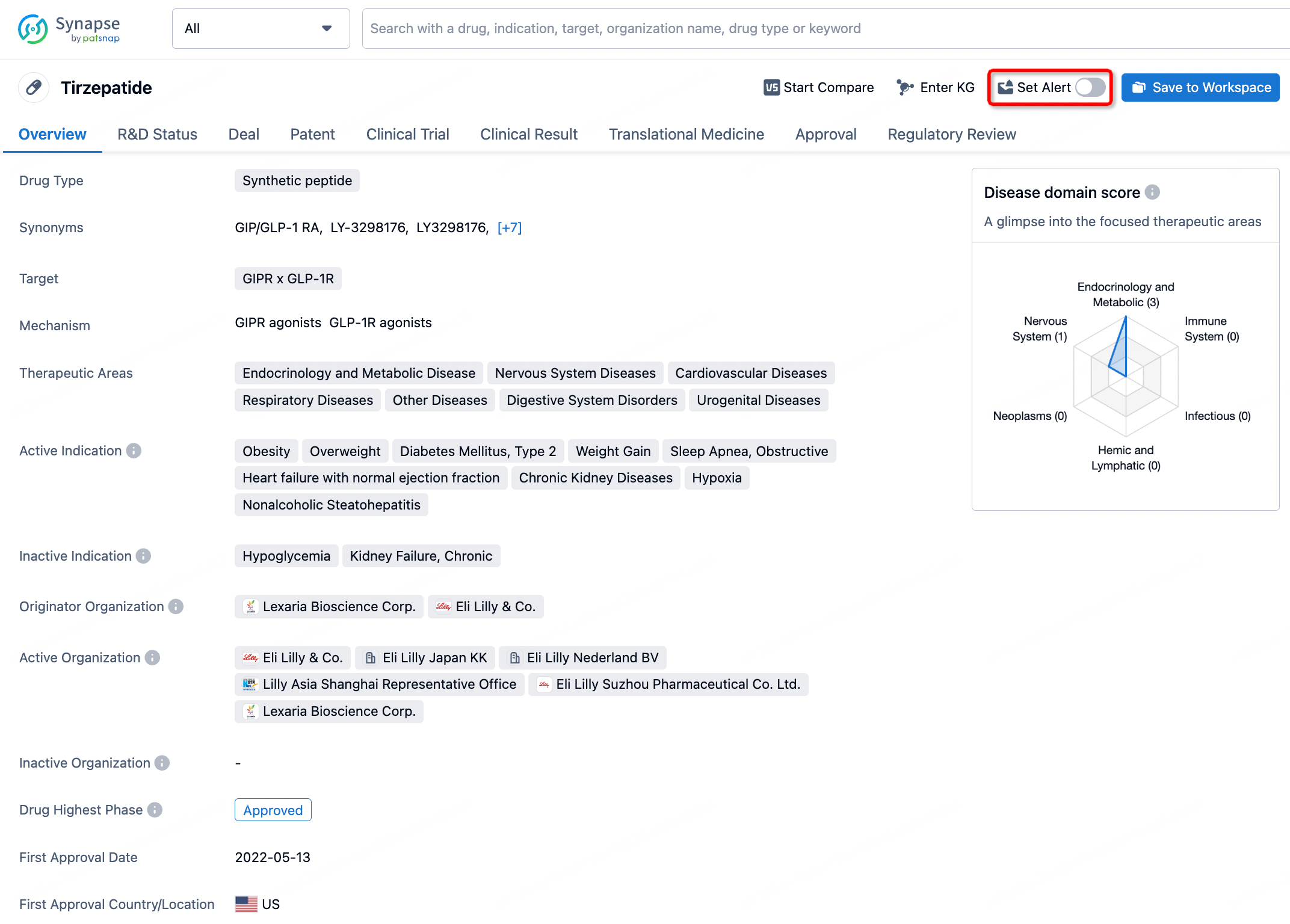
In the Synapse database, you can stay updated on the latest research and development advances of all drugs. This service is accessible anytime and anywhere, with updates available daily or weekly. Use the "Set Alert" function to stay informed. Click on the image below to embark on a brand new journey of drug discovery!


Hiro LS Researcher
The AI Search Engine Built to Accelerate Biopharma Decisions
Search across billion-scale life sciences data to uncover signals, validate evidence, and act with confidence.
Ask any biopharma research question→
Get started for free today!
Accelerate Strategic R&D decision making with Synapse, Patsnap’s AI-powered Connected Innovation Intelligence Platform Built for Life Sciences Professionals.
Discover Synapse Data Servers
Synapse data is now integrated into the PatSnap LS Model Context Protocol (MCP) service. Customize your LLM agent now using our MCP server!