Request Demo
What is Oxycodone Hydrochloride used for?
14 June 2024
Oxycodone Hydrochloride is a prominent prescription medication used primarily for managing moderate to severe pain. Known under various trade names, including OxyContin, Roxicodone, and Percocet (when combined with acetaminophen), this opioid analgesic has contributed significantly to pain management protocols in medical settings. Researchers from numerous institutions around the world, including those in leading pharmaceutical companies and academic settings, continue to study and refine the application of oxycodone to improve its efficacy and safety profile. As a semi-synthetic opioid derived from thebaine, an alkaloid found in the Persian poppy, oxycodone is designed to interact with specific targets within the body to mitigate pain effectively.
Oxycodone is typically indicated for patients who suffer from chronic pain conditions, such as those associated with cancer, arthritis, or severe injury, where other non-opioid pain relievers are insufficient. The drug is also indicated for postoperative pain management and in scenarios where around-the-clock relief is critical. Despite its effectiveness, oxycodone's potential for abuse and dependency has necessitated rigorous regulatory control and ongoing research into safer alternatives and abuse-deterrent formulations.
Oxycodone Hydrochloride's mechanism of action revolves around its ability to bind with high affinity to the mu-opioid receptors in the central nervous system (CNS). These receptors are part of the opioid receptor family, which also includes delta and kappa receptors, each playing distinct roles in pain perception and modulation. By binding to these receptors, oxycodone inhibits the transmission of pain signals and alters the emotional response to pain. This results in both an analgesic (pain-relieving) and euphoric effect, which can, unfortunately, lead to misuse and addiction.
The pharmacokinetics of oxycodone involve its absorption through the gastrointestinal tract when administered orally. Upon reaching the systemic circulation, the drug undergoes hepatic metabolism, predominantly through the enzyme CYP3A4, to its active and inactive metabolites. The primary active metabolite, oxymorphone, contributes to the drug’s analgesic effects. Oxycodone and its metabolites are eventually excreted through the kidneys. The onset of analgesia typically begins within 10 to 30 minutes of oral administration, with peak effects occurring at about 1 to 2 hours and lasting for approximately 3 to 6 hours, depending on the formulation (immediate-release versus extended-release).
Oxycodone Hydrochloride is available in various formulations, including tablets, capsules, and solutions, allowing for flexible administration tailored to patient needs. Immediate-release formulations are often used for acute pain episodes, while extended-release variants are prescribed for chronic, persistent pain requiring long-term management. The specific dosing regimen is determined by factors such as the patient’s pain severity, previous opioid exposure, and overall health status.
Despite its therapeutic benefits, oxycodone hydrochloride is associated with a range of potential side effects, some of which can be severe. Common adverse effects include nausea, vomiting, constipation, dizziness, and drowsiness. These side effects often diminish as the patient adjusts to the medication, but long-term use can lead to more serious complications such as respiratory depression, dependence, and tolerance. Respiratory depression is particularly concerning, as it can be life-threatening, especially at higher doses or when combined with other CNS depressants like alcohol or benzodiazepines.
Contraindications for oxycodone use include patients with known hypersensitivity to the drug, significant respiratory depression or severe asthma in an unmonitored setting, and gastrointestinal obstruction, including paralytic ileus. Additionally, caution is advised when prescribing oxycodone to individuals with a history of substance abuse, mental health disorders, or other conditions that may predispose them to opioid misuse.
Various drugs and substances can interact with oxycodone hydrochloride, altering its effectiveness and increasing the risk of adverse effects. Concomitant use of other CNS depressants, such as sedatives, hypnotics, muscle relaxants, and alcohol, can potentiate the respiratory depressant effects of oxycodone, leading to dangerous respiratory compromise. Drugs that inhibit the enzyme CYP3A4, including certain antifungal agents (ketoconazole), antibiotics (clarithromycin), and HIV protease inhibitors (ritonavir), can increase oxycodone plasma levels, heightening the risk of overdose and prolonged sedation.
Conversely, inducers of CYP3A4, such as rifampin, carbamazepine, and phenytoin, can reduce oxycodone’s plasma concentration, potentially diminishing its analgesic efficacy. It is crucial that healthcare providers carefully review a patient’s medication regimen for potential interactions before initiating oxycodone therapy.
In summary, oxycodone hydrochloride remains a vital component in the management of moderate to severe pain, offering substantial relief for many patients. However, its use must be approached with caution, given the significant risk of side effects, dependency, and potential drug interactions. Ongoing research and clinical vigilance are essential to optimizing the therapeutic use of oxycodone while minimizing its risks. As healthcare providers continue to balance the benefits and challenges of opioid therapy, the development of safer, more effective pain management strategies remains a critical focus in the field of medicine.
Oxycodone is typically indicated for patients who suffer from chronic pain conditions, such as those associated with cancer, arthritis, or severe injury, where other non-opioid pain relievers are insufficient. The drug is also indicated for postoperative pain management and in scenarios where around-the-clock relief is critical. Despite its effectiveness, oxycodone's potential for abuse and dependency has necessitated rigorous regulatory control and ongoing research into safer alternatives and abuse-deterrent formulations.
Oxycodone Hydrochloride's mechanism of action revolves around its ability to bind with high affinity to the mu-opioid receptors in the central nervous system (CNS). These receptors are part of the opioid receptor family, which also includes delta and kappa receptors, each playing distinct roles in pain perception and modulation. By binding to these receptors, oxycodone inhibits the transmission of pain signals and alters the emotional response to pain. This results in both an analgesic (pain-relieving) and euphoric effect, which can, unfortunately, lead to misuse and addiction.
The pharmacokinetics of oxycodone involve its absorption through the gastrointestinal tract when administered orally. Upon reaching the systemic circulation, the drug undergoes hepatic metabolism, predominantly through the enzyme CYP3A4, to its active and inactive metabolites. The primary active metabolite, oxymorphone, contributes to the drug’s analgesic effects. Oxycodone and its metabolites are eventually excreted through the kidneys. The onset of analgesia typically begins within 10 to 30 minutes of oral administration, with peak effects occurring at about 1 to 2 hours and lasting for approximately 3 to 6 hours, depending on the formulation (immediate-release versus extended-release).
Oxycodone Hydrochloride is available in various formulations, including tablets, capsules, and solutions, allowing for flexible administration tailored to patient needs. Immediate-release formulations are often used for acute pain episodes, while extended-release variants are prescribed for chronic, persistent pain requiring long-term management. The specific dosing regimen is determined by factors such as the patient’s pain severity, previous opioid exposure, and overall health status.
Despite its therapeutic benefits, oxycodone hydrochloride is associated with a range of potential side effects, some of which can be severe. Common adverse effects include nausea, vomiting, constipation, dizziness, and drowsiness. These side effects often diminish as the patient adjusts to the medication, but long-term use can lead to more serious complications such as respiratory depression, dependence, and tolerance. Respiratory depression is particularly concerning, as it can be life-threatening, especially at higher doses or when combined with other CNS depressants like alcohol or benzodiazepines.
Contraindications for oxycodone use include patients with known hypersensitivity to the drug, significant respiratory depression or severe asthma in an unmonitored setting, and gastrointestinal obstruction, including paralytic ileus. Additionally, caution is advised when prescribing oxycodone to individuals with a history of substance abuse, mental health disorders, or other conditions that may predispose them to opioid misuse.
Various drugs and substances can interact with oxycodone hydrochloride, altering its effectiveness and increasing the risk of adverse effects. Concomitant use of other CNS depressants, such as sedatives, hypnotics, muscle relaxants, and alcohol, can potentiate the respiratory depressant effects of oxycodone, leading to dangerous respiratory compromise. Drugs that inhibit the enzyme CYP3A4, including certain antifungal agents (ketoconazole), antibiotics (clarithromycin), and HIV protease inhibitors (ritonavir), can increase oxycodone plasma levels, heightening the risk of overdose and prolonged sedation.
Conversely, inducers of CYP3A4, such as rifampin, carbamazepine, and phenytoin, can reduce oxycodone’s plasma concentration, potentially diminishing its analgesic efficacy. It is crucial that healthcare providers carefully review a patient’s medication regimen for potential interactions before initiating oxycodone therapy.
In summary, oxycodone hydrochloride remains a vital component in the management of moderate to severe pain, offering substantial relief for many patients. However, its use must be approached with caution, given the significant risk of side effects, dependency, and potential drug interactions. Ongoing research and clinical vigilance are essential to optimizing the therapeutic use of oxycodone while minimizing its risks. As healthcare providers continue to balance the benefits and challenges of opioid therapy, the development of safer, more effective pain management strategies remains a critical focus in the field of medicine.
How to obtain the latest development progress of all drugs?
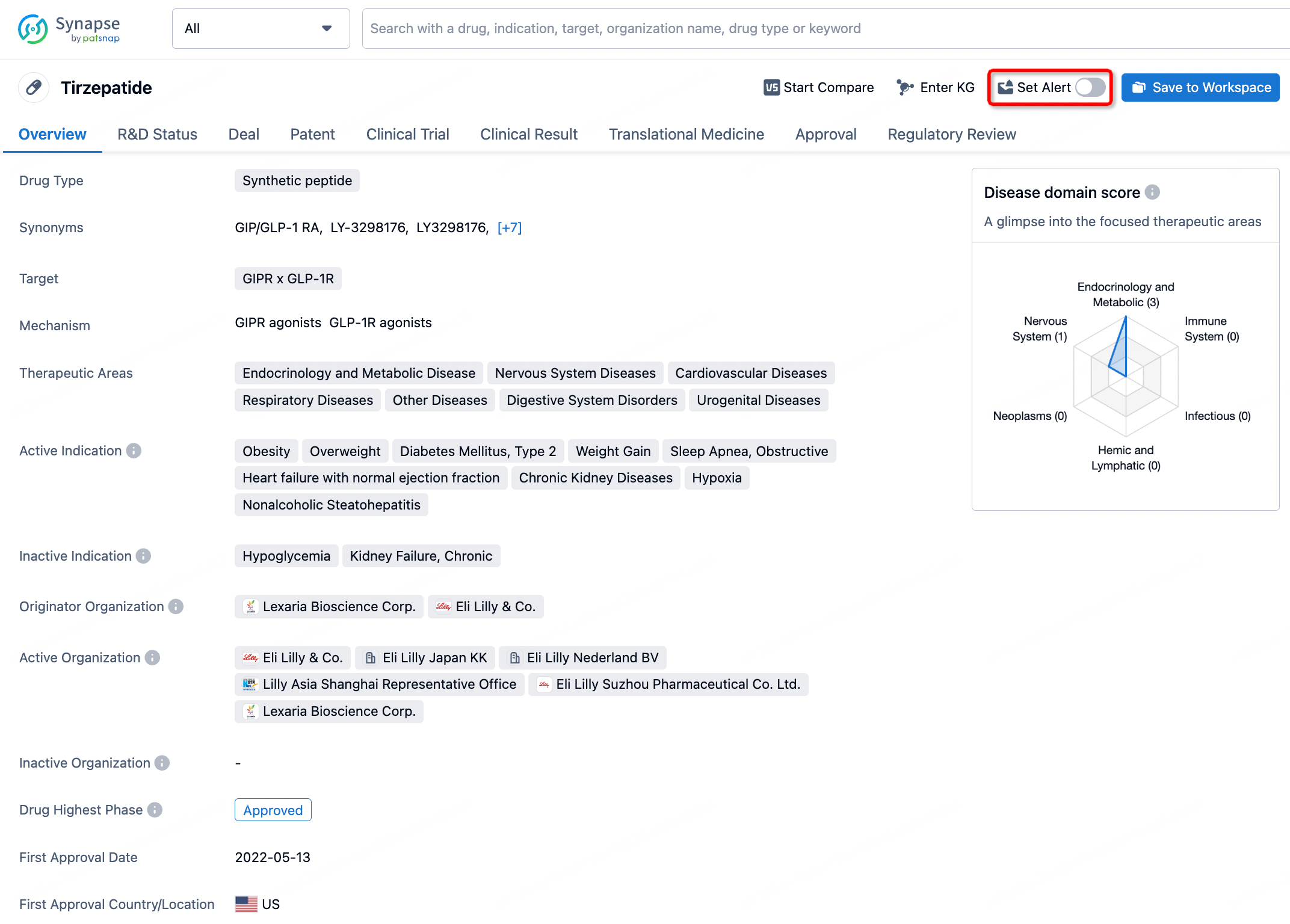
In the Synapse database, you can stay updated on the latest research and development advances of all drugs. This service is accessible anytime and anywhere, with updates available daily or weekly. Use the "Set Alert" function to stay informed. Click on the image below to embark on a brand new journey of drug discovery!


AI Agents Built for Biopharma Breakthroughs
Accelerate discovery. Empower decisions. Transform outcomes.
Get started for free today!
Accelerate Strategic R&D decision making with Synapse, PatSnap’s AI-powered Connected Innovation Intelligence Platform Built for Life Sciences Professionals.
Start your data trial now!
Synapse data is also accessible to external entities via APIs or data packages. Empower better decisions with the latest in pharmaceutical intelligence.