Request Demo
What is Tirofiban Hydrochloride used for?
14 June 2024
Introduction to Tirofiban Hydrochloride:
Tirofiban Hydrochloride, known by the trade names Aggrastat, is a potent antiplatelet agent primarily used in the medical sector to prevent thrombotic cardiovascular events. This drug is classified as a glycoprotein IIb/IIIa inhibitor, a category of medications that interfere with the final common pathway in platelet aggregation. Tirofiban was developed and researched by Merck & Co., Inc., and has been instrumental in the management of patients with acute coronary syndrome (ACS), particularly those who are undergoing percutaneous coronary intervention (PCI). Its introduction into clinical practice has significantly improved outcomes for patients at risk of myocardial infarction (heart attack) due to its ability to prevent the formation of new clots and the enlargement of existing ones. Research and clinical trials continue to evaluate its efficacy and safety in various subgroups of patients, leading to an ever-evolving understanding of its role in cardiology.
Tirofiban Hydrochloride Mechanism of Action:
The mechanism of action of Tirofiban Hydrochloride revolves around its ability to inhibit platelet aggregation. It achieves this by selectively blocking the glycoprotein IIb/IIIa receptors on the surface of platelets. These receptors are crucial for platelet aggregation because they mediate the final step in the pathway that leads to clot formation. Normally, when a blood vessel is injured, platelets are activated and these receptors bind to fibrinogen and von Willebrand factor, which link platelets together to form a clot. By blocking these receptors, Tirofiban effectively prevents the binding of these factors, thereby inhibiting platelet aggregation. As a reversible inhibitor, Tirofiban allows for controlled and temporary inhibition, which is particularly useful in acute settings such as during PCI, where rapid antiplatelet effects are necessary but long-term inhibition could increase bleeding risks.
How to Use Tirofiban Hydrochloride:
Tirofiban Hydrochloride is administered intravenously, making it suitable for inpatient settings where immediate antiplatelet activity is required. The typical administration involves an initial bolus dose followed by a continuous infusion. The initial bolus dose is usually administered over a short period, often 3 minutes, to quickly achieve therapeutic blood levels. This is followed by a maintenance infusion that is tailored to the patient's weight and clinical condition. The onset of action is rapid, with significant platelet inhibition occurring within minutes of the bolus dose. The duration of the infusion can vary but is commonly continued for 12 to 24 hours post-PCI or until the patient is clinically stable. It is critical to monitor the patient's platelet function and coagulation status during and after administration to mitigate the risks of bleeding and other adverse effects. The exact dosing regimen may be adjusted based on the patient's renal function and the presence of other medical conditions.
What is Tirofiban Hydrochloride Side Effects:
As with any potent pharmacological agent, Tirofiban Hydrochloride is associated with a range of potential side effects. The most significant and common side effect is bleeding, which can range from minor bruising to severe hemorrhage. Intracranial hemorrhage, gastrointestinal bleeding, and retroperitoneal bleeding are among the serious adverse events reported. To mitigate these risks, Tirofiban is contraindicated in patients with active internal bleeding or a history of bleeding disorders. Other contraindications include recent major surgery or trauma, severe uncontrolled hypertension, and a history of stroke within the past 30 days. Patients may also experience less severe side effects such as nausea, headache, dizziness, and hypotension. Allergic reactions, although rare, can occur and may present as rash, itching, or more severe anaphylactic reactions. Regular monitoring and appropriate dosage adjustments are essential to minimizing these risks, especially in patients with compromised renal function where drug clearance may be reduced.
What Other Drugs Will Affect Tirofiban Hydrochloride:
Tirofiban Hydrochloride can interact with several other medications, which may either potentiate its effects or increase the risk of adverse reactions. Concomitant use with other antiplatelet agents like aspirin, clopidogrel, or prasugrel, as well as anticoagulants such as heparin, warfarin, or newer oral anticoagulants, can significantly increase the risk of bleeding. Nonsteroidal anti-inflammatory drugs (NSAIDs) and selective serotonin reuptake inhibitors (SSRIs) also have antiplatelet properties and could amplify the bleeding risk when used alongside Tirofiban. It is crucial to conduct a thorough medication review and risk assessment before initiating Tirofiban therapy. Additionally, close monitoring and possible dose adjustments are necessary when these drug combinations are deemed clinically necessary. Other drugs that may affect Tirofiban include those that influence renal function, as impaired renal clearance can lead to increased drug levels and heightened risk of toxicity. Therefore, healthcare providers must exercise caution and consider potential drug interactions to ensure the safe and effective use of Tirofiban Hydrochloride in clinical practice.
Tirofiban Hydrochloride, known by the trade names Aggrastat, is a potent antiplatelet agent primarily used in the medical sector to prevent thrombotic cardiovascular events. This drug is classified as a glycoprotein IIb/IIIa inhibitor, a category of medications that interfere with the final common pathway in platelet aggregation. Tirofiban was developed and researched by Merck & Co., Inc., and has been instrumental in the management of patients with acute coronary syndrome (ACS), particularly those who are undergoing percutaneous coronary intervention (PCI). Its introduction into clinical practice has significantly improved outcomes for patients at risk of myocardial infarction (heart attack) due to its ability to prevent the formation of new clots and the enlargement of existing ones. Research and clinical trials continue to evaluate its efficacy and safety in various subgroups of patients, leading to an ever-evolving understanding of its role in cardiology.
Tirofiban Hydrochloride Mechanism of Action:
The mechanism of action of Tirofiban Hydrochloride revolves around its ability to inhibit platelet aggregation. It achieves this by selectively blocking the glycoprotein IIb/IIIa receptors on the surface of platelets. These receptors are crucial for platelet aggregation because they mediate the final step in the pathway that leads to clot formation. Normally, when a blood vessel is injured, platelets are activated and these receptors bind to fibrinogen and von Willebrand factor, which link platelets together to form a clot. By blocking these receptors, Tirofiban effectively prevents the binding of these factors, thereby inhibiting platelet aggregation. As a reversible inhibitor, Tirofiban allows for controlled and temporary inhibition, which is particularly useful in acute settings such as during PCI, where rapid antiplatelet effects are necessary but long-term inhibition could increase bleeding risks.
How to Use Tirofiban Hydrochloride:
Tirofiban Hydrochloride is administered intravenously, making it suitable for inpatient settings where immediate antiplatelet activity is required. The typical administration involves an initial bolus dose followed by a continuous infusion. The initial bolus dose is usually administered over a short period, often 3 minutes, to quickly achieve therapeutic blood levels. This is followed by a maintenance infusion that is tailored to the patient's weight and clinical condition. The onset of action is rapid, with significant platelet inhibition occurring within minutes of the bolus dose. The duration of the infusion can vary but is commonly continued for 12 to 24 hours post-PCI or until the patient is clinically stable. It is critical to monitor the patient's platelet function and coagulation status during and after administration to mitigate the risks of bleeding and other adverse effects. The exact dosing regimen may be adjusted based on the patient's renal function and the presence of other medical conditions.
What is Tirofiban Hydrochloride Side Effects:
As with any potent pharmacological agent, Tirofiban Hydrochloride is associated with a range of potential side effects. The most significant and common side effect is bleeding, which can range from minor bruising to severe hemorrhage. Intracranial hemorrhage, gastrointestinal bleeding, and retroperitoneal bleeding are among the serious adverse events reported. To mitigate these risks, Tirofiban is contraindicated in patients with active internal bleeding or a history of bleeding disorders. Other contraindications include recent major surgery or trauma, severe uncontrolled hypertension, and a history of stroke within the past 30 days. Patients may also experience less severe side effects such as nausea, headache, dizziness, and hypotension. Allergic reactions, although rare, can occur and may present as rash, itching, or more severe anaphylactic reactions. Regular monitoring and appropriate dosage adjustments are essential to minimizing these risks, especially in patients with compromised renal function where drug clearance may be reduced.
What Other Drugs Will Affect Tirofiban Hydrochloride:
Tirofiban Hydrochloride can interact with several other medications, which may either potentiate its effects or increase the risk of adverse reactions. Concomitant use with other antiplatelet agents like aspirin, clopidogrel, or prasugrel, as well as anticoagulants such as heparin, warfarin, or newer oral anticoagulants, can significantly increase the risk of bleeding. Nonsteroidal anti-inflammatory drugs (NSAIDs) and selective serotonin reuptake inhibitors (SSRIs) also have antiplatelet properties and could amplify the bleeding risk when used alongside Tirofiban. It is crucial to conduct a thorough medication review and risk assessment before initiating Tirofiban therapy. Additionally, close monitoring and possible dose adjustments are necessary when these drug combinations are deemed clinically necessary. Other drugs that may affect Tirofiban include those that influence renal function, as impaired renal clearance can lead to increased drug levels and heightened risk of toxicity. Therefore, healthcare providers must exercise caution and consider potential drug interactions to ensure the safe and effective use of Tirofiban Hydrochloride in clinical practice.
How to obtain the latest development progress of all drugs?
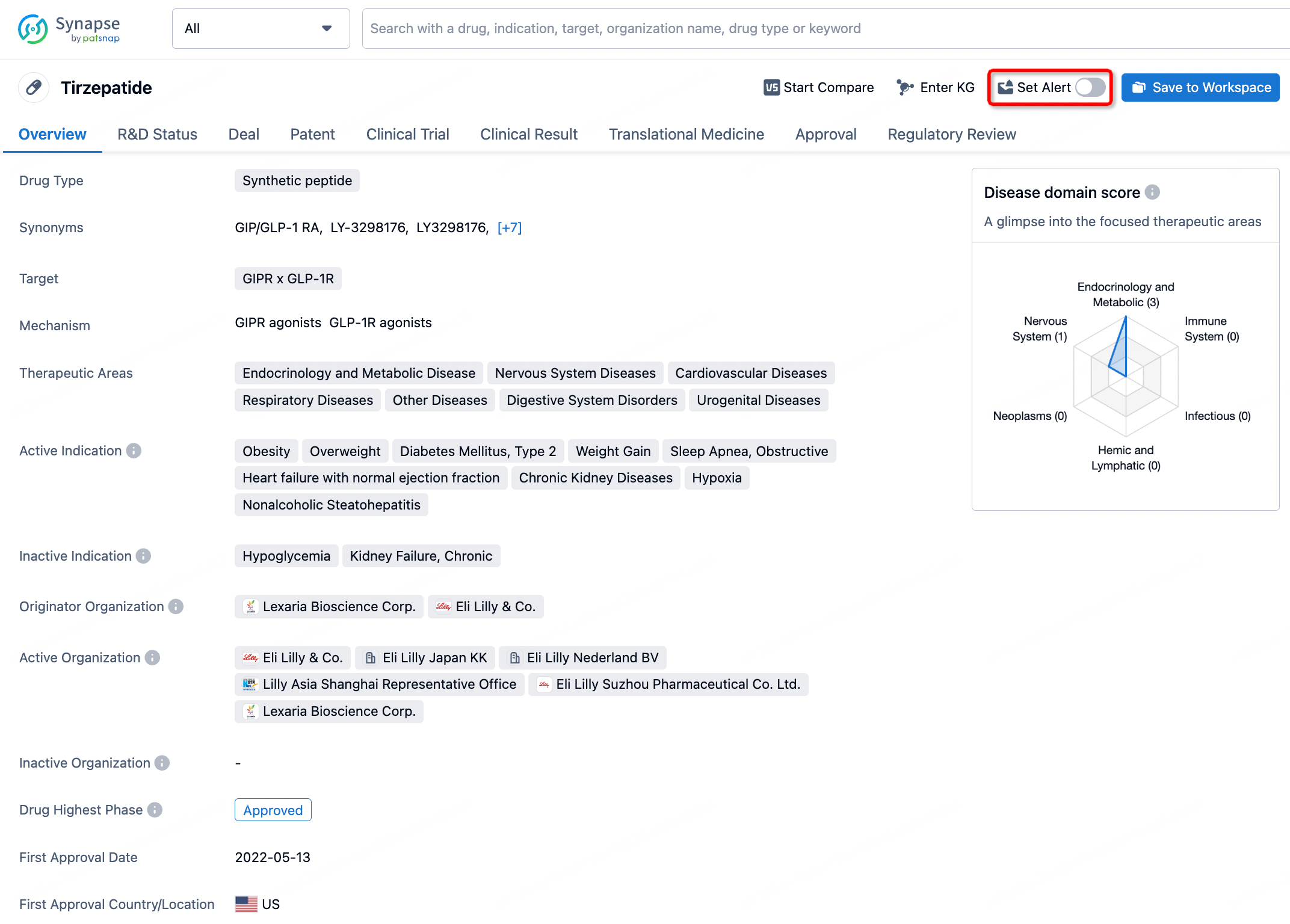
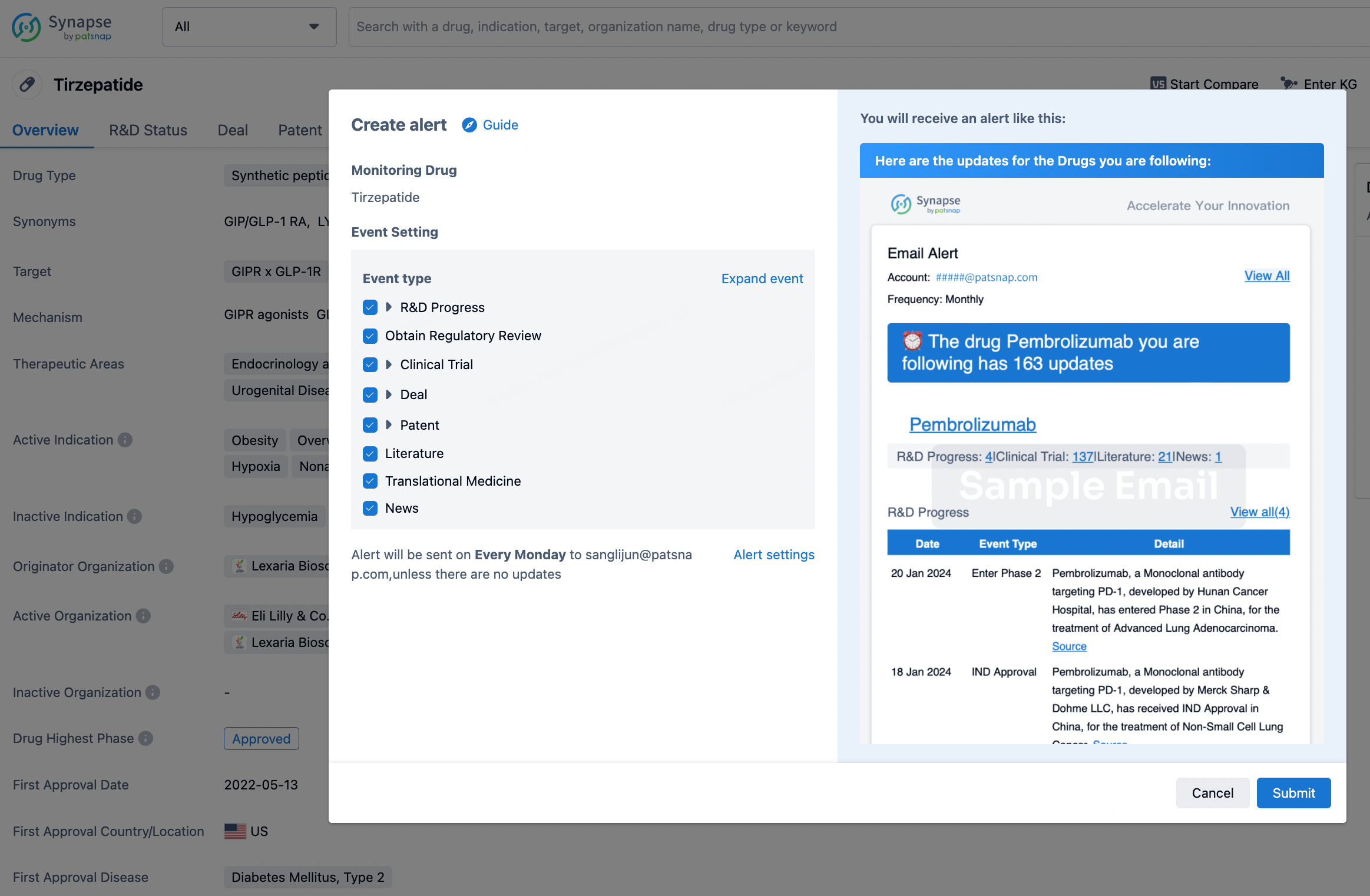
In the Synapse database, you can stay updated on the latest research and development advances of all drugs. This service is accessible anytime and anywhere, with updates available daily or weekly. Use the "Set Alert" function to stay informed. Click on the image below to embark on a brand new journey of drug discovery!
AI Agents Built for Biopharma Breakthroughs
Accelerate discovery. Empower decisions. Transform outcomes.
Get started for free today!
Accelerate Strategic R&D decision making with Synapse, PatSnap’s AI-powered Connected Innovation Intelligence Platform Built for Life Sciences Professionals.
Start your data trial now!
Synapse data is also accessible to external entities via APIs or data packages. Empower better decisions with the latest in pharmaceutical intelligence.