Request Demo
What is Fosphenytoin Sodium used for?
14 June 2024
**Introduction to Fosphenytoin Sodium:**
Fosphenytoin Sodium is an anticonvulsant medication primarily used in the management of seizures. Marketed under trade names like Cerebyx, Fosphenytoin Sodium is a prodrug of phenytoin, meaning it is converted into phenytoin in the body. This conversion helps to mitigate some of the complications associated with the administration of phenytoin directly. The drug targets voltage-gated sodium channels in the central nervous system, stabilizing neuronal membranes and reducing seizure activity.
Fosphenytoin Sodium is often utilized in emergency medical settings, particularly for the treatment of status epilepticus—a severe, prolonged seizure condition that can be life-threatening. Research institutions around the world have conducted extensive studies on Fosphenytoin Sodium since its approval by the FDA in 1996. The drug is categorized as an antiepileptic and is also employed in the prevention of seizures during and after neurosurgery. Ongoing research aims to optimize its use and explore potential new indications for the drug.
**Fosphenytoin Sodium Mechanism of Action**
The mechanism of action of Fosphenytoin Sodium is intricately linked to its conversion into phenytoin in the body. Once administered, Fosphenytoin Sodium is rapidly metabolized by plasma enzymes to produce phenytoin. Phenytoin then exerts its anti-seizure effects primarily by inhibiting voltage-gated sodium channels in neurons.
The inactivation of these channels prevents the excessive influx of sodium ions that usually leads to neuronal hyperactivity, a key factor in the development of seizures. By stabilizing the neuronal membrane and reducing the ability of neurons to fire at high frequencies, phenytoin helps to control the spread of seizure activity in the brain. This results in the effective management of acute and chronic seizures, making Fosphenytoin Sodium a valuable tool in the arsenal of antiepileptic drugs.
**How to Use Fosphenytoin Sodium**
Fosphenytoin Sodium can be administered intravenously (IV) or intramuscularly (IM), making it highly versatile for use in various clinical scenarios. In emergency settings, intravenous administration is preferred due to its rapid onset of action. When given IV, the drug reaches peak levels in the bloodstream much faster, making it ideal for controlling acute seizures or status epilepticus. For less urgent situations or when IV access is not available, intramuscular administration can be employed.
The onset of action for Fosphenytoin Sodium is relatively quick. Intravenous administration typically results in therapeutic levels of phenytoin within 30 minutes. The conversion of Fosphenytoin to phenytoin is rapid and nearly complete, ensuring that effective seizure control is achieved promptly.
The dosage of Fosphenytoin Sodium is often calculated based on the patient's weight and specific clinical needs. As with any medication, it is crucial to follow the prescribed dosing regimen and administration guidelines to avoid potential complications.
**What is Fosphenytoin Sodium Side Effects**
Like all medications, Fosphenytoin Sodium is associated with a range of potential side effects. While many patients tolerate the drug well, some may experience adverse effects that can vary in severity. Common side effects include dizziness, drowsiness, itching, and numbness or tingling sensations. More significant side effects can include hypotension (low blood pressure), cardiac arrhythmias, and severe allergic reactions such as Stevens-Johnson syndrome.
Contraindications for using Fosphenytoin Sodium include hypersensitivity to phenytoin or any of the formulation's components, as well as certain pre-existing medical conditions like sinus bradycardia, sinoatrial block, second and third-degree AV block, and Adams-Stokes syndrome. Patients with hepatic impairment or a history of drug-induced rash should also use Fosphenytoin Sodium with caution.
Monitoring is essential when administering this drug, especially in patients with cardiovascular conditions, as rapid IV administration can lead to severe cardiovascular complications. Continuous cardiac monitoring is recommended during and after administration to detect any potential issues promptly.
**What Other Drugs Will Affect Fosphenytoin Sodium**
The interaction of Fosphenytoin Sodium with other drugs is a critical consideration in clinical practice. Numerous medications can affect the metabolism and efficacy of phenytoin, leading to either subtherapeutic or toxic levels. For instance, drugs that induce cytochrome P450 enzymes, such as rifampin and phenobarbital, can decrease phenytoin levels, reducing its effectiveness. Conversely, medications that inhibit these enzymes, like fluconazole and omeprazole, can increase phenytoin levels and the risk of toxicity.
Other antiepileptic drugs, such as valproate, can also interact with Fosphenytoin Sodium. Valproate can displace phenytoin from plasma protein binding sites, leading to higher free (active) phenytoin levels and increasing the potential for adverse effects.
Additionally, Fosphenytoin Sodium can affect the metabolism of other drugs. For example, it can decrease the efficacy of oral contraceptives, anticoagulants like warfarin, and certain antidepressants by inducing hepatic enzymes that increase the metabolism of these drugs.
Patients should always inform their healthcare providers about all medications they are taking, including over-the-counter drugs and supplements, to manage potential interactions effectively. Regular monitoring of phenytoin levels in the blood can help to ensure that therapeutic levels are maintained and adverse effects are minimized.
In conclusion, Fosphenytoin Sodium is a crucial medication in the management of seizures, particularly in emergency settings. Its rapid conversion to phenytoin and subsequent action on sodium channels make it highly effective in controlling seizure activity. However, like any potent medication, careful monitoring and consideration of potential drug interactions and side effects are essential to ensure its safe and effective use.
Fosphenytoin Sodium is an anticonvulsant medication primarily used in the management of seizures. Marketed under trade names like Cerebyx, Fosphenytoin Sodium is a prodrug of phenytoin, meaning it is converted into phenytoin in the body. This conversion helps to mitigate some of the complications associated with the administration of phenytoin directly. The drug targets voltage-gated sodium channels in the central nervous system, stabilizing neuronal membranes and reducing seizure activity.
Fosphenytoin Sodium is often utilized in emergency medical settings, particularly for the treatment of status epilepticus—a severe, prolonged seizure condition that can be life-threatening. Research institutions around the world have conducted extensive studies on Fosphenytoin Sodium since its approval by the FDA in 1996. The drug is categorized as an antiepileptic and is also employed in the prevention of seizures during and after neurosurgery. Ongoing research aims to optimize its use and explore potential new indications for the drug.
**Fosphenytoin Sodium Mechanism of Action**
The mechanism of action of Fosphenytoin Sodium is intricately linked to its conversion into phenytoin in the body. Once administered, Fosphenytoin Sodium is rapidly metabolized by plasma enzymes to produce phenytoin. Phenytoin then exerts its anti-seizure effects primarily by inhibiting voltage-gated sodium channels in neurons.
The inactivation of these channels prevents the excessive influx of sodium ions that usually leads to neuronal hyperactivity, a key factor in the development of seizures. By stabilizing the neuronal membrane and reducing the ability of neurons to fire at high frequencies, phenytoin helps to control the spread of seizure activity in the brain. This results in the effective management of acute and chronic seizures, making Fosphenytoin Sodium a valuable tool in the arsenal of antiepileptic drugs.
**How to Use Fosphenytoin Sodium**
Fosphenytoin Sodium can be administered intravenously (IV) or intramuscularly (IM), making it highly versatile for use in various clinical scenarios. In emergency settings, intravenous administration is preferred due to its rapid onset of action. When given IV, the drug reaches peak levels in the bloodstream much faster, making it ideal for controlling acute seizures or status epilepticus. For less urgent situations or when IV access is not available, intramuscular administration can be employed.
The onset of action for Fosphenytoin Sodium is relatively quick. Intravenous administration typically results in therapeutic levels of phenytoin within 30 minutes. The conversion of Fosphenytoin to phenytoin is rapid and nearly complete, ensuring that effective seizure control is achieved promptly.
The dosage of Fosphenytoin Sodium is often calculated based on the patient's weight and specific clinical needs. As with any medication, it is crucial to follow the prescribed dosing regimen and administration guidelines to avoid potential complications.
**What is Fosphenytoin Sodium Side Effects**
Like all medications, Fosphenytoin Sodium is associated with a range of potential side effects. While many patients tolerate the drug well, some may experience adverse effects that can vary in severity. Common side effects include dizziness, drowsiness, itching, and numbness or tingling sensations. More significant side effects can include hypotension (low blood pressure), cardiac arrhythmias, and severe allergic reactions such as Stevens-Johnson syndrome.
Contraindications for using Fosphenytoin Sodium include hypersensitivity to phenytoin or any of the formulation's components, as well as certain pre-existing medical conditions like sinus bradycardia, sinoatrial block, second and third-degree AV block, and Adams-Stokes syndrome. Patients with hepatic impairment or a history of drug-induced rash should also use Fosphenytoin Sodium with caution.
Monitoring is essential when administering this drug, especially in patients with cardiovascular conditions, as rapid IV administration can lead to severe cardiovascular complications. Continuous cardiac monitoring is recommended during and after administration to detect any potential issues promptly.
**What Other Drugs Will Affect Fosphenytoin Sodium**
The interaction of Fosphenytoin Sodium with other drugs is a critical consideration in clinical practice. Numerous medications can affect the metabolism and efficacy of phenytoin, leading to either subtherapeutic or toxic levels. For instance, drugs that induce cytochrome P450 enzymes, such as rifampin and phenobarbital, can decrease phenytoin levels, reducing its effectiveness. Conversely, medications that inhibit these enzymes, like fluconazole and omeprazole, can increase phenytoin levels and the risk of toxicity.
Other antiepileptic drugs, such as valproate, can also interact with Fosphenytoin Sodium. Valproate can displace phenytoin from plasma protein binding sites, leading to higher free (active) phenytoin levels and increasing the potential for adverse effects.
Additionally, Fosphenytoin Sodium can affect the metabolism of other drugs. For example, it can decrease the efficacy of oral contraceptives, anticoagulants like warfarin, and certain antidepressants by inducing hepatic enzymes that increase the metabolism of these drugs.
Patients should always inform their healthcare providers about all medications they are taking, including over-the-counter drugs and supplements, to manage potential interactions effectively. Regular monitoring of phenytoin levels in the blood can help to ensure that therapeutic levels are maintained and adverse effects are minimized.
In conclusion, Fosphenytoin Sodium is a crucial medication in the management of seizures, particularly in emergency settings. Its rapid conversion to phenytoin and subsequent action on sodium channels make it highly effective in controlling seizure activity. However, like any potent medication, careful monitoring and consideration of potential drug interactions and side effects are essential to ensure its safe and effective use.
How to obtain the latest development progress of all drugs?
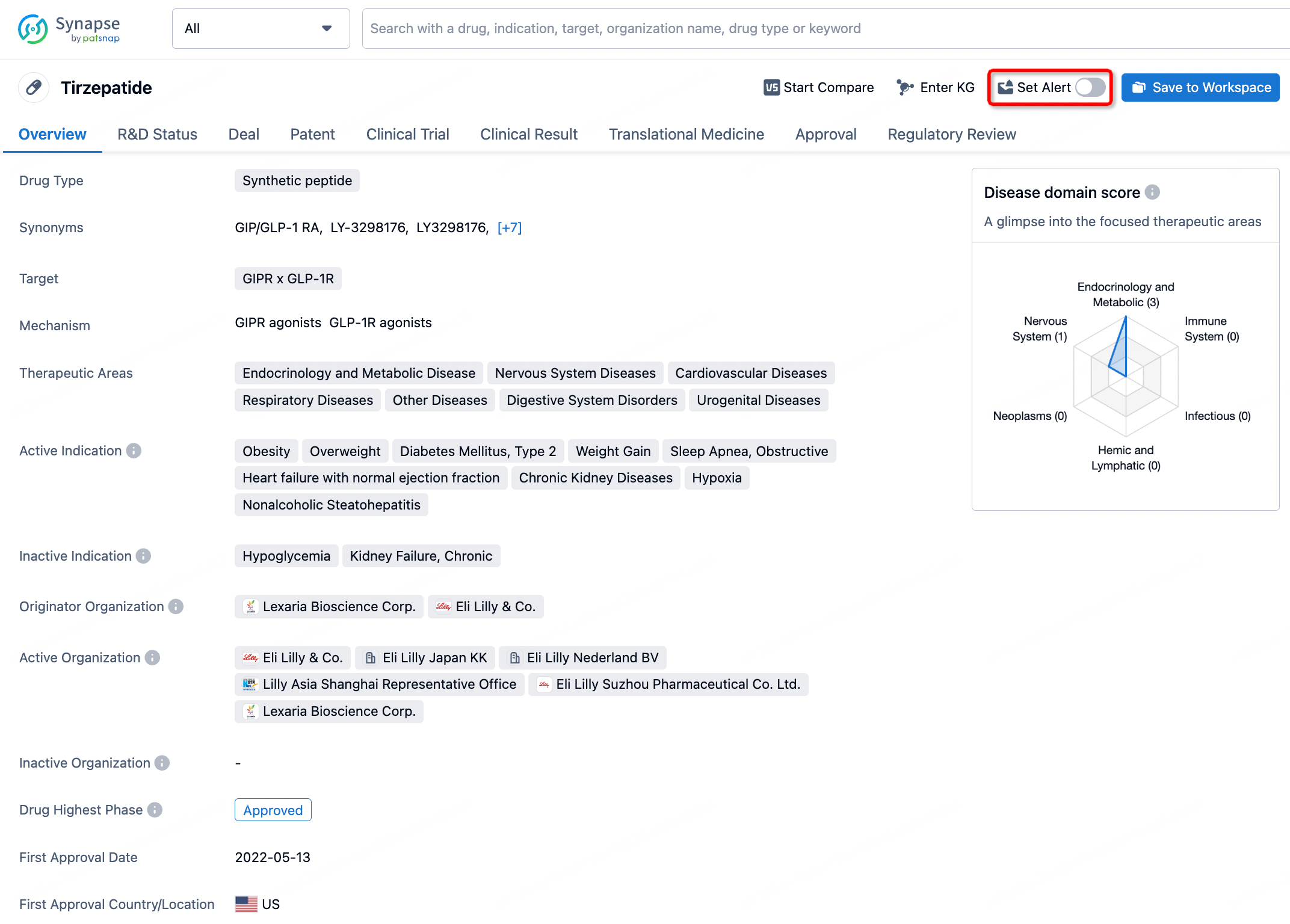
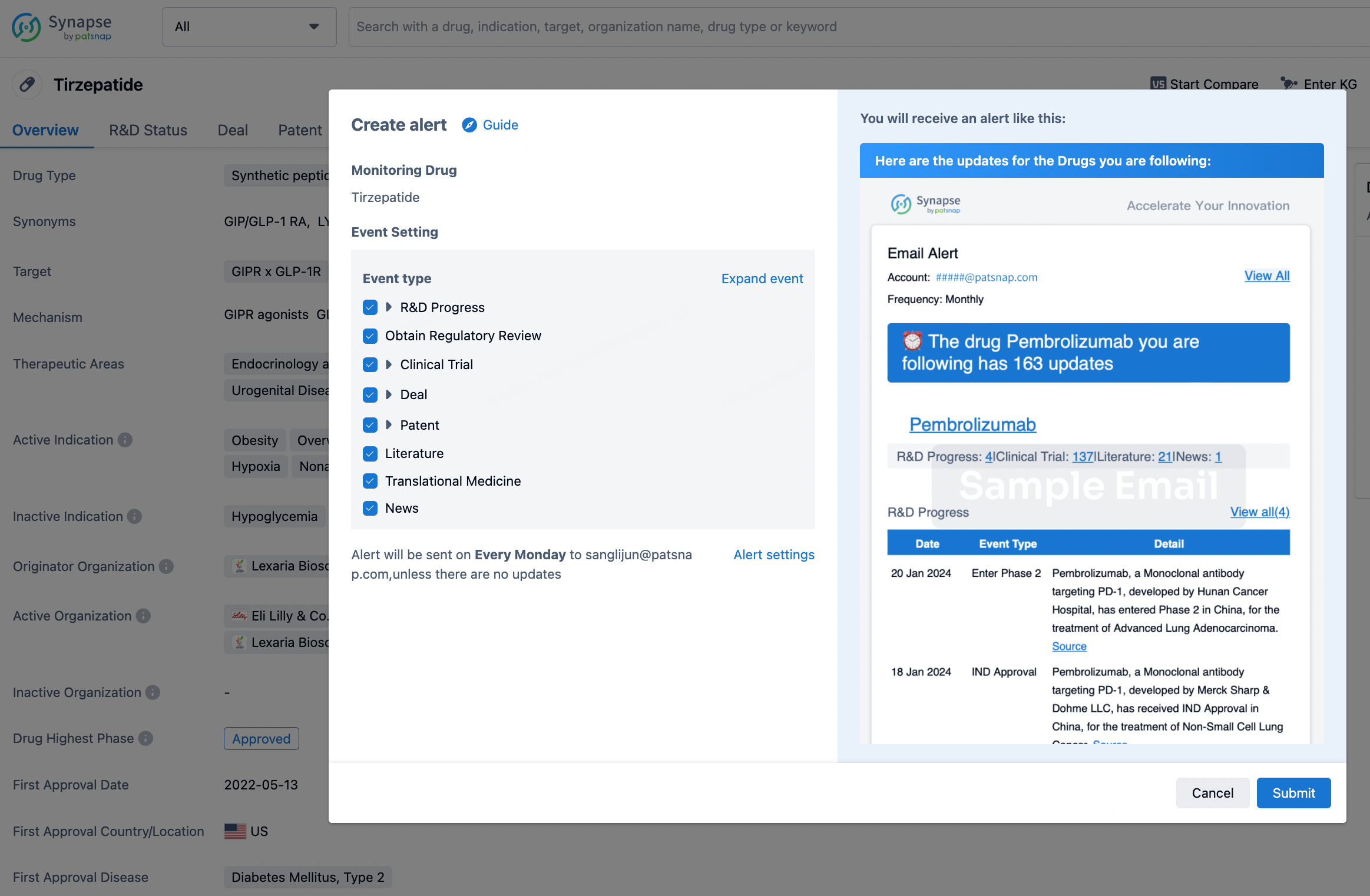
In the Synapse database, you can stay updated on the latest research and development advances of all drugs. This service is accessible anytime and anywhere, with updates available daily or weekly. Use the "Set Alert" function to stay informed. Click on the image below to embark on a brand new journey of drug discovery!
AI Agents Built for Biopharma Breakthroughs
Accelerate discovery. Empower decisions. Transform outcomes.
Get started for free today!
Accelerate Strategic R&D decision making with Synapse, PatSnap’s AI-powered Connected Innovation Intelligence Platform Built for Life Sciences Professionals.
Start your data trial now!
Synapse data is also accessible to external entities via APIs or data packages. Empower better decisions with the latest in pharmaceutical intelligence.