Request Demo
What is Midazolam Hydrochloride used for?
15 June 2024
Midazolam Hydrochloride, commonly known under trade names such as Versed, Dormicum, and Hypnovel, is a potent, short-acting benzodiazepine with significant applications in clinical medicine. Originally developed by Hoffmann-La Roche in the 1970s, it has since become an indispensable tool in various medical procedures due to its sedative, anxiolytic, amnesic, and hypnotic properties. Midazolam is primarily used in anesthesia, procedural sedation, trouble sleeping, and severe agitation. The drug operates by targeting the central nervous system, specifically facilitating gamma-aminobutyric acid (GABA) neurotransmission. Research institutions worldwide continuously explore its various applications and efficacy in different medical scenarios, further cementing its critical role in the medical field.
Midazolam Hydrochloride's mechanism of action revolves around its interaction with the GABA-A receptor, a crucial inhibitory neurotransmitter receptor in the brain. When Midazolam binds to the GABA-A receptor, it enhances the receptor's affinity for GABA, amplifying the inhibitory effect of this neurotransmitter. This results in increased chloride ion influx into neurons, leading to hyperpolarization and, consequently, inhibition of neuronal activity. By suppressing abnormal neuronal firing, Midazolam induces sedation and reduces anxiety, making it highly effective for preoperative sedation, procedural sedation, and the management of acute seizures. Its rapid onset and short duration of action are attributed to its high lipid solubility, which facilitates quick entry into the central nervous system following administration.
Midazolam Hydrochloride can be administered through various routes, each offering unique onset times and durations. It is commonly administered intravenously (IV), intramuscularly (IM), orally, or via intranasal and rectal routes. Intravenous administration is preferred for its rapid onset, often within 1-5 minutes, making it ideal for acute situations such as procedural sedation or status epilepticus. Intramuscular administration has a slightly slower onset, ranging from 15-30 minutes. Oral administration is often used for pediatric premedication, with an onset time of approximately 30 minutes. Intranasal and rectal routes are particularly useful in pediatric cases or when IV access is challenging. The mode of administration is chosen based on the clinical scenario, patient condition, and required speed of onset.
Despite its efficacy, Midazolam Hydrochloride is associated with several side effects and contraindications that must be carefully considered. Common side effects include drowsiness, dizziness, confusion, and amnesia, which are generally dose-dependent and typically resolve with the drug's elimination from the body. More severe side effects can include respiratory depression, hypotension, and paradoxical reactions such as agitation or hyperactivity, particularly in pediatric or elderly patients. Contraindications include known hypersensitivity to benzodiazepines, acute narrow-angle glaucoma, and severe respiratory insufficiency. Caution is advised in patients with a history of substance abuse, liver or kidney impairments, and in those who are pregnant or breastfeeding, as Midazolam can cross the placenta and is excreted in breast milk.
The interaction of Midazolam Hydrochloride with other drugs is a critical consideration in its clinical use. Concomitant use with other central nervous system depressants, such as opioids, alcohol, barbiturates, and certain antihistamines, can potentiate its sedative and respiratory depressant effects, increasing the risk of severe respiratory depression and hypotension. Cytochrome P450 (CYP3A4) inhibitors, including ketoconazole, erythromycin, and protease inhibitors used in HIV therapy, can significantly increase Midazolam's plasma concentration, prolonging its sedative effects and increasing the risk of adverse reactions. Conversely, CYP3A4 inducers such as rifampin, phenytoin, and carbamazepine can decrease its effectiveness by accelerating its metabolism. Monitoring for potential drug interactions and adjusting dosages accordingly are essential to ensure patient safety and therapeutic efficacy.
In summary, Midazolam Hydrochloride remains a cornerstone in modern medical practice due to its rapid onset, effective sedative properties, and versatile administration routes. Understanding its mechanism of action, appropriate usage, potential side effects, contraindications, and drug interactions is vital for healthcare providers to optimize patient outcomes while minimizing risks. Ongoing research continues to refine its applications and enhance its safety profile, maintaining its critical role in medical therapeutics.
Midazolam Hydrochloride's mechanism of action revolves around its interaction with the GABA-A receptor, a crucial inhibitory neurotransmitter receptor in the brain. When Midazolam binds to the GABA-A receptor, it enhances the receptor's affinity for GABA, amplifying the inhibitory effect of this neurotransmitter. This results in increased chloride ion influx into neurons, leading to hyperpolarization and, consequently, inhibition of neuronal activity. By suppressing abnormal neuronal firing, Midazolam induces sedation and reduces anxiety, making it highly effective for preoperative sedation, procedural sedation, and the management of acute seizures. Its rapid onset and short duration of action are attributed to its high lipid solubility, which facilitates quick entry into the central nervous system following administration.
Midazolam Hydrochloride can be administered through various routes, each offering unique onset times and durations. It is commonly administered intravenously (IV), intramuscularly (IM), orally, or via intranasal and rectal routes. Intravenous administration is preferred for its rapid onset, often within 1-5 minutes, making it ideal for acute situations such as procedural sedation or status epilepticus. Intramuscular administration has a slightly slower onset, ranging from 15-30 minutes. Oral administration is often used for pediatric premedication, with an onset time of approximately 30 minutes. Intranasal and rectal routes are particularly useful in pediatric cases or when IV access is challenging. The mode of administration is chosen based on the clinical scenario, patient condition, and required speed of onset.
Despite its efficacy, Midazolam Hydrochloride is associated with several side effects and contraindications that must be carefully considered. Common side effects include drowsiness, dizziness, confusion, and amnesia, which are generally dose-dependent and typically resolve with the drug's elimination from the body. More severe side effects can include respiratory depression, hypotension, and paradoxical reactions such as agitation or hyperactivity, particularly in pediatric or elderly patients. Contraindications include known hypersensitivity to benzodiazepines, acute narrow-angle glaucoma, and severe respiratory insufficiency. Caution is advised in patients with a history of substance abuse, liver or kidney impairments, and in those who are pregnant or breastfeeding, as Midazolam can cross the placenta and is excreted in breast milk.
The interaction of Midazolam Hydrochloride with other drugs is a critical consideration in its clinical use. Concomitant use with other central nervous system depressants, such as opioids, alcohol, barbiturates, and certain antihistamines, can potentiate its sedative and respiratory depressant effects, increasing the risk of severe respiratory depression and hypotension. Cytochrome P450 (CYP3A4) inhibitors, including ketoconazole, erythromycin, and protease inhibitors used in HIV therapy, can significantly increase Midazolam's plasma concentration, prolonging its sedative effects and increasing the risk of adverse reactions. Conversely, CYP3A4 inducers such as rifampin, phenytoin, and carbamazepine can decrease its effectiveness by accelerating its metabolism. Monitoring for potential drug interactions and adjusting dosages accordingly are essential to ensure patient safety and therapeutic efficacy.
In summary, Midazolam Hydrochloride remains a cornerstone in modern medical practice due to its rapid onset, effective sedative properties, and versatile administration routes. Understanding its mechanism of action, appropriate usage, potential side effects, contraindications, and drug interactions is vital for healthcare providers to optimize patient outcomes while minimizing risks. Ongoing research continues to refine its applications and enhance its safety profile, maintaining its critical role in medical therapeutics.
How to obtain the latest development progress of all drugs?
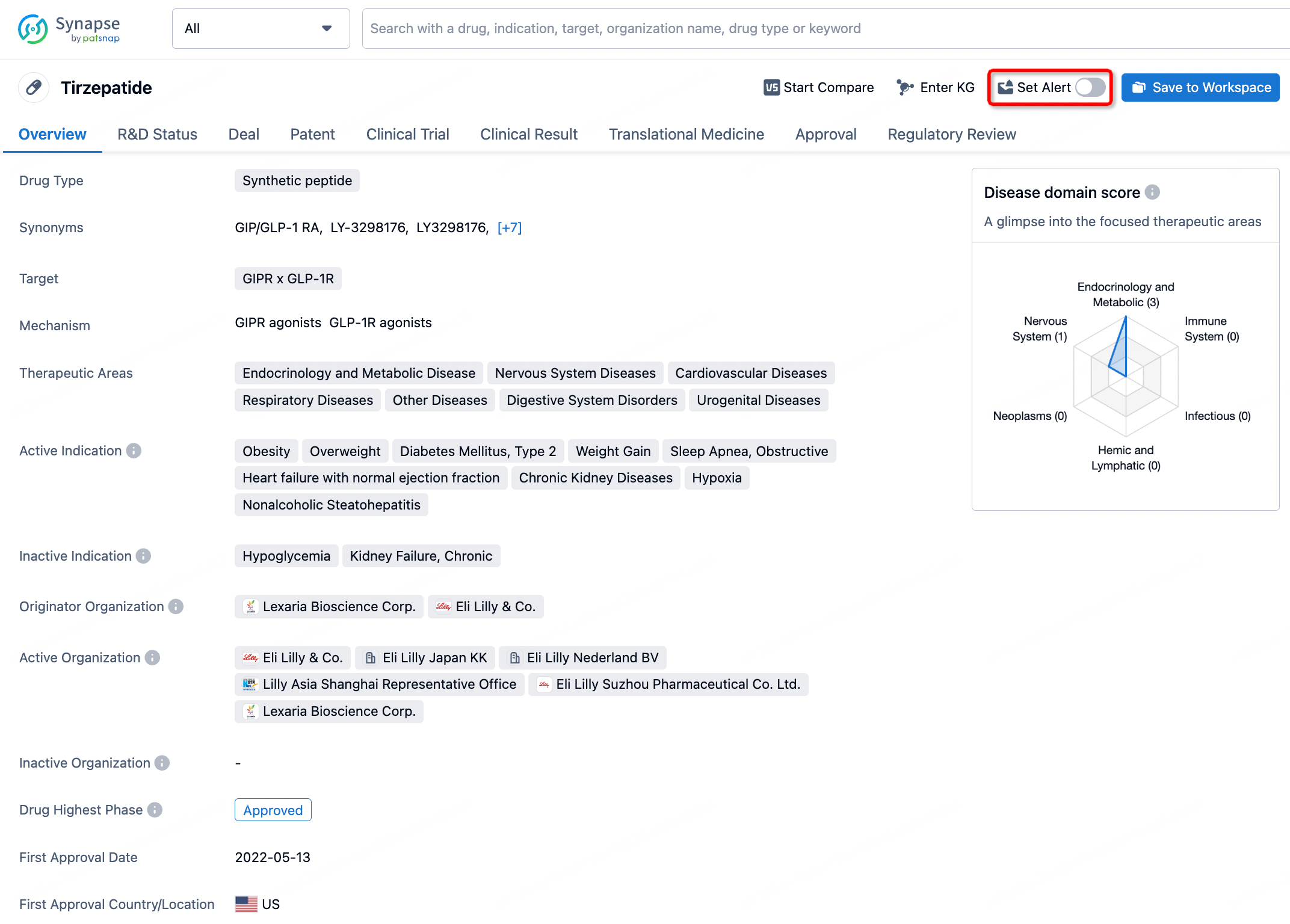
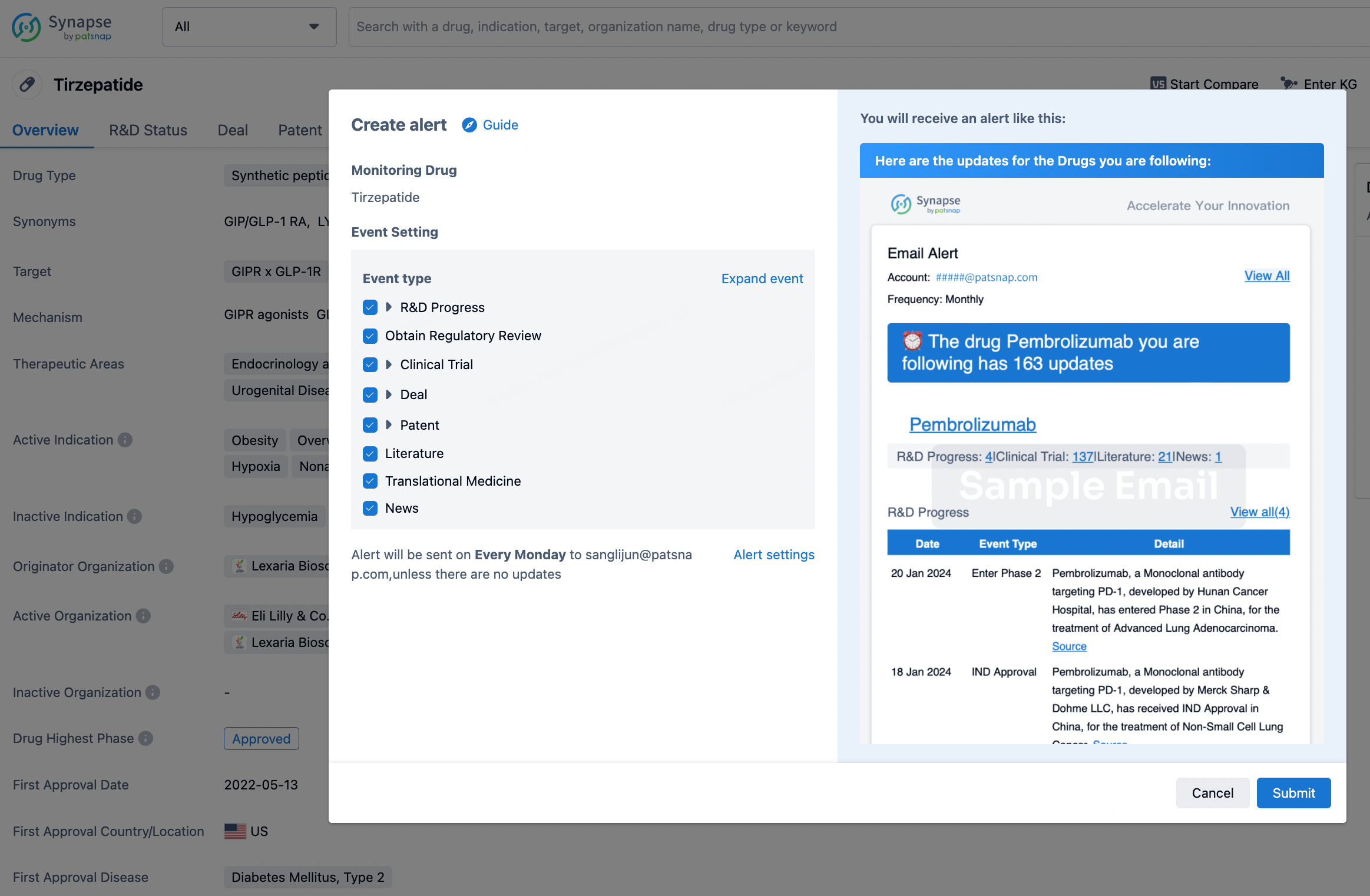
In the Synapse database, you can stay updated on the latest research and development advances of all drugs. This service is accessible anytime and anywhere, with updates available daily or weekly. Use the "Set Alert" function to stay informed. Click on the image below to embark on a brand new journey of drug discovery!

AI Agents Built for Biopharma Breakthroughs
Accelerate discovery. Empower decisions. Transform outcomes.
Get started for free today!
Accelerate Strategic R&D decision making with Synapse, PatSnap’s AI-powered Connected Innovation Intelligence Platform Built for Life Sciences Professionals.
Start your data trial now!
Synapse data is also accessible to external entities via APIs or data packages. Empower better decisions with the latest in pharmaceutical intelligence.