Request Demo
What is Ticagrelor used for?
14 June 2024
Ticagrelor is an antiplatelet medication that has garnered significant attention in the medical field for its efficacy in preventing blood clots. Marketed under the trade name Brilinta, this drug has been primarily developed to reduce the risk of cardiovascular events, particularly in patients who have experienced acute coronary syndrome (ACS) or undergone percutaneous coronary intervention (PCI). The drug targets platelets in the bloodstream, preventing them from clustering together and forming clots, which can lead to heart attacks or strokes. Developed by AstraZeneca, Ticagrelor has undergone extensive clinical trials and research, proving its worth as a potent and effective antiplatelet medication.
Ticagrelor is classified as a P2Y12 receptor antagonist. This class of drugs works by inhibiting the P2Y12 receptor on the surface of platelets, which plays a crucial role in platelet aggregation and activation. Essentially, Ticagrelor renders platelets less "sticky," thereby reducing the likelihood of clot formation. Unlike other antiplatelet medications such as clopidogrel, Ticagrelor does not require metabolic activation, which makes it faster-acting and more reliable. The drug has been approved by various regulatory bodies, including the U.S. Food and Drug Administration (FDA) and the European Medicines Agency (EMA), for specific indications related to heart disease and stroke prevention.
Ticagrelor operates through a unique mechanism of action that sets it apart from other antiplatelet medications. The drug inhibits the P2Y12 receptor on the platelet surface, a receptor that, when activated by adenosine diphosphate (ADP), leads to platelet aggregation. By blocking this receptor, Ticagrelor effectively prevents platelets from clumping together. This mechanism is irreversible, meaning that once the P2Y12 receptor is blocked, it remains so for the lifespan of the platelet, which is about seven to ten days.
One of the standout features of Ticagrelor is its direct action. Unlike clopidogrel and prasugrel, which require metabolic activation in the liver to become effective, Ticagrelor is active in its administered form. This results in a more rapid onset of action, making it particularly useful in acute settings. The drug also has a relatively short half-life, which means that its effects can be more easily managed and reversed if necessary. This is particularly beneficial for patients who may require urgent surgery or are at an increased risk of bleeding.
Ticagrelor is usually administered orally in tablet form, with the standard dosage being 90 mg taken twice daily. For patients who have experienced acute coronary syndrome, an initial loading dose of 180 mg is often given to rapidly achieve therapeutic levels. The drug should be taken with or without food, and it is usually prescribed alongside aspirin, another antiplatelet agent, to provide a synergistic effect in preventing blood clots.
The onset of action for Ticagrelor is relatively quick, with platelet inhibition occurring within 30 minutes of administration. This rapid onset makes it particularly useful in emergency settings where immediate antiplatelet effects are required. The drug reaches its peak plasma concentration within 1.5 hours, and its effects can last for up to 8 hours. Due to its short half-life, Ticagrelor needs to be taken twice daily to maintain consistent platelet inhibition.
It's important to adhere to the prescribed dosage and schedule when taking Ticagrelor to ensure its efficacy. Missing doses or discontinuing the drug without medical advice can significantly increase the risk of cardiovascular events. Patients should also be aware of the increased risk of bleeding while on Ticagrelor and take precautions to minimize injury or trauma.
While Ticagrelor is highly effective in preventing blood clots, it does come with its own set of side effects and contraindications. The most common side effect associated with Ticagrelor is an increased risk of bleeding. This can manifest in various forms, from minor bruising and nosebleeds to more severe gastrointestinal bleeding or intracranial hemorrhage. Patients are advised to monitor for signs of excessive bleeding and seek medical attention if they experience any unusual symptoms.
Other common side effects include shortness of breath (dyspnea), headaches, dizziness, and elevated uric acid levels, which can lead to gout in susceptible individuals. Some patients may also experience a slow heart rate (bradycardia) or irregular heart rhythms. It's crucial to discuss any pre-existing conditions or medications with a healthcare provider before starting Ticagrelor to mitigate these risks.
Ticagrelor is contraindicated in patients with active pathological bleeding, a history of intracranial hemorrhage, or severe hepatic impairment. It is also not recommended for use in patients who are undergoing urgent surgery, as the drug's antiplatelet effects can increase the risk of surgical bleeding. Pregnant or breastfeeding women should consult their healthcare provider before taking Ticagrelor, as its safety in these populations has not been fully established.
When taking Ticagrelor, it's essential to be aware of potential drug interactions that could affect its efficacy or increase the risk of side effects. Certain medications can interfere with the way Ticagrelor is metabolized in the liver, altering its plasma levels and effectiveness.
For instance, strong CYP3A inhibitors like ketoconazole, itraconazole, and clarithromycin can increase Ticagrelor levels in the blood, heightening the risk of bleeding. Conversely, CYP3A inducers such as rifampin and phenytoin can decrease Ticagrelor levels, reducing its efficacy. Patients on these medications should discuss alternative treatments with their healthcare provider.
Other antiplatelet or anticoagulant drugs, including warfarin, heparin, and nonsteroidal anti-inflammatory drugs (NSAIDs), can further elevate the risk of bleeding when taken with Ticagrelor. It's crucial to manage these risks under medical supervision, adjusting dosages as needed and monitoring for signs of adverse effects.
Additionally, grapefruit juice can interfere with the metabolism of Ticagrelor, increasing its plasma concentration and the associated risk of side effects. Patients are generally advised to avoid consuming grapefruit or grapefruit juice while on Ticagrelor.
In conclusion, Ticagrelor is a potent antiplatelet medication that offers significant benefits in preventing cardiovascular events in high-risk patients. Its unique mechanism of action, rapid onset, and relatively manageable side effect profile make it a valuable tool in the arsenal against heart disease and stroke. However, like all medications, it requires careful management and adherence to prescribed guidelines to ensure its safety and efficacy. Patients should work closely with their healthcare providers to navigate potential drug interactions and contraindications, optimizing their treatment outcomes while minimizing risks.
Ticagrelor is classified as a P2Y12 receptor antagonist. This class of drugs works by inhibiting the P2Y12 receptor on the surface of platelets, which plays a crucial role in platelet aggregation and activation. Essentially, Ticagrelor renders platelets less "sticky," thereby reducing the likelihood of clot formation. Unlike other antiplatelet medications such as clopidogrel, Ticagrelor does not require metabolic activation, which makes it faster-acting and more reliable. The drug has been approved by various regulatory bodies, including the U.S. Food and Drug Administration (FDA) and the European Medicines Agency (EMA), for specific indications related to heart disease and stroke prevention.
Ticagrelor operates through a unique mechanism of action that sets it apart from other antiplatelet medications. The drug inhibits the P2Y12 receptor on the platelet surface, a receptor that, when activated by adenosine diphosphate (ADP), leads to platelet aggregation. By blocking this receptor, Ticagrelor effectively prevents platelets from clumping together. This mechanism is irreversible, meaning that once the P2Y12 receptor is blocked, it remains so for the lifespan of the platelet, which is about seven to ten days.
One of the standout features of Ticagrelor is its direct action. Unlike clopidogrel and prasugrel, which require metabolic activation in the liver to become effective, Ticagrelor is active in its administered form. This results in a more rapid onset of action, making it particularly useful in acute settings. The drug also has a relatively short half-life, which means that its effects can be more easily managed and reversed if necessary. This is particularly beneficial for patients who may require urgent surgery or are at an increased risk of bleeding.
Ticagrelor is usually administered orally in tablet form, with the standard dosage being 90 mg taken twice daily. For patients who have experienced acute coronary syndrome, an initial loading dose of 180 mg is often given to rapidly achieve therapeutic levels. The drug should be taken with or without food, and it is usually prescribed alongside aspirin, another antiplatelet agent, to provide a synergistic effect in preventing blood clots.
The onset of action for Ticagrelor is relatively quick, with platelet inhibition occurring within 30 minutes of administration. This rapid onset makes it particularly useful in emergency settings where immediate antiplatelet effects are required. The drug reaches its peak plasma concentration within 1.5 hours, and its effects can last for up to 8 hours. Due to its short half-life, Ticagrelor needs to be taken twice daily to maintain consistent platelet inhibition.
It's important to adhere to the prescribed dosage and schedule when taking Ticagrelor to ensure its efficacy. Missing doses or discontinuing the drug without medical advice can significantly increase the risk of cardiovascular events. Patients should also be aware of the increased risk of bleeding while on Ticagrelor and take precautions to minimize injury or trauma.
While Ticagrelor is highly effective in preventing blood clots, it does come with its own set of side effects and contraindications. The most common side effect associated with Ticagrelor is an increased risk of bleeding. This can manifest in various forms, from minor bruising and nosebleeds to more severe gastrointestinal bleeding or intracranial hemorrhage. Patients are advised to monitor for signs of excessive bleeding and seek medical attention if they experience any unusual symptoms.
Other common side effects include shortness of breath (dyspnea), headaches, dizziness, and elevated uric acid levels, which can lead to gout in susceptible individuals. Some patients may also experience a slow heart rate (bradycardia) or irregular heart rhythms. It's crucial to discuss any pre-existing conditions or medications with a healthcare provider before starting Ticagrelor to mitigate these risks.
Ticagrelor is contraindicated in patients with active pathological bleeding, a history of intracranial hemorrhage, or severe hepatic impairment. It is also not recommended for use in patients who are undergoing urgent surgery, as the drug's antiplatelet effects can increase the risk of surgical bleeding. Pregnant or breastfeeding women should consult their healthcare provider before taking Ticagrelor, as its safety in these populations has not been fully established.
When taking Ticagrelor, it's essential to be aware of potential drug interactions that could affect its efficacy or increase the risk of side effects. Certain medications can interfere with the way Ticagrelor is metabolized in the liver, altering its plasma levels and effectiveness.
For instance, strong CYP3A inhibitors like ketoconazole, itraconazole, and clarithromycin can increase Ticagrelor levels in the blood, heightening the risk of bleeding. Conversely, CYP3A inducers such as rifampin and phenytoin can decrease Ticagrelor levels, reducing its efficacy. Patients on these medications should discuss alternative treatments with their healthcare provider.
Other antiplatelet or anticoagulant drugs, including warfarin, heparin, and nonsteroidal anti-inflammatory drugs (NSAIDs), can further elevate the risk of bleeding when taken with Ticagrelor. It's crucial to manage these risks under medical supervision, adjusting dosages as needed and monitoring for signs of adverse effects.
Additionally, grapefruit juice can interfere with the metabolism of Ticagrelor, increasing its plasma concentration and the associated risk of side effects. Patients are generally advised to avoid consuming grapefruit or grapefruit juice while on Ticagrelor.
In conclusion, Ticagrelor is a potent antiplatelet medication that offers significant benefits in preventing cardiovascular events in high-risk patients. Its unique mechanism of action, rapid onset, and relatively manageable side effect profile make it a valuable tool in the arsenal against heart disease and stroke. However, like all medications, it requires careful management and adherence to prescribed guidelines to ensure its safety and efficacy. Patients should work closely with their healthcare providers to navigate potential drug interactions and contraindications, optimizing their treatment outcomes while minimizing risks.
How to obtain the latest development progress of all drugs?
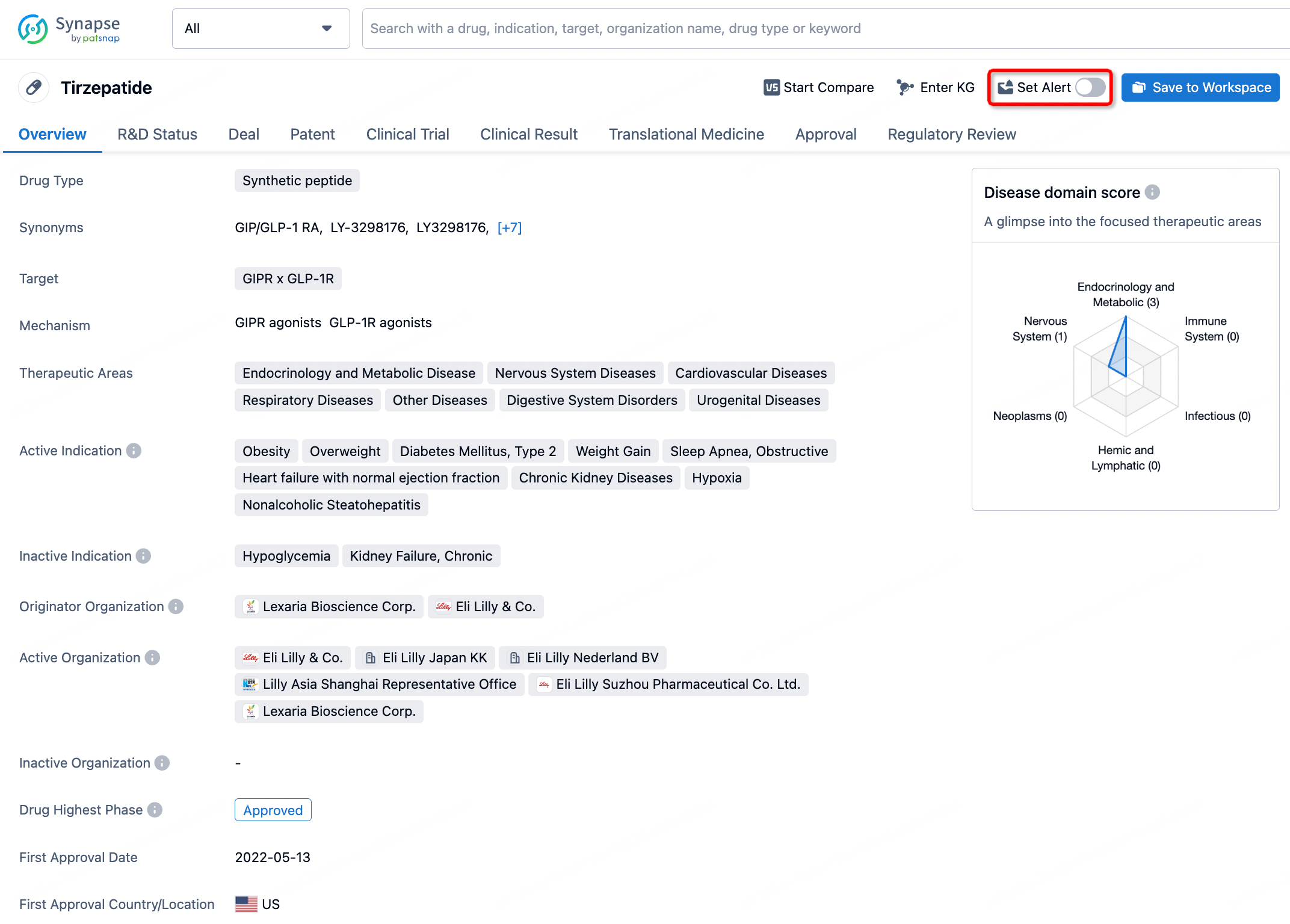
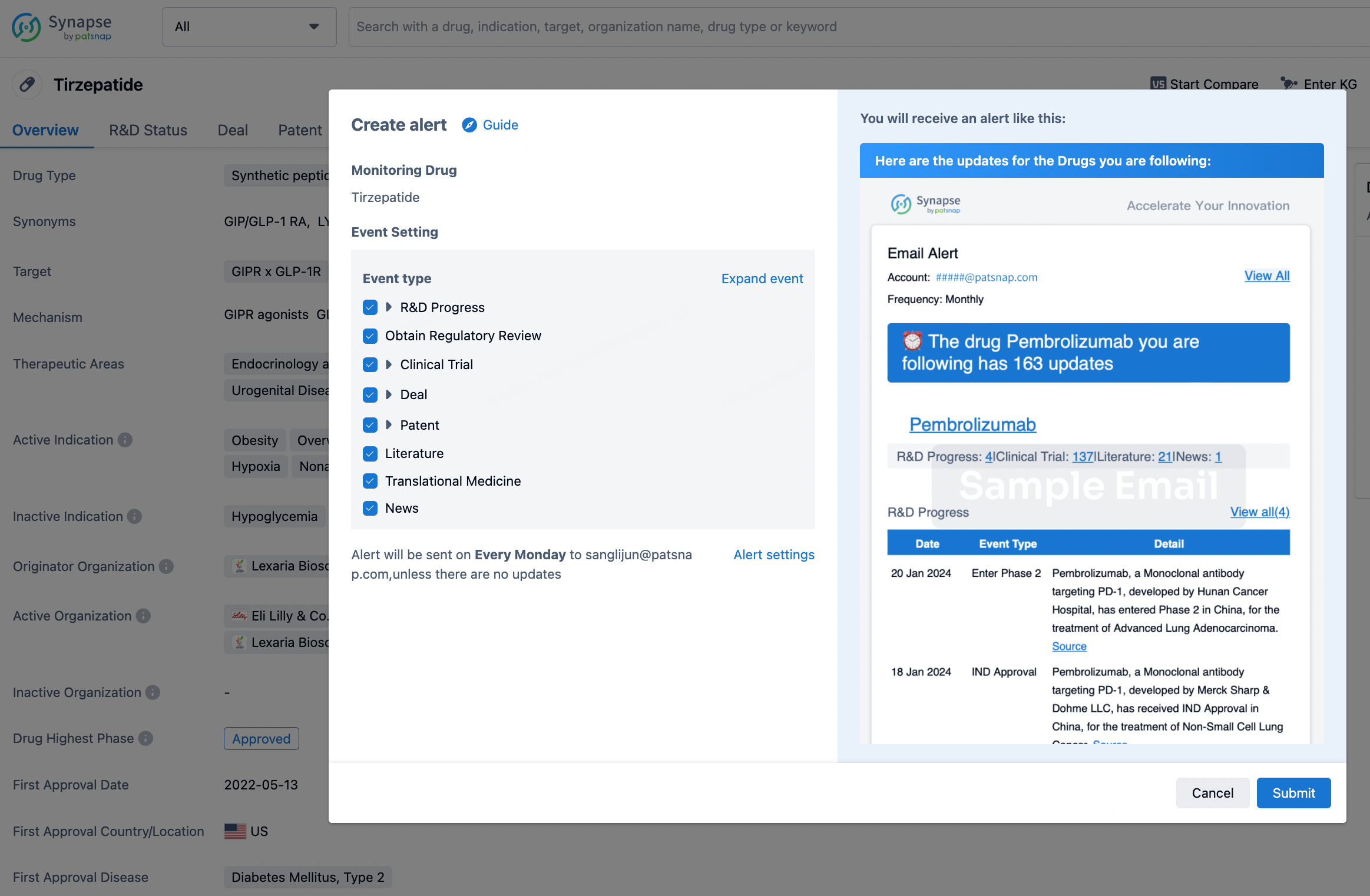
In the Synapse database, you can stay updated on the latest research and development advances of all drugs. This service is accessible anytime and anywhere, with updates available daily or weekly. Use the "Set Alert" function to stay informed. Click on the image below to embark on a brand new journey of drug discovery!
AI Agents Built for Biopharma Breakthroughs
Accelerate discovery. Empower decisions. Transform outcomes.
Get started for free today!
Accelerate Strategic R&D decision making with Synapse, PatSnap’s AI-powered Connected Innovation Intelligence Platform Built for Life Sciences Professionals.
Start your data trial now!
Synapse data is also accessible to external entities via APIs or data packages. Empower better decisions with the latest in pharmaceutical intelligence.