Request Demo
What is Sulfotanshinone sodium used for?
14 June 2024
Sulfotanshinone sodium, also known by its trade names and chemical identifiers, has been garnering attention in the pharmaceutical realm for its promising therapeutic properties. Initially discovered and synthesized by leading research institutions, Sulfotanshinone sodium has positioned itself as a versatile drug with a range of potential clinical applications. Primarily, it's a derivative of tanshinone IIA, a compound isolated from the root of Salvia miltiorrhiza, commonly known as Danshen. This traditional Chinese medicinal herb has been used for centuries to treat cardiovascular and inflammatory diseases. Sulfotanshinone sodium has been developed as a water-soluble form to improve its bioavailability and ease of administration.
Research conducted by numerous institutions worldwide has focused on exploring the drug's efficacy in treating various conditions. The compound primarily targets cardiovascular diseases, owing to its potent anti-inflammatory, antioxidant, and anti-apoptotic properties. Initial studies have demonstrated its effectiveness in improving myocardial function and reducing infarct size, which have significant implications for treating heart disease and ischemic conditions. The research progress, however, still largely remains in preclinical and early clinical trial stages, although the preliminary data are highly promising.
The mechanism of action of Sulfotanshinone sodium is multifaceted, which is a testament to its therapeutic potential. One of its primary mechanisms is the inhibition of oxidative stress, which is a major contributor to cardiovascular and inflammatory diseases. By scavenging free radicals and upregulating antioxidant enzymes, Sulfotanshinone sodium effectively reduces oxidative damage to tissues and cells. Additionally, it modulates various signaling pathways, including the NF-κB pathway, which plays a crucial role in inflammation and immune response. By inhibiting this pathway, the drug reduces the expression of pro-inflammatory cytokines and adhesion molecules, thereby mitigating inflammation.
Moreover, Sulfotanshinone sodium has been shown to have an anti-apoptotic effect, particularly in myocardial cells. It achieves this by modulating the Bcl-2 family of proteins, which are key regulators of apoptosis. By upregulating anti-apoptotic proteins and downregulating pro-apoptotic proteins, the drug helps to preserve cell viability and function under stress conditions. Additionally, Sulfotanshinone sodium has been found to inhibit platelet aggregation and thrombosis, further contributing to its cardiovascular protective effects.
The administration of Sulfotanshinone sodium is straightforward, thanks to its water-soluble formulation. It can be administered orally or via intravenous injection, depending on the clinical scenario and the severity of the condition being treated. The oral route is generally preferred for chronic conditions due to its convenience, while intravenous administration is reserved for acute cases requiring rapid action. The onset of action varies depending on the route of administration; intravenous injection typically results in a more immediate therapeutic effect, whereas oral administration may take longer to achieve peak plasma concentrations. Patients are advised to follow the dosing regimen prescribed by their healthcare provider, which is usually tailored based on individual needs and response to the treatment.
Like any pharmaceutical agent, Sulfotanshinone sodium is not without its side effects and contraindications. Common side effects reported in clinical trials include gastrointestinal disturbances such as nausea, vomiting, and diarrhea. Some patients may also experience dizziness, headache, and fatigue. These side effects are generally mild and transient, resolving with continued use or dose adjustment. However, more severe adverse effects, although rare, can occur and may include hypersensitivity reactions and hepatotoxicity. Patients are advised to report any unusual symptoms to their healthcare provider promptly.
Contraindications for Sulfotanshinone sodium include known hypersensitivity to the drug or its components. Caution is also advised in patients with impaired liver or kidney function, as the drug is metabolized by the liver and excreted by the kidneys. Pregnant and lactating women should avoid using Sulfotanshinone sodium due to the lack of sufficient safety data in these populations. Additionally, patients with a history of bleeding disorders or those on anticoagulant therapy should use the drug with caution, given its potential to inhibit platelet aggregation.
The interaction of Sulfotanshinone sodium with other drugs is an important consideration in clinical practice. Co-administration with anticoagulants or antiplatelet agents, such as warfarin, aspirin, or clopidogrel, may potentiate the risk of bleeding. Therefore, close monitoring of coagulation parameters is recommended in patients receiving such combination therapy. Additionally, the drug may interact with other cardiovascular medications, including beta-blockers, ACE inhibitors, and statins. Although these interactions are not necessarily harmful, they may require dose adjustments to achieve optimal therapeutic outcomes.
Furthermore, the metabolism of Sulfotanshinone sodium involves cytochrome P450 enzymes, specifically CYP3A4. Therefore, drugs that induce or inhibit this enzyme can affect the plasma concentration and efficacy of Sulfotanshinone sodium. For instance, co-administration with CYP3A4 inhibitors such as ketoconazole, erythromycin, or grapefruit juice may increase the drug's plasma levels, raising the risk of adverse effects. Conversely, CYP3A4 inducers like rifampin, phenytoin, or St. John's Wort may reduce its plasma levels, potentially diminishing its therapeutic effect.
In conclusion, Sulfotanshinone sodium represents a promising therapeutic agent with significant potential in the treatment of cardiovascular and inflammatory diseases. Its multifaceted mechanism of action, coupled with its favorable pharmacokinetic properties, makes it a valuable addition to the arsenal of drugs available for these conditions. However, like any drug, it requires careful consideration of its side effects, contraindications, and potential drug interactions to ensure safe and effective use. As research progresses, it is hoped that Sulfotanshinone sodium will continue to demonstrate its value in clinical practice, ultimately improving patient outcomes in these challenging medical conditions.
Research conducted by numerous institutions worldwide has focused on exploring the drug's efficacy in treating various conditions. The compound primarily targets cardiovascular diseases, owing to its potent anti-inflammatory, antioxidant, and anti-apoptotic properties. Initial studies have demonstrated its effectiveness in improving myocardial function and reducing infarct size, which have significant implications for treating heart disease and ischemic conditions. The research progress, however, still largely remains in preclinical and early clinical trial stages, although the preliminary data are highly promising.
The mechanism of action of Sulfotanshinone sodium is multifaceted, which is a testament to its therapeutic potential. One of its primary mechanisms is the inhibition of oxidative stress, which is a major contributor to cardiovascular and inflammatory diseases. By scavenging free radicals and upregulating antioxidant enzymes, Sulfotanshinone sodium effectively reduces oxidative damage to tissues and cells. Additionally, it modulates various signaling pathways, including the NF-κB pathway, which plays a crucial role in inflammation and immune response. By inhibiting this pathway, the drug reduces the expression of pro-inflammatory cytokines and adhesion molecules, thereby mitigating inflammation.
Moreover, Sulfotanshinone sodium has been shown to have an anti-apoptotic effect, particularly in myocardial cells. It achieves this by modulating the Bcl-2 family of proteins, which are key regulators of apoptosis. By upregulating anti-apoptotic proteins and downregulating pro-apoptotic proteins, the drug helps to preserve cell viability and function under stress conditions. Additionally, Sulfotanshinone sodium has been found to inhibit platelet aggregation and thrombosis, further contributing to its cardiovascular protective effects.
The administration of Sulfotanshinone sodium is straightforward, thanks to its water-soluble formulation. It can be administered orally or via intravenous injection, depending on the clinical scenario and the severity of the condition being treated. The oral route is generally preferred for chronic conditions due to its convenience, while intravenous administration is reserved for acute cases requiring rapid action. The onset of action varies depending on the route of administration; intravenous injection typically results in a more immediate therapeutic effect, whereas oral administration may take longer to achieve peak plasma concentrations. Patients are advised to follow the dosing regimen prescribed by their healthcare provider, which is usually tailored based on individual needs and response to the treatment.
Like any pharmaceutical agent, Sulfotanshinone sodium is not without its side effects and contraindications. Common side effects reported in clinical trials include gastrointestinal disturbances such as nausea, vomiting, and diarrhea. Some patients may also experience dizziness, headache, and fatigue. These side effects are generally mild and transient, resolving with continued use or dose adjustment. However, more severe adverse effects, although rare, can occur and may include hypersensitivity reactions and hepatotoxicity. Patients are advised to report any unusual symptoms to their healthcare provider promptly.
Contraindications for Sulfotanshinone sodium include known hypersensitivity to the drug or its components. Caution is also advised in patients with impaired liver or kidney function, as the drug is metabolized by the liver and excreted by the kidneys. Pregnant and lactating women should avoid using Sulfotanshinone sodium due to the lack of sufficient safety data in these populations. Additionally, patients with a history of bleeding disorders or those on anticoagulant therapy should use the drug with caution, given its potential to inhibit platelet aggregation.
The interaction of Sulfotanshinone sodium with other drugs is an important consideration in clinical practice. Co-administration with anticoagulants or antiplatelet agents, such as warfarin, aspirin, or clopidogrel, may potentiate the risk of bleeding. Therefore, close monitoring of coagulation parameters is recommended in patients receiving such combination therapy. Additionally, the drug may interact with other cardiovascular medications, including beta-blockers, ACE inhibitors, and statins. Although these interactions are not necessarily harmful, they may require dose adjustments to achieve optimal therapeutic outcomes.
Furthermore, the metabolism of Sulfotanshinone sodium involves cytochrome P450 enzymes, specifically CYP3A4. Therefore, drugs that induce or inhibit this enzyme can affect the plasma concentration and efficacy of Sulfotanshinone sodium. For instance, co-administration with CYP3A4 inhibitors such as ketoconazole, erythromycin, or grapefruit juice may increase the drug's plasma levels, raising the risk of adverse effects. Conversely, CYP3A4 inducers like rifampin, phenytoin, or St. John's Wort may reduce its plasma levels, potentially diminishing its therapeutic effect.
In conclusion, Sulfotanshinone sodium represents a promising therapeutic agent with significant potential in the treatment of cardiovascular and inflammatory diseases. Its multifaceted mechanism of action, coupled with its favorable pharmacokinetic properties, makes it a valuable addition to the arsenal of drugs available for these conditions. However, like any drug, it requires careful consideration of its side effects, contraindications, and potential drug interactions to ensure safe and effective use. As research progresses, it is hoped that Sulfotanshinone sodium will continue to demonstrate its value in clinical practice, ultimately improving patient outcomes in these challenging medical conditions.
How to obtain the latest development progress of all drugs?
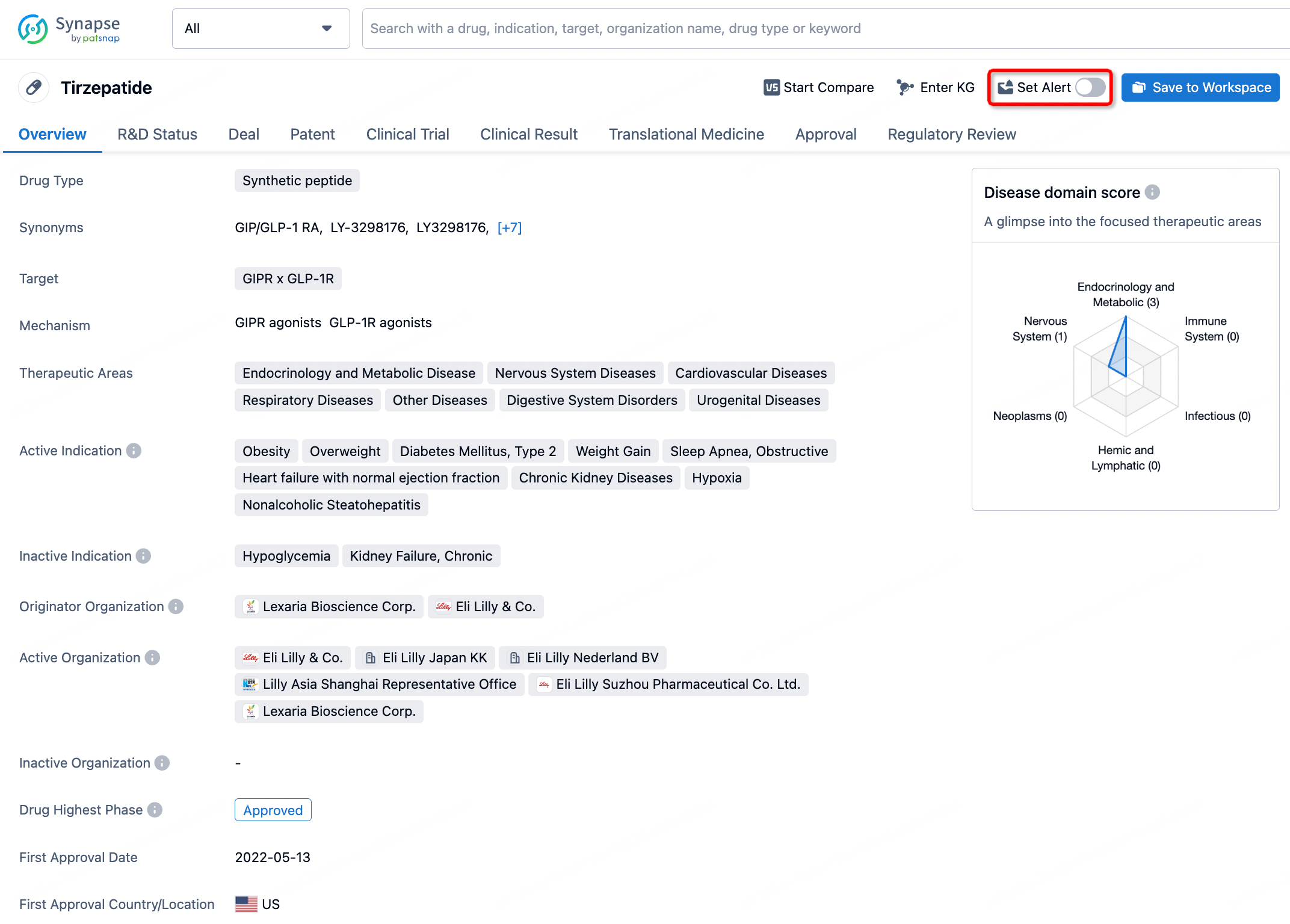
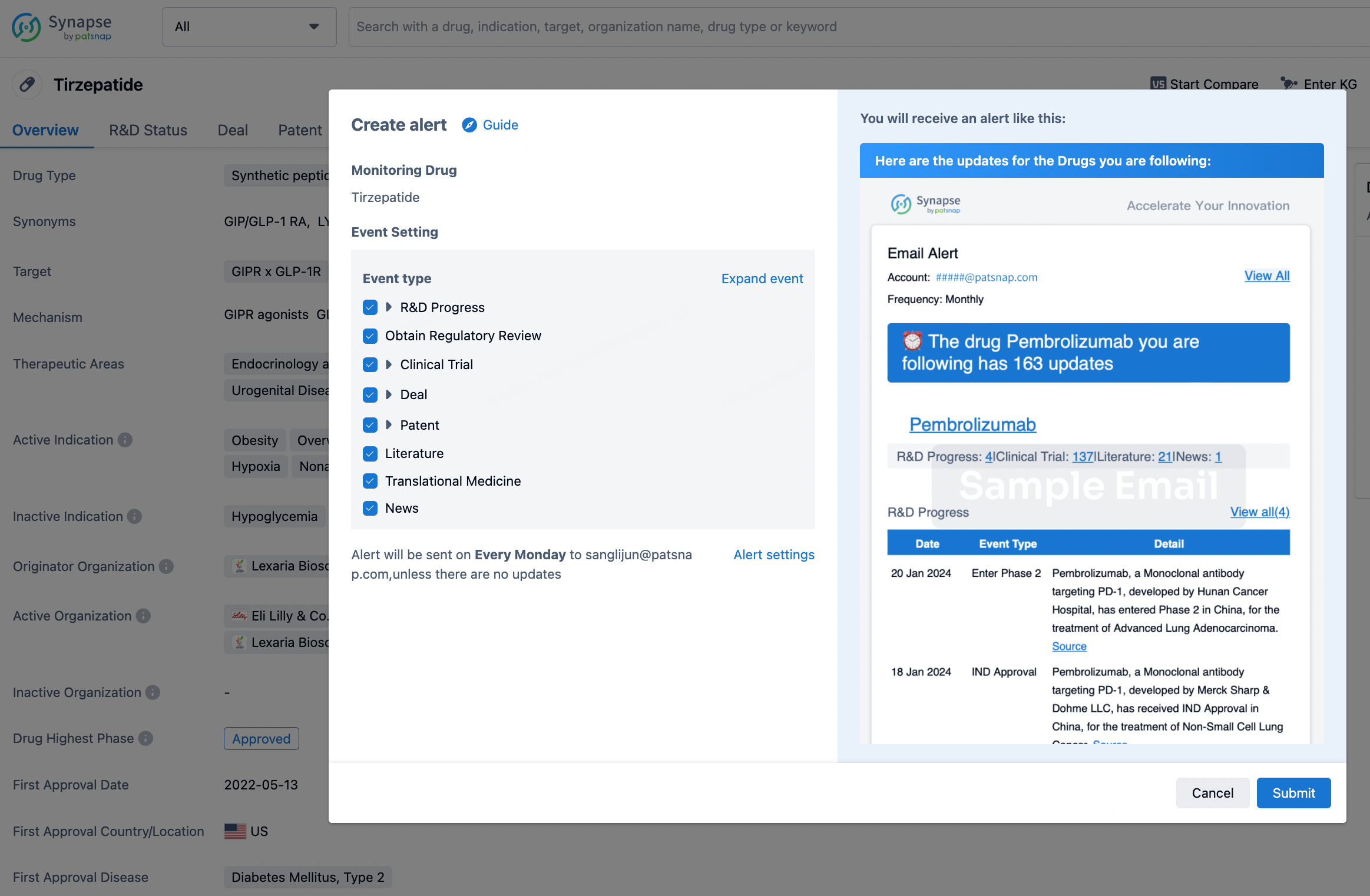
In the Synapse database, you can stay updated on the latest research and development advances of all drugs. This service is accessible anytime and anywhere, with updates available daily or weekly. Use the "Set Alert" function to stay informed. Click on the image below to embark on a brand new journey of drug discovery!
AI Agents Built for Biopharma Breakthroughs
Accelerate discovery. Empower decisions. Transform outcomes.
Get started for free today!
Accelerate Strategic R&D decision making with Synapse, PatSnap’s AI-powered Connected Innovation Intelligence Platform Built for Life Sciences Professionals.
Start your data trial now!
Synapse data is also accessible to external entities via APIs or data packages. Empower better decisions with the latest in pharmaceutical intelligence.